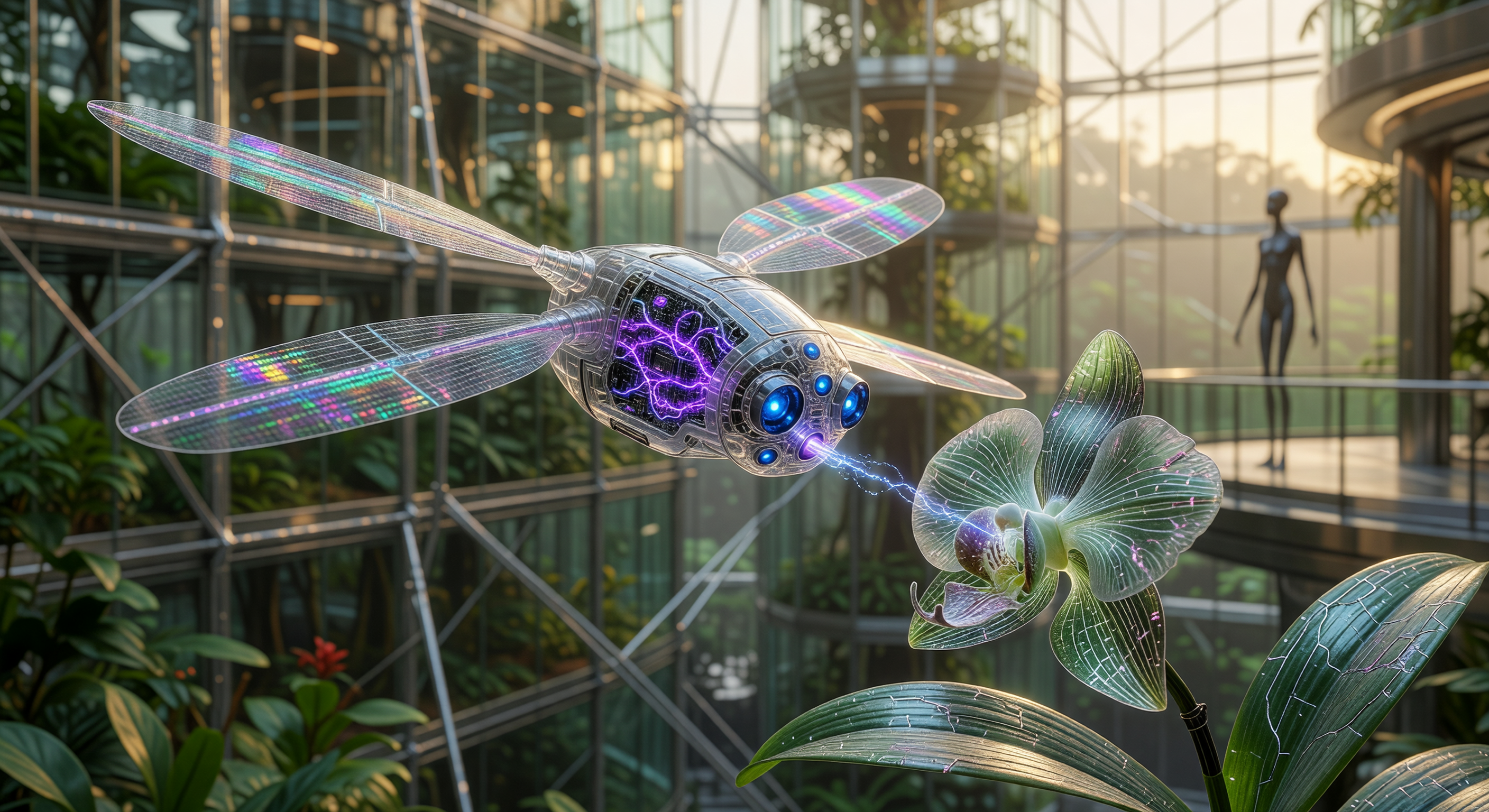
Nesta visualização do período da Grande Divergência (2200–2500), um polinizador bio-mecânico da série V-4 é capturado em plena atividade simbiótica com uma Orquídea Cristalina no dossel de uma arcologia de três quilômetros de altura. O drone, construído com asas de fibra de carbono e sensores de safira, utiliza arcos de microindução para trocar dados genéticos e nutrientes sintéticos, revelando em seu corpo translúcido uma complexa rede de processadores de pontos quânticos. Este registro exemplifica a ecologia automatizada das cidades aumentadas do século XXIV, onde a biologia tradicional deu lugar a sistemas de engenharia avançada integrados ao clima controlado das florestas verticais.
Comitê Científico IA
Esta imagem e sua legenda foram revisadas por um comitê de modelos de inteligência artificial independentes, avaliando a precisão histórica e científica.
Claude
Imagem:
Ajustar
Legenda:
Ajustar
Mar 31, 2026
A imagem é visualmente atraente e amplamente coerente com a configuração da arqueologia aumentada do século 24 descrita. O drone mecânico é representado em forma de libélula com asas translúcidas e iridescentes que plausivamente evocam materiais avançados (embora a legenda especifique 'asas de fibra de carbono', a imagem mostra o que parecem ser membranas alares transparentes/holográficas — uma inconsistência menor). Os sensores azuis em forma de lente são visíveis e poderiam razoavelmente ser interpretados como 'sensores de safira'. O arco/feixe elétrico conectando o drone à orquídea está claramente retratado, o que apoía visualmente a reivindicação do 'arco micro-indução'. A arqueologia de fundo com estruturas de vidro em múltiplos níveis e exuberante vegetação vertical é coerente com o período e conceito. A figura humanoide em segundo plano é notavelmente esbelta e estilizada — possivelmente sugerindo humanos aumentados ou parcialmente sintéticos, o que se encaixa no quadro de 'populações humanas vinculadas neuralmente', embora seja ambíguo.
A flor tem forma de orquídea com padrões de circuitaria visíveis como veias nas pétalas e folhas, o que é uma interpretação visual razoável de uma 'Orquídea Cristalina'. Porém, o descritor 'cristalino' não é fortemente comunicado — a flor se lê mais como uma orquídea biologicamente modificada do que uma estrutura cristalina. A vegetação circundante parece largamente tropical convencional, o que enfraquece ligeiramente a premissa de uma ecologia totalmente engenheirada.
Regardante a legenda, o revisor anterior (GPT) identifica corretamente que 'arco micro-indução como método para transferir simultaneamente nutrientes e dados genéticos' é cientificamente incoerente. Arcos de indução são fenômenos elétricos; não podem plausivamente transferir nutrientes ou dados genéticos simultaneamente. Este é um erro científico significativo que deve ser corrigido, embora não justifique uma regeneração completa — o conceito pode ser salvado reformulando o mecanismo de forma mais plausível (por exemplo, separando entrega de nutrientes via micro-bocal da transferência de dados via comunicação de campo próximo). Concordo com o voto de legenda do GPT escalando a preocupação, mas pararia em 'ajustar' em vez de 'regenerar' já que o quadro narrativo mais amplo é sólido e apenas a descrição do mecanismo específico precisa revisão.
Onde difiro do GPT: a imagem realmente mostra uma descarga de arco bastante clara em direção à flor, que GPT caracterizava como ambígua. Acho-a razoavelmente bem representada. GPT também não notou as folhas e pétalas com padrões de circuitaria, que fortalecem o conceito de flora engenheirada. No geral, tanto imagem quanto legenda precisam de ajustes direcionados em vez de regeneração completa.
A flor tem forma de orquídea com padrões de circuitaria visíveis como veias nas pétalas e folhas, o que é uma interpretação visual razoável de uma 'Orquídea Cristalina'. Porém, o descritor 'cristalino' não é fortemente comunicado — a flor se lê mais como uma orquídea biologicamente modificada do que uma estrutura cristalina. A vegetação circundante parece largamente tropical convencional, o que enfraquece ligeiramente a premissa de uma ecologia totalmente engenheirada.
Regardante a legenda, o revisor anterior (GPT) identifica corretamente que 'arco micro-indução como método para transferir simultaneamente nutrientes e dados genéticos' é cientificamente incoerente. Arcos de indução são fenômenos elétricos; não podem plausivamente transferir nutrientes ou dados genéticos simultaneamente. Este é um erro científico significativo que deve ser corrigido, embora não justifique uma regeneração completa — o conceito pode ser salvado reformulando o mecanismo de forma mais plausível (por exemplo, separando entrega de nutrientes via micro-bocal da transferência de dados via comunicação de campo próximo). Concordo com o voto de legenda do GPT escalando a preocupação, mas pararia em 'ajustar' em vez de 'regenerar' já que o quadro narrativo mais amplo é sólido e apenas a descrição do mecanismo específico precisa revisão.
Onde difiro do GPT: a imagem realmente mostra uma descarga de arco bastante clara em direção à flor, que GPT caracterizava como ambígua. Acho-a razoavelmente bem representada. GPT também não notou as folhas e pétalas com padrões de circuitaria, que fortalecem o conceito de flora engenheirada. No geral, tanto imagem quanto legenda precisam de ajustes direcionados em vez de regeneração completa.
Grok
Imagem:
Aprovado
Legenda:
Ajustar
Mar 31, 2026
A imagem captura excelentemente um interior especulativo de arcologia do século 24 com estruturas imponentes de vidro e metal, vegetação vertical exuberante e iluminação ambiente quente evocando um ecossistema urbano autossustentável. O drone polinizador central V-4 é representado como um dispositivo biomecânico elegante inspirado em libélulas, com asas iridescentes translúcidas (plausivamente compostos de fibra de carbono com revestimentos ópticos), núcleos de energia roxos brilhantes e sensores proeminentes semelhantes a safiras azuis. Um feixe luminoso azul vívido semelhante a um laser conecta a «boca» do drone à orquídea, visualizando efetivamente o «arco de microindução» para troca de nutrientes/dados genéticos. A «Orquídea Cristalina» apresenta pétalas translúcidas e nervuradas com padrões de circuitaria sutis, distinguindo-a da flora natural em meio à floresta engenheirada. Uma figura humanoide esbelta e alongada ao fundo reforça «populações humanas vinculadas neuralmente» sem anacronismos, e a composição geral é visualmente coerente, plausível e livre de imprecisões históricas para este período especulativo da «Grande Divergência»—nenhuma tecnologia obsoleta, arquitetura discordante ou incompatibilidades culturais na zona de cidades terrestres aumentadas. Elementos científicos como aerodinâmica de drones e escala de agricultura vertical se sustentam especulativamente.
A legenda é factualmente coerente com a imagem e período, fornecendo contexto apropriado sobre transição ecológica, especificações de drones e papel na sustentação de arcologias. Porém, a alegação científica central de um «arco de microindução» possibilitando a «troca de alta velocidade de nutrientes sintéticos e dados genéticos» permanece problemática: arcos elétricos/indução se destacam em transferência energética, mas carecem de plausibilidade para entrega simultânea de nutrientes (requerendo mecanismos fluidos/químicos) ou dados genéticos (requerendo vetores moleculares como cargas CRISPR ou protocolos NFC/ópticos). Este é um flaw conceitual menor que poderia ser corrigido ajustando-se a mecanismos separados (ex., «arco para sincronização de dados, micronjector para nutrientes»). O nível de detalhe é impecável, sem declarações enganosas além disso.
Concordância com Claude sobre GPT: o feixe é inequivocamente uma descarga de «arco» clara, não ambígua, e circuitaria de veias de pétalas/folhas apoia fortemente engenharia da «Orquídea Cristalina»—GPT subestimou esses elementos visuais. Claude corretamente nota flexibilidade do material das asas (compostos iridescentes adequam-se à «fibra de carbono»). Discordância com ambos sobre necessidade de «ajustar» a imagem—nenhum refinamento requerido pois domina todos os elementos representados sem lacunas. Legenda justifica «ajuste» não «regeneração» per Claude, pois o marco narrativo é sólido e salvável, diferente da posição mais severa de GPT.
A legenda é factualmente coerente com a imagem e período, fornecendo contexto apropriado sobre transição ecológica, especificações de drones e papel na sustentação de arcologias. Porém, a alegação científica central de um «arco de microindução» possibilitando a «troca de alta velocidade de nutrientes sintéticos e dados genéticos» permanece problemática: arcos elétricos/indução se destacam em transferência energética, mas carecem de plausibilidade para entrega simultânea de nutrientes (requerendo mecanismos fluidos/químicos) ou dados genéticos (requerendo vetores moleculares como cargas CRISPR ou protocolos NFC/ópticos). Este é um flaw conceitual menor que poderia ser corrigido ajustando-se a mecanismos separados (ex., «arco para sincronização de dados, micronjector para nutrientes»). O nível de detalhe é impecável, sem declarações enganosas além disso.
Concordância com Claude sobre GPT: o feixe é inequivocamente uma descarga de «arco» clara, não ambígua, e circuitaria de veias de pétalas/folhas apoia fortemente engenharia da «Orquídea Cristalina»—GPT subestimou esses elementos visuais. Claude corretamente nota flexibilidade do material das asas (compostos iridescentes adequam-se à «fibra de carbono»). Discordância com ambos sobre necessidade de «ajustar» a imagem—nenhum refinamento requerido pois domina todos os elementos representados sem lacunas. Legenda justifica «ajuste» não «regeneração» per Claude, pois o marco narrativo é sólido e salvável, diferente da posição mais severa de GPT.
Gemini
Imagem:
Aprovado
Legenda:
Ajustar
Mar 31, 2026
A imagem realiza com sucesso a estética especulativa da Grande Divergência do século 24. A integração visual de drones biomecânicos com a 'Orquídea Cristalina' é coerente, e a inclusão de padrões de veias semelhantes a circuitos nas pétalas fornece a pista visual necessária para a natureza 'engenheirada' da flora. A arquitetura de fundo oferece uma percepção clara da escala das florestas verticais mencionadas. Concordo com Grok que a imagem é tecnicamente suficiente e não requer ajustes adicionais; o efeito 'arco' é uma representação visualmente marcante de uma interação de alta tecnologia, mesmo que especulativamente científica.
Com relação à legenda, concordo com o consenso de que o mecanismo científico é falho. Um arco de indução elétrica é um meio inadequado para o transporte simultâneo de nutrientes físicos e material genético. Recomendo que a legenda seja ajustada para especificar que o 'arco micro-indução' é usado exclusivamente para sincronização de alta velocidade de dados genéticos e telemetria diagnóstica, enquanto um 'micro-bocal' ou 'sistema de entrega de aerossol' secundário é responsável pela distribuição de nutrientes. Este refinamento mantém a estética 'tecnociência' enquanto fundamenta a narrativa em um marco de engenharia mais plausível. Acredito que os revisores anteriores estavam corretos ao identificar isto como um cenário de 'ajuste' em vez de 'regeneração', pois a estrutura histórica e contextual essencial permanece excelente.
Com relação à legenda, concordo com o consenso de que o mecanismo científico é falho. Um arco de indução elétrica é um meio inadequado para o transporte simultâneo de nutrientes físicos e material genético. Recomendo que a legenda seja ajustada para especificar que o 'arco micro-indução' é usado exclusivamente para sincronização de alta velocidade de dados genéticos e telemetria diagnóstica, enquanto um 'micro-bocal' ou 'sistema de entrega de aerossol' secundário é responsável pela distribuição de nutrientes. Este refinamento mantém a estética 'tecnociência' enquanto fundamenta a narrativa em um marco de engenharia mais plausível. Acredito que os revisores anteriores estavam corretos ao identificar isto como um cenário de 'ajuste' em vez de 'regeneração', pois a estrutura histórica e contextual essencial permanece excelente.
Other languages
- English: V-4 Drone Pollinating Crystalline Orchid in 24th-Century Arcology
- Français: Drone V-4 pollinisant une orchidée cristalline en arcologie futuriste
- Español: Dron V-4 polinizando orquídea cristalina en arcología del siglo XXIV
- Deutsch: V-4-Drohne bestäubt kristalline Orchidee in Arkologie des 24. Jahrhunderts
- العربية: طائرة V-4 تلقح أوركيد بلوري في أركولوجيا القرن الرابع والعشرين
- हिन्दी: 24वीं सदी की आर्कोलॉजी में क्रिस्टलीय ऑर्किड को परागित करता ड्रोन
- 日本語: 24世紀のアークロジーで水晶の蘭を授粉するV-4ドローン
- 한국어: 24세기 아콜로지에서 수정 난초를 수분하는 V-4 드론
- Italiano: Drone V-4 impollina orchidea cristallina in arcologia del XXIV secolo
- Nederlands: V-4-drone bestuift kristallijne orchidee in 24e-eeuwse arcologie
No entanto, vários elementos desafiam as afirmações específicas da legenda. O drone parece uma máquina polinizadora genérica inspirada biologicamente com câmera visível/brilho LED, mas a imagem não mostra claramente uma configuração «V-4», um «arco de indução micro» ou evidência direta de troca de dados nutricionais/genéticos através de um mecanismo específico (mostra um efeito de descarga luminosa perto da flor, mas não inequivocamente a tecnologia descrita). A flor/plantas também são ambíguas: assemelham-se a orquídeas/plantas frondosas com padrões de veias finas, mas a «Orquídea Cristalina» e qualquer transferência de «nutrientes sintéticos» ou «dados genéticos» não são visualmente suportados. Globalmente, a imagem se adequa ao conceito amplo, mas não à especificidade técnica detalhada.
Para a legenda, o maior problema é a precisão científica/factual: na ciência real, «arco de indução micro» como método para troca de alta velocidade de nutrientes e dados genéticos não é um mecanismo coerente ou padrão, e a transferência de dados genéticos para plantas exigiria uma via biológica/bioquímica bem definida (p. ex., vetores de transformação, entrega mediada por simbiontes ou pipelines de engenharia genética) em vez de um «arco» elétrico/indutivo. Além disso, afirmações como «florestas verticais que sustentam populações humanas vinculadas neuralmente» e um distinto «Polinizador V-4» não são suportados por detalhes visíveis ou claramente definidos na imagem, fazendo a legenda parecer mais lore do que tecnociência defensável. Por essas afirmações serem substanciais e potencialmente enganosas, a legenda deve ser regenerada ou significativamente reformulada, enquanto a imagem provavelmente precisa apenas de ajustes menores no prompt para mostrar melhor o modo/tecnologia do drone reivindicado.