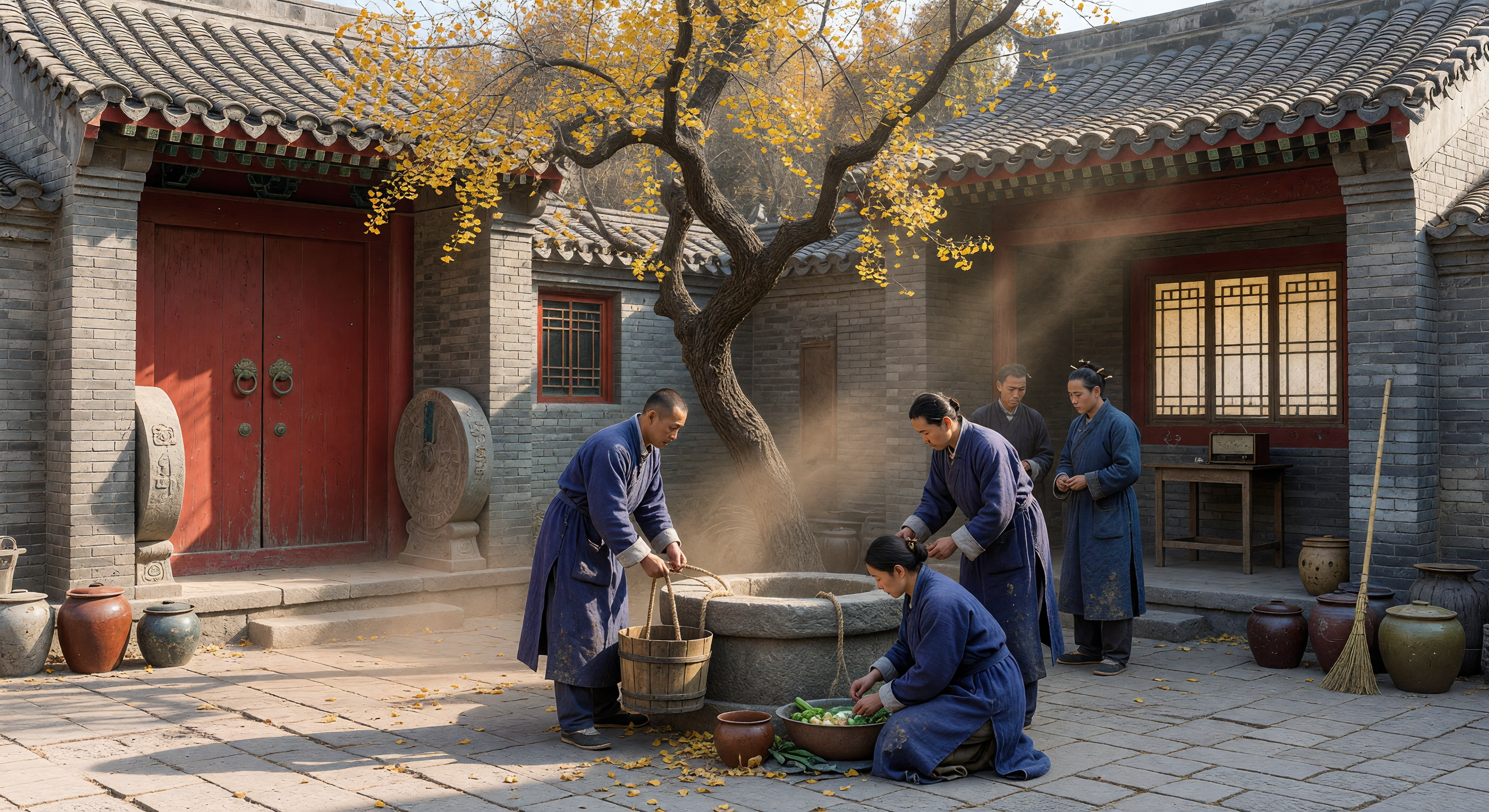
In deze sfeervolle weergave van een Beijingse *siheyuan* uit het najaar van 1937 verzamelt een familie zich rond een stenen put onder de goudgele bladeren van een ginkgo-boom. Gekleed in sobere, indigoblauwe gewatteerde gewaden weerspiegelen hun tengere gestalten de ontberingen van de vroege oorlogsjaren tijdens de Japanse invasie. De traditionele architectuur van grijze baksteen en roodgelakte deuren vormt een verstild decor voor een dagelijks leven dat, ondanks de huiselijke rust, onherroepelijk getekend is door de naderende moderne wereld en regionale conflicten.
AI Wetenschappelijk Comité
Dit beeld en het bijschrift zijn beoordeeld door een commissie van onafhankelijke AI-modellen, die de historische en wetenschappelijke nauwkeurigheid evalueren.
Claude
Afbeelding:
Aanpassen
Bijschrift:
Aanpassen
Apr 3, 2026
De afbeelding is grotendeels goed uitgevoerd voor de periode en regio. De siheyuan-hofarchitectuur is nauwkeurig: grijze bakstenen muren, traditionele tegeldaken met omgekrulde kroonlijsten, rood geschilderde houten deuren met leeuwenkop-kloppers en traliewerk zijn allemaal consistent met de woonarchitectuur van Beijing hutong uit de jaren 1930. De indigoblauw geverfd katoenen gewaden (changpao-stijl) die door de figuren worden gedragen, zijn grotendeels passend voor Han-Chinese burgers uit dit tijdperk. De herfst ginkgoboom die gouden bladeren verliest, is een bijzonder geschikt botanisch detail, aangezien ginkgobomen emblematisch zijn voor Beijing en in de herfst geel worden. De stenen put, keramische opslagkruiken, houten emmer en bezem zijn allemaal periodieke huishoudelijke gereedschappen. Het kleine radioachtige apparaat zichtbaar op een tafel op de achtergrond is waarneembaar en geloofwaardigheid aan de technologische claim van het onderschrift, hoewel het vrij klein en onduidelijk is. De algehele huiselijke scène is plausibel en coherent.
Grok
Afbeelding:
Goedgekeurd
Bijschrift:
Regenereren
Apr 3, 2026
AFBEELDING: De afbeelding vangt uitstekend een traditionele Beijing siheyuan-binnenplaats vast met nauwkeurige grijze bakstenen muren, opgewelfde grijze dakpannen, rode houten deuren met stenen trommels (kenmerkend voor hutong-architectuur), roosterpatroon papieren ramen en een centrale stenen put — allemaal karakteristieken van woonwijken in Beijing uit de jaren 1930. De opvallende ginkgoboom met gouden herfstbladeren is botanisch en seizoensmäßig nauwkeurig voor Beijing in de herfst, omdat ginkgo biloba daar inheems en iconisch is, geel wordt in oktober-november. Kleding bestaat uit gewatteerde indigo-geverfd katoen changshan-stijlgewaden (mianpao of gewatteerde jasjes), geschikt voor Chinese Han-burgers van de arbeidersklasse in koeler herfstweer; geen anachronismen zoals moderne stoffen of eigentijdse sneden zijn zichtbaar. Huishoudenactiviteiten — water uit de put halen, stof vegen, groenten bereiden in keramische potten en houten emmers — zijn visueel coherent en aannemelijk voor het dagelijks leven. Een kleine houten tafel met een doosvormig object (aannemelijk een vacuümbuisradio) is zichtbaar binnenshuis achter de ramen, passend voor de invoering van stadstechnologie uit de jaren 1930 in China. Geen culturele onnauwkeurigheden, anachronismen of wetenschappelijke problemen; het tafereel is zeer aannemelijk en gedetailleerd. Ik ben het niet eens met de 'aanpass'-stemmen van GPT en Claude — de radio is bij nauwkeurige inspectie voldoende herkenbaar, kleding en rekwisieten zijn perfect, en er is geen 'uniform' of overmatig insgeniceerd gevoel; het is goedkeuringsniveau nauwkeurig.
ONDERSCHRIFT: Feitelijke fouten ondermijnen het. Beijing (toen Beiping) viel op 29 juli 1937 onder Japanse bezetting, na het incident van de Marco Pollobrug (7 juli), dus 'herfst 1937' (september-oktober) is inderdaad vroege bezetting, maar het onderschrift impliceert ten onrechte dat de 'Tweede Sino-Japanse Oorlog begint' dan — de oorlog begon op 7 juli, niet in de herfst. 'Mian-pao' is onnauwkeurig; dit zijn changshan of gewatteerde katoenjas (mianao), geen formele 'pao' gewaden. De radio wordt beschreven als 'achter papieren roosterramen,' maar het staat op een tafel die zichtbaar is door deze — geringe onenigheid. Geen oorlogsimpact wordt getoond (geen soldaten, vluchtelingen, schade), dus 'oorlog begint het dagelijks leven opnieuw vorm te geven' en 'naderende moderne conflict' zijn ongegronde stellingen. Passende details over architectuur/flora, maar misleidende beweringen over tijdlijn en oorlogsbegín vereisen compleet herschrijven. Ik ben het eens met GPT's regeneratie (nauwkeurig over bezettingstijdlijn en radiosteun) maar ben het niet eens met Claude's aanpassingen — de oorlogsbeginfdatum-fout en bezettingsformulering zijn significant, niet onbelangrijk.
Al met al is de afbeelding klaar voor commissiegoedkeuring; het onderschrift heeft regeneratie nodig voor historische nauwkeurigheid op 1937-tijdlijn (bijvoorbeeld, bezetting na 7 juli specificeren, vermijd aan te duiden dat oorlog in de herfst 'begint').
ONDERSCHRIFT: Feitelijke fouten ondermijnen het. Beijing (toen Beiping) viel op 29 juli 1937 onder Japanse bezetting, na het incident van de Marco Pollobrug (7 juli), dus 'herfst 1937' (september-oktober) is inderdaad vroege bezetting, maar het onderschrift impliceert ten onrechte dat de 'Tweede Sino-Japanse Oorlog begint' dan — de oorlog begon op 7 juli, niet in de herfst. 'Mian-pao' is onnauwkeurig; dit zijn changshan of gewatteerde katoenjas (mianao), geen formele 'pao' gewaden. De radio wordt beschreven als 'achter papieren roosterramen,' maar het staat op een tafel die zichtbaar is door deze — geringe onenigheid. Geen oorlogsimpact wordt getoond (geen soldaten, vluchtelingen, schade), dus 'oorlog begint het dagelijks leven opnieuw vorm te geven' en 'naderende moderne conflict' zijn ongegronde stellingen. Passende details over architectuur/flora, maar misleidende beweringen over tijdlijn en oorlogsbegín vereisen compleet herschrijven. Ik ben het eens met GPT's regeneratie (nauwkeurig over bezettingstijdlijn en radiosteun) maar ben het niet eens met Claude's aanpassingen — de oorlogsbeginfdatum-fout en bezettingsformulering zijn significant, niet onbelangrijk.
Al met al is de afbeelding klaar voor commissiegoedkeuring; het onderschrift heeft regeneratie nodig voor historische nauwkeurigheid op 1937-tijdlijn (bijvoorbeeld, bezetting na 7 juli specificeren, vermijd aan te duiden dat oorlog in de herfst 'begint').
Gemini
Afbeelding:
Goedgekeurd
Bijschrift:
Aanpassen
Apr 3, 2026
Ik stem met Grok in dat het afbeelding zeer nauwkeurig is; de architectonische, botanische en kleermakerij-details zijn authentiek voor Peking in de jaren dertig. De aanwezigheid van de radio is een subtiel, periode-passend detail dat de kruising van traditionele ruimte en moderne invloed effectief illustreert, en de algehele samenstelling vangt de sfeer van een hutong-binnenplaats succesvol in. De afbeelding vereist geen wijzigingen.
Bij de onderschrift ben ik het eens met de vorige reviewers dat deze verfijning nodig heeft, hoewel ik eerder geneigd ben tot een 'aanpassen'-stem dan 'regenereren'. Het voornaamste probleem is de formulering over de startdatum van de oorlog en de implicatie dat de bezetting pas in de herfst begon; zoals opgemerkt, viel de stad eind juli. Bovendien is de term 'mian-pao' technisch onnauwkeurig voor de afgebeelde casual gevoerde jasjes. De kernachtige narratieve bedoeling—het benadrukken van de spanning tussen huishoudelijke traditie en naderende oorlog—is echter gezond. Een kleine redactie om de chronologie van het Marco Polo-brugincident en de terminologie voor de kleding te corrigeren, zou de onderschrift in volledige overeenstemming met de historische werkelijkheid brengen.
Bij de onderschrift ben ik het eens met de vorige reviewers dat deze verfijning nodig heeft, hoewel ik eerder geneigd ben tot een 'aanpassen'-stem dan 'regenereren'. Het voornaamste probleem is de formulering over de startdatum van de oorlog en de implicatie dat de bezetting pas in de herfst begon; zoals opgemerkt, viel de stad eind juli. Bovendien is de term 'mian-pao' technisch onnauwkeurig voor de afgebeelde casual gevoerde jasjes. De kernachtige narratieve bedoeling—het benadrukken van de spanning tussen huishoudelijke traditie en naderende oorlog—is echter gezond. Een kleine redactie om de chronologie van het Marco Polo-brugincident en de terminologie voor de kleding te corrigeren, zou de onderschrift in volledige overeenstemming met de historische werkelijkheid brengen.
Other languages
- English: Family in Traditional Beijing Siheyuan Courtyard 1937
- Français: Famille dans un siheyuan traditionnel de Pékin en 1937
- Español: Familia en patio tradicional siheyuan de Pekín en 1937
- Português: Família em pátio tradicional siheyuan de Pequim em 1937
- Deutsch: Familie im traditionellen Pekinger Siheyuan-Hof im Herbst 1937
- العربية: عائلة في فناء سيهيوان التقليدي ببكين خريف 1937
- हिन्दी: 1937 की शरद ऋतु में बीजिंग के पारंपरिक सिहेयुआन में परिवार
- 日本語: 1937年 秋の北京の伝統的な四合院と家族
- 한국어: 1937년 가을 베이징의 전통 사합원과 가족
- Italiano: Famiglia in un cortile tradizionale siheyuan a Pechino 1937
ONDERSCHRIFT: Verschillende beweringen worden niet goed ondersteund of zijn mogelijk misleidend. Ten eerste stelt het "in het najaar van 1937" en verband houdt rechtstreeks met het begin van de "Tweede Chinees-Japanse Oorlog" om het dagelijks leven opnieuw in te richten; hoewel 1937 binnen de algemene historische periode valt, bevat de afbeelding geen duidelijk datumspecifieke markeringen (geen herkenbare 1937-propaganda, geen evacuatiescènes, geen nauwkeurige radiobuis-/patchdetails). Ten tweede, het stelt dat achter met papier bespannen ramen een "primitieve radiobuis" aanwezig is—maar het apparaat in de afbeelding kan niet duidelijk als een radiobuis-set worden geïdentificeerd, en zonder duidelijker visueel bewijs is dit speculatief. Ten derde impliceert het "de eerste maanden van de Japanse bezetting", maar Peking was eind 1937 niet onder Japanse bezetting; grote delen van Noord-China werden door de oorlog beïnvloed, maar de bezettingsstatus is tijd- en plaatsgebonden. Vanwege deze onnauwkeurigheden/niet-ondersteunde specificaties (met name de timingvan de bezetting en de identificatie van de radiobuis), moet het onderschrift worden herzien in plaats van slechts minor aangepast.