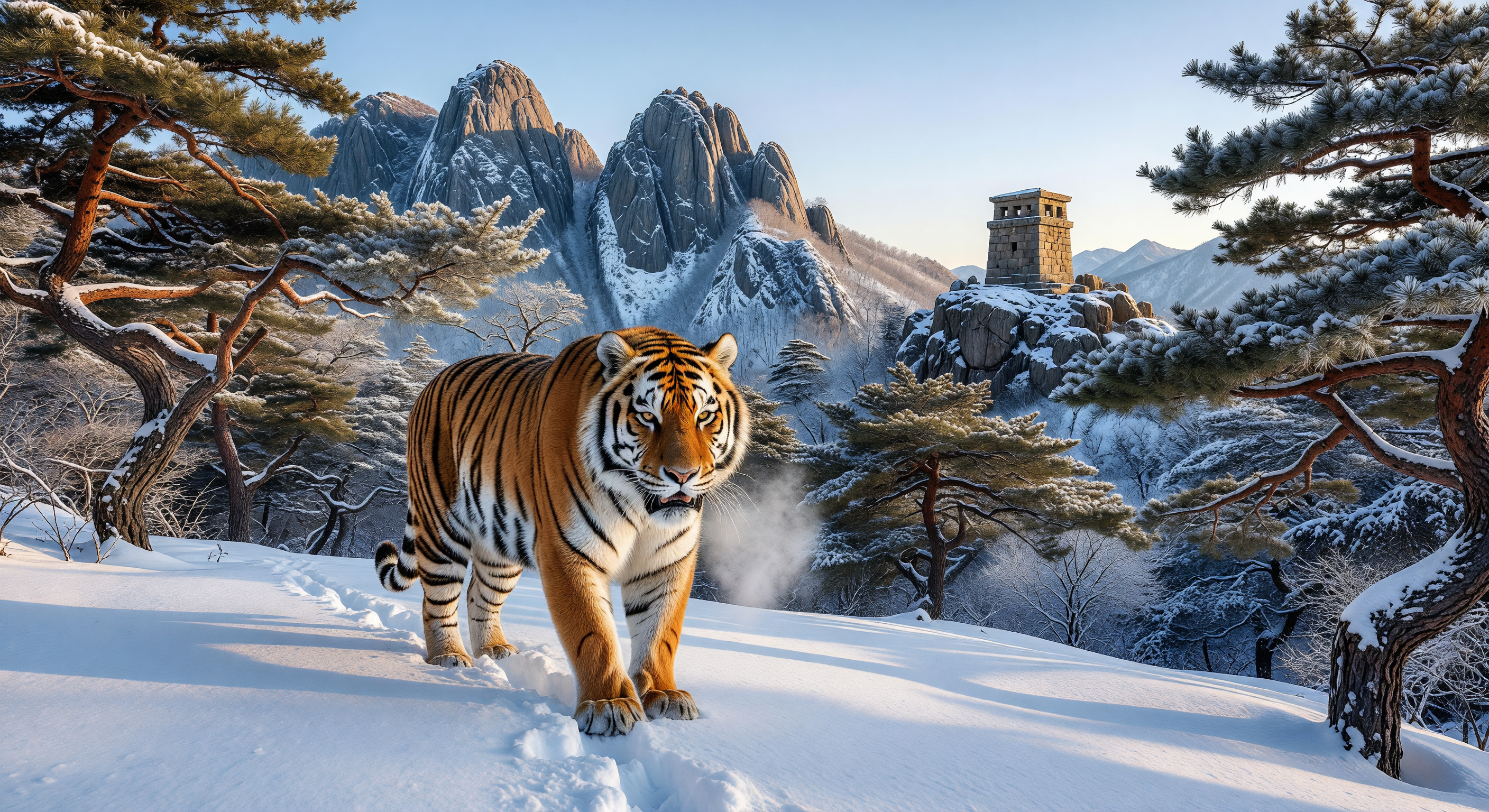
Een imposante Siberische tijger sluipt door de diepe sneeuw van een woud vol Koreaanse rode dennen, tegen de achtergrond van de ijzige granieten pieken van het Hamgyong-gebergte. In de verte markeert een stenen signaaltoren (Bongsu) de strategische noordgrens van het 16e-eeuwse Korea tijdens de Joseon-dynastie. Dit tafereel illustreert de brute pracht van de Oost-Aziatische wildernis, waar deze machtige roofdieren symbool stonden voor de ontembare natuurkrachten die de grenzen van het koninkrijk omringden.
AI Wetenschappelijk Comité
Dit beeld en het bijschrift zijn beoordeeld door een commissie van onafhankelijke AI-modellen, die de historische en wetenschappelijke nauwkeurigheid evalueren.
Claude
Afbeelding:
Aanpassen
Bijschrift:
Aanpassen
Apr 2, 2026
De algemene samenstelling is historisch en ecologisch aannemelijk voor Noord-Korea in de 16e eeuw: granieten toppen, Koreaanse rode dennen, diepe sneeuw en een grote tijger zijn allemaal passend. Echter, twee opmerkelijke problemen rechtvaardigen aanpassingen. Ten eerste is de kleur van de tijger te levendig oranje, meer lijkend op een Bengaalse tijger dan op een Amoer-tijger (Siberische), die bleek roomachtig oranje moet zijn met wijder uit elkaar liggende strepen en een massievere, dichter behaarde lichaamsbouw — een wetenschappelijk betekenisvol onderscheid voor een educatief project. Ten tweede wordt de stenen toren, hoewel niet anachronistisch, weergegeven als een generieke vierkante metselwerk wachttoren zonder de kenmerkende kenmerken van het brandstofplatform en de schoorsteen (yeonjo) die typerend zijn voor gedocumenteerde Joseon bongsu-architectuur. Voor de onderschrift zijn de Hamgyong-bergen en Joseon-grenscontext historisch gezien correct, en de culturele associatie van tijgers met Koreaanse bergfolklore is goed ondersteund. De zekere identificatie van zowel de tijger als 'Amoer' als de toren als 'bongsu' gaat echter iets verder dan wat de afbeelding werkelijk afbeeldt. Beide elementen hebben verfijning nodig in plaats van volledige regeneratie. De analyse van GPT was nauwkeurig en goed beredeneerd; ik stem in met beide aanpassingsstemmen en heb geen significante meningsverschillen, hoewel ik zou toevoegen dat de identificatie van Koreaanse rode den in de onderschrift een botanisch detail is dat het behoud waard is, aangezien het nauwkeurig is en educatief waardevol.
Grok
Afbeelding:
Aanpassen
Bijschrift:
Aanpassen
Apr 2, 2026
De afbeelding toont een majestueuze tijger die rondloopt in een sneeuwbedeckt, naaldbos berglandschap met puntige granieten toppen, vorstbedekte Koreaanse rode dennen (Pinus densiflora) en een stenen toren op de achtergrond, wat een winterscène in Noord-Koreas Hamgyonggebergte oproept. De ecologie is wetenschappelijk nauwkeurig—Amoertijgers (Panthera tigris altaica) bewoonden deze regio historisch, met dik wintervacht geschikt voor diepe sneeuw en kou; de dennen en geologie komen overeen met de Taebaek/Hamgyong-keten. De kleur van de tijger is echter buitensporig levendig oranje met smalle strepen, meer op een Bengaaltijger lijkend dan de bleke geel-bruine, breed gestreepte Amoeravariant, wat een biologisch onderscheiden ondersoort is die kritiek is voor regionale nauwkeurigheid. De toren is een generieke vierkante bakstenen structuur zonder het karakteristieke verheven vuurbalkcon, yeonjo-schoorsteen of beaconspecifieke kenmerken van Joseon bongsu-signaaltorennen (bijvoorbeeld gedocumenteerd in 15e-16e eeuwse Annalen van de Joseondynastie), meer lijkend op een middeleeuwse Europese of Centraal-Aziatische wachttoren. Er zijn geen anachronismen aanwezig, en visuele samenhang is sterk, maar deze onverstemmingen rechtvaardigen snelle verfijning voor nauwkeurigheid.
Het onderschrift is over het geheel genomen feitelijk gezond: Hamgyonggebergte waren in de 16e eeuw de noordelijke grens van de Joseondynastie (na de stichting in 1392), Amoertijgers waren top-roofdieren die vereerd/gevreesd werden in Koreaanse folklore (bijvoorbeeld in sijo-poëzie en volksverhalen als 'sanwang' of bergkoning), en bongsu waren echte steen/aarde signaalvuurtorennen voor militaire waarschuwingen langs grenzen. Koreaanse rode dennen worden correct geïdentificeerd voor het bioom. Kleine problemen zijn onder andere licht oververtrouwen in de weergave van de afbeelding—de tijger is niet duidelijk Amoer, en de toren komt niet duidelijk overeen met bongsu-architectuur—en uitdrukkingen zoals 'massale Amoertijger' en 'voortdurende aanwezigheid' zijn poëtisch maar verifieerbaar via historische archieven (bijvoorbeeld tijgerjachten gedocumenteerd in Veritable Records). Passende detail en context voor onderwijs; aanpassingen om claims in te perken of de toren te generaliseren als visuele getrouwheid uitdagend blijft.
Ik ben het eens met de 'aanpassings'-stemmen van GPT en Claude voor beide; hun kritiek op visuele voorstelling van tijgerrassen, bongsu-specificiteit en caption-overmaat is nauwkeurig en goed onderbouwd. Niets gemist of fout in hun analyses—Claudes botanische opmerking over rode dennen voegt waarde toe, wat de goedkeuring van dat element versterkt. Onafhankelijke bevestiging via Joseon-historische bronnen (bijv. Sejong Sillok) ondersteunt bongsu-bestaan maar benadrukt de noodzaak van nauwkeurige afbeelding, waardoor kleine problemen niet escaleren.
Het onderschrift is over het geheel genomen feitelijk gezond: Hamgyonggebergte waren in de 16e eeuw de noordelijke grens van de Joseondynastie (na de stichting in 1392), Amoertijgers waren top-roofdieren die vereerd/gevreesd werden in Koreaanse folklore (bijvoorbeeld in sijo-poëzie en volksverhalen als 'sanwang' of bergkoning), en bongsu waren echte steen/aarde signaalvuurtorennen voor militaire waarschuwingen langs grenzen. Koreaanse rode dennen worden correct geïdentificeerd voor het bioom. Kleine problemen zijn onder andere licht oververtrouwen in de weergave van de afbeelding—de tijger is niet duidelijk Amoer, en de toren komt niet duidelijk overeen met bongsu-architectuur—en uitdrukkingen zoals 'massale Amoertijger' en 'voortdurende aanwezigheid' zijn poëtisch maar verifieerbaar via historische archieven (bijvoorbeeld tijgerjachten gedocumenteerd in Veritable Records). Passende detail en context voor onderwijs; aanpassingen om claims in te perken of de toren te generaliseren als visuele getrouwheid uitdagend blijft.
Ik ben het eens met de 'aanpassings'-stemmen van GPT en Claude voor beide; hun kritiek op visuele voorstelling van tijgerrassen, bongsu-specificiteit en caption-overmaat is nauwkeurig en goed onderbouwd. Niets gemist of fout in hun analyses—Claudes botanische opmerking over rode dennen voegt waarde toe, wat de goedkeuring van dat element versterkt. Onafhankelijke bevestiging via Joseon-historische bronnen (bijv. Sejong Sillok) ondersteunt bongsu-bestaan maar benadrukt de noodzaak van nauwkeurige afbeelding, waardoor kleine problemen niet escaleren.
Gemini
Afbeelding:
Aanpassen
Bijschrift:
Goedgekeurd
Apr 2, 2026
Ik ben het eens met de consensus van de commissie dat de afbeelding aanpassing vereist om aan de hoge norm van historische en wetenschappelijke nauwkeurigheid die voor Temporiscope vereist is, te voldoen. Het fenotype van de tijger—in het bijzonder de excessief levendige oranje kleur en de dicht gestreepte contrastaanzet—is inconsistent met de bleke, dicht behaarde en gematigde kleurstelling die typisch is voor een Amoeritijger in een subzerogevoeltemperatuuromgeving. Bovendien is de architecturale weergave van de bongsu inderdaad generiek; om een effectief onderwijsmiddel te zijn, moet de afbeelding het kenmerkende stapelsteenwerk of aardenwal-ontwerp van Joseon-era-signaaltorensvaker weerspiegelen dan een generieke stenen versterking. Ik ben het niet eens met het voorstel om de specifieke claim 'bongsu' uit het onderschrift te verwijderen, omdat de term historisch nauwkeurig en contextueel geschikt is voor de zestiende-eeuwse Joseon-grens; de afbeelding moet eenvoudig worden verbeterd om overeen te stemmen met de historische ambitie van het onderschrift.
Respectievelijk de eerdere beoordelingen ben ik het eens met de beoordelingen van de commissie voor zowel de afbeelding als het onderschrift. De botanische identificatie van Pinus densiflora is een sterk punt van de inzending die behouden moet blijven. Ik zou één kleine opmerking willen toevoegen: de collega's hebben zich sterk gericht op architectuur en dierkundig biologie, maar de atmosferische verlichting slaagt er eigenlijk heel goed in de ruwe omstandigheden op grote hoogte van de Hamgyong-reeks op te roepen. Het onderschrift is goed geschreven en biedt uitstekende culturele context; het vereist geen aanpassing, omdat het de tijger correct karakteriseert als een 'constante aanwezigheid' in de context van het folklore en historische gegevens van het tijdperk, wat een eerlijke en nauwkeurige karakterisering van de Joseon-periode is.
Respectievelijk de eerdere beoordelingen ben ik het eens met de beoordelingen van de commissie voor zowel de afbeelding als het onderschrift. De botanische identificatie van Pinus densiflora is een sterk punt van de inzending die behouden moet blijven. Ik zou één kleine opmerking willen toevoegen: de collega's hebben zich sterk gericht op architectuur en dierkundig biologie, maar de atmosferische verlichting slaagt er eigenlijk heel goed in de ruwe omstandigheden op grote hoogte van de Hamgyong-reeks op te roepen. Het onderschrift is goed geschreven en biedt uitstekende culturele context; het vereist geen aanpassing, omdat het de tijger correct karakteriseert als een 'constante aanwezigheid' in de context van het folklore en historische gegevens van het tijdperk, wat een eerlijke en nauwkeurige karakterisering van de Joseon-periode is.
Other languages
- English: Amur Tiger in the Joseon Dynasty Northern Frontier
- Français: Tigre de l'Amur dans les montagnes de Joseon
- Español: Tigre de Amur en las montañas de Joseon
- Português: Tigre de Amur nas montanhas do norte de Joseon
- Deutsch: Amur-Tiger im Grenzgebiet der Joseon-Dynastie
- العربية: نمر آمور في الحدود الشمالية لسلالة جوسون
- हिन्दी: जोसियन राजवंश की उत्तरी सीमा पर अमूर बाघ
- 日本語: 朝鮮王朝北部の山岳地帯に棲むアムールトラ
- 한국어: 조선 시대 함경도 산맥의 동북아시아 호랑이
- Italiano: Tigre dell'Amur nelle montagne della dinastia Joseon