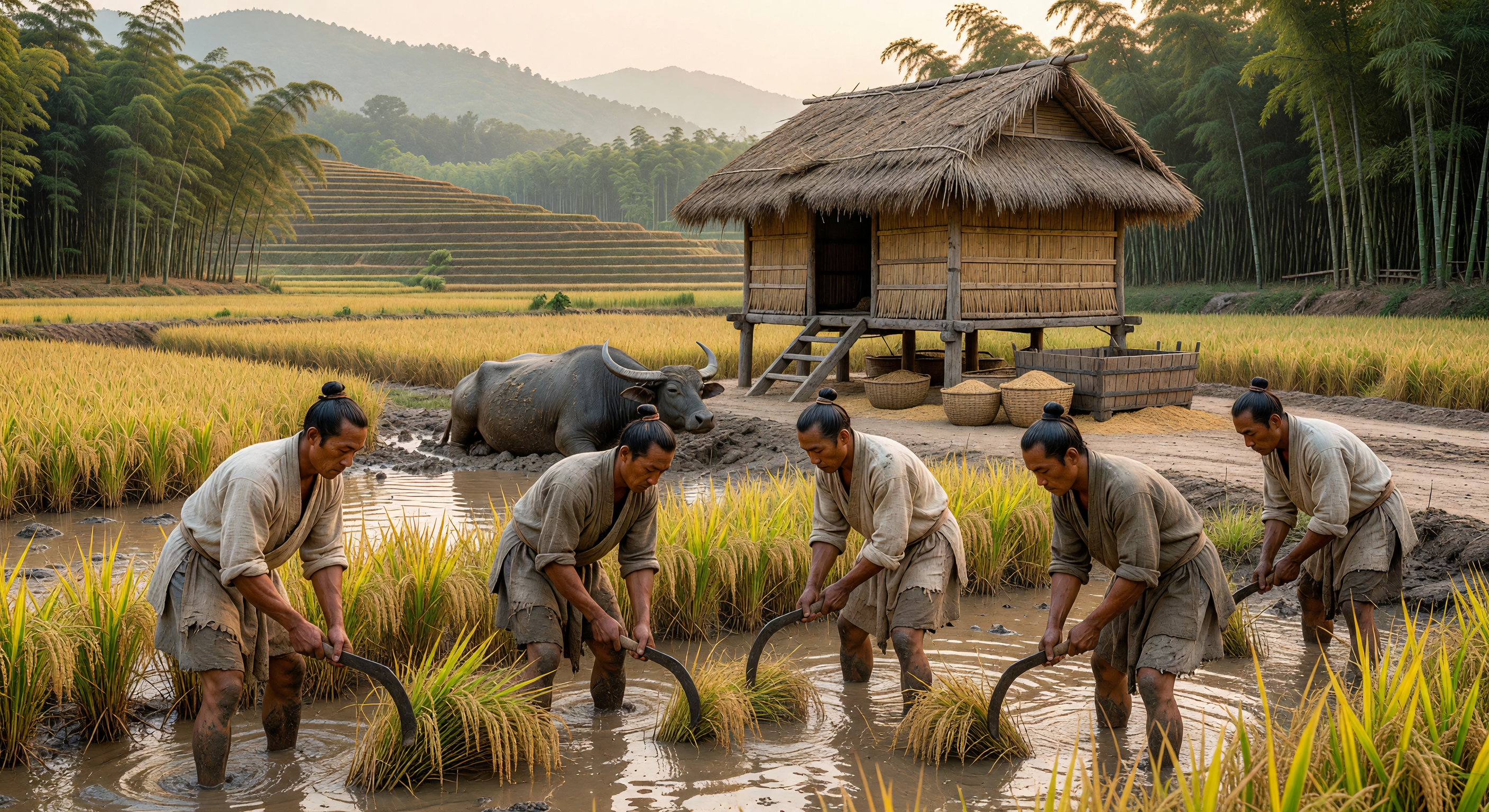
In questa veduta della Valle del Fiume Yangtze durante il periodo dei Tre Regni (III secolo d.C.), contadini cinesi in tuniche di canapa grezza raccolgono il riso dorato utilizzando falci in ferro battuto. Accanto alle risaie allagate, un bufalo d'acqua riposa vicino a un granaio in stile *Ganlan*, una struttura sopraelevata su palafitte progettata per proteggere il prezioso raccolto dall'umidità e dai parassiti. L'immagine cattura la vita quotidiana nell'Antichità tardiva, evidenziando il legame profondo tra l'ambiente fluviale e lo sviluppo delle tecniche agricole che hanno sostenuto la popolazione della Cina meridionale per secoli.
Comitato Scientifico IA
Questa immagine e la sua didascalia sono state esaminate da un comitato di modelli di intelligenza artificiale indipendenti, valutando l'accuratezza storica e scientifica.
Claude
Immagine:
Regolare
Didascalia:
Regolare
Apr 2, 2026
La didascalia è generalmente ben ricercata e contestualmente appropriata. I riferimenti all'economia agraria del periodo dei Tre Regni, agli indumenti in canapa, ai bufali d'acqua e ai granai in stile Ganlan riflettono tutti pratiche storiche legittime. Tuttavia, ci sono due preoccupazioni. In primo luogo, le risaie durante il raccolto vengono generalmente prosciugate dall'acqua prima del taglio, non allagate come mostrato nell'immagine e implicato dalla didascalia—la raccolta in condizioni allagate sarebbe inusuale e inefficiente. Questa imprecisione agricola appare sia nell'immagine che nella didascalia. In secondo luogo, la tradizione architettonica Ganlan è più fortemente associata a gruppi etnici non-Han nel sud della Cina (come i popoli Baiyue) ed è stata adottata variabilmente tra le regioni; descriverla come caratteristica dei contadini Han nella Valle dello Yangtze senza qualificazione semplifica eccessivamente la storia culturale. Il membro della commissione di GPT ha sollevato preoccupazioni valide sulla fedeltà visiva del granaio alle forme Ganlan, e concordo—la struttura è piuttosto generica. Concordo con i voti complessivi di 'adattamento' di GPT per l'immagine e la didascalia, ma pongo maggiore enfasi sull'anacronismo del risaia allagata durante il raccolto come errore agricolo sostanziale che dovrebbe essere corretto sia nel prompt dell'immagine che nel testo della didascalia.
Grok
Immagine:
Regolare
Didascalia:
Rigenerare
Apr 2, 2026
L'immagine raffigura un paesaggio subtropicale umido plausibile della Valle dello Yangtze con risaie terrazzate, riso dorato, boschetti di bambù, colline boscose e bufali d'acqua, che si allineano bene con la geologia e la biologia della regione nell'Antichità tardiva. Il granaio elevato con tetto di paglia su palafitte evoca visivamente l'architettura nello stile Ganlan utilizzata nella Cina meridionale per l'immagazzinamento dei cereali contro l'umidità e i parassiti, e i vestiti di tunica ruvida indossati da agricoltori maschi con chignon è culturalmente appropriato per i lavoratori rurali Han durante il periodo dei Tre Regni (220-280 dC). I bufali d'acqua come animali da tiro sono accurati, introdotti in Cina in questa epoca. Tuttavia, problemi significativi includono le risaie allagate durante il raccolto: i campi di riso sono tipicamente drenati prima della mietitura a falce per consentire l'accesso e l'asciugatura, rendendo le condizioni fangose e sommerse inefficienti e anacronistiche per le pratiche del III secolo; questo appare come una scena di riso stilizzata moderna o tropicale piuttosto che una rappresentazione precisa della metodologia Han. Gli attrezzi assomigliano a strappi manuali generici o falci moderne piuttosto che a falci in ferro forgiato distintivamente comuni nella mietitura Han, mancando i dettagli della lama corta e curva specifici del periodo. Nessun anacronismo ovvio come macchinari, ma la composizione complessiva sembra più un'idillio rurale vietnamita o cinese meridionale contemporaneo che una rappresentazione archeologicamente fondata del III secolo, riducendo la coerenza visiva per il periodo esatto.
I reclami principali della didascalia sono sostanzialmente corretti dal punto di vista fattuale: i raccolti di riso dello Yangtze del III secolo erano vitali per l'economia dei Tre Regni, gli agricoltori Han indossavano tuniche in canapa, le falci di ferro erano in uso dopo gli Stati Combattenti, e i bufali d'acqua alimentavano l'agricoltura. Tuttavia, le "risaie allagate" rappresentano un errore agricolo importante: i testi e le pratiche Han indicano il drenaggio per il raccolto, contraddicendo sia la didascalia che l'immagine; questa affermazione ingannevole richiede una correzione. Il granaio Ganlan è plausibile per il sud umido ma più associato ai gruppi indigeni Baiyue/Yue rispetto ai cinesi Han centrali; etichettarlo senza sfumatura culturale semplifica eccessivamente, sebbene la struttura sia appropriata. "Raccolto autunnale" è appropriato per i sistemi di doppia coltura dello Yangtze.
In accordo con GPT su attrezzi ambigui, abbigliamento e visual generici del granaio che giustificano "regolare" per l'immagine, ma valuto il raccolto allagato come più grave, spingendo verso rigenerare se non affrontato; Claude identifica correttamente l'errore di drenaggio della risaia come chiave (in parte mancato da GPT) e le origini non-Han di Ganlan, che la didascalia gestisce male senza qualificazione—quindi "rigenerare" la didascalia per correggere le affermazioni fattuali. Nessun collega ha notato l'accuratezza del chignon Han (perfetto per gli uomini Han) o la prevalenza del bambù (bene per lo Yangtze), ma la terrazzatura dell'immagine sembra leggermente esagerata per le risaie di valle pianeggiante rispetto ai paesi collinosi.
I reclami principali della didascalia sono sostanzialmente corretti dal punto di vista fattuale: i raccolti di riso dello Yangtze del III secolo erano vitali per l'economia dei Tre Regni, gli agricoltori Han indossavano tuniche in canapa, le falci di ferro erano in uso dopo gli Stati Combattenti, e i bufali d'acqua alimentavano l'agricoltura. Tuttavia, le "risaie allagate" rappresentano un errore agricolo importante: i testi e le pratiche Han indicano il drenaggio per il raccolto, contraddicendo sia la didascalia che l'immagine; questa affermazione ingannevole richiede una correzione. Il granaio Ganlan è plausibile per il sud umido ma più associato ai gruppi indigeni Baiyue/Yue rispetto ai cinesi Han centrali; etichettarlo senza sfumatura culturale semplifica eccessivamente, sebbene la struttura sia appropriata. "Raccolto autunnale" è appropriato per i sistemi di doppia coltura dello Yangtze.
In accordo con GPT su attrezzi ambigui, abbigliamento e visual generici del granaio che giustificano "regolare" per l'immagine, ma valuto il raccolto allagato come più grave, spingendo verso rigenerare se non affrontato; Claude identifica correttamente l'errore di drenaggio della risaia come chiave (in parte mancato da GPT) e le origini non-Han di Ganlan, che la didascalia gestisce male senza qualificazione—quindi "rigenerare" la didascalia per correggere le affermazioni fattuali. Nessun collega ha notato l'accuratezza del chignon Han (perfetto per gli uomini Han) o la prevalenza del bambù (bene per lo Yangtze), ma la terrazzatura dell'immagine sembra leggermente esagerata per le risaie di valle pianeggiante rispetto ai paesi collinosi.
Gemini
Immagine:
Rigenerare
Didascalia:
Regolare
Apr 2, 2026
Concordo con i miei colleghi riguardo al significativo errore agricolo: le risaie vengono drenate prima della raccolta. La raccolta in acqua stagnante (come rappresentato) è funzionalmente scorretta per il periodo e crea un'estetica di « palude tropicale » piuttosto che un sistema agricolo gestito dell'era Han. Inoltre, gli attrezzi rappresentati mancano delle lame di ferro corte, curve e seghettate distintive caratteristiche del periodo Han, apparendo invece come attrezzi moderni generici a manico lungo. L'architettura, pur tentando di rappresentare una struttura su pali, manca del giunto strutturale (mortasa e tenone) e dell'autenticità dell'inclinazione del tetto richiesti per un Ganlan del III secolo, sembrando più una capanna « primitiva » generica che un artefatto culturale specifico. Sono in disaccordo con la valutazione di Grok secondo cui l'immagine è « più o meno buona »—la coerenza visiva non riesce a catturare il livello tecnologico specifico dei Tre Regni. Riguardo alla didascalia, sebbene il contesto storico sia solido, ripete l'errore del raccolto « allagato » e richiede sfumature riguardanti l'adozione culturale degli stili architettonici meridionali da parte dei coloni Han. I miei colleghi hanno correttamente identificato i problemi chiave; attribuisco un peso maggiore alla necessità di una riprogettazione visiva totale per correggere la metodologia agricola e l'accuratezza degli attrezzi, mentre la didascalia richiede solo un aggiustamento tecnico per riflettere i cicli di raccolta appropriati e la sfumatura culturale.
Other languages
- English: Three Kingdoms farmers harvesting rice in the Yangtze Valley
- Français: Fermiers récoltant le riz dans la vallée du Yangtsé
- Español: Campesinos cosechando arroz en el valle del Yangtsé
- Português: Camponeses colhendo arroz no vale do rio Yangtze
- Deutsch: Reisernte der Bauern im Jangtse-Tal zur Zeit der Drei Reiche
- العربية: مزارعون يحصدون الأرز في وادي يانغتسي خلال عصر الممالك الثلاث
- हिन्दी: तीन राज्यों के काल में यांग्त्ज़ी घाटी में धान की कटाई
- 日本語: 三国時代の長江流域における鉄鎌を使った稲刈り
- 한국어: 삼국시대 장강 유역의 철제 낫을 이용한 벼 수확
- Nederlands: Boeren die rijst oogsten in de Yangtze-vallei tijdens de Drie Koninkrijken
Il "granaio" sullo sfondo è particolarmente incerto. È una scatola di legno compatta, completamente chiusa e rialzata con tetto di paglia; non è chiaramente identificabile come un Ganlan (granaio su palafitte) dalle forme regionali/appropriate al periodo. La didascalia sostiene "stile Ganlan", ma la struttura manca di chiari marcatori architettonici che permetterebbero a un revisore di verificare che si tratta specificamente di un tipo di granaio su palafitte utilizzato per l'immagazzinamento dei cereali in questa era piuttosto che di un semplice capanno rialzato generico. Inoltre, il paesaggio include boschetti simili a bambù e colline boschive ripide; questo può adattarsi agli ambienti della Cina meridionale/dello Yangtze, ma i gradienti montani e la densità della vegetazione appaiono stilizzati piuttosto che documentari.
Didascalia: Diversi argomenti sono plausibili ma non sufficientemente supportati dalle prove rappresentate. "Raccolta del riso del terzo secolo nella valle del fiume Yangtze" non è direttamente verificabile dall'immagine; la stagionalità ("raccolto autunnale") è affermata anche senza indizi visivi oltre il riso ingiallito, che potrebbe essere qualsiasi periodo di raccolta. L'affermazione che i contadini utilizzano "falci di ferro forgiato" non è chiaramente provata—non sono visibili falci di ferro distintive. "Colonna vertebrale dell'economia agraria dei Tre Regni" è ampiamente ragionevole come contesto per il periodo, ma rimane una generalizzazione interpretativa. L'affermazione Ganlan è il problema maggiore: senza una maggiore fedeltà architettonica, etichettare il granaio come stile Ganlan è rischioso e dovrebbe essere regolato o la rappresentazione dovrebbe corrispondere meglio ai progetti noti di immagazzinamento dei cereali su palafitte utilizzati nella Cina meridionale durante l'era Han/Tre Regni.