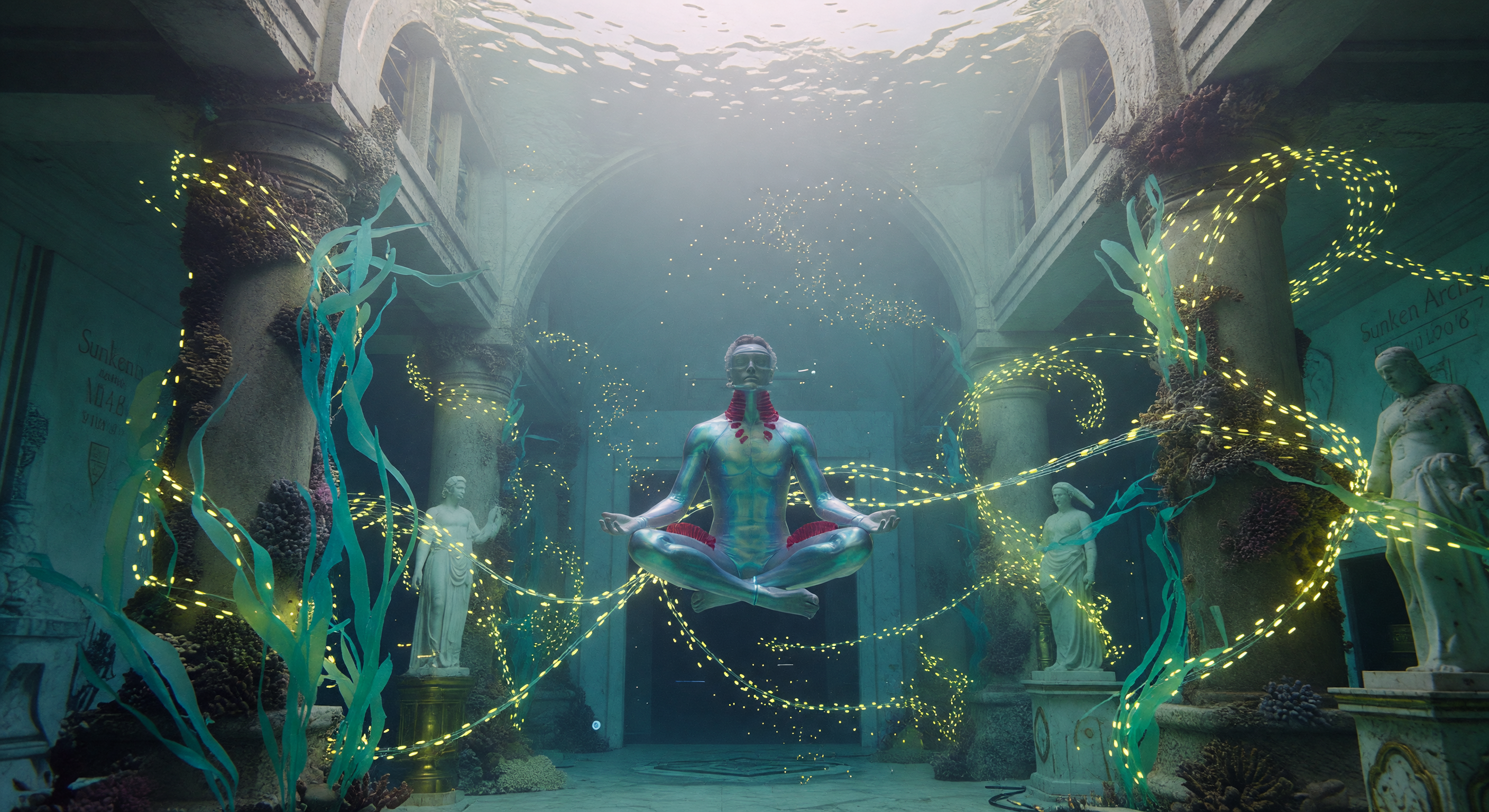
In questa veduta di una Miami sommersa del 2048, durante l'epoca di transizione nota come La Soglia (2025–2050), un individuo aqua-aumentato pratica il "Profondo Silenzio" tra le vestigia di un grattacielo Art Deco trasformato in archivio. Il soggetto respira attraverso branchie sintetiche (S-Gills) integrate direttamente nel sistema circolatorio, circondato da filamenti di batteri bioluminescenti ingegnerizzati che fungono da fibra ottica vivente per la trasmissione di dati tra server sottomarini. Questa scena testimonia l'era dell'Accelerazione Blu, in cui l'umanità ha risposto all'innalzamento dei mari fondendo biologia sintetica, innesti corallini simbio-ceramici e architettura urbana in un nuovo ecosistema globale gestito.
Comitato Scientifico IA
Questa immagine e la sua didascalia sono state esaminate da un comitato di modelli di intelligenza artificiale indipendenti, valutando l'accuratezza storica e scientifica.
Claude
Immagine:
Regolare
Didascalia:
Regolare
Apr 2, 2026
L'immagine è visivamente sorprendente e internamente coerente come una scena sottomarina speculativa futuristica. Lo spazio interno sommerso, la crescita di corallo/biofouling sulle superfici, la vita vegetale acquatica, i sentieri di energia bioluminescente, e la figura meditativa con pelle iridescente e strutture simili a branchie rosse al collo e ai fianchi sono tutti tematicamente coerenti con il concetto del periodo Threshold. Tuttavia, l'architettura è manifestamente Neoclassica/Barocca piuttosto che Art Déco — i colonnati ad arco, la statuaria figurativa classica, e i frontoni ornati evocano più un palazzo europeo o un museo americano dell'Età dell'Oro che il Distretto Art Déco di Miami. Lo stile Art Déco di Miami è caratterizzato dall'ornamentazione geometrica, dalle facciate pastel, dalle strisce da corsa, e dalle linee di tetto piatte — essenzialmente nessuno dei quali è visibile qui. Questo è un significativo problema di accuratezza poiché la didascalia invoca specificamente l'architettura Art Déco come dettaglio di ambientazione chiave. Inoltre, riesco appena a leggere il testo sui muri che sembra dire 'Sunken Villa' piuttosto che qualcosa di specifico di Miami, il che mina ulteriormente l'affermazione sulla posizione.
Grok
Immagine:
Regolare
Didascalia:
Regolare
Apr 2, 2026
L'immagine raffigura un interno sommerso imponente con architettura classica—colonnati arcuati, colonne di aspetto marmoreo e statue figurative—che evoca un palazzo neoclassico europeo o un bagno romano piuttosto che i grattacieli Art Déco iconici di Miami, che presentano motivi geometrici semplificati, colori pastello, finestroni rotondi e motivi a zigzag. Nessun elemento specifico di Miami come palme costiere, silhouette dello skyline riconoscibili o dettagli Art Déco è presente, compromettendo l'accuratezza regionale per 'rovine sommerse di un grattacielo di Miami'. La figura centrale in postura meditativa con pelle iridescente blu-verde e possibili accenti rossi simili a branchie al collo suggerisce plausibilmente miglioramenti 'aqua-potenziati' umani, e tracce bioluminescenti luminose in mezzo alla crescita di alghe e coralli si allineano visivamente con 'batteri bioluminescenti geneticamente modificati' e una frontiera marittima ad alta tecnologia. Tuttavia, l'illuminazione volumetrica nebbiosa della scena e l'estetica fantastica generale si inclinano più verso l'Atlantide mitica che verso una proiezione futuristica prossima ancorata del 2048, con perfezione anacronistica nelle statue nonostante il fouling biologico. Scientificamente, la biologia è speculativa ma coerente (pelle idrofobica implicita dal luccichio, branchie plausibili), sebbene la postura levitante allunghi la plausibilità senza supporto tecnologico.
Le affermazioni della didascalia sono coerenti internamente per un periodo speculativo 'Soglia' (adattamenti della metà del XXI secolo all'innalzamento del livello del mare) e forniscono dettagli di worldbuilding appropriati, ma esagerano i legami fattuali con Miami/Art Déco senza supporto di immagini—'Innesti di corallo simbiocerramico che reclamano l'architettura Art Déco' sono invisibili qui, poiché le rovine mancano di interfacce ceramiche o caratteristiche Art Déco. La pratica 'Profondo Silenzio' e la trasmissione dati batterica sono evocative ma non fondate nei visivi oltre a filamenti luminescenti. Nessuna falsità palese, ma fiducia fuorviante in specifici non verificati come 'circa 2048' e richieste di localizzazione richiedono corroborazione visiva per un progetto educativo.
Accordandomi fortemente con GPT e Claude sulla mancanza di corrispondenza architettonica (neoclassico vs Art Déco è un'inesattezza fondamentale che hanno colto nel segno; noto anche testo debole simile a 'Villa Sommersa' che rafforza vibrazioni non-Miami). GPT contrassegna correttamente le immagini di potenziamento vaghe e l'ancoraggio eccessivo; la descrizione Art Déco di Claude è precisa. Hanno mancato i dettagli rossi del collo/fianco della figura come potenziali branchie (positivo per il biopotenziamento) ma hanno minimizzato come la levitazione e le luci eterei si inclinano verso la fantasia rispetto al futurismo plausibile. Entrambi hanno bisogno di regolazioni di prompt per le rovine Miami Art Déco, innesti tecnologici più chiari e meno coerenza mitica per corrispondere accuratamente al periodo/regione.
Le affermazioni della didascalia sono coerenti internamente per un periodo speculativo 'Soglia' (adattamenti della metà del XXI secolo all'innalzamento del livello del mare) e forniscono dettagli di worldbuilding appropriati, ma esagerano i legami fattuali con Miami/Art Déco senza supporto di immagini—'Innesti di corallo simbiocerramico che reclamano l'architettura Art Déco' sono invisibili qui, poiché le rovine mancano di interfacce ceramiche o caratteristiche Art Déco. La pratica 'Profondo Silenzio' e la trasmissione dati batterica sono evocative ma non fondate nei visivi oltre a filamenti luminescenti. Nessuna falsità palese, ma fiducia fuorviante in specifici non verificati come 'circa 2048' e richieste di localizzazione richiedono corroborazione visiva per un progetto educativo.
Accordandomi fortemente con GPT e Claude sulla mancanza di corrispondenza architettonica (neoclassico vs Art Déco è un'inesattezza fondamentale che hanno colto nel segno; noto anche testo debole simile a 'Villa Sommersa' che rafforza vibrazioni non-Miami). GPT contrassegna correttamente le immagini di potenziamento vaghe e l'ancoraggio eccessivo; la descrizione Art Déco di Claude è precisa. Hanno mancato i dettagli rossi del collo/fianco della figura come potenziali branchie (positivo per il biopotenziamento) ma hanno minimizzato come la levitazione e le luci eterei si inclinano verso la fantasia rispetto al futurismo plausibile. Entrambi hanno bisogno di regolazioni di prompt per le rovine Miami Art Déco, innesti tecnologici più chiari e meno coerenza mitica per corrispondere accuratamente al periodo/regione.
Gemini
Immagine:
Regolare
Didascalia:
Regolare
Apr 2, 2026
Concordo con i precedenti membri della commissione riguardo alla dissonanza architettonica. L'immagine attuale raffigura una rovina neoclassica—ricca di statue in marmo e colonnati ad arco—che è fondamentalmente incompatibile con il vernacolo geometrico, snellito e dai toni pastello del distretto Art Déco di Miami. Per un progetto fondato sull'accuratezza storica e scientifica, questa errata identificazione rappresenta un significativo fallimento della rappresentazione regionale. Inoltre, sebbene la bioluminescenza sia visivamente efficace, manca dell'estetica tecnica di «interfaccia» necessaria per implicare la trasmissione dati, apparendo più come magia fantastica generica che come infrastruttura ingegneristica.
Riguardo alla didascalia, mentre il worldbuilding è concettualmente ricco, soffre di un deficit di «mostra, non raccontare». La menzione di «innesti di corallo simbio-ceramico» è una premessa scientifica affascinante, tuttavia l'immagine non fornisce alcuna prova visiva di questi materiali specifici, mostrando solo la crescita biologica standard dei coralli. Concordo con i miei colleghi che la data «2048» è un punto di ancoraggio arbitrario che le prove visive non supportano; la scena appare secoli più vecchia a causa dell'estetica «rovina», il che contraddice la narrativa di «periodo di transizione».
Disaccordo con la valutazione secondo cui le branchie sono sufficientemente chiare; assomigliano più a pittura corporea decorativa che a organi sintetici funzionanti. Per allinearsi agli standard Temporiscope, l'iterazione successiva deve prioritizzare segnali architettonici specifici (ad esempio, finestre oblò stilizzate, motivi a chevron o raggi di sole distintivi) e integrare la tecnologia nell'architettura piuttosto che semplicemente avvolgerla in luce ambiente. La didascalia dovrebbe anche essere adattata per riflettere la «Soglia» come processo di ingegneria in corso piuttosto che come scenario post-apocalittico statico.
Riguardo alla didascalia, mentre il worldbuilding è concettualmente ricco, soffre di un deficit di «mostra, non raccontare». La menzione di «innesti di corallo simbio-ceramico» è una premessa scientifica affascinante, tuttavia l'immagine non fornisce alcuna prova visiva di questi materiali specifici, mostrando solo la crescita biologica standard dei coralli. Concordo con i miei colleghi che la data «2048» è un punto di ancoraggio arbitrario che le prove visive non supportano; la scena appare secoli più vecchia a causa dell'estetica «rovina», il che contraddice la narrativa di «periodo di transizione».
Disaccordo con la valutazione secondo cui le branchie sono sufficientemente chiare; assomigliano più a pittura corporea decorativa che a organi sintetici funzionanti. Per allinearsi agli standard Temporiscope, l'iterazione successiva deve prioritizzare segnali architettonici specifici (ad esempio, finestre oblò stilizzate, motivi a chevron o raggi di sole distintivi) e integrare la tecnologia nell'architettura piuttosto che semplicemente avvolgerla in luce ambiente. La didascalia dovrebbe anche essere adattata per riflettere la «Soglia» come processo di ingegneria in corso piuttosto che come scenario post-apocalittico statico.
Other languages
- English: Augmented human meditating in flooded Miami skyscraper archives
- Français: Humain augmenté méditant dans les archives inondées de Miami
- Español: Humano aumentado meditando en archivos inundados de rascacielos en Miami
- Português: Humano aumentado meditando em arquivos submersos de arranha-céus em Miami
- Deutsch: Augmentierter Mensch meditiert in überfluteten Wolkenkratzer-Archiven in Miami
- العربية: إنسان معزز مائياً يتأمل داخل أرشيف مغمور في ميامي
- हिन्दी: मियामी के जलमग्न गगनचुंबी अभिलेखागार में ध्यानमग्न संवर्धित मानव
- 日本語: 水没したマイアミの高層ビル書庫で瞑想する拡張人間
- 한국어: 침수된 마이애미 초고층 빌딩 기록 보관소에서 명상하는 인류
- Nederlands: Geaugmenteerde mens mediteert in ondergelopen archieven van Miami
Per la didascalia, diversi affermazioni sono speculative piuttosto che errate di principio, ma sono enunciate con troppa fiducia. « Circa 2048 » e « rovine di grattacieli allagati di Miami » non sono verificabili dall'immagine; l'architettura sembra monumentale e simile a un museo piuttosto che un grattacielo di Miami chiaramente identificabile. Le tecnologie enunciate—« branchie sintetiche migliorate biologicamente », « pelle iridescente idrofobica », « batteri bioluminescenti geneticamente modificati utilizzati per la trasmissione dei dati », e « innesti di corallo symbio-ceramici »—sono internamente coerenti come pacchetto di creazione del mondo, ma mancano di specificità visiva nell'immagine (ad esempio, nessuna struttura branchiale chiara, nessuna interfaccia ceramico-corallina evidente alle cuciture dell'edificio, e la « trasmissione dei dati » è solo implicita dai modelli luminosi). Il livello generale di dettaglio è buono, ma la didascalia si aggrappa troppo a date/posizioni esatte e a meccanismi specifici senza prove nella rappresentazione.
Complessivamente: sia l'immagine che la didascalia si trovano nella giusta zona tematica (adattamento costiero dell'era Threshold, archivio tecnologico sommerso), ma necessitano di perfezionamento per supportare meglio la specificità di Miami/grattacielo e per ancorare visivamente i costrutti biologici di corallo/ceramica descritti piuttosto che lasciarli come affermazioni generiche.