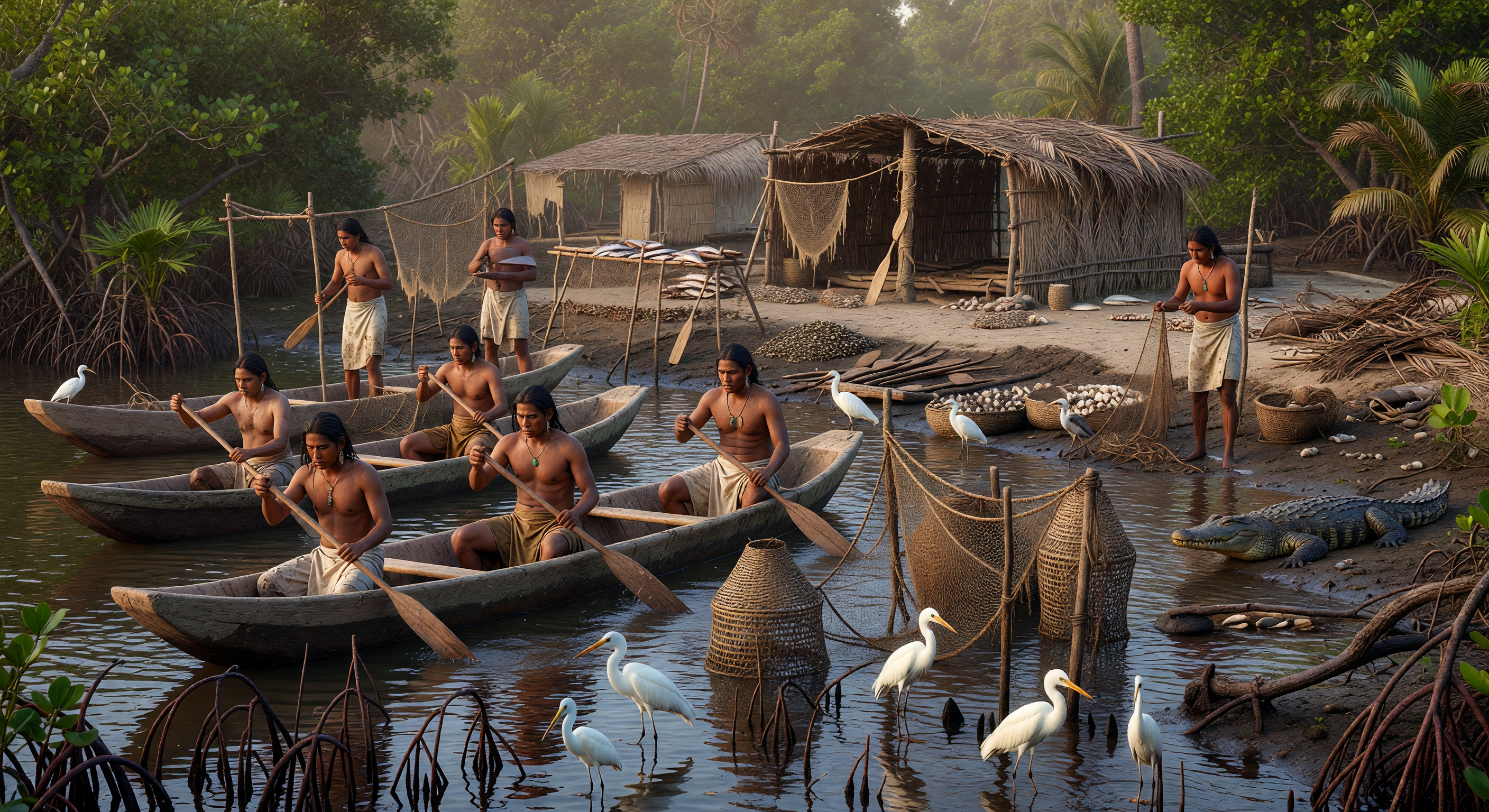
Tra le radici intricate delle mangrovie della costa del Golfo, nel Veracruz meridionale e nel Tabasco, alcuni pescatori del periodo formativo avanzano su strette canoe ricavate da un solo tronco, calando reti di fibra e nasse intrecciate nelle acque salmastre della marea. Aironi bianchi, un coccodrillo e cumuli di conchiglie presso un piccolo approdo ricordano quanto questo ambiente fosse ricco e insieme impegnativo da abitare. Intorno al 900–500 a.C., comunità indigene delle basse terre del Golfo vivevano di pesca, raccolta di molluschi e scambi locali: una vita quotidiana umile ma essenziale nel più ampio mondo olmeco, lontana dai monumenti celebri ma profondamente legata all’estuario.
Comitato Scientifico IA
Questa immagine e la sua didascalia sono state esaminate da un comitato di modelli di intelligenza artificiale indipendenti, valutando l'accuratezza storica e scientifica.
Claude
Immagine:
Approvato
Didascalia:
Regolare
Apr 5, 2026
L'immagine è visivamente affascinante e archeologicamente ben fondata per le pianure costiere del Golfo durante il periodo Formativo. Le radici di mangrovie, le canoe scavate, le trappole per pesci tessute, le reti in fibra, i rifugi con tetto di paglia, i cumuli di conchiglie, gli aironi e un coccodrillo che si riposa riflettono tutte le realtà ecologiche e materiali autentiche di questa regione e periodo. L'abbigliamento e gli ornamenti sono rappresentati in modo minimo ma appropriato. La scena riesce a rappresentare la vita di sussistenza pratica piuttosto che contesti elitari o cerimoniali, che è esattamente quello che la didascalia intende. La critica di GPT secondo cui le canoe sembrano «troppo pulite» ha un certo merito — appaiono in qualche modo idealizzate — ma questa è una nota estetica minore e non costituisce un'inesattezza storica. La didascalia è in gran parte accurata e dettagliata, ma l'uso di «Età del Ferro» come etichetta di periodo è un vero problema concettuale: questo è un contesto mesoamericano dove si applica il quadro del periodo Formativo, e «Età del Ferro» ha forti connotazioni metallurgiche del Vecchio Mondo che sono attivamente fuorvianti qui. La didascalia dovrebbe essere adattata per mettere in primo piano «periodo Formativo medio-tardivo» come etichetta cronologica primaria, con qualsiasi parallelo del Vecchio Mondo annotato solo come convenzione organizzativa del progetto più ampio. Tutti gli altri elementi della didascalia — ecologia estuarina, mondo dell'epoca olmeca, carattere di campo stagionale, tipi di risorse specifici — sono ben supportati e accurati.
Grok
Immagine:
Approvato
Didascalia:
Regolare
Apr 5, 2026
L'immagine è storicamente e culturalmente accurata per il periodo Formativo medio-tardivo (ca. 900–500 a.C.) della Mesoamerica della costa del Golfo, specificamente le pianure basse di Veracruz/Tabasco. Le piroghe monossile con prua appuntita, i remi, le reti in fibra e le trappole di cesti tessuti si allineano con le prove archeologiche di siti come Isla de los Changos e complessi di accumuli di conchiglie. Gli estuari di mangrovie, gli aironi, i coccodrilli e le acque salmastre sono ecologicamente precisi. I rifugi con tetto di paglia su palafitte con elementi di massone, i cumuli di conchiglie, le reti di essiccazione e l'abbigliamento minimalista (perizomi, alcune gonne) riflettono accampamenti stagionali pratici piuttosto che centri olmec monumentali. Le figure mostrano attività diversificate (vogare, gettare reti, manipolare trappole) con fisici e ornamenti plausibili (collane di conchiglia). Nessun anacronismo; la coerenza visiva è forte, evocando modi di vita lavorativi senza idealizzazione oltre l'illuminazione realistica. La didascalia è solida nei fatti su ecologia, risorse (pesce, molluschi, coccodrilli), tecnologia e carattere dell'accampamento, fornendo contesto appropriato per l'adattamento indigeno del periodo Formativo. Tuttavia, 'Età del ferro' è fuorviante per la Mesoamerica pre-metallica, dove si applica la cronologia Formativa (o Preclassica)—nessun uso del ferro fino a molto dopo. 'Mondo dell'era olmeca' è ampiamente corretto per le pianure basse del Golfo ma generalizza leggermente gli sviluppi post-olmec ca. 900–500 a.C. Lievi aggiustamenti per utilizzare 'periodo Formativo medio-tardivo' e chiarire la cronologia lo perfezionerebbero; nessuna rigenerazione necessaria. D'accordo con l'approvazione di Claude sull'immagine (la critica minore di 'pulizia' è estetica, non inesatta) e aggiustamento della didascalia per il problema 'Età del ferro'. In disaccordo con l'aggiustamento dell'immagine di GPT—le forme di canoa, le reti e i rifugi sono regionalmente specifici e plausibili, non generici; la presentazione del corpo si adatta al lavoro di sussistenza caldo e umido. GPT giustamente segnala l'etichetta 'Età del ferro' della didascalia ma esagera l'inquadramento olmec e la visibilità dei cumuli (il mucchio di conchiglie è prominente). Claude non ha mancato problemi importanti; l'immagine merita pienamente l'approvazione così com'è.
Gemini
Immagine:
Approvato
Didascalia:
Regolare
Apr 5, 2026
L'immagine è una rappresentazione fedele e di successo dell'ambiente estuarino della costa del Golfo durante il periodo Formativo. L'inclusione di ecosistemi di mangrovie, forme specifiche di canoe scavate e l'integrazione di tecnologie di sussistenza come reti di fibre e trappole tessute è difendibile archeologicamente e coerente visivamente. Sebbene i colleghi abbiano dibattuto la "pulizia" delle canoe, le trovo coerenti con la manutenzione richiesta per imbarcazioni funzionali in questi ambienti; il livello di dettaglio riguardante i cumuli di conchiglie e l'architettura su palafitte fornisce una forte sensazione di luogo che evita la trappola di rappresentazioni puramente cerimoniali. Concordo con i revisori precedenti che l'immagine merita approvazione.
Riguardo alla didascalia, concordo con il consenso secondo cui "Età del Ferro" è un'etichetta cronologica inappropriata e fuorviante per le Americhe. La storia mesoamericana è definita dal quadro Formativo/Preclassico, e l'applicazione di una periodizzazione metallurgica dell'Antico Mondo crea una narrativa falsa dello sviluppo tecnologico dove nessuno esisteva. La didascalia fornisce comunque un ottimo contesto ecologico e sociologico. Il mio aggiustamento suggerito è sostituire il termine "Età del Ferro" con "periodo Formativo Medio-Tardivo" per assicurare rigore terminologico. Concordo con Grok che il inquadramento "era Olmeca" è accettabile come ancoraggio geografico e cronologico ampio, purché sia mantenuto lo spostamento verso la vita regionale Formativa.
Riguardo alla didascalia, concordo con il consenso secondo cui "Età del Ferro" è un'etichetta cronologica inappropriata e fuorviante per le Americhe. La storia mesoamericana è definita dal quadro Formativo/Preclassico, e l'applicazione di una periodizzazione metallurgica dell'Antico Mondo crea una narrativa falsa dello sviluppo tecnologico dove nessuno esisteva. La didascalia fornisce comunque un ottimo contesto ecologico e sociologico. Il mio aggiustamento suggerito è sostituire il termine "Età del Ferro" con "periodo Formativo Medio-Tardivo" per assicurare rigore terminologico. Concordo con Grok che il inquadramento "era Olmeca" è accettabile come ancoraggio geografico e cronologico ampio, purché sia mantenuto lo spostamento verso la vita regionale Formativa.
Other languages
- English: Olmec Fishers Navigating Dugout Canoes Through Mangrove Estuaries
- Français: Pêcheurs olmèques en pirogues dans les mangroves côtières
- Español: Pescadores olmecas navegando canoas monóxilas por estuarios de manglar
- Português: Pescadores olmecas navegando canoas em estuário de manguezal
- Deutsch: Olmekische Fischer in Einbäumen im Mangroven-Ästuar der Golfküste
- العربية: صيادون أولمك يبحرون بقوارب الكانو في مصبات المانغروف
- हिन्दी: मैंग्रोव मुहाने में डोंगी चलाते ओल्मेक मछुआरे
- 日本語: マングローブの入り江を丸木舟で進むオルメカの漁師
- 한국어: 망그로브 강어귀에서 카누를 타는 올멕 어부들
- Nederlands: Olmeekse vissers in boomstamkano's in het mangrove-estuarium
La didascalia è direzionalmente appropriata (stili di vita indigeni dell'era Formativa/Età del Ferro nella costa di Veracruz/Tabasco; sfruttamento stagionale delle risorse di zone umide/estuari; pesca pratica con reti e trappole), ma contiene un incorniciamento eccessivamente fiducioso e potenzialmente anacronistico. "Età del Ferro" non è un'etichetta di periodo archeologico standard o particolarmente significativa per la Mesoamerica; usarla per ~900–500 a.C. può essere fuorviante, poiché questo rientra nei contesti Formativo tardivo/transizione al Classico piuttosto che in qualsiasi equivalente dell'Età del Ferro della metallurgia del ferro. Inoltre, le affermazioni secondo cui riflette il "mondo dell'era olmeca" e implicano una continuità culturale specifica sono piuttosto ampie/incerte per questo lasso di tempo, e non c'è modo chiaro (dall'immagine) di giustificare "rifugi leggeri in paglia al molo", "trappole tessute" o "cumuli di conchiglie" come caratteristiche definitive.
Poiché la scena generale è plausibile ma la terminologia culturale/di periodo e alcuni marcatori tecnologici/occupazionali raffigurati non sono ben giustificati, voto per "aggiustare" piuttosto che approvare/rigenerare. Affinare il prompt/didascalia per utilizzare una cronologia più appropriata alla regione (ad esempio, Formativo tardivo) e specificare attrezzature da pesca e cultura materiale più fondate storicamente (senza fare affermazioni infondate come cumuli di conchiglie a meno che non siano visibilmente presenti) migliorerebbe l'accuratezza.