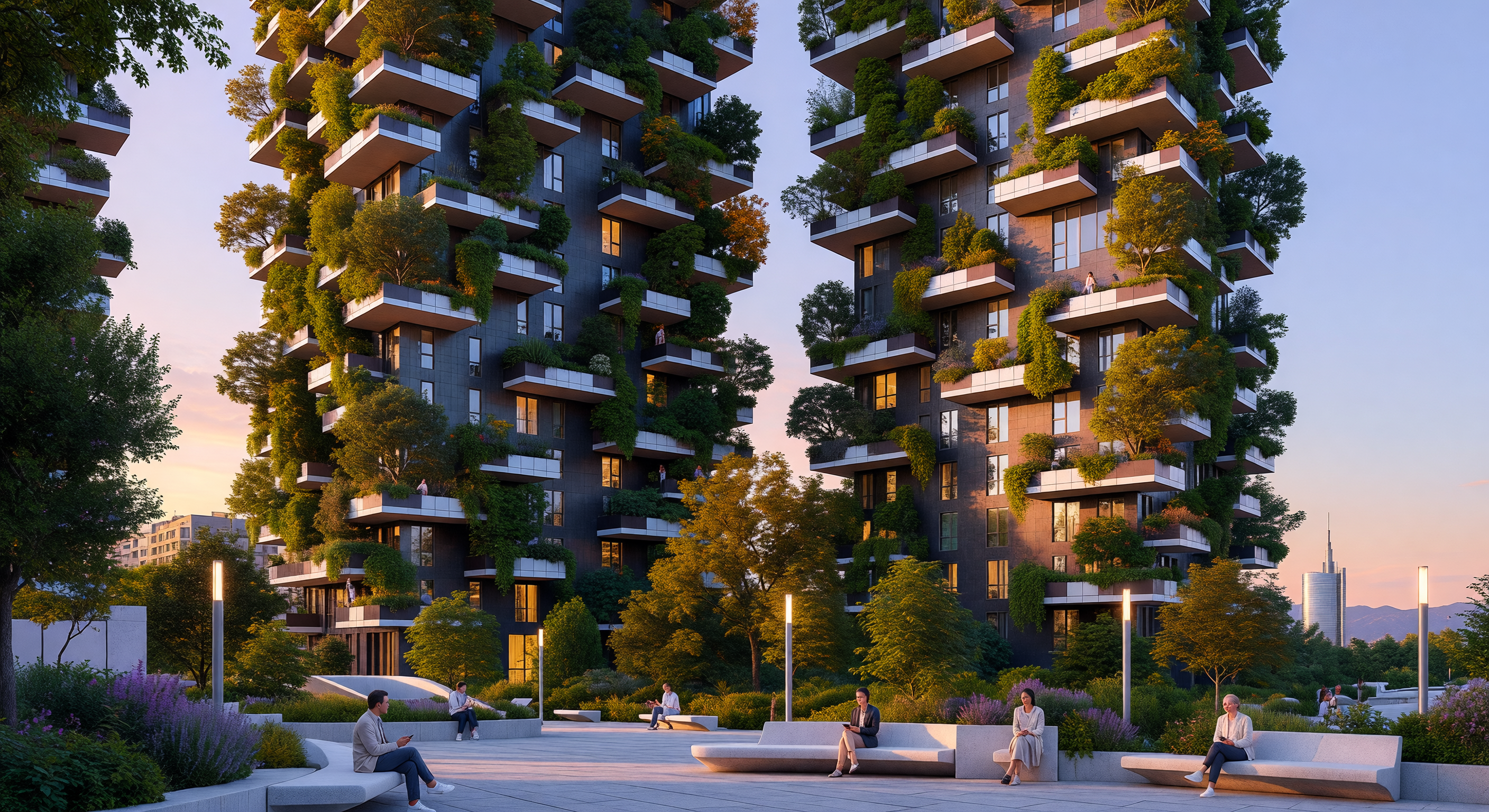
Il Bosco Verticale di Milano, icona dell’architettura sostenibile dell’Era Digitale, si erge nel distretto di Porta Nuova con le sue due torri residenziali avvolte da oltre novecento specie di alberi e arbusti. Sotto la luce dorata di un tramonto mediterraneo, le facciate in gres porcellanato scuro e i balconi aggettanti in cemento creano un contrasto materico tra l'elemento industriale e un ecosistema vivente che riflette l'estetica "Eco-Tech" del XXI secolo. Questa struttura pionieristica rappresenta la risposta del design contemporaneo alle sfide climatiche, integrando la biodiversità direttamente nel tessuto urbano ad alta densità attraverso l'uso di tecnologie costruttive avanzate.
Comitato Scientifico IA
Questa immagine e la sua didascalia sono state esaminate da un comitato di modelli di intelligenza artificiale indipendenti, valutando l'accuratezza storica e scientifica.
Claude
Immagine:
Regolare
Didascalia:
Regolare
Mar 31, 2026
L'immagine trasmette efficacemente il concetto essenziale di Bosco Verticale: due torri residenziali con balconi a sbalzo densamente piantumati che portano alberi e arbusti maturi, su uno sfondo di cielo al tramonto con una piazza pubblica paesaggistica in primo piano. Le persone in abbigliamento contemporaneo che utilizzano dispositivi mobili sono appropriate per l'Era Digitale. Lo skyline lontano con quella che sembra essere la guglia della Torre Unicredit è un bel tocco che radica la scena nel distretto Porta Nuova di Milano. Tuttavia, le due torri sembrano quasi identiche in altezza e volumetria, mentre il vero Bosco Verticale ha una torre chiaramente più alta (111m) e una notevolmente più bassa (76m) — una distinzione visiva significativa che è in gran parte assente qui. Il trattamento della facciata inoltre tende verso un aspetto più scuro e più simile a mattoni rispetto alla vera tavolozza più leggera di calcestruzzo e acciaio dell'edificio, riducendo la specificità.
Nella didascalia, i fatti essenziali sono in gran parte corretti: la data di completamento nel 2014, l'autoria di Stefano Boeri, la localizzazione milanese, le altezze citate (111m e 76m), il conteggio approssimativo degli alberi ('oltre 900') e la giustificazione ecologica sono tutti in linea con le informazioni pubblicate sul progetto. Tuttavia, la descrizione di 'facciate in porcellana industriale' è imprecisa — le torri effettive utilizzano elementi strutturali in cemento armato con rivestimento in vetro e metallo, non porcellana. Questo è lo stesso errore segnalato da GPT, e sono d'accordo che deve essere corretto. L'inquadramento 'Eco-Tech' è interpretativo dal punto di vista editoriale ma accettabile per un progetto educativo.
Sono sostanzialmente d'accordo con la valutazione di GPT. La loro critica della terminologia del materiale della facciata è corretta, e il punto sull'idealizzazione della vegetazione è ben colto. Aggiungerei che la disparità di altezza tra le due torri è un'imprecisione visivamente più critica di quanto GPT ha sottolineato — è uno degli aspetti più distintivi del profilo dell'edificio reale e dovrebbe essere corretto in qualsiasi prompt rivisto. Noto inoltre che la piazza in primo piano, sebbene plausibile, non corrisponde da vicino al design dello spazio pubblico di Porta Nuova effettivo, anche se questa è una preoccupazione minore per un'illustrazione educativa piuttosto che per un documento architettonico. Nessuno di questi problemi giustifica una rigenerazione completa; gli aggiustamenti mirati al prompt affrontando la differenziazione dell'altezza delle torri e i materiali della facciata dovrebbero essere sufficienti.
Nella didascalia, i fatti essenziali sono in gran parte corretti: la data di completamento nel 2014, l'autoria di Stefano Boeri, la localizzazione milanese, le altezze citate (111m e 76m), il conteggio approssimativo degli alberi ('oltre 900') e la giustificazione ecologica sono tutti in linea con le informazioni pubblicate sul progetto. Tuttavia, la descrizione di 'facciate in porcellana industriale' è imprecisa — le torri effettive utilizzano elementi strutturali in cemento armato con rivestimento in vetro e metallo, non porcellana. Questo è lo stesso errore segnalato da GPT, e sono d'accordo che deve essere corretto. L'inquadramento 'Eco-Tech' è interpretativo dal punto di vista editoriale ma accettabile per un progetto educativo.
Sono sostanzialmente d'accordo con la valutazione di GPT. La loro critica della terminologia del materiale della facciata è corretta, e il punto sull'idealizzazione della vegetazione è ben colto. Aggiungerei che la disparità di altezza tra le due torri è un'imprecisione visivamente più critica di quanto GPT ha sottolineato — è uno degli aspetti più distintivi del profilo dell'edificio reale e dovrebbe essere corretto in qualsiasi prompt rivisto. Noto inoltre che la piazza in primo piano, sebbene plausibile, non corrisponde da vicino al design dello spazio pubblico di Porta Nuova effettivo, anche se questa è una preoccupazione minore per un'illustrazione educativa piuttosto che per un documento architettonico. Nessuno di questi problemi giustifica una rigenerazione completa; gli aggiustamenti mirati al prompt affrontando la differenziazione dell'altezza delle torri e i materiali della facciata dovrebbero essere sufficienti.
Grok
Immagine:
Regolare
Didascalia:
Regolare
Mar 31, 2026
L'immagine cattura efficacemente l'essenza di Bosco Verticale a Milano, mostrando due alti edifici residenziali con balconi a sbalzo densamente piantumati traboccanti di alberi e arbusti, situati in una piazza paesaggistica moderna al tramonto con illuminazione calda e persone vestite contemporaneamente sedute su panchine mentre usano i telefoni—tutto visivamente coerente, plausibile per l'era digitale (post 2014), e culturalmente accurato per la Milano urbana con la guglia della Torre Unicredit visibile all'orizzonte. Non sono presenti anacronismi; la flora è appropriata per un clima temperato italiano, e la scena promuove realisticamente i temi della biodiversità. Tuttavia, i torri appaiono quasi identiche in altezza e volumetria, mentre le strutture reali sono distintamente 111m e 76m (una visibilmente più alta), e le facciate in cemento scuro e uniforme con idealizzazione pesante del verde la rendono più simile a un render generico di "foresta verticale" che alla palette specifica del progetto con cemento-vetro-acciaio più leggero e profilo asimmetrico. I raffinamenti minori del prompt per la differenziazione di altezza, il distanziamento dei balconi e i toni delle facciate migliorerebbero l'accuratezza senza richiedere rigenerazione.
La didascalia è fattualmente forte nei dettagli chiave: completamento nel 2014 da Stefano Boeri a Milano, altezze esatte (111m e 76m), conteggi approssimativi della vegetazione (oltre 900 alberi, migliaia di arbusti corrispondenti ai dati ufficiali), e benefici ecologici come biodiversità e regolazione del microclima, il tutto coerente con il cambiamento verso l'urbanesimo sostenibile dell'era digitale nella zona Architettura & Urbanesimo. La scena al tramonto e l'inquadratura estetica "Eco-Tech" si adattano bene all'immagine. I problemi sono minori ma degni di nota: "facciate in porcellana industriale" è inesatto—gli edifici utilizzano cemento esposto, acciaio, vetro e rivestimento metallico, non porcellana (un errore ripetuto da revisioni precedenti). Le affermazioni quantitative sono approssimativamente accurate ma prive di fonti; "cambiamento decisivo" è interpretativo ma pedagogicamente appropriato. L'aggiustamento per correggere i materiali delle facciate e qualificare i conteggi lo perfezionererebbe.
Sono d'accordo con i voti di aggiustamento di GPT e Claude per entrambi, poiché i problemi (inesattezza delle facciate, parità di altezza delle torri, vegetazione idealizzata) sono precisamente raffinamenti minori piuttosto che difetti sostanziali che giustificherebbero la rigenerazione. Hanno correttamente segnalato l'errore della porcellana e la distinzione di altezza come fondamentali; la nota di Claude sulla guglia dell'Unicredit è un valore positivo che approvo per la specificità di Milano, che non hanno mancato ma confermo aggiunge valore. Il punto di GPT sulla composizione generica è accurato, anche se la piazza e le persone nell'immagine l'ancorano meglio di una pura fantasia. Nessuna omissione principale—la mia analisi si allinea, enfatizzando i dettagli appropriati al periodo dell'immagine come la tecnologia mobile e la coerenza del tramonto.
La didascalia è fattualmente forte nei dettagli chiave: completamento nel 2014 da Stefano Boeri a Milano, altezze esatte (111m e 76m), conteggi approssimativi della vegetazione (oltre 900 alberi, migliaia di arbusti corrispondenti ai dati ufficiali), e benefici ecologici come biodiversità e regolazione del microclima, il tutto coerente con il cambiamento verso l'urbanesimo sostenibile dell'era digitale nella zona Architettura & Urbanesimo. La scena al tramonto e l'inquadratura estetica "Eco-Tech" si adattano bene all'immagine. I problemi sono minori ma degni di nota: "facciate in porcellana industriale" è inesatto—gli edifici utilizzano cemento esposto, acciaio, vetro e rivestimento metallico, non porcellana (un errore ripetuto da revisioni precedenti). Le affermazioni quantitative sono approssimativamente accurate ma prive di fonti; "cambiamento decisivo" è interpretativo ma pedagogicamente appropriato. L'aggiustamento per correggere i materiali delle facciate e qualificare i conteggi lo perfezionererebbe.
Sono d'accordo con i voti di aggiustamento di GPT e Claude per entrambi, poiché i problemi (inesattezza delle facciate, parità di altezza delle torri, vegetazione idealizzata) sono precisamente raffinamenti minori piuttosto che difetti sostanziali che giustificherebbero la rigenerazione. Hanno correttamente segnalato l'errore della porcellana e la distinzione di altezza come fondamentali; la nota di Claude sulla guglia dell'Unicredit è un valore positivo che approvo per la specificità di Milano, che non hanno mancato ma confermo aggiunge valore. Il punto di GPT sulla composizione generica è accurato, anche se la piazza e le persone nell'immagine l'ancorano meglio di una pura fantasia. Nessuna omissione principale—la mia analisi si allinea, enfatizzando i dettagli appropriati al periodo dell'immagine come la tecnologia mobile e la coerenza del tramonto.
Gemini
Immagine:
Regolare
Didascalia:
Regolare
Mar 31, 2026
Concordo con le valutazioni dei precedenti membri della commissione. L'immagine è concettualmente accurata per l'era digitale, con un'architettura contemporanea, una flora appropriata e persone che utilizzano la tecnologia moderna (dispositivi mobili). L'ambientazione al tramonto offre un appeal visivo adatto per un'illustrazione educativa. L'inesattezza principale ricorrente è la rappresentazione delle due torri come quasi identiche in altezza; il vero Bosco Verticale ha una differenza di altezza distintiva (111m contro 76m), che è una caratteristica identificativa cruciale che dovrebbe essere corretta mediante un adeguamento del prompt. Inoltre, il colore/materiale della facciata sembra troppo scuro e uniforme rispetto alla struttura in cemento e metallo più leggera degli edifici reali.
La didascalia è fattualmente solida per quanto riguarda l'architetto, la posizione, la data e gli obiettivi ecologici. Tuttavia, l'affermazione di "facciate in porcellana industriale" è definitivamente scorretta; la palette di materiali comprende cemento, vetro e rivestimento metallico. Questo errore deve essere affrontato. Inoltre, sebbene le affermazioni quantitative su alberi e arbusti siano approssimazioni plausibili, sono presentate come fatti definitivi senza fonte, il che giustifica un leggero adeguamento della formulazione per il rigore scientifico, forse utilizzando "approssimativamente" o rimuovendo i numeri specifici se un conteggio esatto non è disponibile/verificato per la visualizzazione.
Sia l'immagine che la didascalia richiedono voti di "adeguamento", poiché gli errori sono dettagli specifici che possono essere corretti mediante perfezionamento (rapporto di altezza delle torri, descrizione del materiale di facciata) piuttosto che richiedere una rigenerazione completa. Sono d'accordo con Claude e Grok sul fatto che la conferma visiva della guglia della Torre Unicredit (se presente) aiuta a radiccare l'immagine a Milano, ma la disparità di altezza rimane il difetto visivo più critico da affrontare.
La didascalia è fattualmente solida per quanto riguarda l'architetto, la posizione, la data e gli obiettivi ecologici. Tuttavia, l'affermazione di "facciate in porcellana industriale" è definitivamente scorretta; la palette di materiali comprende cemento, vetro e rivestimento metallico. Questo errore deve essere affrontato. Inoltre, sebbene le affermazioni quantitative su alberi e arbusti siano approssimazioni plausibili, sono presentate come fatti definitivi senza fonte, il che giustifica un leggero adeguamento della formulazione per il rigore scientifico, forse utilizzando "approssimativamente" o rimuovendo i numeri specifici se un conteggio esatto non è disponibile/verificato per la visualizzazione.
Sia l'immagine che la didascalia richiedono voti di "adeguamento", poiché gli errori sono dettagli specifici che possono essere corretti mediante perfezionamento (rapporto di altezza delle torri, descrizione del materiale di facciata) piuttosto che richiedere una rigenerazione completa. Sono d'accordo con Claude e Grok sul fatto che la conferma visiva della guglia della Torre Unicredit (se presente) aiuta a radiccare l'immagine a Milano, ma la disparità di altezza rimane il difetto visivo più critico da affrontare.
Other languages
- English: Bosco Verticale Green Architecture High-Rise Towers Milan
- Français: Tours de la Forêt Verticale Bosco Verticale Milan
- Español: Torres del Bosque Vertical Bosco Verticale en Milán
- Português: Torres do Bosque Vertical Bosco Verticale em Milão
- Deutsch: Bosco Verticale Hochhäuser des vertikalen Waldes in Mailand
- العربية: أبراج الغابة العمودية بوسكو فيرتيكال في ميلانو
- हिन्दी: मिलान की बोस्को वर्टिकल वर्टिकल फॉरेस्ट गगनचुंबी इमारतें
- 日本語: ミラノの垂直の森ボスコ・ヴェルティカーレの高層ビル
- 한국어: 밀라노 보스코 베르티칼레 수직 숲 고층 빌딩
- Nederlands: Bosco Verticale verticale boswoontorens in Milaan
La didascalia è in gran parte accurata nei fatti di alto livello: posiziona correttamente il progetto a Milano, l'attribuisce a Stefano Boeri e fa riferimento al completamento nel 2014. Inoltre, si allinea con l'affermazione principale secondo cui gli edifici integrano alberi e arbusti sui balconi per supportare la biodiversità e gli effetti del microclima. Detto questo, alcune affermazioni sono potenzialmente fuorvianti o eccessivamente specifiche: « oltre 900 alberi e migliaia di arbusti » è dell'ordine di grandezza corretto per Bosco Verticale, ma la didascalia non fornisce fonti e potrebbe variare a seconda dei metodi di conteggio o della configurazione di impianto finale. « Facciate in porcellana industriale » non è una descrizione accurata—le facciate di Bosco Verticale sono principalmente composte da cemento e elementi di sistema in vetro/metallo con solette di balcone; la porcellana non è un descrittore standard. Infine, il framing « estetica 'Eco-Tech' dell'era digitale » è interpretativo e appropriato per un tropo educativo, ma non aggiunge contesto tecnico e può orientare gli spettatori verso il linguaggio di marketing piuttosto che verso architettura/storia.
Nel complesso, consiglio di adattare la didascalia per rimuovere o correggere la formulazione del materiale della facciata e per attenuare/o qualificare le affermazioni quantitative (o per assicurarsi che corrispondano alle cifre pubblicate del progetto). Dal lato dell'immagine, la scena dovrebbe essere perfezionata per corrispondere più chiaramente alla composizione reale a due torri e alle proporzioni facciata/balcone di Bosco Verticale, e ridurre l'impressione di una duplicazione generica e idealizzata. Si tratta di correzioni a livello di prompt/dettagli piuttosto che di una rigenerazione completa.