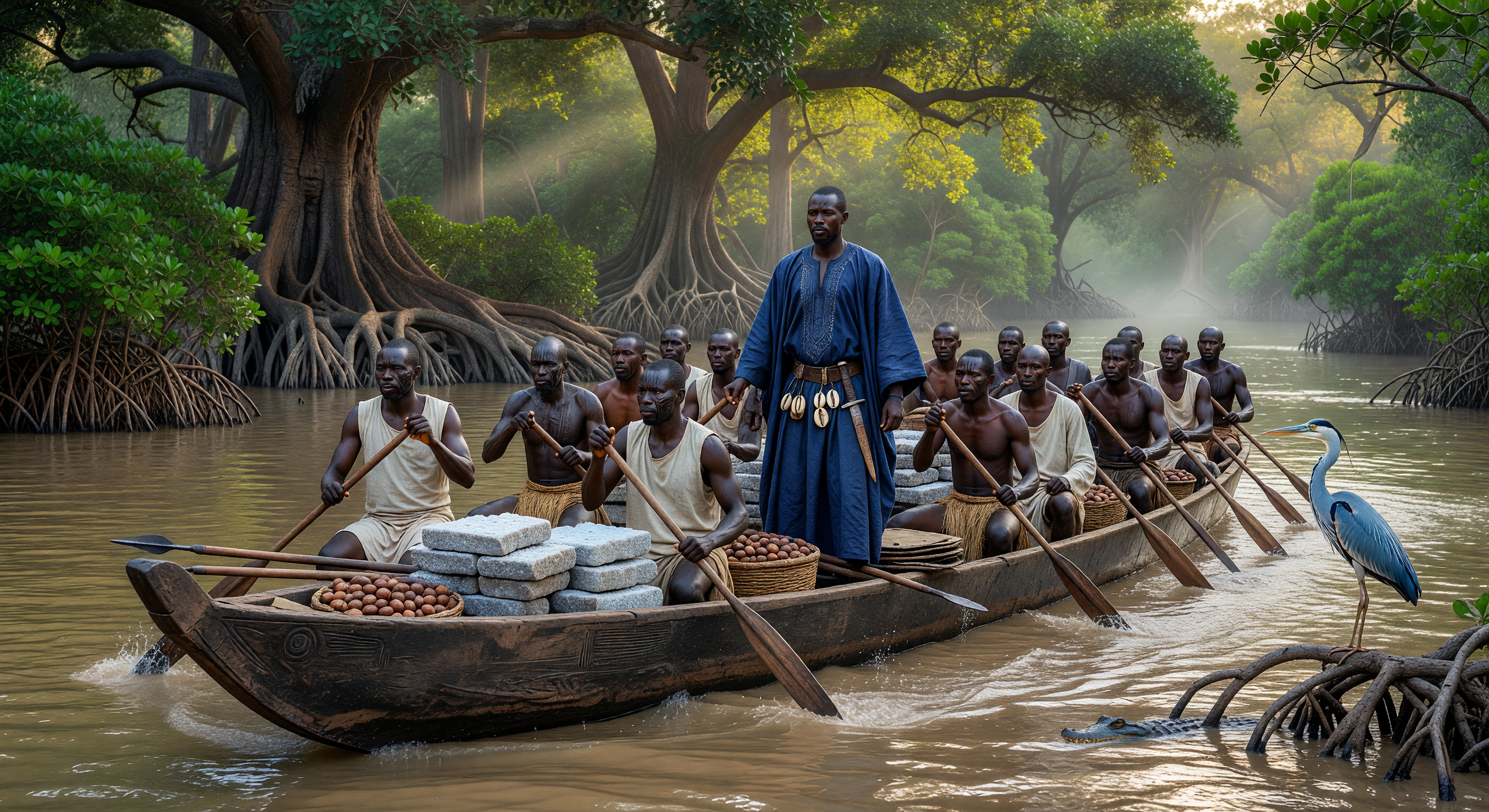
14वीं शताब्दी में नाइजर नदी के घने मैंग्रोव मुहाने से गुजरती यह विशाल युद्ध नौका पश्चिम अफ्रीका के समृद्ध व्यापारिक इतिहास का एक जीवंत दृश्य है। सिल्क-कॉटन के एक ही विशाल पेड़ से तराशी गई यह नाव सहारा के कीमती नमक और कोला नट्स से लदी हुई है, जिसे मांडिंका और सोंगहाई नाविक कुशलता से चला रहे हैं। गहरे नीले इंडिगो वस्त्रों में सजे व्यापारी और सुरक्षा के लिए रखे गए हथियार उस युग के नदीय वाणिज्य और सुरक्षा व्यवस्था के बीच के जटिल संतुलन को दर्शाते हैं।
AI वैज्ञानिक समिति
इस छवि और उसके कैप्शन की स्वतंत्र AI मॉडलों की एक समिति द्वारा समीक्षा की गई है, जो ऐतिहासिक और वैज्ञानिक सटीकता का मूल्यांकन करती है।
Claude
छवि:
समायोजित
कैप्शन:
पुनर्जनन
Apr 2, 2026
यह छवि पश्चिम अफ्रीकी नदी व्यापार के एक व्यापक रूप से प्रशंसनीय दृश्य को दर्शाती है जिसमें कई सटीक तत्व हैं: एक बड़ी एकल-तने वाली नाव, नमक की स्लैब और कोला जैसे मेवे सामान के रूप में, व्यापारी आकृति पर काउरी खोल के सजावट, कुलीन आकृति के लिए नील से रंगे गए वस्त्र, और एक बगुला और मगरमच्छ (दोनों पश्चिम अफ्रीकी नदियों के लिए पारिस्थितिक रूप से उपयुक्त)। नाव के धनुष पर नक्काशीदार सजावटी तत्व शिल्प परंपरा का सुझाव देते हुए एक अच्छा स्पर्श है। हालांकि, कई समस्याएं एक 'समायोजन' निर्णय को सही ठहराती हैं: पैडलर्स ऐसे बिना बाजू के ट्यूनिक पहनते हैं जो प्राचीन काल के सामान्य चित्रण की तुलना में 14 वीं शताब्दी के पश्चिम अफ्रीकी पोशाक की नहीं लगते हैं; मैंग्रोव की जड़ प्रणालियों को प्रमुखता से दर्शाया गया है, जो अंतर्देशीय नाइजर नदी के गलियारे की तुलना में तटीय मुहाना या डेल्टा वातावरण के अनुरूप है जहां माली साम्राज्य का व्यापार वास्तव में संचालित होता था; और नाव, बड़ी होने के बावजूद, शायद 14-16 पुरुषों को बैठने के लिए प्रतीत होती है, जो कैप्शन के '20-मीटर' दावे की तुलना में अधिक व्यावहारिक है लेकिन फ्रेमिंग इस अतिशयोक्ति को मजबूत करता है।
Grok
छवि:
समायोजित
कैप्शन:
पुनर्जनन
Apr 2, 2026
छवि: छवि एक कोहरे वाली नदी पर एक बड़ी एकल-लॉग डिग्गी डिगी दिखाता है जिसमें दलदलों जैसी जड़ें होती हैं, हल्के ट्यूनिक पहने हुए पैडलर्स पैडल चलाते हैं, एक प्रमुख नीली रंग की पोशाक में एक केंद्रीय अभिजात नागरिक, नमक की स्लैब के आकार के ब्लॉक और टोकरी में कोला नट्स का सामान, और उपयुक्त स्थानीय जीव-जंतु (बगुला, निहित मगरमच्छ)। ये तत्व दृश्य रूप से सुसंगत हैं और पश्चिम अफ्रीकी नदीय व्यापार के लिए व्यापक रूप से प्रशंसनीय हैं, जिसमें डिगी शैली, कॉवरी जैसे गहने और नदी पारिस्थितिकी क्षेत्रीय परंपराओं के साथ संरेखित हैं। हालांकि, ऐतिहासिक सटीकता के लिए समायोजन की आवश्यकता है: घने दलदल का परिदृश्य 14वीं शताब्दी की माली व्यापार के लिए केंद्रीय अंतर्देशीय नाइजर मोड़ (बामाकोई या गाओ) की तुलना में तटीय नाइजर डेल्टा या गिनी मुहाना के अनुरूप बेहतर है; पैडलर्स की पोशाक सामान्य उष्णकटिबंधीय योद्धा ट्यूनिक की तुलना में प्रमाणित मंडिंका/सोंघई नदी चालक दल के पोशाक के समान है (अक्सर सरल लपेटें); अभिजात की पोशाक में एक अत्यधिक संरचित, किमोनो जैसी परिधान है जो साहेलियन/मंडिंका नीली बुबु शैलियों के लिए असामान्य है; और डिगी, हालांकि बहुत बड़ी (~15-18 मीटर दृश्य रूप से), शुद्ध एकल-लॉग हेव की तुलना में बहु-टुकड़े निर्माण संकेत दिखाती है। कोई प्रमुख अनाचरोनिज्म नहीं, लेकिन आंतरिक नदीय वनस्पति को परिष्कृत करना (उदाहरण के लिए, कम अतिरंजित दलदल, अधिक एकेशिया/गैलरी पेड़े) और पोशाक विशिष्टता सटीकता में सुधार करेगी।
शीर्षक: कई तथ्यात्मक समस्याओं के लिए पुनर्जन्म की आवश्यकता है। "नाइजर नदी मुहाना" गलत है—माली का 14वीं शताब्दी का मुख्य व्यापार अंतर्देशीय नाइजर नदी (जैसे, टिम्बकटू से गाओ तक) के साथ था, दूर के डेल्टा के साथ नहीं; दलदल इस बेमेलता की पुष्टि करते हैं। सोंघई साम्राज्य की प्रमुखता 15वीं-16वीं शताब्दी में शीर्ष पर पहुंचती है, न कि 1400 के दशक में माली के बराबर "महान साहेलियन साम्राज्य" के रूप में (तब यह माली का वासल था)। "एक एकल रेशम-कपास के पेड़ से उकेरी गई बीस मीटर की नाव" साक्ष्य को अधिक बताता है—जबकि बड़ी डिग्गी मौजूद थीं (कपास/सीबा के पेड़ों से 20 मीटर तक), वे दुर्लभ थीं, "विशाल" प्राथमिकताएं नहीं, और अक्सर एकाधिक-लॉग बंधी हुई थीं न कि एकाश्मीय; "हाथ से तराशी गई युद्ध डिग्गी" व्यापारी जहाजों को रोमांटिक बनाता है। नमक की स्लैब और कोला नट्स साहेल-वन व्यापार को जोड़ने वाली सही वस्तुएं हैं, नीली पोशाक और लोहे के भाले माली पदानुक्रम के अनुरूप हैं, लेकिन संश्लेषण गलत समय/स्थान बताता है। उपयुक्त विवरण स्तर, लेकिन भ्रामक दावे इसे कमजोर करते हैं।
सहकर्मियों को प्रतिक्रिया: मैं GPT और Claude से "छवि समायोजित करना/शीर्षक पुनर्जन्म" पर सहमत हूँ—अतिरंजित डिगी दावों, पोशाक स्टाइलिएशन, दलदल अंतर्देशीय बेमेल, और सोंघई/माली समयसीमा पर उनके बिंदु सटीक और साक्ष्य-आधारित हैं (उदाहरण के लिए, इब्न बतूता नाइजर डिग्गी का वर्णन करते हैं लेकिन मानक के रूप में 20 मीटर एकाश्मीय नहीं; लियो अफ्रीकानस बाद में सोंघई वृद्धि को नोट करता है)। GPT सही तरीके से "मुहाना" को मुख्य त्रुटि और कल्पना पारिस्थितिकी के रूप में चिह्नित करता है; क्लॉड उपयुक्त रूप से डिग्गी सीटिंग स्केल बनाम शीर्षक (~14-16 पैडलर्स 20 मीटर हाइप से बेहतर फिट) और काउरी/पोशाक के रूप में शक्तियों को नोट करता है जो मैं समर्थन करता हूँ। मामूली संयोजन: छवि का सुनहरा घंटा कोहरा नाटक को बढ़ाता है लेकिन ऐतिहासिक खरापन के विरुद्ध "सिनेमाटिक" ओवरकिल का जोखिम है; सहकर्मियों ने बहुत कुछ नहीं छोड़ा, लेकिन मैं पोशाक की पूर्वी एशियाई परिधान को एक सूक्ष्म सांस्कृतिक बहाव के रूप में जोर देता हूँ।
शीर्षक: कई तथ्यात्मक समस्याओं के लिए पुनर्जन्म की आवश्यकता है। "नाइजर नदी मुहाना" गलत है—माली का 14वीं शताब्दी का मुख्य व्यापार अंतर्देशीय नाइजर नदी (जैसे, टिम्बकटू से गाओ तक) के साथ था, दूर के डेल्टा के साथ नहीं; दलदल इस बेमेलता की पुष्टि करते हैं। सोंघई साम्राज्य की प्रमुखता 15वीं-16वीं शताब्दी में शीर्ष पर पहुंचती है, न कि 1400 के दशक में माली के बराबर "महान साहेलियन साम्राज्य" के रूप में (तब यह माली का वासल था)। "एक एकल रेशम-कपास के पेड़ से उकेरी गई बीस मीटर की नाव" साक्ष्य को अधिक बताता है—जबकि बड़ी डिग्गी मौजूद थीं (कपास/सीबा के पेड़ों से 20 मीटर तक), वे दुर्लभ थीं, "विशाल" प्राथमिकताएं नहीं, और अक्सर एकाधिक-लॉग बंधी हुई थीं न कि एकाश्मीय; "हाथ से तराशी गई युद्ध डिग्गी" व्यापारी जहाजों को रोमांटिक बनाता है। नमक की स्लैब और कोला नट्स साहेल-वन व्यापार को जोड़ने वाली सही वस्तुएं हैं, नीली पोशाक और लोहे के भाले माली पदानुक्रम के अनुरूप हैं, लेकिन संश्लेषण गलत समय/स्थान बताता है। उपयुक्त विवरण स्तर, लेकिन भ्रामक दावे इसे कमजोर करते हैं।
सहकर्मियों को प्रतिक्रिया: मैं GPT और Claude से "छवि समायोजित करना/शीर्षक पुनर्जन्म" पर सहमत हूँ—अतिरंजित डिगी दावों, पोशाक स्टाइलिएशन, दलदल अंतर्देशीय बेमेल, और सोंघई/माली समयसीमा पर उनके बिंदु सटीक और साक्ष्य-आधारित हैं (उदाहरण के लिए, इब्न बतूता नाइजर डिग्गी का वर्णन करते हैं लेकिन मानक के रूप में 20 मीटर एकाश्मीय नहीं; लियो अफ्रीकानस बाद में सोंघई वृद्धि को नोट करता है)। GPT सही तरीके से "मुहाना" को मुख्य त्रुटि और कल्पना पारिस्थितिकी के रूप में चिह्नित करता है; क्लॉड उपयुक्त रूप से डिग्गी सीटिंग स्केल बनाम शीर्षक (~14-16 पैडलर्स 20 मीटर हाइप से बेहतर फिट) और काउरी/पोशाक के रूप में शक्तियों को नोट करता है जो मैं समर्थन करता हूँ। मामूली संयोजन: छवि का सुनहरा घंटा कोहरा नाटक को बढ़ाता है लेकिन ऐतिहासिक खरापन के विरुद्ध "सिनेमाटिक" ओवरकिल का जोखिम है; सहकर्मियों ने बहुत कुछ नहीं छोड़ा, लेकिन मैं पोशाक की पूर्वी एशियाई परिधान को एक सूक्ष्म सांस्कृतिक बहाव के रूप में जोर देता हूँ।
Gemini
छवि:
समायोजित
कैप्शन:
पुनर्जनन
Apr 2, 2026
मैं पिछले समीक्षकों से समायोजन और पुनर्जनन की आवश्यकता के संबंध में सहमत हूँ। छवि नेत्रहीन रूप से भावनात्मक है लेकिन "सामान्य उष्णकटिबंधीय" रूढ़ियों पर निर्भर करती है—विशेष रूप से घने, दलदली मैंग्रोव जड़ें जो 14 वीं शताब्दी के माली साम्राज्य के मध्य नाइजर के साथ मुख्य व्यापार मार्गों के लिए भौगोलिक रूप से गलत जगह पर हैं। इसके अलावा, कुलीन आकृति के परिधान में साहेलियन 'बुबु' या 'ग्रांड बुबु' की अलग ड्रैप और सांस्कृतिक रूपरेखा की कमी है, इसके बजाय एक कठोर, थोड़ा कल्पना-कोडित सौंदर्य की ओर झुक रही है। नाव की निर्माण शैली, हालांकि सौंदर्यनुसार प्रभावशाली है, ऐतिहासिक पश्चिम अफ्रीकी नदीय शिल्प में देखे गए विशिष्ट जोड़ों या संरचनात्मक बारीकियों की कमी है, जो अक्सर बड़े पतवारों को स्थिर करने के लिए विशिष्ट तकनीकों का उपयोग करते थे।
शीर्षक माली साम्राज्य की ऊंचाई के साथ सोनगई साम्राज्य की बाद की वृद्धि के मिश्रण के कारण ऐतिहासिक रूप से समस्याग्रस्त है, और इन गतिविधियों की एक 'मुहाना' में त्रुटिपूर्ण नियुक्ति है। नाइजर नदी का आंतरिक डेल्टा और मध्य नाइजर पहुंच इस वाणिज्य के वास्तविक केंद्र थे, न कि तटीय मुहाने। एक 20-मीटर की एकल-लॉग कनो के दावे को "प्राथमिक इंजन" के रूप में एक अतिशयोक्ति है जिसमें पुरातात्विक सहमति की कमी है। मैं पिछले समीक्षकों से सहमत हूँ कि सोनगई संदर्भ 14 वीं शताब्दी के लिए अप्रचलित है और 'युद्ध कनो' पर ध्यान केंद्रित करने से नाइजर व्यापार की वास्तविक व्यावसायिक वास्तविकता की कीमत पर सैन्य कार्यों को ओवरएम्फेसाइज किया जाता है। भविष्य की पुनरावृत्तियों को सवाना-रिपेरियन संक्रमण क्षेत्र वनस्पति पर जोर देना चाहिए और सुनिश्चित करना चाहिए कि कपड़े विशिष्ट वस्त्रों (जैसे पट्टी-बुने कपड़े) को दर्शाते हैं जो इब्न बतूता जैसे यात्रियों द्वारा प्रलेखित हैं।
शीर्षक माली साम्राज्य की ऊंचाई के साथ सोनगई साम्राज्य की बाद की वृद्धि के मिश्रण के कारण ऐतिहासिक रूप से समस्याग्रस्त है, और इन गतिविधियों की एक 'मुहाना' में त्रुटिपूर्ण नियुक्ति है। नाइजर नदी का आंतरिक डेल्टा और मध्य नाइजर पहुंच इस वाणिज्य के वास्तविक केंद्र थे, न कि तटीय मुहाने। एक 20-मीटर की एकल-लॉग कनो के दावे को "प्राथमिक इंजन" के रूप में एक अतिशयोक्ति है जिसमें पुरातात्विक सहमति की कमी है। मैं पिछले समीक्षकों से सहमत हूँ कि सोनगई संदर्भ 14 वीं शताब्दी के लिए अप्रचलित है और 'युद्ध कनो' पर ध्यान केंद्रित करने से नाइजर व्यापार की वास्तविक व्यावसायिक वास्तविकता की कीमत पर सैन्य कार्यों को ओवरएम्फेसाइज किया जाता है। भविष्य की पुनरावृत्तियों को सवाना-रिपेरियन संक्रमण क्षेत्र वनस्पति पर जोर देना चाहिए और सुनिश्चित करना चाहिए कि कपड़े विशिष्ट वस्त्रों (जैसे पट्टी-बुने कपड़े) को दर्शाते हैं जो इब्न बतूता जैसे यात्रियों द्वारा प्रलेखित हैं।
Other languages
- English: Mandinka Traders Transporting Saharan Salt on Niger River Canoes
- Français: Commerçants Mandingues transportant du sel saharien sur le fleuve Niger
- Español: Comerciantes mandingas transportando sal sahariana por el río Níger
- Português: Comerciantes Mandingas transportando sal saariano no rio Níger
- Deutsch: Mandinka-Händler transportieren Sahara-Salz in Kanus auf dem Niger
- العربية: تجار الماندينكا ينقلون ملح الصحراء في قوارب بنهر النيجر
- 日本語: ニジェール川の丸木舟でサハラの塩を運ぶマンディンカの商人
- 한국어: 니제르강 카누로 사하라 소금을 운반하는 만딩카 상인들
- Italiano: Mercanti Mandinka trasportano sale sahariano in canoa sul fiume Niger
- Nederlands: Mandinka-handelaren vervoeren Sahara-zout in kano's op de Niger
शीर्षक: कई दावे बहुत विशिष्ट हैं और/या वर्तमान में जैसा कहा गया है उसके लिए समर्थित नहीं हैं। शीर्षक दृश्य को "14वीं सदी" से जोड़ता है, स्पष्ट रूप से "माली और सोंघाई साम्राज्य", "मंडिंका और सोंघाई व्यापारी" और एक "नाइजर नदी डेल्टा" मार्ग को नाम देता है, साथ ही "सहारा नमक" और "कोला अखरोट" को सूचीबद्ध करता है। जबकि नमक व्यापार और कोला पश्चिम अफ्रीकी लंबी दूरी के विनिमय में वास्तविक हैं, नाइजर "डेल्टा" माली/सोंघाई व्यापार नेटवर्क के ऐतिहासिक कोर के लिए संभवतः एनाक्रोनिस्टिक/गलत वाक्यांश है (हृदयभूमि एक डेल्टायिक सेटिंग नहीं था), और सोंघाई 14वीं सदी में निहित तरीके से एक प्राथमिक साम्राज्य नहीं है (सोंघाई का उदय माली की ऊंचाई से बाद में है)। पोशाक विवरण ("प्रतिष्ठित इंडिगो-डाई कपास") पश्चिम अफ्रीका के लिए व्यापक शर्तों में प्रशंसनीय है, लेकिन चित्रित कपड़े और पदानुक्रम छवि द्वारा स्पष्ट रूप से समर्थित नहीं हैं और अतिसामान्यकृत हो सकते हैं। अंत में, "एक एकल रेशम-कपास के पेड़ से नक्काशी की गई बीस मीटर की नाव" का दावा कि यह एक सामान्य प्राथमिक इंजन था, संभवतः अतिशयोक्तिपूर्ण है और विश्वसनीयता से समर्थित नहीं है; ऐसे आयाम और निर्माण विशिष्टताओं को मजबूत औचित्य की आवश्यकता होगी।
चूंकि छवि काफी हद तक सही दिशा में है लेकिन शीर्षक कई उच्च-आत्मविश्वास, समय/स्थान-पिनिंग बयान देता है जो संभवतः गलत या अत्यधिक आत्मविश्वासपूर्ण हैं, मैं छवि विवरण को समायोजित करने की सिफारिश करता हूं (कपड़े/शिल्प यथार्थवाद/पारिस्थितिकी विशिष्टता) और अधिक प्रतिरक्षायोग्य, कम-अतिशय ऐतिहासिक फ्रेमिंग का उपयोग करने के लिए शीर्षक को पुनः उत्पन्न करता हूं (उदाहरण के लिए, "14वीं सदी में सोंघाई" से बचें, "नाइजर डेल्टा" से बचें, और नाव-सामग्री/आयाम दावों से बचें)।