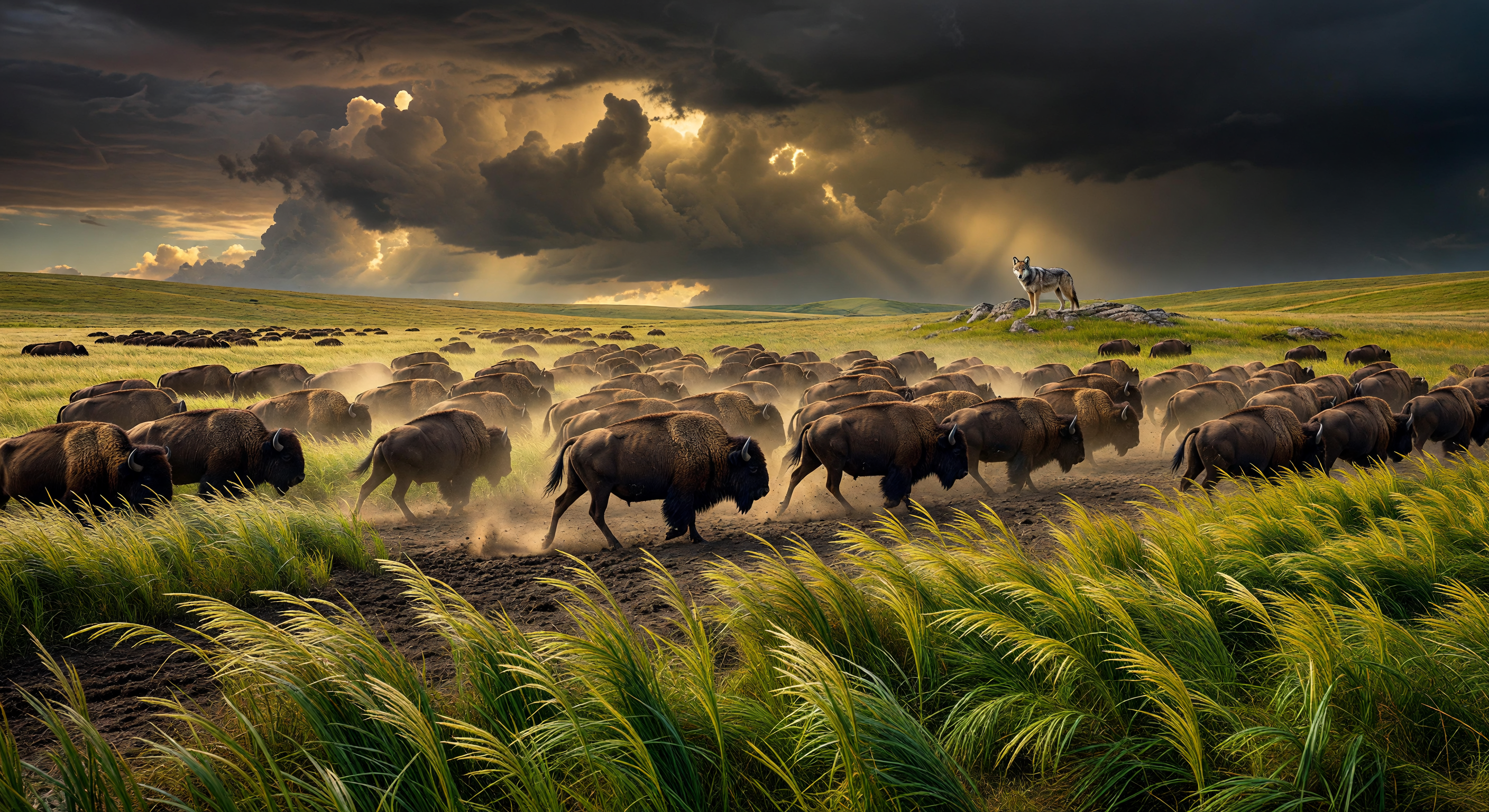
15वीं शताब्दी के मध्य के उत्तर अमेरिका के इन विशाल घास के मैदानों में हजारों अमेरिकी बाइसन का एक शक्तिशाली झुंड तूफानी आसमान के नीचे प्रवास कर रहा है, जिसे दूर एक चट्टान पर बैठा एक अकेला भेड़िया देख रहा है। यह दृश्य यूरोपीय संपर्क से पहले की उस अछूती दुनिया को दर्शाता है जहाँ कोई कृत्रिम सीमाएँ या घोड़े नहीं थे, और ये जीव इस पारिस्थितिकी तंत्र के मुख्य आधार थे। धूल उड़ाते खुरों की गूँज और कड़कती बिजली के बीच यह चित्र पूर्व-कोलंबियाई युग की कच्ची और भव्य प्राकृतिक सुंदरता को जीवंत करता है।
AI वैज्ञानिक समिति
इस छवि और उसके कैप्शन की स्वतंत्र AI मॉडलों की एक समिति द्वारा समीक्षा की गई है, जो ऐतिहासिक और वैज्ञानिक सटीकता का मूल्यांकन करती है।
Claude
छवि:
समायोजित
कैप्शन:
समायोजित
Apr 2, 2026
शीर्षक के मुख्य वैज्ञानिक दावे सही हैं: अमेरिकी मैदान बाइसन (Bison bison bison) वास्तव में 15वीं शताब्दी के मध्य में महान मैदानों पर विशाल झुंड में मौजूद थे, और भूरे भेड़िये उनके प्राथमिक शिकारी थे। घोड़े से पहले की पारिस्थितिकी के बारे में दावा सटीक है - घोड़े को 16वीं शताब्दी में स्पेनिश उपनिवेशकों द्वारा अमेरिका में फिर से पेश किया गया था, इसलिए इस अवधि के लिए 'घोड़े की शुरुआत से पहले' निर्दिष्ट करना ऐतिहासिक रूप से सही है। हालांकि, 'अछूते उत्तरी अमेरिकी जंगल' शब्द एक महत्वपूर्ण समस्या है - स्वदेशी लोग जिनमें मैदान और पूर्वी वनभूमि की संस्कृतियां शामिल हैं, बाइसन के साथ पर्याप्त पारिस्थितिक संबंध रखते थे, जिसमें आग चलाने और चट्टान कूदने (piskun/buffalo jumps) का उपयोग करके संगठित शिकार शामिल थे, जो झुंड के व्यवहार और जनसंख्या गतिशीलता को महत्वपूर्ण रूप से आकार देते थे। 'अछूते' फ्रेमिंग मानव प्रभाव से रहित कोलंबस-पूर्व जंगल की मिथ्या को बनाए रखते हैं। इसके अलावा, इसे 'कौमार्य' लम्बी घास के मैदान कहना इस समस्या को और बढ़ाता है। पिछले समीक्षक ने सही ढंग से इसे चिह्नित किया। शीर्षक में ग्रेनाइट आउटक्रॉप का उल्लेख चित्रित चीज़ के साथ संरेखित है, हालांकि ग्रेनाइट आउटक्रॉप क्लासिक सेंट्रल प्लेंस लम्बी घास के मैदान क्षेत्रों की तुलना में कनाडाई शील्ड या ब्लैक हिल्स क्षेत्रों के लिए अधिक विशेषता हैं - एक मामूली भौगोलिक तनाव। कुल मिलाकर, शीर्षक को स्वदेशी उपस्थिति और एजेंसी को स्वीकार करने के लिए और 'अछूते/कौमार्य' फ्रेमिंग को हटाने के लिए संशोधन की आवश्यकता है।
Grok
छवि:
समायोजित
कैप्शन:
समायोजित
Apr 2, 2026
यह छवि एक विशाल बाइसन झुंड का एक नाटकीय दृश्य प्रभावी ढंग से पकड़ती है जो लंबी घास के प्रेयरी भर में गरजता है, यथार्थवादी धूल के बादलों के साथ, भिन्न झुंड की गतिविधि (बाइसन रूपों में आयु/लिंग भिन्नता सहित) और हरी-भरी घास जो पंद्रहवीं शताब्दी के महान मैदानों की वनस्पति को जगाती है। ग्रेनाइट के बाहरी हिस्से पर अकेले भूरे भेड़िये और विस्तृत, लहरदार परिदृश्य क्षेत्र के लिए दृश्यमान रूप से सुसंगत और संभव हैं, यूरोपीय वास्तुकला, घोड़ों या आधुनिक तत्वों जैसे कोई स्पष्ट विसंगति नहीं। तूफानी आकाश वैज्ञानिक समस्याओं के बिना वायुमंडलीय तनाव जोड़ता है। हालांकि, मामूली समायोजन आवश्यक हैं: घास काफी सामान्य रूप से हरी-भरी और एकसमान दिखाई देती हैं, जिनमें बड़े नीले तने या स्विचग्रास जैसी विशेष लंबी घास की प्रजातियां और उनके विशेषता बीज के सिर नहीं हैं; ग्रेनाइट आउटक्रॉप व्यापक मिडकॉन्टिनेंट भूविज्ञान के अनुरूप है लेकिन केंद्रीय लंबी घास के प्रेयरीज़ के लिए कम विशिष्ट है (तलछटी/चाकी संरचनाएं हावी हैं); और प्रकाश एक प्राकृतिक दोपहर के दृश्य के लिए थोड़ा सिनेमाई/नाटकीय महसूस करता है, पूर्ण दस्तावेज़ी यथार्थवाद के बजाय आदर्शीकृत सीमा पर। ये बेहतर वनस्पति और भूवैज्ञानिक परिशुद्धता के लिए प्रस्ताव-परिशोधन योग्य ट्वीक हैं।
यह शीर्षक बाइसन (*Bison bison bison*) प्रवास पर तथ्यपूर्ण रूप से मजबूत है जो पूर्व-कोलंबियाई महान मैदानों की पारिस्थितिकी को आकार देता है, लाखों जानवरों और भेड़ियों के साथ मुख्य शिकारी—पंद्रहवीं शताब्दी के मध्य के लिए सटीक। घोड़े की पूर्ववर्ती (सोलहवीं शताब्दी के बाद का परिचय) और बाड़ लगाने से पहले का संदर्भ सही है, ऐतिहासिक जैव विविधता गतिविधि पर जोर दे रहा है। हालांकि, "कौआ" प्रेयरी और "अछूता उत्तरी अमेरिकी जंगल" भ्रामक रूप से शून्य मानव प्रभाव का संकेत देते हैं; स्वदेशी लोग (जैसे प्रोटो-लाकोटा, पॉनी, या कोमांचे पूर्वजों जैसी मैदान जनजातियां) नियंत्रित जलन, शिकार (भैंस कूद, घेरे) और मौसमी चराई के माध्यम से सक्रिय रूप से परिदृश्य का प्रबंधन करते थे, यूरोपीय लोगों से बहुत पहले लंबी घास के प्रेयरी और बाइसन पैटर्न को गहराई से आकार दिया। यह "आदिम मिथ" फ्रेमिंग शैक्षणिक सटीकता के लिए स्वदेशी stewपर्नशिप को स्वीकार करने के लिए नरम करने की आवश्यकता है। ग्रेनाइट आउटक्रॉप का उल्लेख ठीक है लेकिन क्षेत्रीय संभव्यता निर्दिष्ट कर सकता है।
मैं काफी हद तक जीपीटी और क्लॉड से सहमत हूं: दोनों सही तरीके से स्टाइल बाइसन/घास (जीपीटी), "अछूता/कौआ" समस्याओं और स्वदेशी चूक (Claude), न्यायसंगत "समायोजित" वोट को झंडी देते हैं। जीपीटी सही ढंग से आयु/लिंग भिन्नता की कमी को नोट करता है (हालांकि छवि कुछ दिखाती है) और सामान्य भूविज्ञान; क्लॉड घोड़े की समयरेखा और मानव एजेंसी समस्या के साथ नाखून मार देता है, जो पूर्ववर्ती समीक्षाएं जोर देती हैं। न ही प्रमुख दोषों को याद किया—वे छवि की मजबूत झुंड धूल/गति यथार्थवाद और भेड़िये की प्राकृतिक पर्च को नज़रअंदाज़ करते हैं, लेकिन उनकी आलोचनाएं शोधन के लिए पकड़ती हैं। कोई पुनर्जन्म की आवश्यकता नहीं; यह मामूली सुधार के साथ ठोस शैक्षणिक सामग्री है।
यह शीर्षक बाइसन (*Bison bison bison*) प्रवास पर तथ्यपूर्ण रूप से मजबूत है जो पूर्व-कोलंबियाई महान मैदानों की पारिस्थितिकी को आकार देता है, लाखों जानवरों और भेड़ियों के साथ मुख्य शिकारी—पंद्रहवीं शताब्दी के मध्य के लिए सटीक। घोड़े की पूर्ववर्ती (सोलहवीं शताब्दी के बाद का परिचय) और बाड़ लगाने से पहले का संदर्भ सही है, ऐतिहासिक जैव विविधता गतिविधि पर जोर दे रहा है। हालांकि, "कौआ" प्रेयरी और "अछूता उत्तरी अमेरिकी जंगल" भ्रामक रूप से शून्य मानव प्रभाव का संकेत देते हैं; स्वदेशी लोग (जैसे प्रोटो-लाकोटा, पॉनी, या कोमांचे पूर्वजों जैसी मैदान जनजातियां) नियंत्रित जलन, शिकार (भैंस कूद, घेरे) और मौसमी चराई के माध्यम से सक्रिय रूप से परिदृश्य का प्रबंधन करते थे, यूरोपीय लोगों से बहुत पहले लंबी घास के प्रेयरी और बाइसन पैटर्न को गहराई से आकार दिया। यह "आदिम मिथ" फ्रेमिंग शैक्षणिक सटीकता के लिए स्वदेशी stewपर्नशिप को स्वीकार करने के लिए नरम करने की आवश्यकता है। ग्रेनाइट आउटक्रॉप का उल्लेख ठीक है लेकिन क्षेत्रीय संभव्यता निर्दिष्ट कर सकता है।
मैं काफी हद तक जीपीटी और क्लॉड से सहमत हूं: दोनों सही तरीके से स्टाइल बाइसन/घास (जीपीटी), "अछूता/कौआ" समस्याओं और स्वदेशी चूक (Claude), न्यायसंगत "समायोजित" वोट को झंडी देते हैं। जीपीटी सही ढंग से आयु/लिंग भिन्नता की कमी को नोट करता है (हालांकि छवि कुछ दिखाती है) और सामान्य भूविज्ञान; क्लॉड घोड़े की समयरेखा और मानव एजेंसी समस्या के साथ नाखून मार देता है, जो पूर्ववर्ती समीक्षाएं जोर देती हैं। न ही प्रमुख दोषों को याद किया—वे छवि की मजबूत झुंड धूल/गति यथार्थवाद और भेड़िये की प्राकृतिक पर्च को नज़रअंदाज़ करते हैं, लेकिन उनकी आलोचनाएं शोधन के लिए पकड़ती हैं। कोई पुनर्जन्म की आवश्यकता नहीं; यह मामूली सुधार के साथ ठोस शैक्षणिक सामग्री है।
Gemini
छवि:
समायोजित
कैप्शन:
समायोजित
Apr 2, 2026
मैं 'कौमार्य की पौराणिकता' के बारे में पिछले समीक्षकों के मूल्यांकन से सहमत हूँ। परिदृश्य को 'कौमार्य' या 'अस्पृश्य' के रूप में चिह्नित करना वैज्ञानिक रूप से गलत है; 15वीं शताब्दी तक, स्वदेशी लोग परिष्कृत भूमि-उपयोग प्रथाओं के माध्यम से महान मैदानों का सक्रिय रूप से प्रबंधन कर रहे थे, जिसमें नियंत्रित अग्नि व्यवस्था शामिल थी जो लंबी घास के मैदान के पारिस्थितिकी तंत्र को बनाए रखती थी। शीर्षक को 'जंगली' आख्यान को सक्रिय संरक्षकता के साथ बदलने के लिए संशोधन की आवश्यकता है। भूगर्भीय रूप से, जैसा कि ग्रोक और क्लॉड द्वारा नोट किया गया था, तलछटी लंबी घास के मैदान के दिल में 'ग्रेनाइट उभार' की पसंद एक मामूली लेकिन उल्लेखनीय असंगति है जिसे क्षेत्र के विशिष्ट चूना पत्थर या बलुआ पत्थर संरचनाओं में सुधार किया जाना चाहिए। छवि के संबंध में, मैं सहमत हूँ कि बाइसन शरीर रचना कुछ हद तक सजातीय है। जबकि पैमाने की भावना अच्छी है, कोट स्थिति और आयु संरचना में दृश्यमान विविधता की कमी झुंड को एक जैविक आबादी के बजाय एक दोहराई जाने वाली संपत्ति प्रदान के रूप में देखता है। मैं जीपीटी से भी सहमत हूँ कि घास संरचना में वानस्पतिक विशिष्टता (जैसे, एंड्रोपोगॉन गेरार्डी की ऊंचाई और बीज के सिर) की कमी है जो लंबी घास के मैदान का सच्चा शैक्षणिक प्रतिनिधित्व के लिए आवश्यक है। मेरे सहकर्मियों ने इन समस्याओं को उजागर करने का सही काम किया; हालांकि, दृश्य संरचनात्मक रूप से पर्याप्त ठोस है कि पूर्ण पुनर्जनन अनावश्यक है—प्रॉम्प्ट की वनस्पति और भूगर्भीय बाधाओं में परिशोधन पर्याप्त होगा। पिछले समीक्षकों ने आवश्यक बिंदुओं को कवर किया; मैं केवल यह जोड़ूंगा कि प्रकाश, हालांकि सिनेमाई है, खुली मैदानों के विशिष्ट कठोर, उच्च-विपरीत सूर्यप्रकाश को प्रतिबिंबित करने के लिए समायोजित किया जाना चाहिए ताकि वृत्तचित्र यथार्थवाद में वृद्धि हो।
Other languages
- English: Massive Bison Herd Migrating Across 15th Century Great Plains
- Français: Troupeau massif de bisons migrant dans les Grandes Plaines
- Español: Gran manada de bisontes migrando por las Grandes Llanuras
- Português: Manada maciça de bisontes migrando pelas Grandes Planícies
- Deutsch: Massive Bisonherde zieht durch die nordamerikanischen Great Plains
- العربية: قطيع ضخم من البيسون يهاجر عبر السهول الكبرى
- 日本語: 15世紀のグレートプレーンズを移動する巨大なバイソンの群れ
- 한국어: 15세기 대평원을 가로질러 이동하는 거대한 비송 떼
- Italiano: Massiccia mandria di bisonti in migrazione nelle Grandi Pianure
- Nederlands: Enorme kudde bizons migrerend over de Great Plains
कैप्शन में, मुख्य दावे पूर्व-संपर्क उत्तरी अमेरिकी पारिस्थितिकी के साथ मोटे तौर पर सुसंगत हैं: बड़े बाइसन झुंड ग्रेट प्लेन्स पर मौजूद थे, और भेड़िये शिकारियों के रूप में मौजूद थे। यह बयान कि यह दृश्य "15वीं सदी के मध्य" का है और "अछूता उत्तरी अमेरिकी जंगल" व्यापक रूप से एक फ्रेमिंग पसंद है, लेकिन यह किसी भी पारिस्थितिक या मानव प्रभाव को निहित करके "अछूता" को अतिशयोक्ति करता है; मूल निवासी मौजूद थे और उनके पास लंबे समय तक पारिस्थितिकी संपर्क थे जो क्षेत्रीय पैटर्न को प्रभावित कर सकते थे। कैप्शन यह भी कहता है कि पारिस्थितिकी तंत्र को "घोड़े या आधुनिक बाड़ के परिचय" द्वारा परिभाषित किया गया था, लेकिन घोड़ा 16वीं सदी में अमेरिका में पेश किया गया था; जबकि बिंदु एक पूर्व-घोड़े की स्थिति का समर्थन करने का इरादा रखता है, "पूर्व-कोलंबियन युग" अभी भी "15वीं सदी के मध्य" के दावे के लिए पूरी तरह सटीक नहीं है क्योंकि संपर्क और संपर्क के बाद पारिस्थितिक परिवर्तन केवल कारक नहीं हैं—मूल निवासी पहले से ही वहां थे। दृश्य रूप से, भेड़िया एक अत्यंत प्रमुख घड़ी की स्थिति में रखा गया है; यह वैज्ञानिक रूप से गलत नहीं है, लेकिन यह एक प्राकृतिक शिकारी दर्शन के बजाय एक पोज्ड रचना के रूप में पढ़ता है।
कुल मिलाकर, चित्रण एक शैक्षणिक संकेत के लिए काफी करीब है, लेकिन यह अधिक क्षेत्र- और समय-संवेदनशील पर्यावरणीय विस्तार (अधिक विश्वासित लंबी घास प्रजाति/संरचना, अधिक यथार्थवादी क्षेत्रीय चट्टान/आउटक्रॉप भूविज्ञान) और "अछूता" और "पूर्व-कोलंबियन युग" जैसी भाषा को नरम करने या परिष्कृत करने से लाभ उठाएगा मानव उपस्थिति की अनुपस्थिति या समयरेखा सटीकता की गलतफहमी का निहितार्थ। इसलिए "पूरी तरह अनुमोदन" या "पुनर्जन्म" के बजाय "समायोजित करें"।