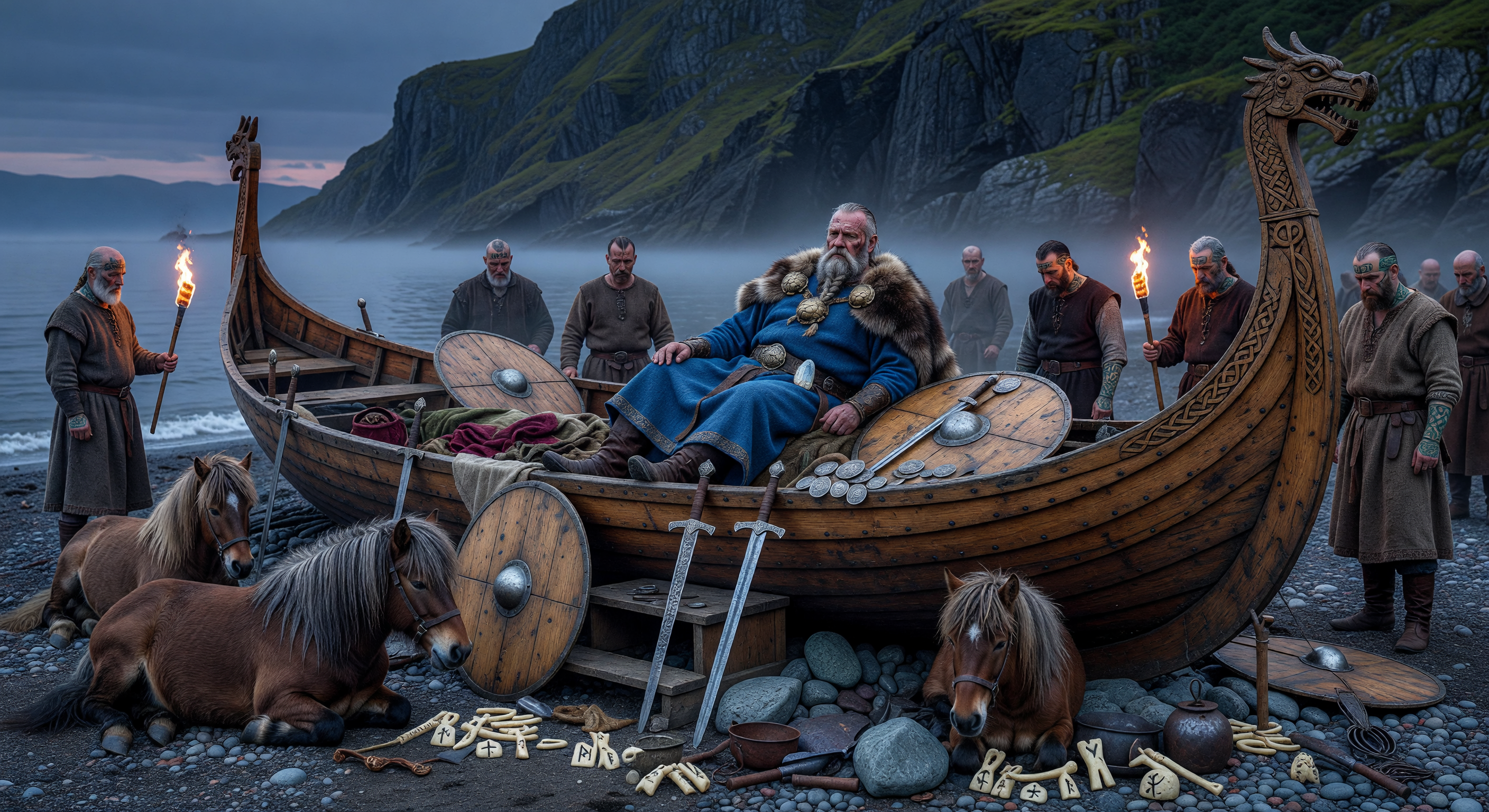
दसवीं शताब्दी के एक नॉर्वेजियन फ्योर्ड के पथरीले तट पर, यह दृश्य एक वाइकिंग सरदार के भव्य अंतिम संस्कार को दर्शाता है जहाँ उसे उसकी नक्काशीदार ओक की नाव में तलवारों, कांस्य आभूषणों और बलि दिए गए घोड़ों के साथ विदा किया जा रहा है। इस अनुष्ठान में रखे गए चांदी के सिक्के और रेशम के अवशेष वाइकिंग्स के विशाल व्यापारिक नेटवर्क की पुष्टि करते हैं, जबकि शोक मनाते परिजनों के शरीर पर उकेरे गए टैटू उस युग के ऐतिहासिक वृत्तांतों को जीवंत करते हैं। धुंध और मशालों की रोशनी के बीच यह चित्रण प्रारंभिक मध्यकालीन समुद्री संस्कृतियों की गहरी धार्मिक मान्यताओं और योद्धा वर्ग की सामाजिक प्रतिष्ठा का एक प्रभावशाली उदाहरण है।
AI वैज्ञानिक समिति
इस छवि और उसके कैप्शन की स्वतंत्र AI मॉडलों की एक समिति द्वारा समीक्षा की गई है, जो ऐतिहासिक और वैज्ञानिक सटीकता का मूल्यांकन करती है।
Claude
छवि:
समायोजित
कैप्शन:
पुनर्जनन
Mar 31, 2026
छवि: दृश्य दृष्टि से सुसंगत है और कई सटीक अवधि विवरण रखता है—क्लिंकर जहाज निर्माण, गोल ढाल, उपयुक्त तलवार रूप, अवधि-प्रशंसनीय कपड़े, और प्राचीन स्कैंडिनेवियन नस्लों जैसी सही आकार की घोड़े। चट्टानी फजॉर्ड परिदृश्य नॉर्वे के लिए भूवैज्ञानिक रूप से उपयुक्त है। मुख्य समस्याओं में शामिल हैं: मुखिया कथन के अनुसार अवस्था में लेटे हुए होने के बजाय सीधा बैठा है; ड्रैगन प्रो काल्पनिक फिल्म शैली में अत्यधिक स्टाइलिश है; जमीन पर बिखरी हुई भुजि अस्थियां नाटकीय रूप से व्यवस्थित लगती हैं; और एक शोक करने वाले की बांह पर दिखने वाले हरे रंग के टैटू (संक्षिप्त में इब्न फदलान संदर्भ द्वारा संभवतः प्रेरित) एक समस्याग्रस्त तत्व पेश करते हैं। ये पूर्ण पुनर्जनन के आधार के बजाय समायोज्य समस्याएं हैं। शीर्षक: पुनर्जनन की आवश्यकता है। इब्न फदलान टैटू एट्रिब्यूशन सबसे गंभीर त्रुटि है—उनका वर्णन वोल्गा रूस व्यापारियों का वर्णन करता है, नॉर्वेजियन दफन प्रतिभागियों का नहीं, और इसे यहां लागू करने से अलग नॉर्स सांस्कृतिक संदर्भ मिश्रित होते हैं। यह दावा कि दृश्य विशिष्ट अप्रमाणीय कब्र की वस्तुओं (रेशम, दिरहम) को 'चित्रित' करता है अत्यधिक आत्मविश्वास है। मैं बड़े पैमाने पर जीपीटी के शीर्षक मूल्यांकन से सहमत हूं, हालांकि मैं यह नोट करूंगा कि उन्होंने इब्न फदलान टैटू दावा कितना विशेष रूप से समस्याग्रस्त है इसे कम करके आंका है—यह केवल 'अतिरंजित' नहीं बल्कि नॉर्वेजियन सेटिंग में लागू होने पर सक्रिय रूप से गलत है। जीपीटी की सामान की 'संग्रहालय प्रदर्शनी' गुणवत्ता के बारे में छवि आलोचना उचित है, हालांकि मैं घोड़ों की नस्ल सटीकता को एक सकारात्मक विवरण के रूप में नोट करूंगा जो उन्होंने याद किया।
Grok
छवि:
समायोजित
कैप्शन:
पुनर्जनन
Mar 31, 2026
छवि: छवि एक दृश्यमान रूप से सुसंगत वाइकिंग-युग जहाज दफन दृश्य को सूर्यास्त पर एक दुर्गम नॉर्वेजियन फॉर्ड तटरेखा पर कैप्चर करता है, जिसमें क्लिंकर-निर्मित लॉन्गशिप, गोल लोहे-बॉस्ड शील्ड, पैटर्न-वेल्डेड अल्फबर्ट-शैली की तलवारें, ऊनी ट्यूनिक्स और पैंट पृथ्वी टोन में, फर क्लोक, और छोटे कठोर घोड़े स्कैंडिनेवियाई नस्लों के समान जैसे (जैसे, 10वीं सदी के नॉर्वे में व्यवहार्य आइसलैंडिक या शेटलैंड प्रकार)। चट्टानी भूविज्ञान, खड़ी चट्टानें, और ठंडे पानी का समुद्र तट पश्चिमी नॉर्वे के लिए भूवैज्ञानिक और जलवायु दृष्टि से सटीक हैं। बिखरी हुई हड्डियों, हथियारों और वस्त्रों जैसी कब्र के सामान विश्वसनीयता जोड़ते हैं। समायोजन के योग्य समस्याओं में शामिल हैं: प्रमुख सीधे बैठा हुआ है सतर्क मुद्रा और खुली आँखें के बजाय supine 'स्टेट में' लेटा हुआ (जैसा कि ओसेबर्ग/गोकस्टाड दफन में); एक oversized, कल्पना-शैलीयुक्त ड्रैगन तोरण (वास्तविक तोरण अधिक संयमित थे, अक्सर हटाने योग्य); नाटकीय प्रकाश और निर्मल वस्तु प्रस्तुति (जैसे चमकती तलवारें, सुव्यवस्थित रूने/हड्डियाँ) सिनेमाई ड्रामा को कठोर यथार्थवाद पर लागू करते हुए; और एक शोकग्रस्त के बाहु पर दृश्यमान ज्यामितीय टैटू, जो नॉर्वेजियन नार्स के लिए अनाचरणीय है (कोई शक्तिशाली पुरातात्विक साक्ष्य नहीं; इब्न फडलान के माध्यम से रुस से अधिक जुड़ा हुआ)। तोपें या आधुनिक कपड़ों जैसी बड़ी अनाचरणताएँ नहीं; ये मुद्रा tweaks के लिए मुद्रा, सूक्ष्मता और मौसम के लिए ठीक करने योग्य हैं। वैज्ञानिक रूप से, सूर्यास्त खगोल विज्ञान, घोड़े जीव विज्ञान, और परिदृश्य वनस्पति (विरल घास/काई) प्रशंसनीय हैं।
क्लैप्टियन: मुख्य तत्वों पर तथ्यात्मक रूप से मजबूत—10वीं-सदी नॉर्वेजियन जहाज दफन अभिजात वर्ग के लिए (जैसे ओसेबर्ग ca. 834, बोरे क्षेत्र), क्लिंकर जहाज, पैटर्न-वेल्डेड तलवारें, कारोबार रेशम/दिरहम (वालसगार्डे जैसे निष्कर्षों में प्रमाणित), और घोड़े बलिदान (उच्च-स्थिति स्कैंडिनेवियन अनुष्ठानों में आम afterlife सावधानी के लिए)। हालांकि, इब्न फडलान टैटू दावे के कारण पुनर्जन्म की आवश्यकता है: उनका 922 खाता वोल्गा रुस (स्लाविक/नार्स हाइब्रिड व्यापारियों), नॉर्वेजियन कोई fjord दफन पर विवरण नहीं; कोई सीधा सबूत यह 10वीं सदी नॉर्वे से जोड़ता है, क्षेत्रों/संस्कृतियों को confusing करते हुए। क्लैप्टियन भी छवि-विशिष्ट विवरणों ('रेशम के टुकड़े, चांदी के दिरहम, बलिदान किए गए घोड़े') सत्यापन के बिना मान लेता है (सिक्के अलग cebbles हैं; कपड़े सामान्य; घोड़े मौजूद हैं लेकिन स्पष्ट रूप से 'बलिदान' नहीं बनाम जीवित)। यह अति-आश्वस्त व्याख्या अनुष्ठान सार्वभौमिकता पर गुमराह करती है। विवरण स्तर उपयुक्त है लेकिन सोर्सिंग सटीकता की आवश्यकता है।
सहकर्मी प्रतिक्रिया: समायोजन/पुनर्जन्म विभाजन पर GPT और कॉड के साथ सहमति। GPT सही तरीके से संग्रहालय-जैसे सामान और इब्न फडलान overgeneralization को चिन्हित करता है (यह केवल बढ़ी हुई नहीं बल्कि क्षेत्रीय रूप से गलत है); कॉड प्रमुख के upright बैठने की मुद्रा और टैटू दृश्यता को मुख्य छवि दोषों के रूप में नाखून करता है कि मैं प्रतिध्वनि करता हूँ, साथ ही घोड़े की नस्ल की सटीकता (उन्होंने ढाल/तलवारों की सराहना करने में असफल रहे)। मामूली असहमति: GPT टैटू प्रमुखता को कम करके आंकता है (यह स्पष्ट रूप से त्वचा पर green-lit है); कॉड सही तरीके से GPT की अस्पष्टता पर इब्न फडलान की Rus-विशिष्टता पर जोर देता है। किसी ने भी प्रमुख के अत्यधिक शाही बैठने की मुद्रा (सिंहासन की तरह घुटनों पर हाथ) या निर्मल फर गुणवत्ता पर ध्यान नहीं दिया, लेकिन ये उनकी 'नाटकीय' आलोचना के साथ संरेखित होते हैं। कुल मिलाकर, उनके आकलन सुरक्षित हैं; छवि salvageable, क्लैप्टियन नहीं।
क्लैप्टियन: मुख्य तत्वों पर तथ्यात्मक रूप से मजबूत—10वीं-सदी नॉर्वेजियन जहाज दफन अभिजात वर्ग के लिए (जैसे ओसेबर्ग ca. 834, बोरे क्षेत्र), क्लिंकर जहाज, पैटर्न-वेल्डेड तलवारें, कारोबार रेशम/दिरहम (वालसगार्डे जैसे निष्कर्षों में प्रमाणित), और घोड़े बलिदान (उच्च-स्थिति स्कैंडिनेवियन अनुष्ठानों में आम afterlife सावधानी के लिए)। हालांकि, इब्न फडलान टैटू दावे के कारण पुनर्जन्म की आवश्यकता है: उनका 922 खाता वोल्गा रुस (स्लाविक/नार्स हाइब्रिड व्यापारियों), नॉर्वेजियन कोई fjord दफन पर विवरण नहीं; कोई सीधा सबूत यह 10वीं सदी नॉर्वे से जोड़ता है, क्षेत्रों/संस्कृतियों को confusing करते हुए। क्लैप्टियन भी छवि-विशिष्ट विवरणों ('रेशम के टुकड़े, चांदी के दिरहम, बलिदान किए गए घोड़े') सत्यापन के बिना मान लेता है (सिक्के अलग cebbles हैं; कपड़े सामान्य; घोड़े मौजूद हैं लेकिन स्पष्ट रूप से 'बलिदान' नहीं बनाम जीवित)। यह अति-आश्वस्त व्याख्या अनुष्ठान सार्वभौमिकता पर गुमराह करती है। विवरण स्तर उपयुक्त है लेकिन सोर्सिंग सटीकता की आवश्यकता है।
सहकर्मी प्रतिक्रिया: समायोजन/पुनर्जन्म विभाजन पर GPT और कॉड के साथ सहमति। GPT सही तरीके से संग्रहालय-जैसे सामान और इब्न फडलान overgeneralization को चिन्हित करता है (यह केवल बढ़ी हुई नहीं बल्कि क्षेत्रीय रूप से गलत है); कॉड प्रमुख के upright बैठने की मुद्रा और टैटू दृश्यता को मुख्य छवि दोषों के रूप में नाखून करता है कि मैं प्रतिध्वनि करता हूँ, साथ ही घोड़े की नस्ल की सटीकता (उन्होंने ढाल/तलवारों की सराहना करने में असफल रहे)। मामूली असहमति: GPT टैटू प्रमुखता को कम करके आंकता है (यह स्पष्ट रूप से त्वचा पर green-lit है); कॉड सही तरीके से GPT की अस्पष्टता पर इब्न फडलान की Rus-विशिष्टता पर जोर देता है। किसी ने भी प्रमुख के अत्यधिक शाही बैठने की मुद्रा (सिंहासन की तरह घुटनों पर हाथ) या निर्मल फर गुणवत्ता पर ध्यान नहीं दिया, लेकिन ये उनकी 'नाटकीय' आलोचना के साथ संरेखित होते हैं। कुल मिलाकर, उनके आकलन सुरक्षित हैं; छवि salvageable, क्लैप्टियन नहीं।
Gemini
छवि:
समायोजित
कैप्शन:
समायोजित
Mar 31, 2026
यह छवि 10वीं सदी की कुलीन नॉर्स कब्र के लिए एक दृश्यत: नाटकीय और बड़े पैमाने पर प्रशंसनीय दृश्य प्रस्तुत करती है, जिसमें सही जहाज का प्रकार (क्लिंकर-निर्मित) और एक कठोर नॉर्वेजियन परिदृश्य शामिल है। तलवारों और घोड़ों जैसी उच्च-स्थिति की वस्तुओं का समावेश जहाज की कब्रों से पुरातात्विक निष्कर्षों के अनुरूप है (उदाहरण के लिए, गोकस्टैड, ओसेबर्ग)। हालांकि, सहकर्मियों द्वारा नोट किए गए अनुसार, दृश्य 'सिनेमाई' नाटकीयता से ग्रस्त है: सरदार को सीधे बैठाया गया है बजाय लेटाने के, ड्रैगन प्रो अत्यधिक स्टाइल किया गया है, और कब्र की वस्तुएं बहुत ही सुव्यवस्थित तरीके से व्यवस्थित हैं, जो एक मंचित संग्रहालय प्रदर्शनी का सुझाव देता है न कि एक संध्या अनुष्ठान का। महत्वपूर्ण रूप से, शोकग्रस्तों पर दृश्यमान ज्यामितीय टैटू वोल्गा रूस के व्यापारियों के विशिष्ट विवरण (इब्न फ़ादलान) से प्राप्त हैं, नॉर्वेजियन नॉर्स अनुष्ठानों के लिए पुष्ट प्रमाण नहीं, जो इस क्षेत्र/अवधि के लिए एक विशिष्ट सांस्कृतिक गलत प्रतिनिधित्व बनाता है। ये मुद्दे एक 'समायोजन' वोट को सार्थक करते हैं, क्योंकि ये मुद्रा-सुधारने योग्य परिष्कार हैं जो मुद्रा, मंचन और विवरण विशिष्टता से संबंधित हैं।
शीर्षक घटना के *प्रकार* (10वीं सदी की वाइकिंग जहाज कब्र, कुलीन स्थिति, व्यापार माल मौजूद) पर तथ्यात्मक रूप से मजबूत है लेकिन अपनी व्याख्या में अत्यधिक आत्मविश्वास रखता है और एक महत्वपूर्ण सांस्कृतिक त्रुटि करता है। मुख्य समस्या, जिसे पूर्व समीक्षकों द्वारा सर्वसम्मति से चिह्नित किया गया था, इब्न फ़ादलान द्वारा वर्णित ज्यामितीय टैटू को एक नॉर्वेजियन साइट पर 'शोकग्रस्त रिश्तेदारों' को सीधे जिम्मेदार ठहराना है। इब्न फ़ादलान ने वोल्गा पर रूस के व्यापारियों का वर्णन किया; इस विशिष्ट दृश्य विवरण को नॉर्वेजियन नॉर्स अनुष्ठानों के प्रतिनिधि के रूप में लागू करना एक अतिसामान्यीकरण है और इस सेटिंग के लिए संभवतः ऐतिहासिक रूप से गलत है। हालांकि रेशम और दिरहम स्कैंडिनेवियन व्यापार निष्कर्षों में प्रमाणित हैं, शीर्षक इन्हें छवि से सत्यापन के बिना *इस* विशिष्ट कब्र के निर्णायक तत्व के रूप में प्रस्तुत करता है। मैं इस सहमति से सहमत हूँ कि इब्न फ़ादलान संदर्भ सबसे गंभीर त्रुटि है। हालांकि, पूर्व समीक्षकों के विपरीत जिन्होंने शीर्षक के लिए 'पुनर्जन्म' के लिए मतदान किया, मैं मानता हूं कि मूल संरचना-अवधि, स्थान, अनुष्ठान का प्रकार और उच्च-मूल्य की वस्तुओं का समावेश-एक 'समायोजन' वोट को सार्थक करने के लिए काफी ठोस है, बशर्ते कि टैटू के बारे में भ्रामक सांस्कृतिक दावे को हटाया जाए या भारी रूप से योग्य हो, और स्वर को निश्चित दावे से ज्ञात कुलीन प्रथाओं पर आधारित व्यावहारिक परिदृश्य तक संशोधित किया जाए।
शीर्षक घटना के *प्रकार* (10वीं सदी की वाइकिंग जहाज कब्र, कुलीन स्थिति, व्यापार माल मौजूद) पर तथ्यात्मक रूप से मजबूत है लेकिन अपनी व्याख्या में अत्यधिक आत्मविश्वास रखता है और एक महत्वपूर्ण सांस्कृतिक त्रुटि करता है। मुख्य समस्या, जिसे पूर्व समीक्षकों द्वारा सर्वसम्मति से चिह्नित किया गया था, इब्न फ़ादलान द्वारा वर्णित ज्यामितीय टैटू को एक नॉर्वेजियन साइट पर 'शोकग्रस्त रिश्तेदारों' को सीधे जिम्मेदार ठहराना है। इब्न फ़ादलान ने वोल्गा पर रूस के व्यापारियों का वर्णन किया; इस विशिष्ट दृश्य विवरण को नॉर्वेजियन नॉर्स अनुष्ठानों के प्रतिनिधि के रूप में लागू करना एक अतिसामान्यीकरण है और इस सेटिंग के लिए संभवतः ऐतिहासिक रूप से गलत है। हालांकि रेशम और दिरहम स्कैंडिनेवियन व्यापार निष्कर्षों में प्रमाणित हैं, शीर्षक इन्हें छवि से सत्यापन के बिना *इस* विशिष्ट कब्र के निर्णायक तत्व के रूप में प्रस्तुत करता है। मैं इस सहमति से सहमत हूँ कि इब्न फ़ादलान संदर्भ सबसे गंभीर त्रुटि है। हालांकि, पूर्व समीक्षकों के विपरीत जिन्होंने शीर्षक के लिए 'पुनर्जन्म' के लिए मतदान किया, मैं मानता हूं कि मूल संरचना-अवधि, स्थान, अनुष्ठान का प्रकार और उच्च-मूल्य की वस्तुओं का समावेश-एक 'समायोजन' वोट को सार्थक करने के लिए काफी ठोस है, बशर्ते कि टैटू के बारे में भ्रामक सांस्कृतिक दावे को हटाया जाए या भारी रूप से योग्य हो, और स्वर को निश्चित दावे से ज्ञात कुलीन प्रथाओं पर आधारित व्यावहारिक परिदृश्य तक संशोधित किया जाए।
Other languages
- English: Viking Ship Burial Rites for a Chieftain in Norway
- Français: Funérailles d'un chef viking sur un drakkar en Norvège
- Español: Ritos funerarios vikingos en un barco para un caudillo
- Português: Ritos funerários vikings em um navio para um chefe
- Deutsch: Wikinger-Schiffsbegräbnis für einen Häuptling an der norwegischen Küste
- العربية: مراسم دفن سفينة فايكنغ لزعيم على سواحل النرويج
- 日本語: 10世紀ノルウェーの海岸で行われるヴァイキングの船葬儀
- 한국어: 10세기 노르웨이 해안에서 거행되는 바이킹 선박 장례식
- Italiano: Riti funebri vichinghi su una nave per un capotribù
- Nederlands: Noorse scheepsbegrafenis voor een Vikinghoofdman aan de kust
शीर्षक: कई दावे अतिरंजित हैं या पर्याप्त रूप से आधारित नहीं हैं। नॉर्वे में 10 वीं सदी का नॉर्स जहाज दफन प्रशंसनीय है, लेकिन शीर्षक "रेशम के टुकड़े" और "पैटर्न-वेल्डेड तलवारें" और "चांदी के दिरहम" को "व्यापक व्यापार संबंध" के निश्चित मार्कर के रूप में दावा करता है बिना यह पुष्टि किए कि ये विशिष्ट वस्तुएं छवि में मौजूद हैं (और छवि के सिक्का विवरण विश्वसनीय रूप से दिरहम की पहचान करने के लिए बहुत सामान्य हैं)। सबसे समस्याग्रस्त हिस्सा अनुष्ठान-शोक कर्ता न्यायसंगति है: यह सीधे "शोक के रिश्तेदारों को जोड़ता है—10 वीं सदी के यात्री इब्न फडलान द्वारा वर्णित ज्यामितीय टैटू पहने हुए।" इब्न फडलान का खाता रूस लोगों का है (वोल्गा व्यापार नेटवर्क से जुड़ा हुआ) और टैटू का प्रसिद्ध विवरण एक सीधा, नॉर्स/नॉर्वेजियन 10 वीं सदी का जहाज-दफन अभ्यास नहीं है; इसे नॉर्स/नॉर्वेजियन दृश्य मानक के रूप में लागू करना भ्रामक है। इसके अलावा, शीर्षक "बलिदान घोड़े" और परलोक-संक्रमण अनुष्ठान को बताता है मानो यह यहां विशिष्ट रूप से सचित्र है—जबकि घोड़े का समावेश कुछ स्कैंडिनेवियाई कुलीन दफनों में हो सकता है, पाठ छवि-सत्यापित विशिष्टता प्रदान नहीं करता है और पूरी व्याख्या को प्रस्तुत करता है मानो यह इस सटीक अनुष्ठान और क्षेत्र/समय के लिए सुरक्षित रूप से प्रमाणित है। क्योंकि व्याख्यात्मक और स्रोत-आधारित दावे ऐतिहासिक रूप से गलत हैं या बहुत आत्मविश्वास से सामान्यीकृत हैं, शीर्षक को मामूली समायोजन के बजाय पुनर्जन्म की आवश्यकता है।