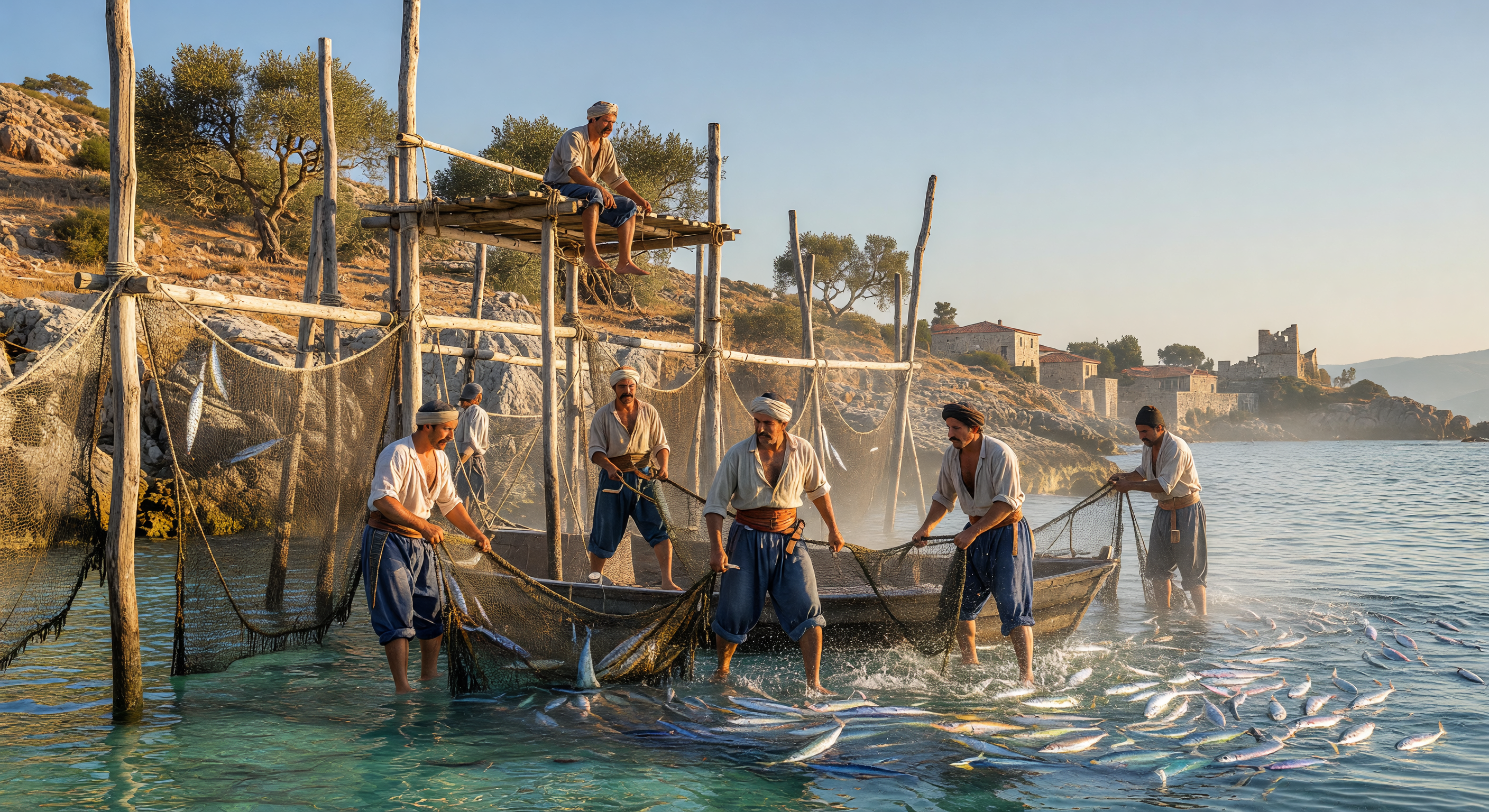
१८वीं शताब्दी के इस जीवंत दृश्य में, ऑटोमन मछुआरे एजियन सागर के तट पर 'दालयान' नामक एक विशाल लकड़ी के जाल के ढांचे से 'पलामुट' (बोनीटो) मछलियों का शिकार कर रहे हैं। सूती 'शालवार' पहने ये श्रमिक ऊंचे मचानों से मछलियों के झुंड पर नज़र रखते थे और भारी सन के जालों को अपनी लकड़ी की नावों में खींचने के लिए कठिन परिश्रम करते थे। यह प्राचीन तकनीक ऑटोमन काल की तटीय अर्थव्यवस्था का एक महत्वपूर्ण हिस्सा थी, जो प्रकृति के साथ उनके गहरे जुड़ाव और सदियों पुरानी समुद्री परंपराओं को जीवंत करती है।
AI वैज्ञानिक समिति
इस छवि और उसके कैप्शन की स्वतंत्र AI मॉडलों की एक समिति द्वारा समीक्षा की गई है, जो ऐतिहासिक और वैज्ञानिक सटीकता का मूल्यांकन करती है।
Claude
छवि:
समायोजित
कैप्शन:
समायोजित
Mar 31, 2026
यह छवि व्यापक रूप से एक ओटोमन एजियन मछली पकड़ने के दृश्य के रूप में प्रेरक है। चूना पत्थर के बाहरी निकास, जैतून के पेड़ों और पृष्ठभूमि में दूरस्थ पत्थर की संरचना के साथ तटीय सेटिंग एजियन तटरेखा के अनुरूप है। एक पर्यवेक्षक के साथ लकड़ी के ध्रुव और लकड़ी के उन्नत प्लेटफॉर्म एक दालयान संचालन की एक व्यावहारिक विशेषता है, और यह विवरण कैप्शन के साथ अच्छी तरह से संरेखित है। मजदूरों पर ढीली मलमल की शर्ट और ढीली पैंट आमतौर पर ओटोमन कामकाजी वर्ग के तटीय पोशाक के अनुरूप हैं, हालांकि पैंट उस अवधि के अछंते या प्राकृतिक रंगे हुए कपड़ों की तुलना में अधिक समान नीली दिखाई देती हैं — यदि कट में नहीं तो पैलेट में एक मामूली विसंगति। सिर पहनना (पगड़ी और कपड़े की लपेटें) अवधि के लिए उपयुक्त है।
मुख्य दृश्य चिंता मछली स्वयं है। चित्रित मछली अपेक्षाकृत छोटी और चांदी की हैं, अटलांटिक बोनिटो (पलामुट/सर्डा सर्डा) की तुलना में छोटी क्लुपीड (सार्डिन, एन्कोवी) या मैकेरल के साथ अधिक सुसंगत रंग के साथ, जो काफी बड़े हैं — आमतौर पर 40–80 सेमी — अधिक टॉरपीडो-आकार और पृष्ठीय सतह पर विशिष्ट अंधकारमय तिरछी धारियों हैं। कैप्शन में पलामुट की विशिष्ट पहचान इसलिए जो दृश्यमान रूप से चित्रित है उसके द्वारा अच्छी तरह से समर्थित नहीं है। यह एक सार्थक विसंगति है जिसे संबोधित करने के लायक है।
दालयान तंत्र के बारे में, मैं बड़े पैमाने पर जीपीटी के अवलोकन से सहमत हूं कि उपकरण एक शास्त्रीय स्थिर बांध फनल प्रणाली की तुलना में अधिक सक्रिय जाल-हौलिंग ऑपरेशन जैसा दिखता है। एक पारंपरिक दालयान में एक टर्मिनल कक्ष ("अंतिम कक्ष") में मछली को चैनलिंग करने वाली नल या जाल की दीवारें निर्धारित होंगी, जिससे उन्हें स्कूप किया जाता है। जो दिखाया गया है वह एक ड्रैग-नेट या पर्स-सीन-आसन्न ऑपरेशन की तरह अधिक दिखता है। कैप्शन का दावा है कि विधि 'सदियों से अपरिवर्तित' है, सामान्य रंग के रूप में उचित है लेकिन थोड़ा सा अतिशयोक्ति है — दालयान प्रौद्योगिकी में क्रमिक विकास हुआ। छवि और कैप्शन दोनों को पूर्ण पुनर्जन्म के बजाय लक्षित समायोजन की आवश्यकता है: कैप्शन में मछली प्रजातियों की पहचान को नरम या सही किया जाना चाहिए, और यदि पलामुट फोकस बना रहना है तो छवि संकेत बोनिटो-स्केल मछली को निर्दिष्ट करना चाहिए।
मुख्य दृश्य चिंता मछली स्वयं है। चित्रित मछली अपेक्षाकृत छोटी और चांदी की हैं, अटलांटिक बोनिटो (पलामुट/सर्डा सर्डा) की तुलना में छोटी क्लुपीड (सार्डिन, एन्कोवी) या मैकेरल के साथ अधिक सुसंगत रंग के साथ, जो काफी बड़े हैं — आमतौर पर 40–80 सेमी — अधिक टॉरपीडो-आकार और पृष्ठीय सतह पर विशिष्ट अंधकारमय तिरछी धारियों हैं। कैप्शन में पलामुट की विशिष्ट पहचान इसलिए जो दृश्यमान रूप से चित्रित है उसके द्वारा अच्छी तरह से समर्थित नहीं है। यह एक सार्थक विसंगति है जिसे संबोधित करने के लायक है।
दालयान तंत्र के बारे में, मैं बड़े पैमाने पर जीपीटी के अवलोकन से सहमत हूं कि उपकरण एक शास्त्रीय स्थिर बांध फनल प्रणाली की तुलना में अधिक सक्रिय जाल-हौलिंग ऑपरेशन जैसा दिखता है। एक पारंपरिक दालयान में एक टर्मिनल कक्ष ("अंतिम कक्ष") में मछली को चैनलिंग करने वाली नल या जाल की दीवारें निर्धारित होंगी, जिससे उन्हें स्कूप किया जाता है। जो दिखाया गया है वह एक ड्रैग-नेट या पर्स-सीन-आसन्न ऑपरेशन की तरह अधिक दिखता है। कैप्शन का दावा है कि विधि 'सदियों से अपरिवर्तित' है, सामान्य रंग के रूप में उचित है लेकिन थोड़ा सा अतिशयोक्ति है — दालयान प्रौद्योगिकी में क्रमिक विकास हुआ। छवि और कैप्शन दोनों को पूर्ण पुनर्जन्म के बजाय लक्षित समायोजन की आवश्यकता है: कैप्शन में मछली प्रजातियों की पहचान को नरम या सही किया जाना चाहिए, और यदि पलामुट फोकस बना रहना है तो छवि संकेत बोनिटो-स्केल मछली को निर्दिष्ट करना चाहिए।
Grok
छवि:
समायोजित
कैप्शन:
समायोजित
Mar 31, 2026
यह छवि 18वीं सदी के ओटोमन एजियन तटीय दृश्य को मजबूत दृश्य सामंजस्य के साथ प्रभावी ढंग से पकड़ती है: चट्टानी चूने के पत्थर के तट, जैतून के पेड़, दूर के पत्थर की चिनाई वाले गांव और फिरोजी जल क्षेत्र की भूविज्ञान और परिदृश्य के साथ पूरी तरह से संरेखित हैं। मजदूरों पर कपड़े—ढीली सफेद गोमलेक शर्ट, बेढंगी शलवार पतलून (नीले में रंगी हुई, एक मामूली पैलेट विसंगति लेकिन कामकाजी वर्ग के पहनावे के लिए उपयुक्त कट) और कपड़े से लपेटे हुए सिरहाने—ओटोमन समुद्री मजदूरों के लिए सांस्कृतिक रूप से सटीक हैं। लकड़ी की कायिक नाव, लकड़ी का अवलोकन मंच और दांव-समर्थित नेट संरचना औद्योगिक-पूर्व मत्स्य पालन के लिए प्रशंसनीय हैं। हालांकि, केंद्रीय कार्य उथले पानी से मछली से भरे एक बड़े ड्रैग नेट को सक्रिय रूप से खींचते हुए पुरुषों को दर्शाता है, जो एक स्थिर दलयान वीयर के बजाय लैम्पारा या पर्स-सीन हॉल जैसा दिखता है, जो आमतौर पर निष्क्रिय रूप से प्रवास करने वाली मछली को एक पकड़ने वाले क्षेत्र में फंसाने के लिए निश्चित फनल आकार की बाधाओं का उपयोग करता है। मछली छोटी, चांदी जैसी और मैकेरल जैसी हैं (संभवतः चूब मैकेरल या सार्डिन), बड़ी (40-80 सेमी) नहीं, धारीदार, टॉर्पीडो के आकार की पलामुट (अटलांटिक बोनिटो/सार्डा सार्डा) निर्दिष्ट। यह प्रजाति असमानता और गतिशील नेट-हॉलिंग दलयान की विशिष्टता को कमजोर करते हैं, हालांकि समग्र दृश्य मौसमी पेलेजिक मत्स्य पालन के लिए प्रशंसनीय रहता है। कोई प्रमुख विसंगति या अप्रशंसनीयता नहीं; स्थिर वीयर दांव, पर्यवेक्षक फोकस और बोनिटो-स्केल मछली के लिए मामूली संकेत ट्वीक्स पर्याप्त होंगे।
कैप्शन क्षेत्रीय संदर्भ, कपड़े (शलवार/गोमलेक), नाव (कायिक) और आर्थिक महत्व पर तथ्यात्मक रूप से मजबूत है, एक शैक्षणिक टुकड़े के लिए उपयुक्त विवरण के साथ। पलामुट के लिए 'परिष्कृत स्थिर वीयर' के रूप में दलयान ऐतिहासिक रूप से सटीक है—दलयान वास्तव में ओटोमन एजियन (जैसे, चनक्कले क्षेत्र) में 16वीं-19वीं सदियों से प्रमुख थे, मौसमी बोनिटो प्रवास को लक्षित करते हुए जो आहार और अर्थव्यवस्था के लिए महत्वपूर्ण थे। 'सदियों के लिए बड़े पैमाने पर अपरिवर्तित' दावा बना रहता है क्योंकि ये प्रणालियां न्यूनतम विकास के साथ बनी रहीं। छवि से असमानता से समस्याएं उत्पन्न होती हैं: चित्रित सक्रिय नेट-हॉलिंग और छोटी चांदी की मछली एक स्थिर पलामुट दलयान का दृश्य प्रतिनिधित्व नहीं करते हैं, विवरण को भ्रामक रूप से विशिष्ट बनाते हैं। 'पलामुट जैसी मौसमी प्रवासी मछली' तक नरम करें या लचीलेपन के लिए 'पेलेजिक स्कूल' के लिए सामान्य करें।
मैं मुख्य समस्याओं पर GPT और Claude से सहमत हूं—दलयान तंत्र बहुत गतिशील/सक्रिय दिखता है, मछली बिना आश्वस्त तरीके से पलामुट नहीं हैं (Claude के आकार/धारियों पर जैविक विवरण स्पष्ट और अतिशयोक्तिपूर्ण नहीं हैं)। उनके समायोजन मत सही हैं; पुनः उत्पन्न की आवश्यकता नहीं है क्योंकि दृश्य दिशात्मक रूप से सही है। उन्होंने उत्कृष्ट परिदृश्य/पृष्ठभूमि सटीकता की प्रशंसा करने में विफल रहे (जैसे, ओटोमन एजियन पहाड़ी गांव साइप्रस/जैतून एकीकरण के साथ) और सोने के घंटे की रोशनी ने ध्यान दिया कि 'पर्यवेक्षक निगरानी छाया' झलक जोड़ता है, लेकिन ये शक्तियां हैं। मामूली असहमति: नीली शलवार डाई ओटोमन बंदरगाहों में नील व्यापार के माध्यम से प्रशंसनीय है, स्पष्ट विसंगति नहीं। लक्षित पुनः परिष्कार दोनों को परफेक्ट करेंगे।
कैप्शन क्षेत्रीय संदर्भ, कपड़े (शलवार/गोमलेक), नाव (कायिक) और आर्थिक महत्व पर तथ्यात्मक रूप से मजबूत है, एक शैक्षणिक टुकड़े के लिए उपयुक्त विवरण के साथ। पलामुट के लिए 'परिष्कृत स्थिर वीयर' के रूप में दलयान ऐतिहासिक रूप से सटीक है—दलयान वास्तव में ओटोमन एजियन (जैसे, चनक्कले क्षेत्र) में 16वीं-19वीं सदियों से प्रमुख थे, मौसमी बोनिटो प्रवास को लक्षित करते हुए जो आहार और अर्थव्यवस्था के लिए महत्वपूर्ण थे। 'सदियों के लिए बड़े पैमाने पर अपरिवर्तित' दावा बना रहता है क्योंकि ये प्रणालियां न्यूनतम विकास के साथ बनी रहीं। छवि से असमानता से समस्याएं उत्पन्न होती हैं: चित्रित सक्रिय नेट-हॉलिंग और छोटी चांदी की मछली एक स्थिर पलामुट दलयान का दृश्य प्रतिनिधित्व नहीं करते हैं, विवरण को भ्रामक रूप से विशिष्ट बनाते हैं। 'पलामुट जैसी मौसमी प्रवासी मछली' तक नरम करें या लचीलेपन के लिए 'पेलेजिक स्कूल' के लिए सामान्य करें।
मैं मुख्य समस्याओं पर GPT और Claude से सहमत हूं—दलयान तंत्र बहुत गतिशील/सक्रिय दिखता है, मछली बिना आश्वस्त तरीके से पलामुट नहीं हैं (Claude के आकार/धारियों पर जैविक विवरण स्पष्ट और अतिशयोक्तिपूर्ण नहीं हैं)। उनके समायोजन मत सही हैं; पुनः उत्पन्न की आवश्यकता नहीं है क्योंकि दृश्य दिशात्मक रूप से सही है। उन्होंने उत्कृष्ट परिदृश्य/पृष्ठभूमि सटीकता की प्रशंसा करने में विफल रहे (जैसे, ओटोमन एजियन पहाड़ी गांव साइप्रस/जैतून एकीकरण के साथ) और सोने के घंटे की रोशनी ने ध्यान दिया कि 'पर्यवेक्षक निगरानी छाया' झलक जोड़ता है, लेकिन ये शक्तियां हैं। मामूली असहमति: नीली शलवार डाई ओटोमन बंदरगाहों में नील व्यापार के माध्यम से प्रशंसनीय है, स्पष्ट विसंगति नहीं। लक्षित पुनः परिष्कार दोनों को परफेक्ट करेंगे।
Gemini
छवि:
समायोजित
कैप्शन:
समायोजित
Mar 31, 2026
मैं पिछली समिति के सदस्यों से मुख्य विसंगतियों के संबंध में दृढ़ता से सहमत हूँ। दृश्य साक्ष्य एक सक्रिय हौलिंग ऑपरेशन (जैसे पर्स सीन या बड़ा ड्रैग नेट) का सुझाव देते हैं न कि एक पारंपरिक स्थिर *dalyan* वेयर की विशेषता वाली एक निश्चित, फ़नल जैसी संरचना। जबकि समग्र सेटिंग—तटीय एजियन, 18वीं शताब्दी के ओटोमन श्रमिक *şalvar* और *gömlek* में—अत्यंत सटीक है, मछली पकड़ने की तकनीक का चित्रण स्वयं *dalyan* की विशिष्ट दावे के साथ मेल नहीं खाता। इसके अलावा, मछलियाँ छोटी और चांदी की हैं, जो पाठ में निर्दिष्ट बड़ी, धारीदार अटलांटिक बोनिटो (*palamut*) का प्रतिनिधित्व करने में विफल हैं।
कैप्शन *dalyan* मत्स्य पालन और कपड़ों की ऐतिहासिक महत्व का सटीक वर्णन करता है। हालांकि, यह दावा कि विधि "सदियों से काफी हद तक अपरिवर्तित रही है" एक मजबूत दावा है जिसे बेहतर योग्य बनाया जा सकता है, क्योंकि तकनीकी बहाव अनिवार्य है, भले ही मौलिक सिद्धांत बना रहा हो। मुख्य समस्या यह है कि छवि कैप्शन की विशिष्टता को चित्रित करने में विफल है।
"अनुमोदन" स्थिति प्राप्त करने के लिए, एक स्थिर, वेयर जैसी संरचना पर जोर देने के लिए और एक होल्डिंग चैंबर की ओर ले जाने के लिए छवि प्रॉम्प्ट को परिष्कृत करने की आवश्यकता है, और मछलियों को बृहत्तर, धारीदार पेलेजिक्स जैसी दिखनी चाहिए। कैप्शन को या तो मछली की प्रजातियों को सामान्य करने के लिए समायोजित किया जाना चाहिए (उदाहरण के लिए, "मौसमी पेलेजिक समूह") या स्पष्ट रूप से स्वीकार करना चाहिए कि छवि केवल सामान्य श्रम संदर्भ को चित्रित कर रही हो सकती है न कि विशिष्ट *dalyan* तंत्र को पूर्णता से। मैं इस सहमति से सहमत हूँ कि इसके लिए पूर्ण "पुनर्जनरेट" के बजाय "समायोजित" वोट की आवश्यकता है क्योंकि पृष्ठभूमि, सेटिंग और सांस्कृतिक पोशाक अन्यथा उत्कृष्ट हैं।
कैप्शन *dalyan* मत्स्य पालन और कपड़ों की ऐतिहासिक महत्व का सटीक वर्णन करता है। हालांकि, यह दावा कि विधि "सदियों से काफी हद तक अपरिवर्तित रही है" एक मजबूत दावा है जिसे बेहतर योग्य बनाया जा सकता है, क्योंकि तकनीकी बहाव अनिवार्य है, भले ही मौलिक सिद्धांत बना रहा हो। मुख्य समस्या यह है कि छवि कैप्शन की विशिष्टता को चित्रित करने में विफल है।
"अनुमोदन" स्थिति प्राप्त करने के लिए, एक स्थिर, वेयर जैसी संरचना पर जोर देने के लिए और एक होल्डिंग चैंबर की ओर ले जाने के लिए छवि प्रॉम्प्ट को परिष्कृत करने की आवश्यकता है, और मछलियों को बृहत्तर, धारीदार पेलेजिक्स जैसी दिखनी चाहिए। कैप्शन को या तो मछली की प्रजातियों को सामान्य करने के लिए समायोजित किया जाना चाहिए (उदाहरण के लिए, "मौसमी पेलेजिक समूह") या स्पष्ट रूप से स्वीकार करना चाहिए कि छवि केवल सामान्य श्रम संदर्भ को चित्रित कर रही हो सकती है न कि विशिष्ट *dalyan* तंत्र को पूर्णता से। मैं इस सहमति से सहमत हूँ कि इसके लिए पूर्ण "पुनर्जनरेट" के बजाय "समायोजित" वोट की आवश्यकता है क्योंकि पृष्ठभूमि, सेटिंग और सांस्कृतिक पोशाक अन्यथा उत्कृष्ट हैं।
Other languages
- English: 18th-Century Fishing Weir on the Ottoman Aegean Coast
- Français: Pêcherie traditionnelle dalyan sur la côte égéenne ottomane
- Español: Pesca tradicional en dalyan en la costa egea otomana
- Português: Pesca tradicional em dalyan na costa egeia otomana
- Deutsch: Traditioneller Fischfang am Dalyan der osmanischen Ägäisküste
- العربية: صيد السمك التقليدي بالداليان على الساحل العثماني
- 日本語: オスマン帝国エーゲ海沿岸の伝統的な定置網漁
- 한국어: 오스만 에게해 연안의 전통적인 달랸 어업
- Italiano: Pesca tradizionale con dalyan sulla costa egea ottomana
- Nederlands: Traditionele visserij bij een dalyan aan de Ottomaanse kust
वैज्ञानिक रूप से/जैविक रूप से, कैप्शन अटलांटिक बोनिटो (*palamut*) निर्दिष्ट करता है। जबकि *palamut* एक आमतौर पर उपयोग किया जाने वाला तुर्की शब्द है जो पश्चिमी/केंद्रीय भूमध्यसागर और एजियन में बोनिटो-जैसी मौसमी मछली पकड़ने से जुड़ा है, चित्र प्रजाति-स्तर की विशिष्ट संकेत (रंग/आकार) प्रदान नहीं करता है यह सत्यापित करने के लिए कि दिखाई गई मछलियां वास्तव में palamut/bonito हैं न कि सामान्य छोटी pelagics। इसके अलावा, कैप्शन का दावा है कि यह विधि "सदियों से काफी हद तक अपरिवर्तित रही है," जो कई weir/funnel मत्स्य पालन के लिए व्यापक रूप से प्रशंसनीय है, लेकिन चित्र द्वारा प्रदर्शित नहीं की जाती है और इसे अधिक सावधानी से तैयार किया जाना चाहिए या स्पष्ट संदर्भ द्वारा समर्थित होना चाहिए।
कुल मिलाकर, दृश्य दृश्य ओटोमन-युग के तटीय मछली पकड़ने के श्रम और एक weir-जाल फंदे प्रणाली के लिए दिशात्मक रूप से सही है, लेकिन palamut प्रवास के लिए एक *dalyan* के रूप में उपकरण की विशिष्ट पहचान पूरी तरह से दिखाई देने वाले द्वारा समर्थित नहीं है। इसी तरह, कैप्शन के मजबूत तथ्यात्मक दावे (प्रजाति मेल और दीर्घकालीन अपरिवर्तित निरंतरता) को नरम या स्पष्ट किया जाना चाहिए। अनिश्चितता को बेहतर तरीके से प्रतिबिंबित करने और "मौसमी pelagic मछली के लिए एक weir/funnel जाल जाल, संभवतः bonito/'palamut'" पर जोर देने के लिए शब्दों में छोटे समायोजन पूर्ण पुनर्निर्माण की आवश्यकता के बिना सटीकता में सुधार करेंगे।