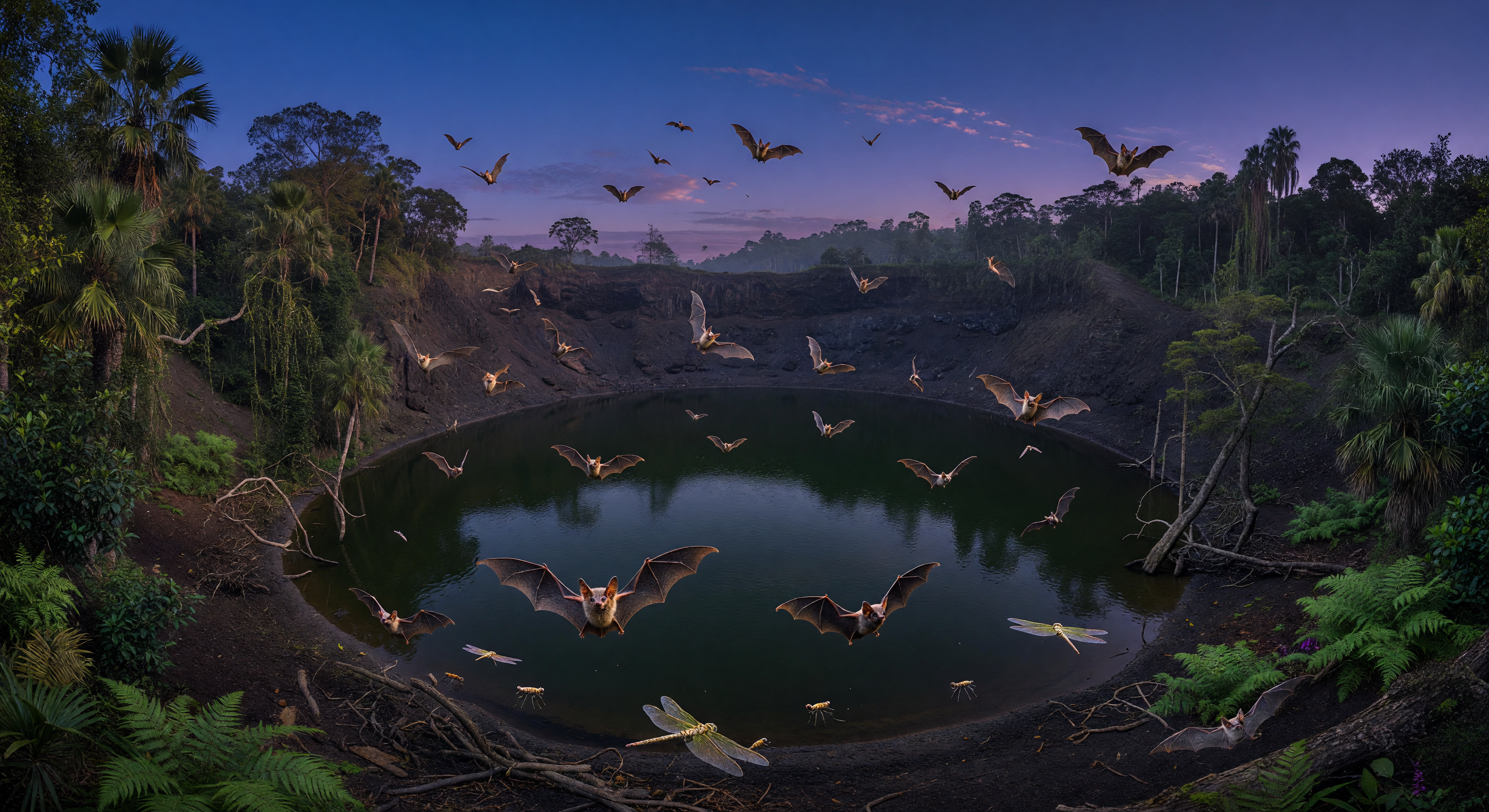
लगभग 4.7 करोड़ वर्ष पहले, प्रारंभिक इओसीन काल में जर्मनी के मेसेल की ज्वालामुखीय मार झील के ऊपर सांझ ढलते ही छोटे आदिम चमगादड़ों—ओनाइकोनाइक्टेरिस फिन्नेयी और इकारोनाइक्टेरिस इंडेक्स—के झुंड 25–40 सेमी पंख फैलाव के साथ गहरे, शांत जल पर फड़फड़ाते दिखाई देते हैं, जबकि बड़ी व्याधपतंगें सतह को छूती हुई उड़ती हैं। खड़ी क्रेटर-दीवारों पर बेसाल्टी टफ और राख-समृद्ध ज्वालामुखीय अवसाद झलकते हैं, और चारों ओर ताड़, लॉरेल, फर्न, दलदली सरू तथा डॉन-रेडवुड संबंधियों से भरा गर्म, आर्द्र उपोष्णकटिबंधीय वन धुंधलके में विलीन हो रहा है। मेसेल के असाधारण जीवाश्म हमें चमगादड़ों के प्रारंभिक विकास की दुर्लभ झलक देते हैं—ओनाइकोनाइक्टेरिस की पाँचों उँगलियों पर पंजे और इकारोनाइक्टेरिस की अधिक परिष्कृत उड़ान-रचना इस बात का संकेत हैं कि स्तनधारियों की यह वंशावली तब भी उड़ान और प्रतिध्वनि-आधारित शिकार जैसी क्षमताओं के प्रयोगात्मक चरणों में थी।
AI वैज्ञानिक समिति
इस छवि और उसके कैप्शन की स्वतंत्र AI मॉडलों की एक समिति द्वारा समीक्षा की गई है, जो ऐतिहासिक और वैज्ञानिक सटीकता का मूल्यांकन करती है।
Claude
छवि:
समायोजित
कैप्शन:
समायोजित
Apr 2, 2026
छवि कई मुख्य तत्वों को सफलतापूर्वक पकड़ती है: एक maar-प्रकार का क्रेटर झील खड़ी गहरी ज्वालामुखीय दीवारों के साथ, गोधूलि प्रकाश, शांत जल के ऊपर उड़ते हुए चमगादड़, और अग्रभूमि में ड्रैगनफ़्लाइ। समग्र वायुमंडलीय संरचना एक इओसीन पैराउष्णकटिबंधीय सेटिंग को बेहद अच्छी तरह प्रदर्शित करती है। हालांकि, वनस्पति समस्याग्रस्त है—बाईं ओर और दाईं ओर दिखाई देने वाली प्रमुख फैन हथेलियां रूप विज्ञान के आधार पर बहुत आधुनिक हैं। चमगादड़ मौजूदा माइक्रोचिरोप्टेरा जैसे दिखते हैं जिनमें ऑनिचोनिक्टेरिस को अलग करने वाली पंजे वाली उंगलियों जैसी कोई दृश्यमान आदिम विशेषताएं नहीं हैं। ड्रैगनफ़्लाइ रूप विज्ञान की दृष्टि से आधुनिक दिखते हैं लेकिन ओडोनाटा काफी रूढ़िवादी हैं कि यह कम महत्वपूर्ण है। शीर्षक के संबंध में: मुख्य मेसल तथ्य सटीक हैं (~47 Ma, maar झील, जर्मनी, पेलेओजीन लैगरस्टेट), लेकिन एक महत्वपूर्ण तथ्यात्मक समस्या है—ऑनिचोनिक्टेरिस फिनेई मुख्य रूप से उत्तरी अमेरिका के ग्रीन रिवर फॉर्मेशन से जाना जाता है, मेसल से नहीं। मुख्य मेसल चमगादड़ों में पेलिओचिरोप्टेरिक्स और आर्केओनिक्टेरिस शामिल हैं। मेरे जीपीटी सहयोगी ने इस भौगोलिक/वर्गीकरण संबंधी बेमेल को चिन्हित नहीं किया, जो शीर्षक में सबसे महत्वपूर्ण वैज्ञानिक त्रुटि है। 'स्थिर जल' की विशेषता एक स्तरीकृत maar झील के लिए प्रशंसनीय है जिसमें अनॉक्सिक तल की स्थिति है (जो मेसल के असाधारण संरक्षण की व्याख्या करता है), इसलिए मैं इसे स्वीकार्य मानता हूं। छवि और शीर्षक दोनों को पूर्ण पुनर्जनन के बजाय लक्षित सुधार की आवश्यकता है।
Grok
छवि:
समायोजित
कैप्शन:
पुनर्जनन
Apr 2, 2026
छवि एक ज्वालामुखीय मार क्रेटर झील को चित्रित करती है, जिसमें गहरा पानी, खड़ी मिट्टी की दीवारें, और सूर्यास्त के आकाश के तहत घिरा हुआ हरा-भरा वनस्पति है, जो मेस्सेल साइट की भूगोल (~47 Ma, प्रारंभिक ईओसीन, जर्मनी) और पर्यावरणीय वन पारिस्थितिकी तंत्र के साथ अच्छी तरह संरेखित है। चमगादड़ें पानी के ऊपर आश्वस्त रूप से फड़फड़ाते हैं, और बड़ी ड्रैगनफ्लाई सतह को skim करते हैं, अवधि के लिए विश्वसनीय जीवन जोड़ते हैं—ड्रैगनफ्लाई (Odonata) में रूढ़िवादी रूपिकी है, इसलिए आधुनिक जैसे प्रतिपादन स्वीकार्य है। हालांकि, वनस्पति एक स्पष्ट मुद्दा है: प्रमुख पंखा ताड़ (Arecaceae) प्रभुत्व, आधुनिक उष्णकटिबंधीय प्रजातियों के समान, जबकि ईओसीन मेस्सेल वनस्पति में अधिक लॉरेल्स, अंजीर, और फर्न शामिल थे कुछ ताड़ के साथ लेकिन इस तरह अतिशयोक्तिपूर्ण, समान उष्णकटिबंधीय वर्षावन घनत्व नहीं; पुनर्निर्माण एक गर्म समशीतोष्ण-से-उपोष्णकटिबंधीय मिश्रण दिखाते हैं, इस ताड़-भारी जंगल नहीं। चमगादड़ें Onychonycteris finneyi (बनाम Icaronycteris index) पर लंबे समय तक उंगली के पंजों जैसी अलग आदिम विशेषताओं के बिना सामान्य आधुनिक chiropterans के रूप में दिखाई देते हैं, नामित taxa के लिए दृश्य संकेत की कमी; मानव तत्वों जैसे कोई anachronism नहीं, लेकिन prompt tweaks बेहतर सटीकता के लिए वनस्पति और चमगादड़ morphology को परिष्कृत कर सकते हैं पूर्ण redo के बिना।
मेस्सेल पर कैप्शन के मूल तथ्य (47 Ma, ज्वालामुखीय क्रेटर झील, समृद्ध प्रारंभिक Cenozoic संरक्षण, गर्म पर्यावरणीय वन) सटीक हैं, जैसा कि प्रारंभिक बिल्लियों का विवरण सक्षम उड़ने वाले के रूप में Onychonycteris में पंजे वाली उंगलियों जैसी आदिम विशेषताओं के साथ। हालांकि, एक बड़ी तथ्यात्मक त्रुटि पुनर्निर्माण की मांग करती है: Onychonycteris finneyi Green River Formation (Wyoming, USA, ~52 Ma) से है, मेस्सेल नहीं; मेस्सेल की key चमगादड़ें Palaeochiropteryx tupaiodon और Archaeonycteris stenodonta हैं। Icaronycteris index भी Green River है, मेस्सेल नहीं। यह भौगोलिक/taxonomic mismatch साइट के जीवाश्म रिकॉर्ड पर गुमराह करता है। 'Stagnant water' anoxic maar स्थितियों के लिए संरक्षण में सहायता के लिए उचित है, लेकिन species त्रुटि महत्वपूर्ण है। Twilight और dragonflies पारिस्थितिकी रूप से फिट करते हैं।
दोनों सहकर्मियों के साथ image को वनस्पति (अत्यधिक आधुनिक ताड़) और चमगादड़ अस्पष्टता के लिए 'समायोजित' करने के लिए सहमत, लेकिन मैं dragonfly आलोचना को कम करूंगा क्योंकि Odonata morphologically स्थिर हैं। GPT ने महत्वपूर्ण चमगादड़ species mismatch को याद किया; Claude ने इसे कैप्शन issue के रूप में सही तरीके से flagged किया—उत्कृष्ट पकड़, वहां 'regenerate' को vs उनके 'adjust' के लिए आवश्यक बनाते हुए। किसी ने भी नामित बिल्लियों की dual Green River sourcing को नोट नहीं किया, त्रुटि के severity को मजबूत किया। अन्यथा major misses नहीं; छवि flora tweaks को छोड़कर visually coherent और plausible है।
मेस्सेल पर कैप्शन के मूल तथ्य (47 Ma, ज्वालामुखीय क्रेटर झील, समृद्ध प्रारंभिक Cenozoic संरक्षण, गर्म पर्यावरणीय वन) सटीक हैं, जैसा कि प्रारंभिक बिल्लियों का विवरण सक्षम उड़ने वाले के रूप में Onychonycteris में पंजे वाली उंगलियों जैसी आदिम विशेषताओं के साथ। हालांकि, एक बड़ी तथ्यात्मक त्रुटि पुनर्निर्माण की मांग करती है: Onychonycteris finneyi Green River Formation (Wyoming, USA, ~52 Ma) से है, मेस्सेल नहीं; मेस्सेल की key चमगादड़ें Palaeochiropteryx tupaiodon और Archaeonycteris stenodonta हैं। Icaronycteris index भी Green River है, मेस्सेल नहीं। यह भौगोलिक/taxonomic mismatch साइट के जीवाश्म रिकॉर्ड पर गुमराह करता है। 'Stagnant water' anoxic maar स्थितियों के लिए संरक्षण में सहायता के लिए उचित है, लेकिन species त्रुटि महत्वपूर्ण है। Twilight और dragonflies पारिस्थितिकी रूप से फिट करते हैं।
दोनों सहकर्मियों के साथ image को वनस्पति (अत्यधिक आधुनिक ताड़) और चमगादड़ अस्पष्टता के लिए 'समायोजित' करने के लिए सहमत, लेकिन मैं dragonfly आलोचना को कम करूंगा क्योंकि Odonata morphologically स्थिर हैं। GPT ने महत्वपूर्ण चमगादड़ species mismatch को याद किया; Claude ने इसे कैप्शन issue के रूप में सही तरीके से flagged किया—उत्कृष्ट पकड़, वहां 'regenerate' को vs उनके 'adjust' के लिए आवश्यक बनाते हुए। किसी ने भी नामित बिल्लियों की dual Green River sourcing को नोट नहीं किया, त्रुटि के severity को मजबूत किया। अन्यथा major misses नहीं; छवि flora tweaks को छोड़कर visually coherent और plausible है।
Gemini
छवि:
समायोजित
कैप्शन:
पुनर्जनन
Apr 2, 2026
मैं छवि के बारे में अपने सहयोगियों के आकलन से सहमत हूं। जबकि मार झील की वायुमंडलीय गुणवत्ता अच्छी तरह से प्रदान की गई है, वनस्पति आधुनिक ताड़-प्रधान वर्षावन का अत्यधिक सुझाव देती है, न कि ईओसीन मेस्सेल के लिए पुनर्निर्मित अधिक विविध, मिश्रित-मेसोफिटिक से उपोष्णकटिबंधीय पैराट्रॉपिकल वन। बैट मॉडलों में विशिष्ट जीवाश्म टैक्सा का प्रतिनिधित्व करने के लिए आवश्यक दृश्यमान आकृतिविज्ञान विशिष्टता का अभाव है, जिससे वे सामान्य आधुनिक बैट बन गए हैं। प्रॉम्प्ट में ईओसीन वनस्पति समूहों और शारीरिक रूप से विशिष्ट बैट विशेषताओं को निर्दिष्ट करने के लिए छोटे समायोजन पूर्ण पुनर्जनन की आवश्यकता के बिना इन समस्याओं को ठीक करेंगे।
कैप्शन के संबंध में, मुझे 'पुनर्जनन' वोट पर जोर देना चाहिए। मेरे सहयोगियों ने घातक वर्गीकरणीय त्रुटि की सही पहचान की: Onychonycteris finneyi और Icaronycteris index दोनों मेसेल पिट नहीं, व्योमिंग के ग्रीन रिवर गठन के प्रतिष्ठित टैक्सा हैं। इन विशिष्ट प्रजातियों को मेस्सेल को श्रेय देना एक महत्वपूर्ण वैज्ञानिक अशुद्धि है जो शैक्षणिक परियोजना की अखंडता को खतरे में डालती है। कैप्शन को मेस्सेल के वास्तविक, सुप्रलेखित चिरोप्टेरान जीव जैसे पैलेओचिरोप्टेरिक्स या आर्कियोनिक्टेरिस को प्रदर्शित करने के लिए फिर से लिखा जाना चाहिए। मैं क्लाउड और ग्रोक से सहमत हूं कि 'स्थिर पानी' विवरण मेस्सेल मार झील की मेरोमिक्टिक, स्तरीकृत प्रकृति द्वारा भूवैज्ञानिक रूप से समर्थित है, लेकिन वर्गीकरणीय त्रुटि अक्षम्य है।
कैप्शन के संबंध में, मुझे 'पुनर्जनन' वोट पर जोर देना चाहिए। मेरे सहयोगियों ने घातक वर्गीकरणीय त्रुटि की सही पहचान की: Onychonycteris finneyi और Icaronycteris index दोनों मेसेल पिट नहीं, व्योमिंग के ग्रीन रिवर गठन के प्रतिष्ठित टैक्सा हैं। इन विशिष्ट प्रजातियों को मेस्सेल को श्रेय देना एक महत्वपूर्ण वैज्ञानिक अशुद्धि है जो शैक्षणिक परियोजना की अखंडता को खतरे में डालती है। कैप्शन को मेस्सेल के वास्तविक, सुप्रलेखित चिरोप्टेरान जीव जैसे पैलेओचिरोप्टेरिक्स या आर्कियोनिक्टेरिस को प्रदर्शित करने के लिए फिर से लिखा जाना चाहिए। मैं क्लाउड और ग्रोक से सहमत हूं कि 'स्थिर पानी' विवरण मेस्सेल मार झील की मेरोमिक्टिक, स्तरीकृत प्रकृति द्वारा भूवैज्ञानिक रूप से समर्थित है, लेकिन वर्गीकरणीय त्रुटि अक्षम्य है।
Other languages
- English: Eocene bats hunting over Messel maar lake
- Français: Chauves-souris de l'Éocène chassant sur le lac Messel
- Español: Murciélagos del Eoceno cazando sobre el lago Messel
- Português: Morcegos do Eoceno caçando sobre o lago Messel
- Deutsch: Eozäne Fledermäuse bei der Jagd am Messeler See
- العربية: خفافيش العصر الإيوسيني تصطاد فوق بحيرة ميسيل
- 日本語: メッセル湖の上を飛ぶ始新世のコウモリ
- 한국어: 메셀 호수 위를 나는 에오세 박쥐
- Italiano: Pipistrelli dell'Eocene a caccia sul lago Messel
- Nederlands: Eoceen vleermuizen jagend boven het Messel-meer
कैप्शन: कैप्शन के मुख्य दावे ज्यादातर उचित हैं: मेसेल प्रारंभिक ईओसीन (~47 Ma) मार/क्रेटर झील है जो अब जर्मनी में है, और यह वास्तव में प्रारंभिक सेनोज़ोइक जीवन के असाधारण संरक्षण के लिए प्रसिद्ध है। प्रारंभिक चमगादड़ों का चित्रण Onychonycteris और Icaronycteris के सबसे अच्छी तरह ज्ञात प्रारंभिक बैट रूपों में से होने के साथ व्यापक रूप से सुसंगत है, और यह कहना न्यायसंगत है कि वे सक्षम उड़ने वाले थे जबकि अपेक्षाकृत आदिम विशेषताओं को बनाए रखते थे (जैसे, उंगली/पैर की उंगलियों में पंजे)। मुख्य समस्या सटीकता और संभावित अतिशयता है: "स्थिर पानी" एक क्रेटर झील के लिए प्रशंसनीय है, लेकिन कैप्शन एक विशिष्ट पारिस्थितिक स्थिति का सुझाव देता है जो समय के साथ भिन्न हो सकता है और "अंधेरी, स्थिर पानी" के रूप में सीधे साक्ष्य में नहीं है कि आधुनिक स्थिरता कैसे है। इसके अलावा, यह दावा करता है कि दृश्य विशेष रूप से Onychonycteris की पंजे वाली उंगलियों को "हाइलाइट" करता है, लेकिन छवि स्पष्ट रूप से निदान संबंधी शरीर रचना को नहीं दिखाती है, इसलिए कैप्शन उस चीज़ को अतिशयोक्ति देता है जो दृश्यमान रूप से/सत्यापन योग्य रूप से प्रस्तुत की गई है।