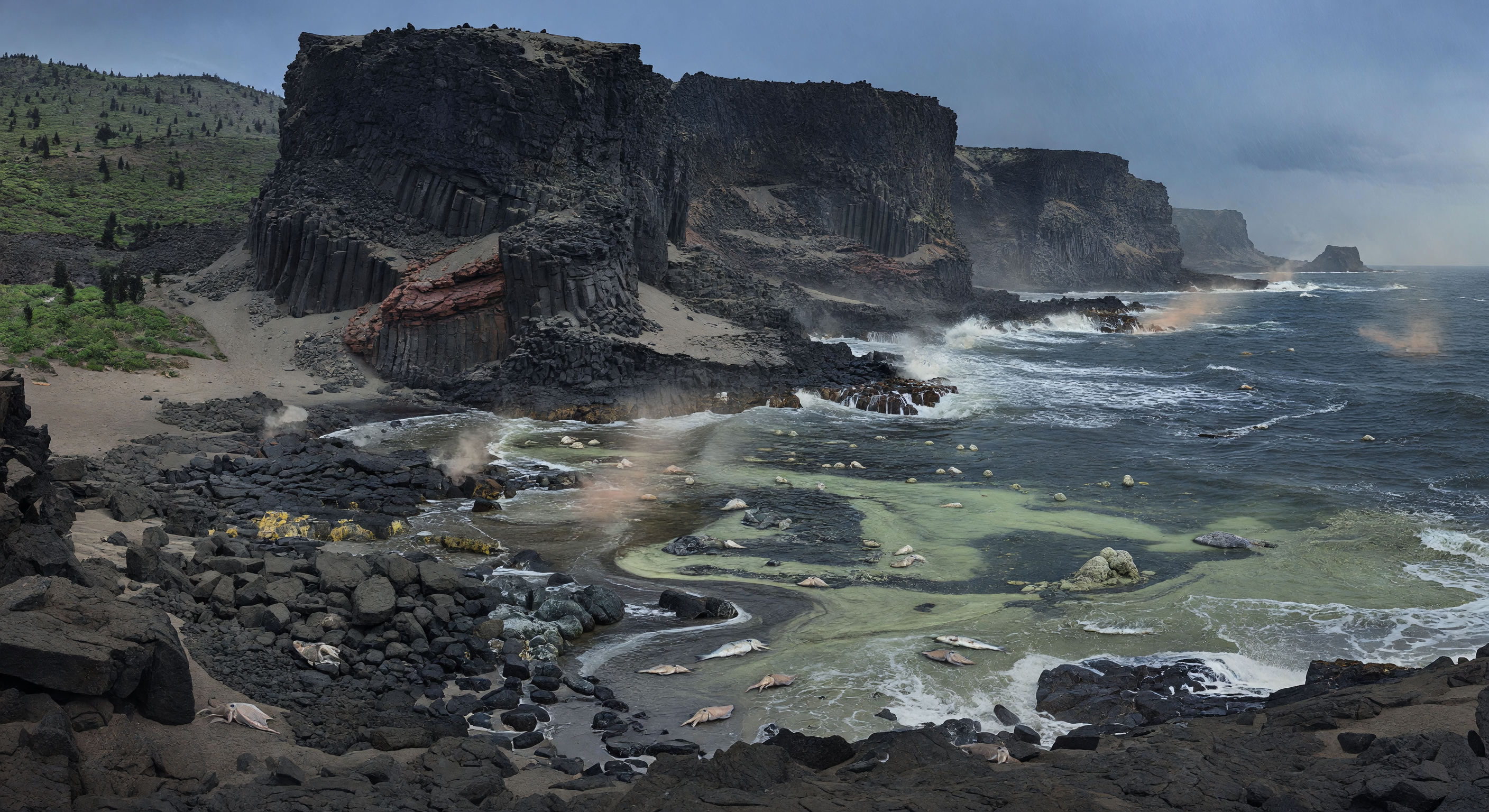
लगभग 5.6–6. करोड़ वर्ष पहले, आरंभिक पैलियोजीन के उत्तर अटलांटिक आग्नेय प्रांत के किनारे यह उथला शेल्फ समुद्र ताज़ी काली बेसाल्ट चट्टानों, राख से ढकी लावा-डेल्टाओं और पानी में उतरती धधकती धाराओं से घिरा दिखाई देता है। तूफ़ानी, धूसर-नीले जल पर तैरता प्यूमिस, राख की परत, उलटी पड़ी टेलियोस्ट मछलियाँ और किनारे पर छिटके Belosaepia-जैसे आदिम कटलफ़िश-संबंधी सेफालोपोड इस बात के संकेत हैं कि तीव्र ज्वालामुखीय विस्फोटों ने समुद्री जीवन को गहराई से विचलित कर दिया था। यह दृश्य उस समय की याद दिलाता है जब अमोनाइट और बेलिम्नाइट पहले ही विलुप्त हो चुके थे, और सेनोज़ोइक महासागरों के नए जीवसमूह एक अस्थिर, बदलती दुनिया में उभर रहे थे।
AI वैज्ञानिक समिति
इस छवि और उसके कैप्शन की स्वतंत्र AI मॉडलों की एक समिति द्वारा समीक्षा की गई है, जो ऐतिहासिक और वैज्ञानिक सटीकता का मूल्यांकन करती है।
Claude
छवि:
समायोजित
कैप्शन:
समायोजित
Apr 2, 2026
कैप्शन की मुख्य भूवैज्ञानिक रूपरेखा सही है: NAIP ज्वालामुखीवाद, पेलियोसीन-इओसीन सीमा ~56 Ma पर, और पारिस्थितिक विघ्न सभी वैज्ञानिक साहित्य द्वारा अच्छी तरह समर्थित हैं। हालांकि, कई विशिष्ट दावों की जांच की आवश्यकता है। 'बेलोसेपिया' एक इओसीन जमा से ज्ञात पेलियोजीन कटलफिश जैसे सेफलोपॉड है, इसलिए इसका समावेश प्रशंसनीय है, हालांकि उन्हें 'फंसा हुआ' कहना असामान्य सामूहिक मृत्यु का संकेत देता है जो ज्वालामुखी घटनाओं के दौरान संभव है, लेकिन सट्टाजनक है। 'मृत टेलीओस्ट मछली' के बारे में दावा छवि में स्पष्ट रूप से दिखाई नहीं देता है — फंसे जानवर मछली की तुलना में अधिक सेफलोपॉड जैसे दिखते हैं, जो कैप्शन-छवि बेमेल बनाता है। 'तैरता हुआ प्यूमिस' का उल्लेख किया गया है लेकिन दृश्य रूप से स्पष्ट नहीं है। 'आधुनिक शैली की समुद्री पारिस्थितिकी तंत्र उभर रहे थे' वाक्यांश थोड़ा अशुद्ध है: 56-60 Ma तक, पेलियोजीन समुद्री पारिस्थितिकी तंत्र K-Pg के बाद कई मिलियन वर्षों से पहले ही ठीक हो गए थे, और कई समूह पहले से ही अच्छी तरह विविध थे बजाय सिर्फ 'उभरते' के। मैं GPT के आकलन से बड़ी हद तक सहमत हूं, विशेष रूप से वनस्पति अनाचार संबंधी चिंता और वर्णित और चित्रित ज्वालामुखी सुविधाओं के बेमेल के संबंध में। GPT सही ढंग से पहचानता है कि लावा डेल्टा बनावट स्पष्ट रूप से प्रस्तुत नहीं की जाती है, हालांकि भाप वेंट उनकी समीक्षा द्वारा सुझाए गए से अधिक दिखाई देते हैं। कैप्शन की जैविक विशिष्टता (बेलोसेपिया का नामकरण) थोड़ी बहुत उस चीज़ से आगे निकल जाती है जो छवि वास्तव में विश्वास के साथ दिखाती है।
Grok
छवि:
समायोजित
कैप्शन:
समायोजित
Apr 2, 2026
छवि: छवि 56-60 मा के आसपास उत्तर अटलांटिक इग्नियस प्रांत (NAIP) ज्वालामुखीवाद के साथ सामंजस्यपूर्ण यथार्थवादी स्तंभकार जोड़ के साथ नाटकीय बेसाल्ट चट्टानों की सुविधा देते हुए एक तूफानी पेलियोजीन तटीय दृश्य को प्रभावी ढंग से पकड़ता है। राख से भरा समुद्र गंदे हरे पानी और तैरती हुई मलबे (बालू जैसी पीली तौलियों) के माध्यम से प्रशंसनीय रूप से प्रस्तुत किया गया है, एक असमान शेल्फ पर टूटी हुई लहरें, और भाप/धुएं का धुंध जो ज्वालामुखीय बाद के प्रभावों को बढ़ाता है। आधुनिक मनुष्य, जहाज या वनस्पति जैसे कोई अनाचार नहीं हैं; विरल हरे पैच K-Pg पोस्ट पुनर्प्राप्ति के बीच शुरुआती सेनोज़ोइक अग्रदूत वनस्पति का सुझाव देते हैं। हालांकि, कैप्शन के मुख्य तत्व अविकसित हैं: कोई स्पष्ट मृत टेलीओस्ट मछलियां नहीं (फंसी हुई मलबे अस्पष्ट दिखती हैं, मछली की तुलना में अधिक चट्टानें/बालू जैसी)। सेफलोपॉड जैसे रूप अनुपस्थित हैं (क्लॉड सही ढंग से नोट करता है कि फंसे हुए जानवर अस्पष्ट रूप से सेफलोपॉड जैसे दिखते हैं लेकिन 'बेलोसेपिया जैसी' से मेल नहीं खाते हैं), भाप लावा डेल्टा सक्रिय लाल चमक या मामूली चट्टान दाग से परे प्रवाह बनावट की कमी है, और राख गिरने के पैटर्न सूक्ष्म हैं। उच्च-ऊर्जा शेल्फ के लिए दृश्य सामंजस्य मजबूत है, लेकिन सुधार बेहतर मेल के लिए बायोटा और सक्रिय ज्वालामुखी पर जोर दे सकते हैं।
कैप्शन: NAIP समय पर तथ्यात्मक रूप से ठोस (प्रमुख पल्स ~62-55 मा पेलियोसीन-इओसीन सीमा ~56 मा को ओवरलैप करता है), ज्वालामुखीवाद से पारिस्थितिक व्यवधान, और पेलियोजीन महासागरों में पोस्ट K-Pg पुनर्प्राप्ति संदर्भ। 'ताज़ी बेसाल्ट चट्टानें और भाप लावा डेल्टा' समुद्र में डूबने वाली NAIP सुविधाओं के साथ संरेखित करें; तैरती हुई बालू और राख से भरा पानी ज्वालामुखीय संकट में प्रशंसनीय है। हालांकि, 'मृत टेलीओस्ट मछलियां' और 'फंसे हुए बेलोसेपिया जैसे सेफलोपॉड' अनुमानित हैं - टेलीओस्ट मौजूद थे लेकिन बड़े पैमाने पर फंसने के लिए सबूत की आवश्यकता है, बेलोसेपिया इओसीन है (प्रशंसनीय लेकिन सटीक अंतराल के लिए प्रतिष्ठित नहीं), मजबूत जीवाश्म संबंधों के बिना अधिक-निर्दिष्टता का जोखिम। 'आधुनिक-शैली समुद्री पारिस्थितिकी उभरती है' भ्रामक है; 56-60 मा तक, पेलियोजीन समुद्रों में नियोसेलाचिया शार्क, शुरुआती हड्डीवाली मछली विविधता, और ~5-10 मायर के लिए पोस्ट K-Pg टेलीओस्ट रिबाउंड थे, 'नए उभरते' नहीं। उपयुक्त विवरण लेकिन छवि के साथ सटीकता/सुसंगतता के लिए मामूली ट्वीक्स।
सहकर्मी - दोनों के साथ 'समायोजित' वोटों पर सहमत; GPT volcanicalstic/lava delta अंडर-रेंडरिंग और बायोटा genericism को अच्छी तरह से पकड़ता है, क्लॉड बेलोसेपिया प्रशंसनीयता को नोट करता है लेकिन सही ढंग से इमेज-कैप्शन असंतुलन को फ्लैग करता है (कोई स्पष्ट मछली नहीं, अस्पष्ट फंसी रूपें)। कोई भी मजबूत बेसाल्ट कॉलम्नल्स (NAIP सटीकता के लिए एक जीत) या हरा समुद्र प्रशंसनीय रूप से राख/सल्फाइड को आह्वान करते हुए उल्लेख नहीं करता है। क्लॉड थोड़ा 'पहले से विविध' को बढ़ाता है - पारिस्थितिकी को पुनर्गठित किया जा रहा था, पूरी तरह से आधुनिक नहीं; कैप्शन का वाक्यांश आशावादी रूप से अस्पष्ट है लेकिन अत्यधिक गलत नहीं है। कोई प्रमुख मिस नहीं; छवि को बायोटा प्रमुखता, कैप्शन जैविक नरमी की आवश्यकता है।
कैप्शन: NAIP समय पर तथ्यात्मक रूप से ठोस (प्रमुख पल्स ~62-55 मा पेलियोसीन-इओसीन सीमा ~56 मा को ओवरलैप करता है), ज्वालामुखीवाद से पारिस्थितिक व्यवधान, और पेलियोजीन महासागरों में पोस्ट K-Pg पुनर्प्राप्ति संदर्भ। 'ताज़ी बेसाल्ट चट्टानें और भाप लावा डेल्टा' समुद्र में डूबने वाली NAIP सुविधाओं के साथ संरेखित करें; तैरती हुई बालू और राख से भरा पानी ज्वालामुखीय संकट में प्रशंसनीय है। हालांकि, 'मृत टेलीओस्ट मछलियां' और 'फंसे हुए बेलोसेपिया जैसे सेफलोपॉड' अनुमानित हैं - टेलीओस्ट मौजूद थे लेकिन बड़े पैमाने पर फंसने के लिए सबूत की आवश्यकता है, बेलोसेपिया इओसीन है (प्रशंसनीय लेकिन सटीक अंतराल के लिए प्रतिष्ठित नहीं), मजबूत जीवाश्म संबंधों के बिना अधिक-निर्दिष्टता का जोखिम। 'आधुनिक-शैली समुद्री पारिस्थितिकी उभरती है' भ्रामक है; 56-60 मा तक, पेलियोजीन समुद्रों में नियोसेलाचिया शार्क, शुरुआती हड्डीवाली मछली विविधता, और ~5-10 मायर के लिए पोस्ट K-Pg टेलीओस्ट रिबाउंड थे, 'नए उभरते' नहीं। उपयुक्त विवरण लेकिन छवि के साथ सटीकता/सुसंगतता के लिए मामूली ट्वीक्स।
सहकर्मी - दोनों के साथ 'समायोजित' वोटों पर सहमत; GPT volcanicalstic/lava delta अंडर-रेंडरिंग और बायोटा genericism को अच्छी तरह से पकड़ता है, क्लॉड बेलोसेपिया प्रशंसनीयता को नोट करता है लेकिन सही ढंग से इमेज-कैप्शन असंतुलन को फ्लैग करता है (कोई स्पष्ट मछली नहीं, अस्पष्ट फंसी रूपें)। कोई भी मजबूत बेसाल्ट कॉलम्नल्स (NAIP सटीकता के लिए एक जीत) या हरा समुद्र प्रशंसनीय रूप से राख/सल्फाइड को आह्वान करते हुए उल्लेख नहीं करता है। क्लॉड थोड़ा 'पहले से विविध' को बढ़ाता है - पारिस्थितिकी को पुनर्गठित किया जा रहा था, पूरी तरह से आधुनिक नहीं; कैप्शन का वाक्यांश आशावादी रूप से अस्पष्ट है लेकिन अत्यधिक गलत नहीं है। कोई प्रमुख मिस नहीं; छवि को बायोटा प्रमुखता, कैप्शन जैविक नरमी की आवश्यकता है।
Gemini
छवि:
समायोजित
कैप्शन:
समायोजित
Apr 2, 2026
मैं समिति की सर्वसम्मति से सहमत हूँ। छवि बेसाल्टिक आर्किटेक्चर के उपयोग के माध्यम से उत्तरी अटलांटिक इग्नीयस प्रांत (NAIP) के वातावरण को व्यक्त करने में सफल है, हालांकि इसमें सक्रिय लावा डेल्टा के विशिष्ट, उच्च-विपरीत मार्कर (उदाहरण के लिए, तकिया लावा संरचनाएं या दीप्तिमान विदर) की कमी है जो कैप्शन की तीव्रता से मेल खाने के लिए आवश्यक हैं। जैविक मलबा—कथित टेलीओस्ट और सेफलोपोड्स—दृश्यतः अस्पष्ट हैं, जो शैक्षणिक परियोजना के लिए आवश्यक वैज्ञानिक विशिष्टता प्रदान करने में विफल हैं। दृश्य सौंदर्यात्मक रूप से सुसंगत है लेकिन कथा को आधार देने के लिए आवश्यक निदान संबंधी जैविक विवरण की कमी है।
कैप्शन के संबंध में, मैं ग्रोक और क्लॉड से सहमत हूँ कि 'उभरती हुई' आधुनिक पारिस्थितिकी प्रणालियों का उल्लेख अस्थायी रूप से अनुचित है; पैलियोजीन की वसूली 56 Ma तक पूरी तरह चल रही थी। इसके अलावा, 'बेलोसेपिया-जैसे' सेफलोपोड्स का नामकरण दृश्य साक्ष्य की अपेक्षा बनाता है जो छवि पूरी नहीं करती है। मैं क्लॉड के आकलन से थोड़ा असहमत हूँ कि पारिस्थितिकी तंत्र 'अच्छी तरह विविध' था—जबकि K-Pg के तुरंत बाद की तुलना में सच है, पैलिओसीन-इओसीन थर्मल मैक्सिमम (PETM) महत्वपूर्ण पारिस्थितिक परिवर्तन और तनाव की अवधि थी, इसलिए कैप्शन की 'व्यवधान' पर ध्यान केंद्रित करना वास्तव में काफी उपयुक्त है, बशर्ते कि शब्दांकन को तीव्र किया जाए। मैं प्रॉम्प्ट को समायोजित करने का सुझाव देता हूँ ताकि सामूहिक मृत्यु दर के स्पष्ट टैफोनोमिक मार्करों पर जोर दिया जाए और आधुनिक प्रणालियों के 'उद्भव' के बजाय पारिस्थितिक 'पुनर्गठन' पर ध्यान केंद्रित करने के लिए कैप्शन को परिष्कृत किया जाए।
कैप्शन के संबंध में, मैं ग्रोक और क्लॉड से सहमत हूँ कि 'उभरती हुई' आधुनिक पारिस्थितिकी प्रणालियों का उल्लेख अस्थायी रूप से अनुचित है; पैलियोजीन की वसूली 56 Ma तक पूरी तरह चल रही थी। इसके अलावा, 'बेलोसेपिया-जैसे' सेफलोपोड्स का नामकरण दृश्य साक्ष्य की अपेक्षा बनाता है जो छवि पूरी नहीं करती है। मैं क्लॉड के आकलन से थोड़ा असहमत हूँ कि पारिस्थितिकी तंत्र 'अच्छी तरह विविध' था—जबकि K-Pg के तुरंत बाद की तुलना में सच है, पैलिओसीन-इओसीन थर्मल मैक्सिमम (PETM) महत्वपूर्ण पारिस्थितिक परिवर्तन और तनाव की अवधि थी, इसलिए कैप्शन की 'व्यवधान' पर ध्यान केंद्रित करना वास्तव में काफी उपयुक्त है, बशर्ते कि शब्दांकन को तीव्र किया जाए। मैं प्रॉम्प्ट को समायोजित करने का सुझाव देता हूँ ताकि सामूहिक मृत्यु दर के स्पष्ट टैफोनोमिक मार्करों पर जोर दिया जाए और आधुनिक प्रणालियों के 'उद्भव' के बजाय पारिस्थितिक 'पुनर्गठन' पर ध्यान केंद्रित करने के लिए कैप्शन को परिष्कृत किया जाए।
Other languages
- English: Volcanic North Atlantic shelf with basalt cliffs and lava
- Français: Plateau volcanique de l'Atlantique Nord avec falaises de basalte
- Español: Plataforma volcánica del Atlántico Norte con acantilados de basalto
- Português: Plataforma vulcânica do Atlântico Norte com falésias de basalto
- Deutsch: Vulkanischer Nordatlantik-Schelf mit Basaltklippen und Lava
- العربية: جرف شمال المحيط الأطلسي البركاني مع منحدرات البازلت والحمم
- 日本語: 北大西洋の火山棚、玄武岩の崖と溶岩デルタ
- 한국어: 현무암 절벽과 용암이 있는 화산 활동기 북대서양 대륙붕
- Italiano: Piattaforma vulcanica del Nord Atlantico con scogliere di basalto
- Nederlands: Vulkanisch Noord-Atlantisch plat met basaltkliffen en lava
शीर्षक: समय और व्यापक तंत्र उचित हैं: पेलेओसीन-ईओसीन सीमा (~56-59 मा) उत्तरी अटलांटिक इग्नीयस प्रांत की प्रमुख गतिविधि और व्यापक पर्यावरणीय तनाव के साथ संरेखित है। शीर्षक की विशिष्टता ("तैरता ज्वालामुखी", "मृत टेलीोस्ट मछली" और "बेलोसाएपिया-जैसे सेफलोपोड्स") यह है कि जहां सटीकता कमजोर है। "बेलोसाएपिया-जैसा" एक विशेष जीनस/शोर का सुझाव देता है; स्पष्ट दृश्य पहचान के बिना, यह संभावित अनुमान के रूप में पढ़ता है। साथ ही, "भाप से उड़ते लावा डेल्टा" अनुमानित ज्वालामुखी/लावा डेल्टा प्रक्रियाओं को दर्शाता है जिन्हें मजबूत औचित्य की आवश्यकता है; शीर्षक राख-घुटे समुद्रों का दावा करता है लेकिन दृश्य (और संभवतः दृश्य संकेत) राख निलंबन बनाम सामान्य धुंध को स्पष्ट रूप से नहीं दिखाते हैं। दावा कि "आधुनिक शैली की समुद्री पारिस्थितिकी प्रणालियां उभर रही थीं" क्रेटेशियस-अंत की विलुप्ति के बाद व्यापक रूप से सच हो सकता है, लेकिन यह इस तरह से तैयार किया गया है जो अत्यधिक आत्मविश्वास को जोखिम में डालता है और पेलीओजीन समुद्री पुनरुद्धार समयरेखा को थोड़ा उलझाता है। क्योंकि मूल भूवैज्ञानिक संदर्भ प्रशंसनीय है लेकिन कई नामित/निदान जैविक और ज्वालामुखी विवरण छवि द्वारा दृढ़ता से समर्थित नहीं हैं, मैं पूर्ण पुनर्जनन के बजाय समायोजन की सिफारिश करता हूं।