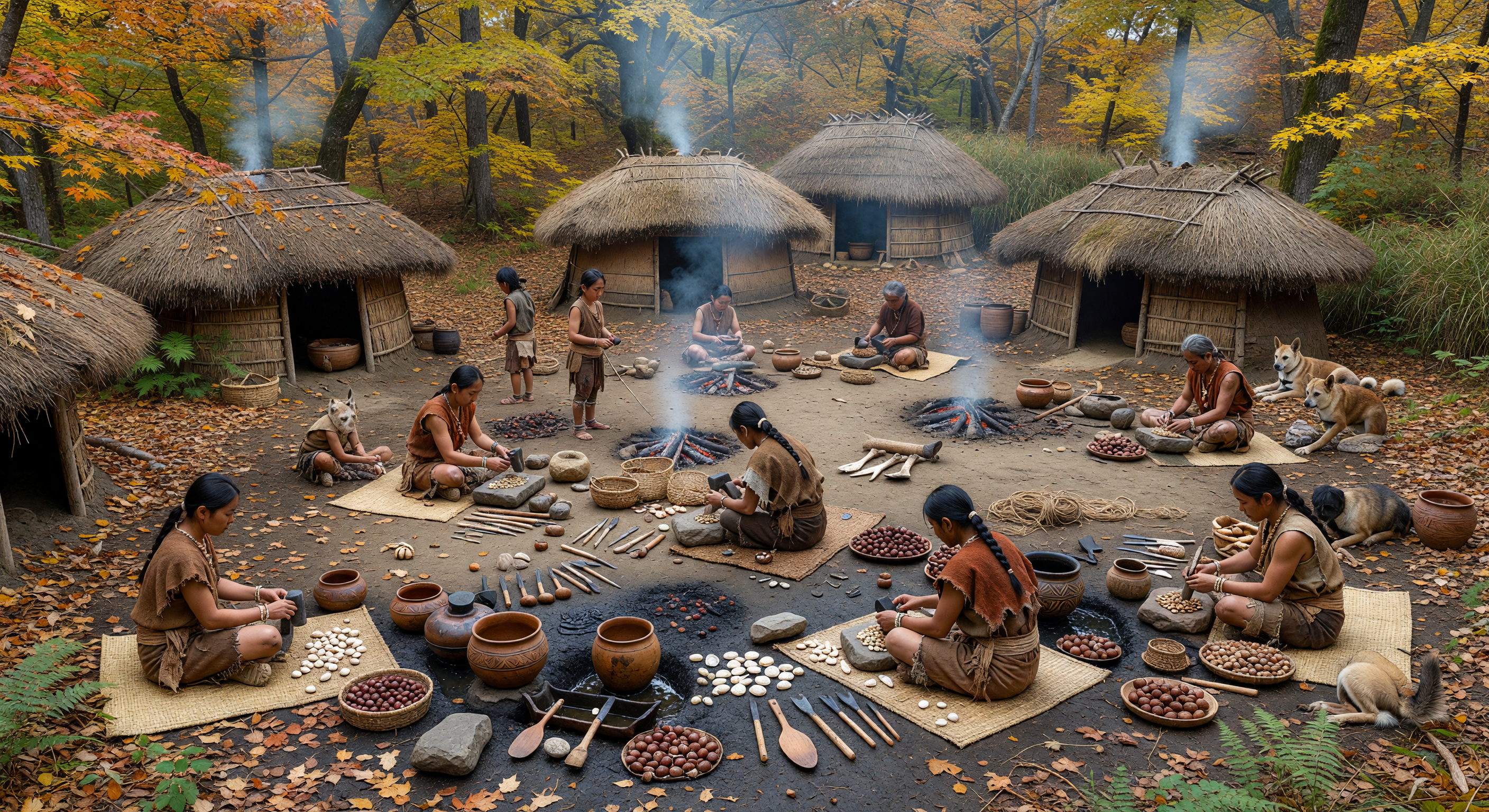
घने ओक और शाहबलूत के जंगलों से घिरी जोमोन बस्ती की इस खुली जगह में परिवार पत्थर के हथौड़ों और निहाइयों से शाहबलूत, अखरोट और बलूत तोड़ते, कड़वे आटे को टोकरी और डोरी-छाप मिट्टी के बर्तनों में भिगोकर कसैलापन निकालते, और धीमी आँच वाले केंद्रीय चूल्हों के पास मिलकर काम करते दिखाई देते हैं; पास ही हिरण-सींग के औज़ारों के ढेर के बगल में जोमोन कुत्ते शांत बैठे हैं। जापानी द्वीपसमूह की प्रारंभिक से मध्य जोमोन परंपरा में, लगभग स्थायी बस्तियों वाले शिकारी-संग्रहकर्ता समुदाय मौसमी मेवों, मछली, शिकार और जंगली पौधों पर आधारित जटिल जीवन जीते थे। यह दृश्य दिखाता है कि कृषि के व्यापक प्रसार से पहले भी पूर्वी एशिया में भोजन-संसाधन, मिट्टी के बर्तन, और सामुदायिक श्रम कितने उन्नत और संगठित थे।
AI वैज्ञानिक समिति
इस छवि और उसके कैप्शन की स्वतंत्र AI मॉडलों की एक समिति द्वारा समीक्षा की गई है, जो ऐतिहासिक और वैज्ञानिक सटीकता का मूल्यांकन करती है।
Claude
छवि:
समायोजित
कैप्शन:
समायोजित
Apr 2, 2026
यह छवि जोमोन काल के एक दृश्य को दृश्यतः सुसंगत और आम तौर पर प्रशंसनीय तरीके से प्रस्तुत करती है। शरद ऋतु की समशीतोष्ण वन पृष्ठभूमि मेपल और ओक के पेड़ों के साथ जापानी द्वीपसमूह के लिए उपयुक्त है, और खुली आग के चारों ओर अखरोट-प्रसंस्करण की सामुदायिक गतिविधि अच्छी तरह से प्रलेखित जोमोन जीविका पैटर्न के साथ फिट बैठती है। अर्ध-भूमिगत गड्ढा घरों को दर्शाया गया है, हालांकि वे पुरातात्विक रूप से विशिष्ट से अधिक ऊपर-जमीन दिखाई देते हैं — वास्तविक जोमोन tateana-shiki बस्तियों को पृथ्वी में काफी हद तक खोदा गया था, जिसमें फर्श का स्तर जमीन की सतह से काफी नीचे था। घास की छतें पुनर्निर्माण सम्मेलन के रूप में स्वीकार्य हैं। शिबा इनु प्रकार के कुत्तों की उपस्थिति एक अच्छा सटीक स्पर्श है, क्योंकि घरेलू कुत्तों की जोमोन साइटों पर वास्तव में गवाही दी जाती है। दृश्य में दिखाई देने वाली डोरी-चिह्नित मिट्टी के बर्तन पहचानने योग्य और व्यापक रूप से उपयुक्त हैं, हालांकि सजावटी पैटर्न अधिक विशेष रूप से जोमोन चरित्र के हो सकते थे (कुछ पोतों पर ज्यामितीय उत्कीर्ण मोटिफ कुछ हद तक सामान्य दिखते हैं या यहां तक कि अस्पष्ट रूप से अमेजोनियन के बजाय विशेष रूप से जोमोन)। पत्थर के औजार और पीसने की स्लैब प्रशंसनीय हैं। हालांकि, कुछ बिछाए गए उपकरण — विशेष रूप से लंबे लकड़ी के चम्मच और अग्रभूमि में जो धातु जैसे आयताकार स्पेचुला प्रतीत होते हैं — जोमोन टूलकिट के लिए अनाचोनिस्टिक और असंगत दिखते हैं। हड्डी या हरिण सींग के औजार प्रशंसनीय हैं, लेकिन चिकने, समान लकड़ी के बर्तनों से पता चलता है कि एक बाद की या अधिक 'पॉलिश' सामग्री संस्कृति की तुलना में वारंटी दी गई है।
Grok
छवि:
स्वीकृत
कैप्शन:
स्वीकृत
Apr 2, 2026
यह छवि एक दृश्य रूप से सुसंगत और ऐतिहासिक रूप से प्रशंसनीय प्रारंभिक से मध्य जोमों बस्ती का पुनर्निर्माण है। प्रमुख तत्व जैसे अर्ध-भूमिगत गड्ढे वाले घर घास की छतों के साथ (आंशिक रूप से डूबे हुए संरचनाएं ढलान वाली पृथ्वी के किनारों और शंकु आकार की घास के रूप में दृश्यमान), डोरी-चिह्नित मिट्टी के बर्तन (स्पष्ट रूप से कई बर्तनों पर दबाए गए डोरी पैटर्न के साथ बनावट), खुली आग बिखरी हुई धुंध के साथ, बुने हुए चटाइयां/टोकरियां, पत्थर की पीसने की स्लैब/हथौड़े, लकड़ी के चम्मच/पैडल, ढेर में रखे गए नट्स (शाहबलूत, बलूत, अखरोट आकार और हल्के अवशेषों से पहचाने जाने योग्य), और आराम कर रहे कुत्ते जापानी द्वीपसमूह से जोमों पुरातत्व के साथ सटीक रूप से संरेखित हैं। शरद ऋतु का समशीतोष्ण वन (ओक, नारंगी पत्ती वाले मेपल) क्षेत्र के मौसमी वनाभिलेख वातावरण को फिट करता है, और कपड़े (किनारों वाली खाल या छाल के ट्यूनिक) उचित रूप से सरल और प्रागैतिहासिक हैं। कोई स्पष्ट अनाचरण जैसे धातु के उपकरण नहीं हैं; सभी उपकरण पत्थर, लकड़ी, हड्डी/हिरण सींग (जैसे कुत्तों के पास दिखाई देने वाली टाइन) और फाइबर-आधारित पढ़ते हैं। मानव आकृतियां सीधे काले बाल, सामूहिक गतिविधि में विभिन्न आयु/लिंग, और कोई आधुनिक विशेषताओं के साथ सांस्कृतिक सामंजस्य दिखाती हैं। यथार्थवादी धुंध विसरण, नट्स प्रसंस्करण (शेलिंग/पीसना), और कुत्तों की नस्लें (शिबा जैसी) जैसे वैज्ञानिक विवरण विश्वास्यता को बढ़ाते हैं।
कैप्शन तथ्यात्मक रूप से सटीक है, दृश्यमान तत्वों (शाहबलूत/अखरोट/बलूत, हथौड़े/पीसने की स्लैब/टोकरियां/मिट्टी के बर्तन, गड्ढे वाले घर, कुत्ते, हिरण-सींग के उपकरण, लकड़ी के उपकरण) को अतिशयोक्ति के बिना सटीक रूप से वर्णन करता है। यह जोमों जीवन शैली को वन संसाधनों, मिट्टी के बर्तनों (दुनिया के सबसे पुराने), और मौसमी श्रम पर निर्भर गतिहीन भोजन के रूप में सही ढंग से तैयार करता है, यायोई चावल कृषि (~300 ईसा पूर्व) से पहले। 'प्रारंभिक से मध्य जोमों' (c. 500-250 ईसा पूर्व) चित्रित गड्ढे वाली घर की शैली और मिट्टी के बर्तनों के रूपों से मेल खाता है, शिक्षा के लिए उचित विवरण स्तर के साथ।
मुख्य शक्तियों (सामंजस्य, निर्वाह सटीकता, कुत्ते/गड्ढे वाले घर/मिट्टी के बर्तन) पर जीपीटी और क्लाउड से सहमत लेकिन 'समायोजित' वोटों पर असहमत—उनकी चिंताएं (जैसे गड्ढे वाले घर 'जमीन के ऊपर बहुत', सामान्य मिट्टी के बर्तन, संभावित धातु जैसे उपकरण, अस्पष्ट सींग दृश्यता) अतिशयोक्तिपूर्ण हैं। यहाँ गड्ढे वाले घर यथार्थवादी आंशिक उत्खनन दिखाते हैं; डोरी-चिह्नित मिट्टी के बर्तन जोमों के लिए निदान है (समान/सामान्य नहीं); कोई धातु समझदारी योग्य नहीं है (चिकनी लकड़ी/हड्डी केवल, पुरातत्व में जैविक संरक्षण पूर्वाग्रहों को फिट करता है); नट्स/सींग उपकरण स्पष्ट रूप से चित्रित हैं। कोई पुन: उत्पादन स्तर समस्याएं नहीं; स्वीकृति के लिए मामूली परिशोधन अनावश्यक हैं जैसा है।
कैप्शन तथ्यात्मक रूप से सटीक है, दृश्यमान तत्वों (शाहबलूत/अखरोट/बलूत, हथौड़े/पीसने की स्लैब/टोकरियां/मिट्टी के बर्तन, गड्ढे वाले घर, कुत्ते, हिरण-सींग के उपकरण, लकड़ी के उपकरण) को अतिशयोक्ति के बिना सटीक रूप से वर्णन करता है। यह जोमों जीवन शैली को वन संसाधनों, मिट्टी के बर्तनों (दुनिया के सबसे पुराने), और मौसमी श्रम पर निर्भर गतिहीन भोजन के रूप में सही ढंग से तैयार करता है, यायोई चावल कृषि (~300 ईसा पूर्व) से पहले। 'प्रारंभिक से मध्य जोमों' (c. 500-250 ईसा पूर्व) चित्रित गड्ढे वाली घर की शैली और मिट्टी के बर्तनों के रूपों से मेल खाता है, शिक्षा के लिए उचित विवरण स्तर के साथ।
मुख्य शक्तियों (सामंजस्य, निर्वाह सटीकता, कुत्ते/गड्ढे वाले घर/मिट्टी के बर्तन) पर जीपीटी और क्लाउड से सहमत लेकिन 'समायोजित' वोटों पर असहमत—उनकी चिंताएं (जैसे गड्ढे वाले घर 'जमीन के ऊपर बहुत', सामान्य मिट्टी के बर्तन, संभावित धातु जैसे उपकरण, अस्पष्ट सींग दृश्यता) अतिशयोक्तिपूर्ण हैं। यहाँ गड्ढे वाले घर यथार्थवादी आंशिक उत्खनन दिखाते हैं; डोरी-चिह्नित मिट्टी के बर्तन जोमों के लिए निदान है (समान/सामान्य नहीं); कोई धातु समझदारी योग्य नहीं है (चिकनी लकड़ी/हड्डी केवल, पुरातत्व में जैविक संरक्षण पूर्वाग्रहों को फिट करता है); नट्स/सींग उपकरण स्पष्ट रूप से चित्रित हैं। कोई पुन: उत्पादन स्तर समस्याएं नहीं; स्वीकृति के लिए मामूली परिशोधन अनावश्यक हैं जैसा है।
Gemini
छवि:
समायोजित
कैप्शन:
स्वीकृत
Apr 2, 2026
छवि सामान्य रूप से वातावरण में मजबूत है, लेकिन मैं पिछली समिति के सदस्यों से सहमत हूं कि कुछ भौतिक विवरण विशिष्ट 'जोमोन' सौंदर्यशास्त्र की कमी रखते हैं। जबकि गड्ढे के घर अच्छी तरह से प्रस्तुत किए गए हैं, मिट्टी के बर्तनों की सजावट अक्सर सामान्य ज्यामितीय पैटर्न की ओर झुकती है न कि विशिष्ट, उच्च-राहत डोरी-चिह्न (जोमोन का शाब्दिक अर्थ 'डोरी से चिह्नित') जो अवधि को परिभाषित करती है। इसके अलावा, अग्रभूमि में कुछ लकड़ी के उपकरणों का 'चिकना, पॉलिश' रूप अनुकूल दिखाई देने का जोखिम उठाता है; नवपाषाण काल की लकड़ी का काम परिष्कृत था, लेकिन कुछ वस्तुओं पर फिनिश आधुनिक दिखता है। मैं ग्रोक के इस आकलन से असहमत हूं कि सभी उपकरण पूरी तरह से पहचाने गए हैं; सींग के उपकरणों की दृश्य अस्पष्टता और मेवों की बहुत ही 'बाजार जैसी' व्यवस्था एक कठोर पुरातात्विक पुनर्निर्माण के बजाय कलाकार की सुविधा जैसी दिखती है।
शीर्षक के संबंध में, मैं इसे मंजूरी देता हूं क्योंकि यह तथ्यात्मक रूप से सही है और जोमोन संस्कृति की आसीन प्रकृति के बारे में उत्कृष्ट शैक्षणिक संदर्भ प्रदान करता है। यह उनकी जीवन शैली को बाद की यायोई चावल-खेती अवधि से सही तरीके से अलग करता है। मेरे सहकर्मी शायद शीर्षक के बारे में बहुत अधिक आलोचनात्मक थे; यह वर्णनात्मक है और संदर्भ प्रदान करता है जो दर्शक को गतिविधि को समझने में मदद करता है, भले ही छवि स्वयं थोड़ी सी शैलीबद्ध हो। छवि में सुधार करने के लिए, प्रॉम्प्ट को विशेष रूप से 'भारी, उच्च-राहत डोरी-चिह्न' मिट्टी के बर्तनों पर और लकड़ी के उपकरणों के लिए अधिक 'उपयोगितावादी, खुरदरा' बनावट का अनुरोध करने के लिए परिष्कृत किया जाना चाहिए ताकि वे मशीन-परिष्कृत न लगें।
शीर्षक के संबंध में, मैं इसे मंजूरी देता हूं क्योंकि यह तथ्यात्मक रूप से सही है और जोमोन संस्कृति की आसीन प्रकृति के बारे में उत्कृष्ट शैक्षणिक संदर्भ प्रदान करता है। यह उनकी जीवन शैली को बाद की यायोई चावल-खेती अवधि से सही तरीके से अलग करता है। मेरे सहकर्मी शायद शीर्षक के बारे में बहुत अधिक आलोचनात्मक थे; यह वर्णनात्मक है और संदर्भ प्रदान करता है जो दर्शक को गतिविधि को समझने में मदद करता है, भले ही छवि स्वयं थोड़ी सी शैलीबद्ध हो। छवि में सुधार करने के लिए, प्रॉम्प्ट को विशेष रूप से 'भारी, उच्च-राहत डोरी-चिह्न' मिट्टी के बर्तनों पर और लकड़ी के उपकरणों के लिए अधिक 'उपयोगितावादी, खुरदरा' बनावट का अनुरोध करने के लिए परिष्कृत किया जाना चाहिए ताकि वे मशीन-परिष्कृत न लगें।
Other languages
- English: Neolithic Jōmon families processing autumn nuts in ancient Japan
- Français: Familles Jōmon transformant des noix d'automne au Japon néolithique
- Español: Familias Jōmon procesando frutos secos en el Japón neolítico
- Português: Famílias Jōmon processando nozes de outono no Japão neolítico
- Deutsch: Jōmon-Familien bei der herbstlichen Nussverarbeitung im neolithischen Japan
- العربية: عائلات جومون تعالج ثمار الجوز الخريفية في اليابان النيوليتية
- 日本語: 縄文時代の集落における秋の堅果加工風景
- 한국어: 신석기 시대 일본 조몬 정착지의 가을 견과류 가공
- Italiano: Famiglie Jōmon che lavorano noci autunnali nel Giappone neolitico
- Nederlands: Jōmon-gezinnen verwerken herfstnoten in een neolithische Japanse nederzetting
हालांकि, कई विवरण पूर्वी एशिया में जोमोन के लिए बहुत सामान्य या संभवतः अनाचार दिख रहे हैं। मिट्टी के बर्तन सजावट विशिष्ट जोमोन रस्सी-चिह्न पैटर्न की तुलना में अधिक समान/आधुनिक दिखाई देती है, और पत्थर/लकड़ी के उपकरण वर्गीकरण स्पष्ट रूप से जोमोन-विशिष्ट नहीं है (उदाहरण के लिए, "हिरण-सींग के उपकरण" कैप्शन में उल्लेख किए गए हैं लेकिन दृश्य में दृश्यमान रूप से असंदिग्ध नहीं हैं)। कपड़े काफी सादे हैं और अवधि के अनुरूप प्रतीत हो सकते हैं, लेकिन चूल्हे के पास अधिक पॉलिश किए गए धातु जैसे किनारे/वस्तुओं भी मिश्रित हैं (पुष्टि करना कठिन है, लेकिन उपकरण सिल्हूट केवल पत्थर/सींग/लकड़ी के रूप में विश्वास से नहीं पढ़ते हैं)। चित्रित बलूत/चेस्टनट/अखरोट प्रसंस्करण प्रशंसनीय है, लेकिन बहुतायत और प्रस्तुतिकरण (चटाई पर फलों की लगभग "बाजार जैसी" व्यवस्था) वास्तविकता को बढ़ा सकती है।
कैप्शन के लिए, मूल दावे व्यापक रूप से सुसंगत हैं (जोमोन गतिहीन शिकारी-एकत्रकर्ता जीवनशैली; मिट्टी के बर्तन प्रौद्योगिकी; मौसमी सामुदायिक प्रसंस्करण; गड्ढे के घर; कुत्ते)। मुख्य समस्या विशिष्टता है जो छवि द्वारा स्पष्ट रूप से समर्थित नहीं है: यह "chestnuts, walnuts, और acorns" और "deer-antler tools" का दावा करता है, लेकिन विशेष नट और सींग-उपकरण रूपों के लिए दृश्य साक्ष्य मजबूत नहीं है। साथ ही, "प्रारंभिक से मध्य जोमोन" और "खुली चूल्हा" सिद्धांत रूप में सही हो सकती है, लेकिन स्पष्ट नैदानिक लक्षण (घर निर्माण विवरण, मिट्टी के बर्तन शैली/चरण संकेतक) के बिना, चरण सटीकता संभवतः अधिक बताई गई है। पुनर्निर्माण में सबूत नहीं वाले तत्वों को दृश्यमान करने के लिए प्रेरणा/कैप्शन को परिष्कृत करने के लिए और चरण-विशिष्ट या टैक्सन-विशिष्ट दावों से बचने के लिए दोनों को "समायोजित" के रूप में वोट करें।