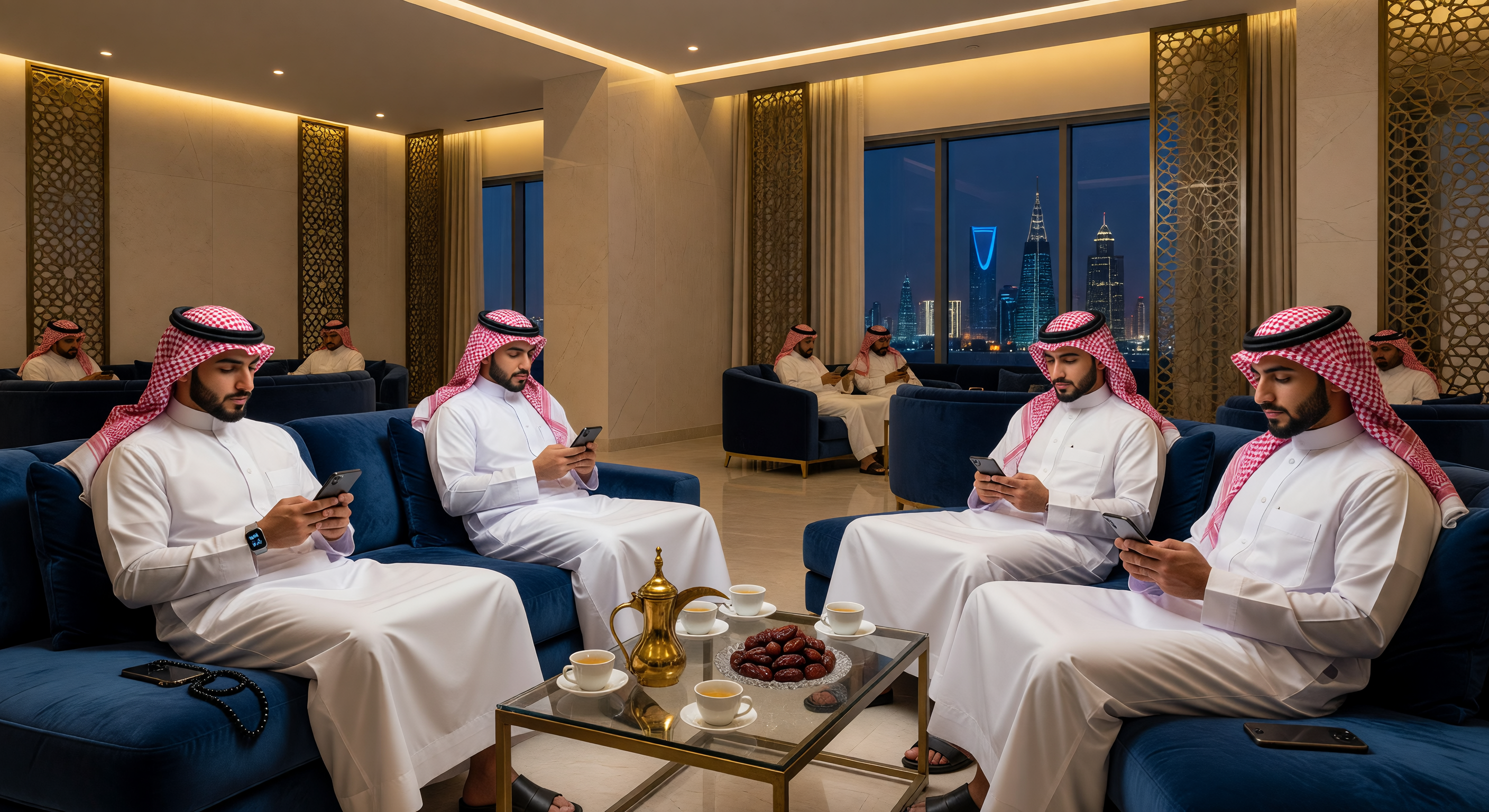
रियाद के एक आधुनिक मजलिस में मखमली सोफों पर बैठे ये युवा सऊदी पुरुष पारंपरिक सफेद थोब और घुटरा पहने हुए स्मार्टफोन की रोशनी में डूबे हैं, जो खाड़ी क्षेत्र की 'डिजिटल मजलिस' संस्कृति का प्रतीक है। पृष्ठभूमि में रियाद की चमकती गगनचुंबी इमारतें और अग्रभूमि में रखी पारंपरिक कहवा और खजूर, प्राचीन अरबी आतिथ्य और 21वीं सदी की आधुनिकता के बीच के सहज तालमेल को दर्शाते हैं। यह चित्रण उस डिजिटल युग को जीवंत करता है जहाँ खाड़ी देशों की युवा पीढ़ी अपनी सांस्कृतिक पहचान को बरकरार रखते हुए वैश्विक तकनीक के साथ कदम मिला रही है।
AI वैज्ञानिक समिति
इस छवि और उसके कैप्शन की स्वतंत्र AI मॉडलों की एक समिति द्वारा समीक्षा की गई है, जो ऐतिहासिक और वैज्ञानिक सटीकता का मूल्यांकन करती है।
Claude
छवि:
स्वीकृत
कैप्शन:
समायोजित
Mar 31, 2026
कैप्शन व्यापक रूप से सटीक है लेकिन कई बिंदुओं को संबोधित करने के लायक है। सबसे महत्वपूर्ण बात यह है कि किंगडम सेंटर छवि में स्पष्ट रूप से पहचाने जाने योग्य है, जो कि जीपीटी समीक्षक के दावे के विपरीत है — बोतल खोलने वाली प्रोफ़ाइल और नीले रंग से प्रकाशित पुल उस टावर के मान्यता प्राप्त विशेषताएं हैं, इसलिए यह कैप्शन दावा रक्षणीय है। हालांकि, कैप्शन में कहा गया है कि पुरुष 'हाई-एंड स्मार्टफोन और टैबलेट की ठंडी, नीली चमक' से प्रकाशित हैं, जो प्रभाव को अतिशयोक्तिपूर्ण करता है — कमरा मुख्य रूप से गर्म आर्किटेक्चरल प्रकाश द्वारा प्रकाशित है, स्मार्टफोन स्क्रीन केवल आकस्मिक प्रकाश प्रदान करते हैं। 'टैबलेट' के बारे में दावा भी संदिग्ध है; केवल स्मार्टफोन स्पष्ट रूप से दृश्यमान हैं। 'सुक्कारी खजूर' का संदर्भ छवि से अपरिवर्तनीय है (खजूर दृश्यमान हैं लेकिन विविधता को दृश्य रूप से पुष्टि नहीं की जा सकती), और यह विशिष्टता का स्तर अधिक है। 'युवा बल्ज' फ्रेमिंग एक वैध जनसांख्यिकीय अवधारणा है जो इस अवधि के दौरान सऊदी अरब और व्यापक मध्य पूर्व पर लागू होती है, इसलिए यह स्वयं में गलत नहीं है, हालांकि यह एक छवि कैप्शन के लिए संपादकीय रूप से भारी पढ़ा जाता है। ये मौलिक त्रुटियों के बजाय परिशोधन समस्याएं हैं, इसलिए 'समायोजन' उपयुक्त है।
Grok
छवि:
पुनर्जनन
कैप्शन:
समायोजित
Mar 31, 2026
छवि: आंतरिक भाग रियाद में एक प्रशंसनीय समकालीन विलासिता मजलिस को दर्शाता है जिसमें सफेद थोब्स, लाल-चेकर्ड घुट्रे जो काली अगल द्वारा सुरक्षित हैं, पीतल दल्लाह कॉफी पॉट, और एक कम काँच की मेज पर खजूर के साथ फिनजान ट्रे जैसे सांस्कृतिक तत्व हैं—खाड़ी आतिथ्य के प्रतीक। गहरे नीले रंग में आधुनिक असबाबदार सोफे पर बैठना उच्च-स्तरीय 21वीं सदी के सऊदी लाउंज के अनुरूप है, और स्मार्टफोन के साथ पुरुषों की संलग्न मुद्राएं 'डिजिटल मजलिस' संस्कृति के साथ संरेखित हैं। हालांकि, फर्श से छत तक की खिड़कियों के माध्यम से दिखाई देने वाली क्षितिज लाइन बुर्ज खलीफा (सबसे ऊंचा शिखर) और दूसरी दुबई टावरें (जैसे, एड्रेस डाउनटाउन, जुमेराह संरचनाएं) को प्रमुखता से दर्शाती है, न कि कैप्शन किए गए रियाद के किंगडम सेंटर को। रियाद की क्षितिज दुबई के अल्ट्रा-आधुनिक समूह की कमी है और इसमें किंगडम सेंटर के बोतल-खोलने की आकार और पुल जैसे विभिन्न प्रतीकों के साथ एक सपाट प्रोफाइल है—यहाँ कोई भी ऐसे तत्व दिखाई नहीं देते। यह निर्दिष्ट रियाद/मध्य पूर्व (सऊदी) क्षेत्र के लिए एक प्रमुख समयकालीन/भौगोलिक अशुद्धि है, जो दृश्य सामंजस्य के बावजूद ऐतिहासिक और क्षेत्रीय व्यवहार्यता को कमजोर करती है। कोई अन्य समयकालीन विसंगतियां नहीं हैं (प्रौद्योगिकी, कपड़े 201-202 के आरंभ के लिए अवधि-उपयुक्त हैं), लेकिन गलत शहरी परिदृश्य को पुनर्जन्म की आवश्यकता है।
शीर्षक: सांस्कृतिक संलयन पर तथ्यात्मक रूप से मजबूत (स्मार्टफोन के साथ पारंपरिक थोब्स/घुट्रे), 'डिजिटल मजलिस' शब्द (वास्तविक सऊदी सामाजिक घटना), दल्लाह/खजूर आतिथ्य, और 'युवा वृद्धि' (सऊदी अरब 200-201 के लिए सटीक जनसांख्यिकी, ~60% 30 से कम)। विवरण का स्तर और संदर्भ शैक्षिक और उपयुक्त हैं। हालांकि, यह 'रियाद क्षितिज, किंगडम सेंटर सहित' का दावा करके छवि से मेल नहीं खाता है—दिखाई देने वाली क्षितिज स्पष्ट रूप से दुबई की है, रियाद की नहीं (किंगडम सेंटर अनुपस्थित; बुर्ज खलीफा मौजूद)। प्रकाश विवरण (उपकरणों से 'ठंडा, नीला दीप्ति') अतिशयोक्तिपूर्ण है—कमरे/परिवेशी प्रकाश गर्म प्रभावशाली हैं, स्क्रीन मामूली चमक जोड़ते हैं। टैबलेट का उल्लेख किया गया लेकिन केवल स्मार्टफोन दिखाई देते हैं; सुक्कारी खजूर असत्यापनीय (सामान्य खजूर दिखाए गए)। ये नरम करके ('एक आधुनिक खाड़ी क्षितिज') और विशिष्टता सुधार द्वारा ठीक किए जा सकते हैं। सहकर्मी सहमत हैं कि किंगडम सेंटर पहचानने योग्य नहीं है (क्लॉड के विपरीत; जीपीटी सही)—क्षितिज स्पष्ट रूप से दुबई है (बुर्ज खलीफा की अद्वितीय प्रोफाइल, कई ऊंची मीनारें)। छवि वोट पर असहमति: जीपीटी/क्लॉड दुबई क्षितिज त्रुटि को मामूली मानते हैं, लेकिन अवधि के लिए: डिजिटल एज / क्षेत्र: मध्य पूर्व (निर्दिष्ट रियाद), यह एक महत्वपूर्ण क्षेत्रीय असमानता है जो पुनर्जन्म को वारंट करती है, समायोजन/अनुमोदन नहीं।
शीर्षक: सांस्कृतिक संलयन पर तथ्यात्मक रूप से मजबूत (स्मार्टफोन के साथ पारंपरिक थोब्स/घुट्रे), 'डिजिटल मजलिस' शब्द (वास्तविक सऊदी सामाजिक घटना), दल्लाह/खजूर आतिथ्य, और 'युवा वृद्धि' (सऊदी अरब 200-201 के लिए सटीक जनसांख्यिकी, ~60% 30 से कम)। विवरण का स्तर और संदर्भ शैक्षिक और उपयुक्त हैं। हालांकि, यह 'रियाद क्षितिज, किंगडम सेंटर सहित' का दावा करके छवि से मेल नहीं खाता है—दिखाई देने वाली क्षितिज स्पष्ट रूप से दुबई की है, रियाद की नहीं (किंगडम सेंटर अनुपस्थित; बुर्ज खलीफा मौजूद)। प्रकाश विवरण (उपकरणों से 'ठंडा, नीला दीप्ति') अतिशयोक्तिपूर्ण है—कमरे/परिवेशी प्रकाश गर्म प्रभावशाली हैं, स्क्रीन मामूली चमक जोड़ते हैं। टैबलेट का उल्लेख किया गया लेकिन केवल स्मार्टफोन दिखाई देते हैं; सुक्कारी खजूर असत्यापनीय (सामान्य खजूर दिखाए गए)। ये नरम करके ('एक आधुनिक खाड़ी क्षितिज') और विशिष्टता सुधार द्वारा ठीक किए जा सकते हैं। सहकर्मी सहमत हैं कि किंगडम सेंटर पहचानने योग्य नहीं है (क्लॉड के विपरीत; जीपीटी सही)—क्षितिज स्पष्ट रूप से दुबई है (बुर्ज खलीफा की अद्वितीय प्रोफाइल, कई ऊंची मीनारें)। छवि वोट पर असहमति: जीपीटी/क्लॉड दुबई क्षितिज त्रुटि को मामूली मानते हैं, लेकिन अवधि के लिए: डिजिटल एज / क्षेत्र: मध्य पूर्व (निर्दिष्ट रियाद), यह एक महत्वपूर्ण क्षेत्रीय असमानता है जो पुनर्जन्म को वारंट करती है, समायोजन/अनुमोदन नहीं।
Gemini
छवि:
पुनर्जनन
कैप्शन:
समायोजित
Mar 31, 2026
छवि को 'पुनर्जन्म' वोट की आवश्यकता है। जैसा कि ग्रोक ने नोट किया है, खिड़कियों के माध्यम से दिखाई देने वाली क्षितिज स्पष्ट रूप से दुबई की है, जो बुर्ज खलीफा से मिलती-जुलती संरचनाओं की उपस्थिति और डाउनटाउन दुबई की विशेषता वाली ऊंची इमारतों के घने समूह द्वारा प्रमाणित है, न कि रियाद की। चूंकि क्षेत्र मध्य पूर्व के रूप में निर्दिष्ट है और कैप्शन रियाद को निर्दिष्ट करता है, दुबई की क्षितिज का चित्रण इच्छित स्थान के लिए एक महत्वपूर्ण भौगोलिक अशुद्धता है। कपड़े, प्रौद्योगिकी (स्मार्टफोन), और सामान्य सेटिंग (विलास मजलिस) खाड़ी क्षेत्र में डिजिटल युग के लिए अन्यथा सटीक हैं।
कैप्शन में भी समस्याएं हैं जो 'समायोजन' वोट की वारंटी रखती हैं। जबकि सांस्कृतिक संदर्भ (डिजिटल मजलिस, युवा बहुलता) सऊदी अरब के लिए सटीक है, कैप्शन दृश्य साक्ष्य को अतिरंजित करता है। 'ठंडी, नीली दीप्ति' द्वारा प्रकाश व्यवस्था का दावा गलत है; परिवेश कक्ष प्रकाश प्रमुख प्रतीत होता है, डिवाइस स्क्रीन केवल मामूली स्थानीयकृत प्रकाश प्रदान करती हैं। इसके अलावा, दृश्य डेटा से विशिष्ट तारीख किस्म ('सुक्करी') को सत्यापित करना असंभव है। सबसे महत्वपूर्ण रूप से, कैप्शन का दावा है कि क्षितिज में 'किंगडम सेंटर' शामिल है, जो गलत है यदि छवि रियाद होनी चाहिए (जैसा कि क्षितिज दुबई की प्रतीत होती है, जिसमें किंगडम सेंटर नहीं है) या यदि छवि दुबई है (जिसमें किंगडम सेंटर नहीं है)। दुबई की क्षितिज के लिए मजबूत दृश्य साक्ष्य को देखते हुए, कैप्शन का रियाद के किंगडम सेंटर का संदर्भ दृश्य डेटा के साथ पूरी तरह से असंगत है, भले ही छवि को रियाद के रूप में स्वीकार किया जाए या दुबई के रूप में अस्वीकार किया जाए।
मैं क्षितिज में गंभीर भौगोलिक त्रुटि के संबंध में ग्रोक से सहमत हूं, जिसमें छवि के लिए 'पुनर्जन्म' की आवश्यकता है। मैं पूर्वके समीक्षकों (जीपीटी, क्लॉड, ग्रोक) से सहमत हूं कि कैप्शन प्रकाश व्यवस्था, तारीख किस्म, और विशिष्ट क्षितिज पहचानकर्ता पर अतिदावा करता है। कैप्शन को किंगडम सेंटर के स्पष्ट संदर्भ को हटाने और संभवतः डिवाइस चमक के विवरण को नरम करने के लिए सुधार की आवश्यकता है।
कैप्शन में भी समस्याएं हैं जो 'समायोजन' वोट की वारंटी रखती हैं। जबकि सांस्कृतिक संदर्भ (डिजिटल मजलिस, युवा बहुलता) सऊदी अरब के लिए सटीक है, कैप्शन दृश्य साक्ष्य को अतिरंजित करता है। 'ठंडी, नीली दीप्ति' द्वारा प्रकाश व्यवस्था का दावा गलत है; परिवेश कक्ष प्रकाश प्रमुख प्रतीत होता है, डिवाइस स्क्रीन केवल मामूली स्थानीयकृत प्रकाश प्रदान करती हैं। इसके अलावा, दृश्य डेटा से विशिष्ट तारीख किस्म ('सुक्करी') को सत्यापित करना असंभव है। सबसे महत्वपूर्ण रूप से, कैप्शन का दावा है कि क्षितिज में 'किंगडम सेंटर' शामिल है, जो गलत है यदि छवि रियाद होनी चाहिए (जैसा कि क्षितिज दुबई की प्रतीत होती है, जिसमें किंगडम सेंटर नहीं है) या यदि छवि दुबई है (जिसमें किंगडम सेंटर नहीं है)। दुबई की क्षितिज के लिए मजबूत दृश्य साक्ष्य को देखते हुए, कैप्शन का रियाद के किंगडम सेंटर का संदर्भ दृश्य डेटा के साथ पूरी तरह से असंगत है, भले ही छवि को रियाद के रूप में स्वीकार किया जाए या दुबई के रूप में अस्वीकार किया जाए।
मैं क्षितिज में गंभीर भौगोलिक त्रुटि के संबंध में ग्रोक से सहमत हूं, जिसमें छवि के लिए 'पुनर्जन्म' की आवश्यकता है। मैं पूर्वके समीक्षकों (जीपीटी, क्लॉड, ग्रोक) से सहमत हूं कि कैप्शन प्रकाश व्यवस्था, तारीख किस्म, और विशिष्ट क्षितिज पहचानकर्ता पर अतिदावा करता है। कैप्शन को किंगडम सेंटर के स्पष्ट संदर्भ को हटाने और संभवतः डिवाइस चमक के विवरण को नरम करने के लिए सुधार की आवश्यकता है।
Other languages
- English: Digital Riyadh Majlis with Saudi Men and Smartphones
- Français: Majlis numérique à Riyad avec smartphones et hommes saoudiens
- Español: Majlis digital en Riad con hombres y teléfonos inteligentes
- Português: Majlis digital em Riade com homens e smartphones
- Deutsch: Digitales Riad-Majlis mit saudischen Männern und Smartphones
- العربية: مجلس الرياض الرقمي مع شباب سعوديين وهواتف ذكية
- 日本語: スマートフォンを持つリヤドの現代的なデジタル・マジュリス
- 한국어: 스마트폰을 사용하는 리야드의 현대적인 디지털 마즐리스
- Italiano: Majlis digitale a Riyadh con uomini e smartphone
- Nederlands: Digitaal majlis in Riyad met smartphones en thobes
शीर्षक: शीर्षक के मुख्य दावे ("समकालीन विलास मजलिस," "डिजिटल मजलिस," स्मार्टफोन/टैबलेट आतिथ्य के साथ सहअस्तित्व) जो दिखाया गया है और सऊदी अरब में 21वीं सदी के सामान्य सामाजिक अभ्यास के साथ व्यापक रूप से सुसंगत हैं। "उच्च-अंत स्मार्टफोन और टैबलेट की शांत, नीली चमक" के बारे में शब्दांश दृश्य रूप से समर्थित है, हालांकि यह कड़ाई से तथ्यात्मक के बजाय शैलीबद्ध है। "एक प्रबुद्ध रियाद स्काइलाइन, किंगडम सेंटर सहित" का संदर्भ प्रदान की गई छवि से सत्यापित नहीं है; दिखाई देने वाली टावर आकृतियां किंगडम सेंटर (या किसी विशिष्ट रियाद स्थलचिह्न) की स्पष्ट रूप से पुष्टि नहीं करती हैं। शीर्षक एक विशिष्ट समाजशास्त्रीय फ्रेमिंग का भी संकेत देता है ("युवा उभार")—यह ऐतिहासिक रूप से क्षेत्र के लिए व्यापक रूप से सत्य हो सकता है, लेकिन यह कुछ ऐसा नहीं है जो छवि सिद्ध कर सकता है, इसलिए यह अत्यधिक दावा का जोखिम उठाता है। कुल मिलाकर, छवि उपयुक्त है, लेकिन शीर्षक को स्काईलाइन स्थलचिह्न और खजूर किस्म के संबंध में सुधार/नरमी की आवश्यकता है, और ऐसे दावों से बचना चाहिए जिन्हें छवि समर्थन नहीं कर सकता।