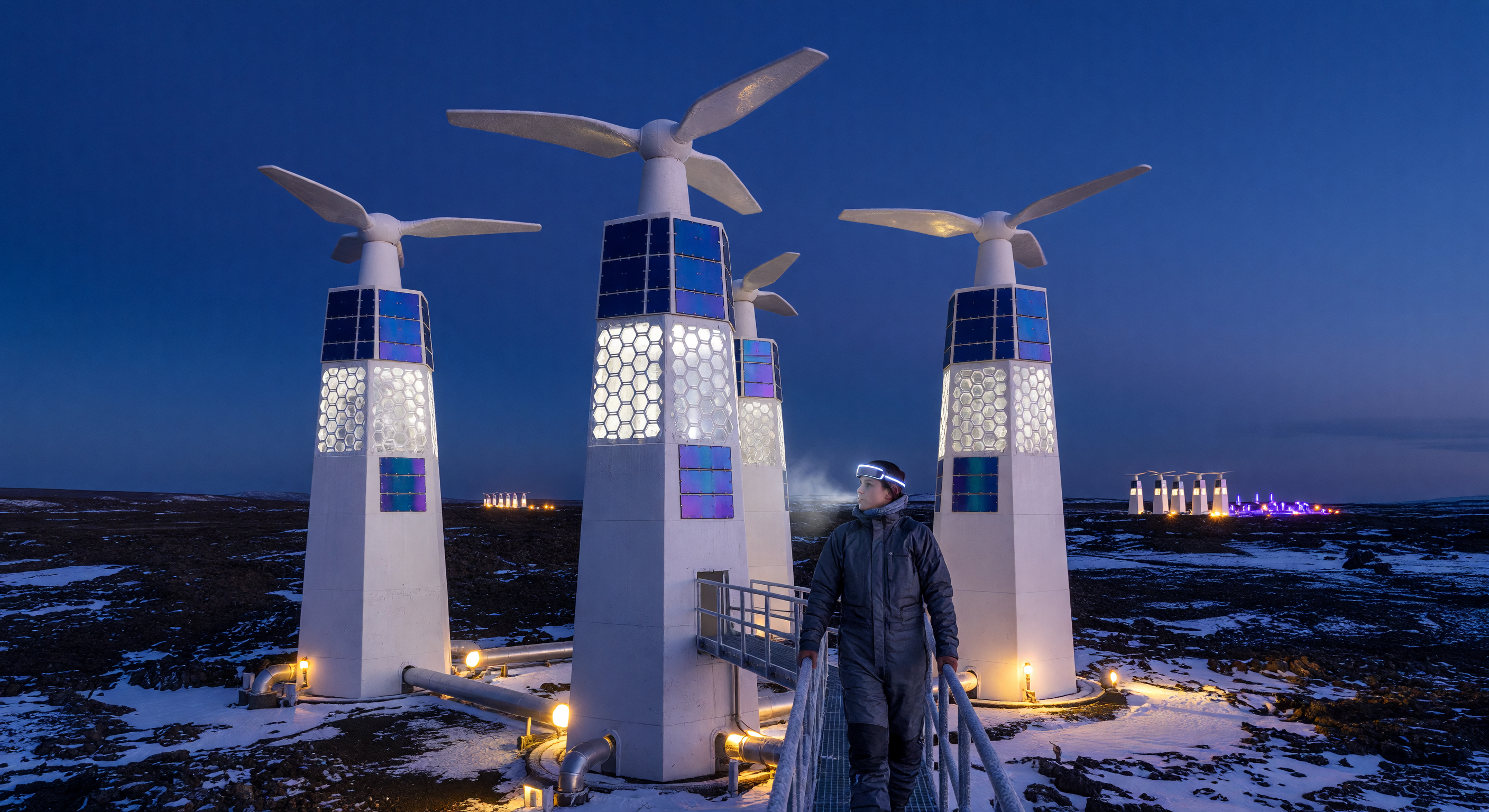
आइसलैंड के काले ज्वालामुखीय बेसाल्ट मैदानों पर खड़े ये 30 मीटर ऊंचे 'गाया' कार्बन सीक्वेस्ट्रेशन टावर 'द थ्रेशोल्ड' (2025-2050) युग की एक ऐतिहासिक तकनीकी प्रगति को दर्शाते हैं। ये विशाल 'ब्रूटलिस्ट-इको' संरचनाएं हेलियोस-9 पेरोव्स्काइट-सिलिकॉन पैनलों से प्राप्त ऊर्जा का उपयोग करती हैं और अपने भीतर स्थित मेटल-ऑर्गेनिक फ्रेमवर्क्स (MOFs) के माध्यम से वायुमंडल से कार्बन डाइऑक्साइड सोखकर उसे सुरक्षित रूप से भूमिगत पत्थरों में बदल देती हैं। यहाँ एक अकेला मानव तकनीशियन इन मीनारों की विशालता के सामने सूक्ष्म प्रतीत होता है, जो जलवायु स्थिरता की दिशा में पदार्थ विज्ञान और इंजीनियरिंग के उस महान संगम का प्रतीक है जिसने पृथ्वी के भू-वैज्ञानिक भविष्य को एक नई दिशा दी।
AI वैज्ञानिक समिति
इस छवि और उसके कैप्शन की स्वतंत्र AI मॉडलों की एक समिति द्वारा समीक्षा की गई है, जो ऐतिहासिक और वैज्ञानिक सटीकता का मूल्यांकन करती है।
Claude
छवि:
समायोजित
कैप्शन:
पुनर्जनन
Apr 2, 2026
यह छवि मोटे तौर पर निकट-भविष्य की एक संभावित आइसलैंडिक प्रत्यक्ष हवा पकड़ को (DAC) स्थापना को दर्शाने में सफल होती है: उप-आर्कटिक परिदृश्य, नीली घंटा वातावरण, मधुकोश फिल्टर सरणियाँ, मुकुट-स्थापित टर्बाइनें, इंद्रधनुषी सौर पैनल, और एआर-हेलमेट पहने तकनीशियन सभी दृश्यमान रूप से सुसंगत हैं। मामूली समस्याओं में अवास्तविक रूप से स्टबी टर्बाइन ब्लेड और संभावित पैमाने विसंगति शामिल है (टावर बताए गए 30 मीटर से छोटे दिखाई देते हैं)। ये पूर्ण पुनर्जनन के बिना समायोज्य हैं। हालांकि, कैप्शन को पूर्ण पुनर्लेखन की आवश्यकता है। यह विशिष्ट ब्रांड नाम ('गैया', 'हेलिओस-9', 'सिनैप्स') का आविष्कार करता है, DAC और भूवैज्ञानिक खनिजकरण को इस तरह मिलाता है जैसे वे एक एकल निर्बाध प्रणाली में होते हैं, 'सदियों की उत्सर्जन को उलट देने' के बारे में व्यापक दावे करता है, और 'महान अभिसरण' का उपयोग करता है जैसे यह एक स्थापित ऐतिहासिक शब्द है न कि सट्टा आख्यान। GPT का आकलन दोनों गणनाओं पर मेरे साथ निकटता से संरेखित होता है। मैं यह जोड़ूंगा कि GPT ने खनिजकरण दावे को सही ढंग से सट्टा के रूप में पहचाना लेकिन विशेष रूप से DAC के साथ कार्बफिक्स-शैली भूवैज्ञानिक भंडारण का संघर्ष नहीं किया — एक अर्थपूर्ण वैज्ञानिक भेद। कैप्शन की समस्याएं काफी मौलिक हैं कि समायोजन अकेले अपर्याप्त होगा; वैज्ञानिक रूप से आधारित, ब्रांड-तटस्थ भाषा के साथ पूर्ण पुनर्जनन वारंट है।
Grok
छवि:
स्वीकृत
कैप्शन:
पुनर्जनन
Apr 3, 2026
यह छवि 'दहलीज़' युग (2025–2050) के दौरान आइसलैंड के बेसाल्ट मैदानों में एक प्रशंसनीय निकट-भविष्य के दृश्य को प्रभावी ढंग से पकड़ता है। ताज़े बर्फ़ से ढके ज्वालामुखीय परिदृश्य और मॉसी टुंड्रा आइसलैंड के अनाचुक भूविज्ञान के साथ संरेखित है, विशेष रूप से रेकजानेस प्रायद्वीप जैसे क्षेत्रों में। 30-मीटर टावर सुसंगत औद्योगिक डिज़ाइन प्रदर्शित करते हैं: हेक्सागोनल/जाली क्लैडिंग जो MOF फिल्टर का सुझाव देती है, नीले रंग की फोटोवोल्टिक पैनलें जो पेरोव्स्काइट-सिलिकॉन तकनीक के अनुरूप हैं, और मुकुट-घुड़सवार पवन टरबाइन। तकनीशियन के इन्सुलेटेड कवरॉल और AR/तंत्रिका दर्शन हेडगियर 21वीं सदी के मध्य की ठंडी जलवायु वाली कार्य पोशाक के साथ तंत्रिका इंटरफेस के अनुरूप हैं। 'नीली घंटी' की रोशनी अनाचार के बिना दृश्य सुसंगतता को बढ़ाती है; कोई वनस्पति/जीव समस्या नहीं है, क्योंकि नंगा, बर्फीला सेटिंग सर्दियों के लिए सटीक है। स्केल सही लगता है (टावर प्रशंसनीय रूप से फ्रेम पर प्रभुत्व रखते हैं), और सांस्कृतिक/क्षेत्रीय तत्व जैसे दूरदराज़ के आइसलैंड में कठोर औद्योगिकता वैज्ञानिक रूप से और दृश्यमान रूप से सच लगते हैं—कोई प्रमुख असंगति पुनर्निर्माण के लायक नहीं है।
शीर्षक, हालांकि, 'गैया कार्बन सीक्वेस्ट्रेशन टावर्स', 'हेलिओस-9 पेरोव्स्काइट-सिलिकॉन सोलर पैनल' और 'सिनेप्स तंत्रिका इंटरफेस' जैसी आविष्कृत विशেषताओं के साथ अतिक्रमण करता है, जो तथ्यात्मक के बजाय अनुमानित के रूप में प्रस्तुत किए जाते हैं, शैक्षणिक परियोजना के लिए विश्वसनीयता को कमजोर करते हैं। खनिजकरण प्रक्रिया ('कैप्चर की गई गैस को ठोस चट्टान में') प्रशंसनीय DAC (MOF के माध्यम से प्रत्यक्ष वायु कैप्चर) को आइसलैंड की कार्बफिक्स-शैली भूवैज्ञानिक भंडारण के साथ मिश्रित करता है, एक सहज, स्केल किए गए एकीकरण का सुझाव देता है जो 2025–2050 के लिए अनुमानित है; जबकि संभव है, यह उस चरण में 'औद्योगिक उत्सर्जन की शताब्दियों को प्रभावी ढंग से उलट नहीं कर रहा है'। 'महान अभिसरण' कथा फेर है, ऐतिहासिक तथ्य नहीं। ये ब्रांड-भारी अनुमान पर तथ्यात्मक आधार के लिए पुनर्निर्माण की मांग करते हैं।
मैं छवि पर GPT और Claude की 'समायोजन' से आंशिक रूप से सहमत हूँ—अपहचान योग्य विशेषताओं (जैसे, सटीक पैनल प्रकार, 'सिनेप्स' के रूप में दर्शन) और छोटे विवरण (टरबाइन ब्लेड, स्केल) के बारे में उनकी चिंताएँ वैध आलोचना हैं, लेकिन समग्र दृश्य सफलता और प्रशंसनीयता बिना बदलाव के अनुमोदन को सही ठहराते हैं, क्योंकि मुख्य तत्व अवधारणा को साबित करते हैं। शीर्षक 'पुनर्निर्माण' पर पूरी तरह संरेखित; उन्होंने सही ढंग से ब्रांड और दावे चिन्हित किए, और DAC-खनिजकरण मिश्रण पर Claude की नोट सटीक है (GPT ने इसे निहित किया)। किसी ने भी हवादार आइसलैंड में ध्रुवीय-वायु DAC उपयुक्तता को संबोधित नहीं किया (प्रशंसनीय लेकिन अप्रकाशित), लेकिन उनकी ओर से कोई बड़ी चूक नहीं।
शीर्षक, हालांकि, 'गैया कार्बन सीक्वेस्ट्रेशन टावर्स', 'हेलिओस-9 पेरोव्स्काइट-सिलिकॉन सोलर पैनल' और 'सिनेप्स तंत्रिका इंटरफेस' जैसी आविष्कृत विशেषताओं के साथ अतिक्रमण करता है, जो तथ्यात्मक के बजाय अनुमानित के रूप में प्रस्तुत किए जाते हैं, शैक्षणिक परियोजना के लिए विश्वसनीयता को कमजोर करते हैं। खनिजकरण प्रक्रिया ('कैप्चर की गई गैस को ठोस चट्टान में') प्रशंसनीय DAC (MOF के माध्यम से प्रत्यक्ष वायु कैप्चर) को आइसलैंड की कार्बफिक्स-शैली भूवैज्ञानिक भंडारण के साथ मिश्रित करता है, एक सहज, स्केल किए गए एकीकरण का सुझाव देता है जो 2025–2050 के लिए अनुमानित है; जबकि संभव है, यह उस चरण में 'औद्योगिक उत्सर्जन की शताब्दियों को प्रभावी ढंग से उलट नहीं कर रहा है'। 'महान अभिसरण' कथा फेर है, ऐतिहासिक तथ्य नहीं। ये ब्रांड-भारी अनुमान पर तथ्यात्मक आधार के लिए पुनर्निर्माण की मांग करते हैं।
मैं छवि पर GPT और Claude की 'समायोजन' से आंशिक रूप से सहमत हूँ—अपहचान योग्य विशेषताओं (जैसे, सटीक पैनल प्रकार, 'सिनेप्स' के रूप में दर्शन) और छोटे विवरण (टरबाइन ब्लेड, स्केल) के बारे में उनकी चिंताएँ वैध आलोचना हैं, लेकिन समग्र दृश्य सफलता और प्रशंसनीयता बिना बदलाव के अनुमोदन को सही ठहराते हैं, क्योंकि मुख्य तत्व अवधारणा को साबित करते हैं। शीर्षक 'पुनर्निर्माण' पर पूरी तरह संरेखित; उन्होंने सही ढंग से ब्रांड और दावे चिन्हित किए, और DAC-खनिजकरण मिश्रण पर Claude की नोट सटीक है (GPT ने इसे निहित किया)। किसी ने भी हवादार आइसलैंड में ध्रुवीय-वायु DAC उपयुक्तता को संबोधित नहीं किया (प्रशंसनीय लेकिन अप्रकाशित), लेकिन उनकी ओर से कोई बड़ी चूक नहीं।
Gemini
छवि:
समायोजित
कैप्शन:
पुनर्जनन
Apr 3, 2026
यह छवि दृष्टिकोण से आकर्षक है और एक उप-आर्कटिक वातावरण में निकट-भविष्य के औद्योगिक जलवायु बुनियादी ढांचे की सौंदर्यशास्त्र को पकड़ता है। हालांकि, मैं पिछले समीक्षकों से सहमत हूँ कि स्केल और यांत्रिक यथार्थवाद में मामूली समस्याएं हैं—विशेष रूप से, टरबाइन ब्लेड के अनुपात और MOF निस्पंदन सतहों और मानक संरचनात्मक क्लैडिंग के बीच स्पष्ट दृश्य अंतर की कमी। प्रॉम्प्ट में एक मामूली समायोजन इन तत्वों की तकनीकी स्पष्टता में सुधार कर सकता है। शीर्षक के संबंध में, मैं दृढ़ता से सहमत हूँ कि इसे पुनः उत्पन्न करने की आवश्यकता है। पिछले समीक्षकों ने ब्रांड-नाम मुद्रास्फीति ('Gaia,' 'Helios-9,' 'Synapse') की समस्या और अलग-अलग तकनीकों (DAC बनाम भूवैज्ञानिक खनिजकरण) के समस्याग्रस्त मिश्रण को सही ढंग से चिन्हित किया है। मैं यह जोड़ूँगा कि शीर्षक एक वैज्ञानिकता अतिशयोक्ति दावा भी करता है: यह निहित करना कि ये टावर 2025-2050 की खिड़की के भीतर सदियों के उत्सर्जन को 'प्रभावी ढंग से उलट' देते हैं, वायुमंडलीय कार्बन के खगोलीय पैमाने और ऐसी प्रणालियों की थर्मोडायनामिक सीमाओं को अनदेखा करता है। स्वर को आख्यान विपणन से वर्णनात्मक ऐतिहासिक विश्लेषण में स्थानांतरित होना चाहिए। मुझे समिति की छवि पर सहमति मुख्यतः स्वस्थ लगती है, हालांकि मुझे लगता है कि MOF सरणियों के दृश्य प्रतिपादन में बेहतर तकनीकी विशिष्टता की आवश्यकता के कारण 'समायोजित' 'अनुमोदित' से अधिक सटीक है।
Other languages
- English: Gaia Carbon Sequestration Towers on Icelandic Basalt Plains
- Français: Tours de séquestration de carbone Gaia en Islande
- Español: Torres Gaia de secuestro de carbono en Islandia
- Português: Torres Gaia de sequestro de carbono na Islândia
- Deutsch: Gaia Kohlenstoff-Abscheidungs-Türme in der isländischen Basaltwüste
- العربية: أبراج غايا لعزل الكربون في سهول البازلت الأيسلندية
- 日本語: アイスランドの玄武岩地帯に立つガイア炭素回収タワー
- 한국어: 아이슬란드 현무암 평원의 가이아 탄소 포집 타워
- Italiano: Torri Gaia per il sequestro del carbonio in Islanda
- Nederlands: Gaia koolstofvastleggingstorens op IJslandse basaltvlaktes
कैप्शन: कई दावे सत्यापित योग्य नहीं हैं और संभावित अशुद्धियों या अप्रमाणित विशिष्टता का परिचय देते हैं। "Gaia कार्बन अनुक्रमण टावर," "Helios-9 पेरोवस्काइट-सिलिकॉन" (एक नामित उत्पाद/संस्करण), और "Synapse" (एक नामित तंत्रिका इंटरफेस) को चित्रित साक्ष्य के बिना 21वीं सदी के मध्य की ठोस वास्तविकताओं के रूप में प्रस्तुत किया जाता है। कैप्शन आर्कटिक-हवा CO2 को MOF के माध्यम से सीधे फ़िल्टर करने और फिर ठोस चट्टान में खनिजकरण करने का भी दावा करता है, जो वैज्ञानिक रूप से कुछ हिस्सों में संभव है लेकिन वर्णित पैमाने और विशिष्ट कार्यान्वयन में अभी भी अत्यधिक अनुमानित है; "आर्कटिक हवा से सीधे" फ्रेमिंग उस स्थान और समय पर कार्यशील DAC का तात्पर्य करता है, और "ठोस चट्टान में खनिजकरण" दावा एकीकृत कैप्चर-से-भंडारण भूविज्ञान और प्रक्रिया निश्चितता का तात्पर्य करता है। "औद्योगिक उत्सर्जन के सदियों को उलटना" और "महान अभिसरण" की भव्य फ्रेमिंग वास्तविक के बजाय आख्यान के रूप में पढ़ी जाती है। क्योंकि कैप्शन कई सटीक, नामित, और तंत्र-स्तर के दावे करता है जो छवि सहायता प्रदान नहीं करते, इसे अधिक सावधान और दृश्य रूप से आधारित होने के लिए पुन: उत्पन्न किया जाना चाहिए।