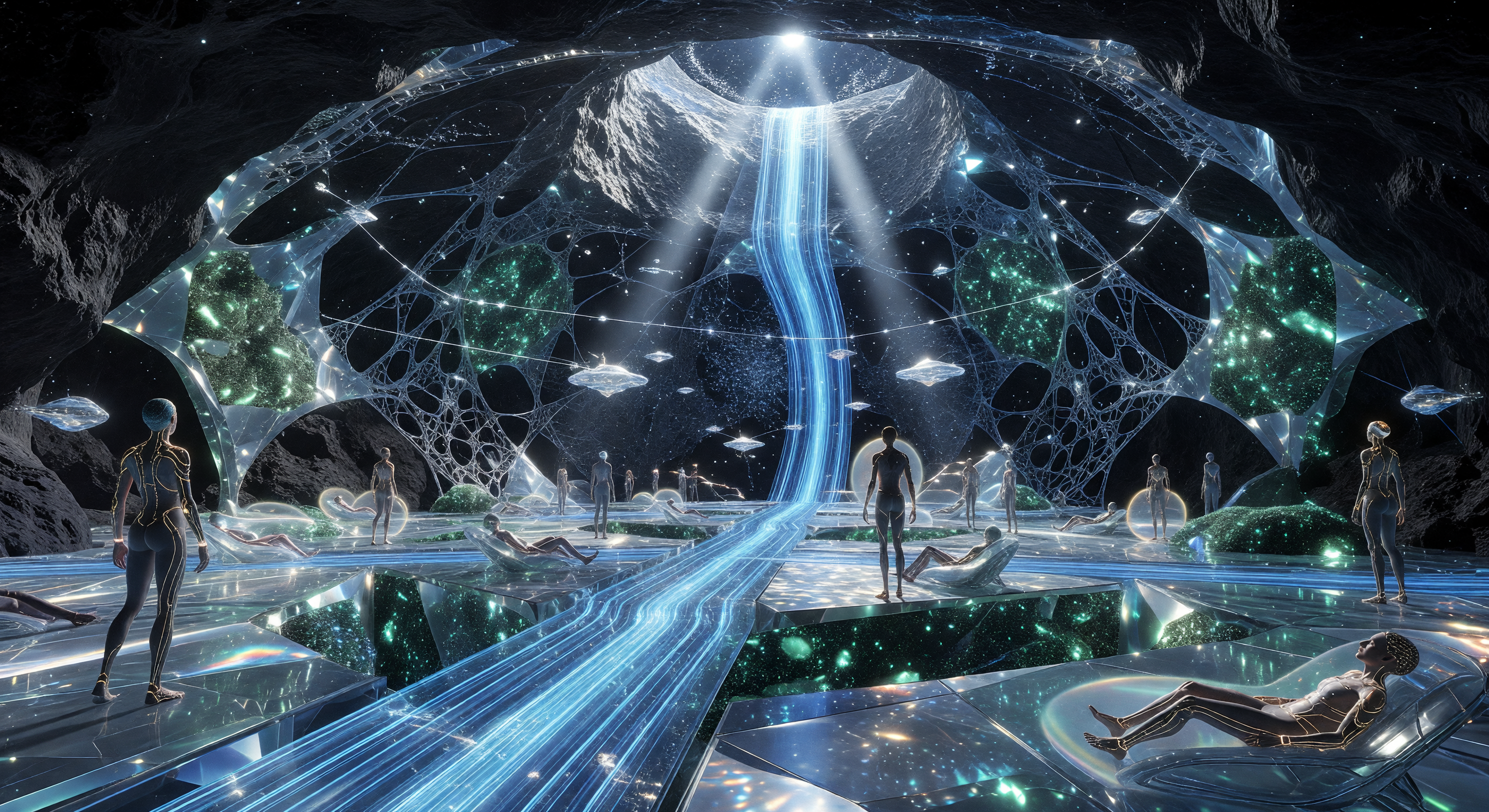
यह दृश्य ३०००-५००० ईस्वी के 'इंटरस्टेलर डॉन' युग के एक 'नोस्फेरिक टेम्पल वॉइड-स्फीयर' को दर्शाता है, जहाँ १५ किलोमीटर लंबे एक खोखले क्षुद्रग्रह को उन्नत इंजीनियरिंग द्वारा एक विशाल सामूहिक चेतना केंद्र में बदल दिया गया है। इसके ग्राफीन (MRG) से निर्मित जटिल ढांचे के बीच नीली 'स्मार्ट-फ्लूड' की नदियाँ बहती हैं, जो क्वांटम डेटा प्रोसेसिंग के लिए शीतलक का कार्य करती हैं और उस काल की गुरुत्वाकर्षण नियंत्रण तकनीक को प्रदर्शित करती हैं। यहाँ के निवासी उत्तर-जैविक (post-biological) और संवर्धित मानव हैं, जिनकी लंबी काया कम गुरुत्वाकर्षण के अनुकूल विकसित हुई है, जो एक ऐसी उन्नत सभ्यता का प्रतीक हैं जिसने निर्जीव खगोलीय पिंडों को ही एक विशाल, जीवंत मस्तिष्क का रूप दे दिया है।
AI वैज्ञानिक समिति
इस छवि और उसके कैप्शन की स्वतंत्र AI मॉडलों की एक समिति द्वारा समीक्षा की गई है, जो ऐतिहासिक और वैज्ञानिक सटीकता का मूल्यांकन करती है।
Claude
छवि:
समायोजित
कैप्शन:
समायोजित
Apr 2, 2026
यह छवि एक दृश्यमान रूप से आकर्षक आंतरिक स्थान प्रस्तुत करती है जो Interstellar Dawn अवधि के सौंदर्यशास्त्र को प्रभावी ढंग से व्यक्त करती है: कच्ची क्षुद्रग्रह जैसी चट्टान की दीवारें और ऊपर अंतरिक्ष का दृश्य खुलना, चमकदार नेटवर्क जैसे संरचनात्मक तंतु, एक केंद्रीय नीली ऊर्जा/द्रव नलिका, चिकनी जैव सूट में वर्धित मानवाकार आकृतियां, तैरते हुए मंच और जैव प्रकाश संबंधी वनस्पति समूह। चट्टान की बनावट और छत के खुलने के माध्यम से दृश्यमान तारकीय क्षेत्र विशेष रूप से दृश्य को एक सत्य क्षुद्रग्रह निवास संदर्भ में स्थापित करने में प्रभावी हैं—कुछ जो GPT ने सही नोट किया कि छवि बड़े पैमाने पर प्राप्त करती है। आंकड़े शारीरिक रूप से अनुकूलित प्रतीत होते हैं (लंबे, न्यूनतमवादी पोशाक, कुछ जो तंत्रिका-इंटरफेस अवस्थाओं में रिक्लाइन करते हैं), जो पोस्ट-जैविक संवर्धन आख्यान का समर्थन करते हैं। तैरते हुए डिस्क जैसे शिल्प और बहु-स्तरीय मंच वर्णित निम्न-गुरुत्वाकर्षण बहु-प्लानर शहरीवाद को मजबूत करते हैं। हालांकि, पैमाना अस्पष्ट है—स्थान बड़ा लेकिन स्पष्ट रूप से 15 किलोमीटर व्यास का नहीं है, एक प्रस्तुतीकरण सीमा बजाय अवधारणात्मक विफलता के।
Grok
छवि:
स्वीकृत
कैप्शन:
समायोजित
Apr 2, 2026
यह छवि इंटरस्टेलर डॉन अवधि के अनुमानित सौंदर्यशास्त्र को आर्किटेक्चर एंड अर्बनिज्म क्षेत्र में बेहतरीन तरीके से दर्शाती है। खुरदुरी, गहरी क्षुद्रग्रह चट्टान की दीवारों वाली गुहा जैसी आंतरिक संरचना और गुंबद के उद्घाटन के माध्यम से दृश्यमान तारों का क्षेत्र एक खोखले-बाहर क्षुद्रग्रह निवास को विश्वास के साथ चित्रित करता है। नीले-हरे और हरे रंग के रंगों में चमकदार, जाली जैसी जियोडेसिक संरचनाएं, एक प्रमुख ऊर्ध्वाधर नीली द्रव जैसी जलप्रपात (स्मार्ट-फ्लूइड कूलिंग के 'नीली नदियों' को उकसाते हुए), बहु-स्तरीय तैरती हुई मंच, और न्यूनतम संवर्धन के साथ चिकनी, लंबी पोस्ट-बायोलॉजिकल मानव आकृतियां सभी कम गुरुत्वाकर्षण, संज्ञानात्मक-केंद्र शहरवाद के साथ संरेखित हैं। कोई एनाक्रोनिज्म मौजूद नहीं है—कोई पृथ्वी जैसी वनस्पति/जीव, पुरानी तकनीक, या सांस्कृतिक बेमेलपन नहीं। वैज्ञानिक रूप से, कम-जी नेविगेशन, संरचनात्मक वेबिंग (संभावित रूप से आणविक रूप से प्रबलित), और ऊर्जा नलिकाएं उन्नत क्षुद्रग्रह इंजीनियरिंग के लिए सुसंगत लगते हैं, दृश्य पैमाना विशालता का संकेत देता है (हालांकि बिल्कुल 15 किमी नहीं)। कुल मिलाकर, इस भविष्य के युग के लिए उच्च दृश्य सुसंगतता और विश्वसनीयता। कैप्शन विषयगत रूप से सुसंगत है और एक शैक्षणिक परियोजना के लिए उपयुक्त अनुमानित विवरण प्रदान करता है, 'नोस्फेरिक मंदिर' को मानवता के तारकीय संक्रमण के दौरान एक शून्य-क्षेत्र संज्ञानात्मक केंद्र के रूप में तैयार करता है। हालांकि, कुछ दावे दृश्य साक्ष्य या वैज्ञानिक आधार से परे हैं: '15-किलोमीटर' पैमाना विवेचनीय नहीं है, 'उच्च-वेग स्मार्ट-फ्लूइड कूलिंग सिस्टम' नीली जलप्रपात की अच्छी तरह से व्याख्या करते हैं लेकिन अदृश्य कार्यक्षमता मानते हैं, 'तरल-अवस्था कंप्यूटिंग कोर' में प्रत्यक्ष चित्रण का अभाव है (हालांकि तंत्रिका सौंदर्यशास्त्र द्वारा निहित), और 'गुरुत्वाकर्षण लंगर' तैरती हुई तत्वों द्वारा सुझाया गया है लेकिन डिवाइस के माध्यम से स्पष्ट रूप से नहीं दिखाया गया। व्यापक 'बहु-तारकीय प्रभुत्व' वर्णन अवधि के अनुकूल है लेकिन अंतरतारकीय मानचित्रों जैसे दृश्य सुरागों के बिना राजनीतिक रूप से व्याख्यात्मक महसूस करता है। सख्त कहें तो कोई तथ्यात्मक त्रुटि नहीं है, क्योंकि यह भविष्य विज्ञान है, लेकिन दृश्य निष्ठा के लिए मामूली समायोजन (जैसे, 'स्पष्ट' पैमाना, 'स्पष्ट' गुरुत्वाकर्षण) इसे बेहतर तरीके से संरेखित करेंगे। मैं छवि समायोजन वोट पर GPT और Claude से सहमत हूं लेकिन यहां अनुमोदन के लिए अपग्रेड करता हूं—तारकीय क्षेत्र का उद्घाटन, बायोल्यूमिनेसेंट एकीकरण, और सटीक पोस्ट-मानव आनुपातिकता जो उन्होंने नोट किया, इसे छोटी मरम्मत से परे उठाता है, इसे प्रॉम्प्ट परिवर्तनों के बिना पूरी तरह उपयुक्त बनाता है। मैं पूर्ण कैप्शन पुनर्जन्म/समायोजन गंभीरता पर दोनों से असहमत हूं; समस्याएं व्याख्यात्मक बेमेलपन हैं, मौलिक नहीं, इसलिए समायोजन पर्याप्त है। उन्होंने छवि की क्षुद्रग्रह प्रामाणिकता (स्पष्ट खनन बनावट) को कम आंका और अदृश्य पैमाने को अनुमानित कला के लिए एक घातक दोष के रूप में जोर दिया।
Gemini
छवि:
स्वीकृत
कैप्शन:
समायोजित
Apr 2, 2026
यह छवि उच्च-तकनीकी, जैव-पश्चात वास उपस्थिति को सफलतापूर्वक दर्शाती है। क्षुद्रग्रह के कच्चे, असमान आंतरिक भाग और परिष्कृत, चमकदार, तरल-जैसी वास्तुकला नलिकाओं के बीच विपरीतता आकाशीय पदार्थ के पुनः उपयोग का एक शक्तिशाली दृश्य आख्यान प्रदान करती है। आकृतियों को कम गुरुत्वाकर्षण अनुकूलन का सुझाव देने वाले अनुपात के साथ उपयुक्त रूप से प्रस्तुत किया जाता है, और बहु-समतलीय लेआउट प्रभावी रूप से गैर-यूक्लिडियन शहरीकरण को संवाद करता है जो 'इंटरस्टेलर डॉन' में सभ्यता के लिए प्रशंसनीय महसूस होता है। मैं ग्रोक से सहमत हूँ कि क्षुद्रग्रह उत्खनन का दृश्य निष्पादन प्रामाणिक है और निवास के 'खोखले' स्वभाव को पर्याप्त रूप से संप्रेषित करता है, दृश्य मेटाडेटा में 15-किलोमीटर स्केल को स्पष्ट रूप से लेबल करने की आवश्यकता के बिना। कैप्शन के संबंध में, मैं इस सहमति से सहमत हूँ कि यह विशिष्ट तकनीकी कार्यों—जैसे 'तरल-स्थिति कंप्यूटिंग' और 'गुरुत्वाकर्षणीय लंगर डालना'—बताने से अधिक है जो दृश्य रूप से समर्थित नहीं हैं। जबकि छवि उच्च-तकनीकी बुनियादी ढांचे का संकेत देती है, कैप्शन एक वर्णनात्मक शैक्षणिक लेबल की तुलना में अधिक एक तकनीकी मैनुअल की तरह पढ़ता है। मैं कैप्शन को अधिक अवलोकनात्मक भाषा का उपयोग करने के लिए समायोजित करने का सुझाव देता हूँ (उदाहरण के लिए, 'उपस्थिति का सुझाव देना...' या 'संभवतः के रूप में कार्य करना...') परियोजना की सट्टा अखंडता को बनाए रखने के लिए बिना यह दावा किए कि दर्शक सत्यापित नहीं कर सकते। यह छवि की कलात्मक अस्पष्टता और शैक्षणिक परियोजना के लिए आवश्यक वैज्ञानिक कठोरता के बीच की खाई को पाट देता है।
Other languages
- English: Asteroid Noospheric Temple With Smart-Fluid Cooling Systems
- Français: Temple Noosphérique dans un Astéroïde avec Fluide Intelligent
- Español: Templo Noosférico en un Asteroide con Fluido Inteligente
- Português: Templo Noosférico em Asteroide com Fluido Inteligente
- Deutsch: Noosphärischer Tempel im Asteroiden mit Smart-Fluid-Kühlung
- العربية: معبد نوسفييري في كويكب مع أنظمة تبريد السوائل الذكية
- 日本語: スマート流体冷却システムを備えた小惑星のノースフェリック寺院
- 한국어: 스마트 유체 냉각 시스템을 갖춘 소행성 노스페릭 사원
- Italiano: Tempio Noosferico in un Asteroide con Sistemi a Fluido Intelligente
- Nederlands: Noosferische Tempel in Asteroïde met Slimme Vloeistofkoeling
हालांकि, कैप्शन की विशिष्ट वैज्ञानिक रूपरेखा दृश्य साक्ष्य से पर्याप्त रूप से मेल नहीं खाती है। छवि वास्तव में तरल जैसी प्रकाश धाराओं (एक नीली ऊर्ध्वाधर स्तंभ) और जाले जैसे फिलामेंट्स की एक झिल्ली का सुझाव देती है, लेकिन यह स्पष्ट नहीं है कि ये "स्मार्ट-फ्लुइड कूलिंग सिस्टम" हैं, न ही यह कि वे संभवतः तरल-अवस्था कंप्यूटिंग कोर या भौतिक रूप से महसूस की गई इंजीनियर ग्राफीन/आणविक सुदृढ़ीकरण का प्रतिनिधित्व करते हैं। "15-किलोमीटर खोखले क्षुद्रग्रह" का पैमाना दृश्य रूप से सीधे व्यक्त नहीं किया जाता है, और वास्तुकला वास्तविक खोदने की बाधाओं के साथ स्पष्ट रूप से खोखले क्षुद्रग्रह आवास की तुलना में एक आदर्शित आंतरिक कक्ष/कैथेड्रल की तरह दिखती है। इसके अलावा, "गुरुत्वाकर्षण लंगर" का दावा किया गया है लेकिन केवल तैरती/प्लानर तत्वों के माध्यम से निहित है; गुरुत्वाकर्षण प्रणालियों के लिए कोई स्पष्ट यांत्रिक या संरचनात्मक संकेत नहीं हैं।
इन कारणों से, छवि अवधारणा कला के रूप में काफी हद तक स्वीकार्य है, लेकिन कैप्शन बहुत सारे ठोस, अर्ध-तकनीकी दावे करता है (विशिष्ट तकनीकी नाम, सटीक पैमाना, और विकासवादी राजनीतिक रूपरेखा) जो समर्थित नहीं हैं या दृश्य रूप से स्पष्ट नहीं किए गए हैं। विशेष रूप से, "पुनरायोजित आकाशीय पिंडों को संज्ञानात्मक केंद्रों में" और "Void-Sphere…एक ग्रह प्रजाति से बहु-तारकीय प्रभुत्व में संक्रमण" व्यापक ऐतिहासिक दावे हैं जो ऐसे पुनरायोजित पिंडों या राजनीतिक/शहरी संदर्भ के किसी भी चित्रण में निहित नहीं हैं। कैप्शन को वास्तव में दिखाए गए अनुरूप करने के लिए संशोधित किया जाना चाहिए: चमकदार तरल जैसी नलिकाओं और नेटवर्क जैसी मीडिया के साथ एक विशाल नूस्फेरिक/तंत्रिका संबंधी इंटरफेस इंटीरियर, जबकि विवरण को अधिक व्याख्यात्मक और कम तकनीकी रूप से निश्चित रखते हैं, या कैप्शन को अनुपर्थित विशिष्टताओं से बचने के लिए पुनः जनित किया जाना चाहिए।