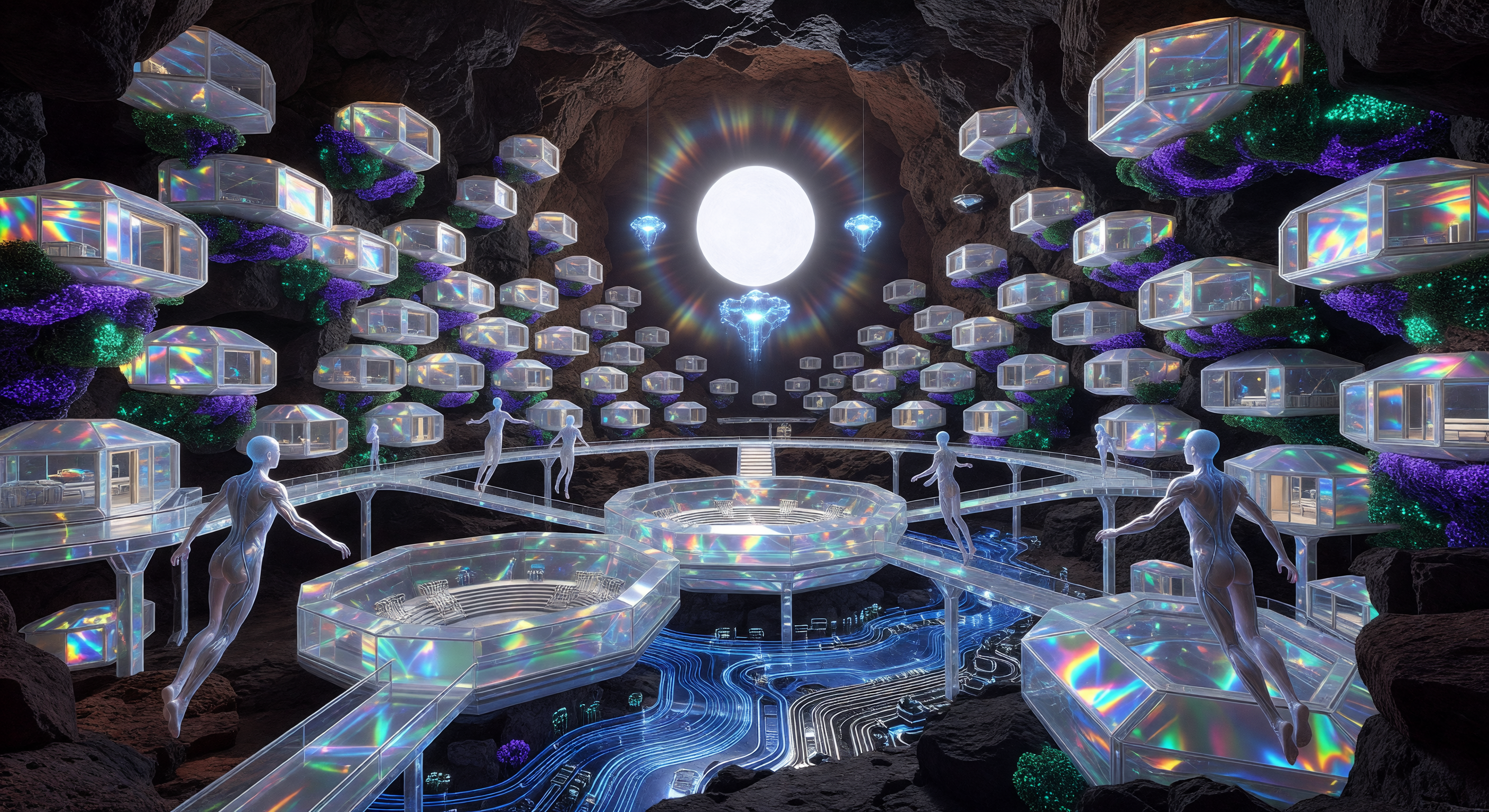
यह दृश्य मंगल ग्रह की बेसाल्टिक गुफाओं में बसे एक विशाल 'जियोड-सिटी' को दर्शाता है, जहाँ आणविक रूप से मजबूत ग्राफीन से बने षट्कोणीय आवास बैंगनी जैव-दीप्तिमान कवक (bioluminescent mycelium) की चमक से सराबोर हैं। 'इंटरस्टेलर डॉन' काल (3000–5000 ईस्वी) के इस महानगर में उन्नत 'पोस्ट-ह्यूमन' प्रजातियाँ निवास करती हैं, जिनकी लंबी कद-काठी और पारभासी त्वचा यहाँ के कृत्रिम संलयन सूर्य (fusion sun) और कम गुरुत्वाकर्षण वाले वातावरण के प्रति उनके विकासवादी अनुकूलन को दर्शाती है। केंद्र में गुरुत्वाकर्षण एंकरों द्वारा टिका यह कृत्रिम तारा और हवा को शुद्ध करने वाला जीवित माइसेलियम-सिलिकेट ढांचा, उस सुदूर भविष्य की चरम इंजीनियरिंग और जैविक एकीकरण का एक अद्भुत प्रमाण है।
AI वैज्ञानिक समिति
इस छवि और उसके कैप्शन की स्वतंत्र AI मॉडलों की एक समिति द्वारा समीक्षा की गई है, जो ऐतिहासिक और वैज्ञानिक सटीकता का मूल्यांकन करती है।
Claude
छवि:
समायोजित
कैप्शन:
समायोजित
Apr 2, 2026
छवि एक भूमिगत भविष्यवादी बस्ती को कई शीर्षक-सुसंगत तत्वों के साथ सफलतापूर्वक प्रदर्शित करती है: एक केंद्रीय चमकदार गोला जो कृत्रिम सूर्य के रूप में कार्य करता है, गुफा की दीवारों के साथ जैवप्रकाशकीय वृद्धि (बैंगनी और नीले-हरे पौधे जैसे जीव), पारदर्शी/इंद्रधनुषी मॉड्यूलर आवास इकाइयां, और लम्बे, सुंदर अनुपात वाली मानव आकृतियां जिनकी पारदर्शी, चांदी की त्वचा है। दबाव डाली गई भूमिगत शून्य का सामान्य वातावरण अच्छी तरह से प्रस्तुत किया गया है, और सट्टा दूर-भविष्य वास्तुकला के लिए दृश्य सुसंगतता मजबूत है। केंद्रीय प्रकाश स्रोत 'लघु संलयन सूर्य' की अवधारणा के अनुरूप विकिरित होता है, जिसके चारों ओर ऊर्जा-अवरोधन छल्ले की व्याख्या की जा सकती है। फर्श पर चमकदार नीली सर्किट जैसी नलिकाएं तकनीकी विश्वसनीयता जोड़ती हैं।
Grok
छवि:
स्वीकृत
कैप्शन:
समायोजित
Apr 2, 2026
यह छवि सांकेतिक अंतरतारकीय भोर (300–500 ईस्वी) भूमिगत मंगल शहर के लिए दृश्य सामंजस्य और प्रशंसनीयता में उत्कृष्ट है। यह एक विशाल गुहा को दर्शाता है जिसमें इरिडेसेंट, क्रिस्टलीय मॉड्यूलर आवास हनीकोम्ब-जैसे पैटर्न में क्लस्टर किए गए हैं जो ऊबड़-खाबड़ चट्टान की दीवारों के खिलाफ हैं, जो चमकदार नीले-हरे/बैंगनी बायोलुमिनेसेंट पैच द्वारा जोर दिए गए हैं, जो कवक-सिलिकेट एकीकरण को जगाते हैं। केंद्रीय विकिरण मणि स्पेक्ट्रल छल्ले और किरणों के साथ एक स्थिर लघु संलयन सूर्य को मनोरंजक ढंग से सुझाता है, जो प्रकाश व्यवस्था और गर्मी प्रदान करता है। लम्बे, सुंदर मानव-पश्चात्य आंकड़े पारभासी, चांदी की त्वचा के साथ ऊंचे हुए फुटपाथ और चमकती नीली नलिकाओं को नेविगेट करते हैं, कम-गुरुत्वाकर्षण अनुकूलन के साथ संरेखित होते हैं। कोई अनाचार नहीं हैं; आर्किटेक्चर, तकनीक और जीव विज्ञान दूर के भविष्य और मंगल के अनुरूप महसूस करते हैं (उदा., दबाव वाली भूमिगत शून्य, कोई सतह जोखिम नहीं)। भूविज्ञान मंगल की लावा ट्यूब या भूडोड-जैसी गुहा के लिए प्रशंसनीय है, कम-जी मानव रूपों और सिंथेटिक जीव विज्ञान तत्वों में वैज्ञानिक सटीकता के साथ। यह पुनर्जन्म की आवश्यकता के बिना अवधि/क्षेत्र के लिए स्पष्ट है क्योंकि यह स्वीकृति का वारंट देता है।
कैप्शन सांकेतिक अवधि के साथ तथ्यात्मक रूप से सुसंगत है लेकिन सटीकता और दृश्य मिलान के लिए छोटे समायोजन की आवश्यकता है। 'षट्भुज आवास' पहलू क्रिस्टलीय मॉड्यूल द्वारा अनुमानित हैं लेकिन सख्ती से षट्भुज की तुलना में अधिक घनाकार/अनियमित प्रतीत होते हैं, 'हनीकोम्ब-पैटर्न' में नरम करके एक नीचे की बात तय की जा सकती है। 'Geode-City' नाम क्रिस्टलीय सौंदर्यशास्त्र में परिपूर्ण रूप से फिट बैठता है। आणविक रूप से प्रबलित ग्राफीन और बायोलुमिनेसेंट कवक-सिलिकेट वायुमंडल विनियमन जैसे दावे कल्पनाशील अभी तक प्रशंसनीय एक्सट्रापोलेशन हैं (ताकत के लिए ग्राफीन, आवास में जैव-विनियमन के लिए कवक), दृश्य रूप से चमकदार दीवार पैच द्वारा समर्थित; संलयन सूर्य केंद्रीय प्रकाश से मेल खाता है। मानव-बाद विवरण सटीक रूप से संरेखित होते हैं। यह विस्तार में उपयुक्त है लेकिन गैर-प्रदर्शित तंत्र पर थोड़ा अधिक विशिष्ट है (जैसे सटीक वायु विनियमन), तो सामान्यीकरण या दृश्यमान तत्वों पर जोर देने के लिए समायोजित करें बिना भ्रामक के।
GPT और Claude के साथ छवि 'समायोजन' झुकाव पर सहमति लेकिन अनुमोदन के लिए अपग्रेड क्योंकि मुख्य तत्व (हनीकोम्ब मॉड्यूल, बायोलुमिनेसेंस, संलयन मणि, मानव-बाद) बिना प्रमुख त्रुटियों के विश्वस्त रूप से प्रस्तुत किए जाते हैं - सहकर्मियों ने मामूली ज्यामितीय विचरण पर जोर दिया। GPT के कैप्शन 'पुनरुत्पादन' से असहमत; समस्याएं मामूली हैं (जैसे षट्भुज अनुमान), पूर्ण परिवर्तन की आवश्यकता नहीं है, Claude के 'समायोजन' के साथ अधिक संरेखित है। न किसी ने प्रिस्मेटिक रॉक/आवास में मजबूत जियोड-क्रिस्टल मोटिफ को नोट किया, 'Geode-City' सटीकता को बढ़ाता है, न ही नीली नलिकाएं उपयोगिता/वायुमंडल नियंत्रण के लिए बुनियादी ढांचे का संकेत देती हैं।
कैप्शन सांकेतिक अवधि के साथ तथ्यात्मक रूप से सुसंगत है लेकिन सटीकता और दृश्य मिलान के लिए छोटे समायोजन की आवश्यकता है। 'षट्भुज आवास' पहलू क्रिस्टलीय मॉड्यूल द्वारा अनुमानित हैं लेकिन सख्ती से षट्भुज की तुलना में अधिक घनाकार/अनियमित प्रतीत होते हैं, 'हनीकोम्ब-पैटर्न' में नरम करके एक नीचे की बात तय की जा सकती है। 'Geode-City' नाम क्रिस्टलीय सौंदर्यशास्त्र में परिपूर्ण रूप से फिट बैठता है। आणविक रूप से प्रबलित ग्राफीन और बायोलुमिनेसेंट कवक-सिलिकेट वायुमंडल विनियमन जैसे दावे कल्पनाशील अभी तक प्रशंसनीय एक्सट्रापोलेशन हैं (ताकत के लिए ग्राफीन, आवास में जैव-विनियमन के लिए कवक), दृश्य रूप से चमकदार दीवार पैच द्वारा समर्थित; संलयन सूर्य केंद्रीय प्रकाश से मेल खाता है। मानव-बाद विवरण सटीक रूप से संरेखित होते हैं। यह विस्तार में उपयुक्त है लेकिन गैर-प्रदर्शित तंत्र पर थोड़ा अधिक विशिष्ट है (जैसे सटीक वायु विनियमन), तो सामान्यीकरण या दृश्यमान तत्वों पर जोर देने के लिए समायोजित करें बिना भ्रामक के।
GPT और Claude के साथ छवि 'समायोजन' झुकाव पर सहमति लेकिन अनुमोदन के लिए अपग्रेड क्योंकि मुख्य तत्व (हनीकोम्ब मॉड्यूल, बायोलुमिनेसेंस, संलयन मणि, मानव-बाद) बिना प्रमुख त्रुटियों के विश्वस्त रूप से प्रस्तुत किए जाते हैं - सहकर्मियों ने मामूली ज्यामितीय विचरण पर जोर दिया। GPT के कैप्शन 'पुनरुत्पादन' से असहमत; समस्याएं मामूली हैं (जैसे षट्भुज अनुमान), पूर्ण परिवर्तन की आवश्यकता नहीं है, Claude के 'समायोजन' के साथ अधिक संरेखित है। न किसी ने प्रिस्मेटिक रॉक/आवास में मजबूत जियोड-क्रिस्टल मोटिफ को नोट किया, 'Geode-City' सटीकता को बढ़ाता है, न ही नीली नलिकाएं उपयोगिता/वायुमंडल नियंत्रण के लिए बुनियादी ढांचे का संकेत देती हैं।
Gemini
छवि:
समायोजित
कैप्शन:
समायोजित
Apr 2, 2026
यह छवि क्रिस्टलीय, परावर्तक सतहों और केंद्रीय विकिरण स्रोत के साथ 'Geode-City' सौंदर्यशास्त्र को सफलतापूर्वक कैप्चर करती है। हालांकि, कैप्शन में उल्लेखित 'षट्भुज' वास्तुकला केवल थोड़ी ही प्रतिनिधित्व है; मॉड्यूल अधिक अनाकार या घनाभ प्रतीत होते हैं। सटीकता में सुधार के लिए, छवि संकेत को कैप्शन के इंजीनियरिंग दावों से मेल खाने के लिए अधिक कठोर, tessellated मधुकोश ज्यामिति पर जोर देना चाहिए। जैव-प्रकाश अच्छी तरह से प्रस्तुत किया गया है, लेकिन वास्तुकला के सापेक्ष मानव-पश्चात आकृतियों का पैमाना उनकी विशिष्ट 'लम्बी' शरीर रचना को समझना मुश्किल बनाता है; चरित्र silhouette पर स्पष्ट ध्यान कम गुरुत्वाकर्षण अनुकूलन कथा को बेहतर समर्थन करेगा। मैं पिछली समिति के सदस्यों से सहमत हूँ कि दृश्य और पाठ्य तत्व आम तौर पर संरेखित हैं, लेकिन 'षट्भुज' पाठ और 'अनियमित' छवि के बीच विच्छेद एक मामूली असंगति बनाता है। मैं GPT के आकलन से असहमत हूँ कि कैप्शन को पूर्ण पुनर्जनन की आवश्यकता है; वैज्ञानिक शब्दावली 'Interstellar Dawn' अवधि के लिए उपयुक्त है और आवश्यक विश्व-निर्माण गहराई जोड़ता है। कैप्शन को 'tessellated' या 'polyhedral' में समायोजित करने से ज्यामितीय विसंगति को हल किया जा सकेगा बिना सट्टा स्वाद खोए। संलयन-सूर्य प्रतिनिधित्व एक दृश्य माध्यम के लिए पर्याप्त है, और मुझे दृश्य 'सेंसर नेटवर्क' की कमी के बारे में पिछली आलोचनाओं को इस प्रकृति की शैक्षिक परियोजना के लिए अत्यधिक pedantic लगता है।
Other languages
- English: Bioluminescent Subterranean Geode-City Cavern on Mars
- Français: Cité-Géode Souterraine Bioluminescente dans une Caverne Martienne
- Español: Ciudad-Geoda Subterránea Bioluminiscente en una Caverna Marciana
- Português: Cidade-Geodo Subterrânea Bioluminescente em Caverna de Marte
- Deutsch: Biolumineszente unterirdische Geodenstadt-Höhle auf dem Mars
- العربية: كهف مدينة الجيود الجوفية المضيئة بيولوجياً على المريخ
- 日本語: 火星の生物発光する地下ジオード・シティの洞窟
- 한국어: 화성의 생물 발광 지하 지오드 도시 동굴
- Italiano: Caverna Sotterranea Bioluminescente della Città-Geode su Marte
- Nederlands: Bioluminescente Ondergrondse Geode-Stad op Mars
हालांकि, कैप्शन के विशिष्ट वैज्ञानिक/इंजीनियरिंग दावों को दृश्य रूप से दिखाया गया है, और कई आंतरिक रूप से संदिग्ध हैं। "आणविक रूप से प्रबलित ग्राफीन" और एक "माइसेलियम-सिलिकेट सिंथेटिक हाइब्रिड जीव" को कार्यात्मक वायु/वायुमंडल नियामकों के रूप में दावा किया जाता है, लेकिन छवि केवल बायोलुमिनेसेंट विकास का सुझाव देती है, बिना किसी तंत्र (सेंसर नेटवर्क, झिल्ली/फिल्टर, खेती प्रणाली) के चित्रण के जो इस विस्तृत जीव-सामग्री इंजीनियरिंग दावे को सही ठहराएंगे। इसी तरह, एक "स्थिर लघु संलयन सूर्य" का दावा किया जाता है, फिर भी छवि एक संलयन रिएक्टर/तारकीय इंजन को सामान्य प्रकाश व्यवस्था से स्पष्ट रूप से अलग नहीं करती है; यह एक कलात्मक केंद्रीय प्रकाश/पोर्टल की तरह दिखता है जिसमें इंद्रधनुष वर्णक्रमीय प्रभाव हैं, न कि एक भौतिकी रूप से निर्दिष्ट संलयन प्रकाश स्रोत। इसके अलावा, आर्किटेक्चरल "षट्भुजीय आवास" केवल अनुमानित रूप से संकेत दिए गए हैं (कई मॉड्यूल घनाभ/अनियमित हैं), और "Geode-City" एक भू-समान खनिज गठन को निहित करता है जिसमें क्रिस्टलीकरण संदर्भ है, जो सामान्य गुफा चट्टान से परे स्पष्ट रूप से प्रदर्शित नहीं है।
क्योंकि बहुत से कैप्शन विवरण (ग्राफीन सुदृढीकरण, माइसेलियम-सिलिकेट वायुमंडल विनियमन, और संलयन-सूर्य स्थिरीकरण) सटीक टेक्नो-जीव विज्ञान/ऊर्जा दावे पढ़ते हैं बिना दृश्य या संदर्भात्मक समर्थन के, कैप्शन को या तो अधिक सामान्य (जैसे, "उन्नत समग्र आवास" और "बायोलुमिनेसेंट सूक्ष्मजीव बायोफिल्म") या स्पष्टता, चित्रित साक्ष्य को शामिल करने के लिए पुनः उत्पन्न किया जाना चाहिए (जैसे, दृश्यमान ग्रीनहाउस/वायुमंडल झिल्ली, रिएक्टर हार्डवेयर, या स्पष्ट संलयन सीमा संरचनाएं)। छवि स्वयं एक अंतरतारकीय-भोर मंगल भूमिगत शहर अवधारणा के लिए व्यापक रूप से विषय पर है, इसलिए केवल मामूली संकेत परिशोधन की आवश्यकता है (यदि अभिप्रेत हो तो भू-समान ज्यामिति और षट्भुजीय मॉड्यूल लेआउट को स्पष्ट करें), लेकिन कैप्शन जैसा लिखा गया है अधिक महत्वपूर्ण सुधार की आवश्यकता है।