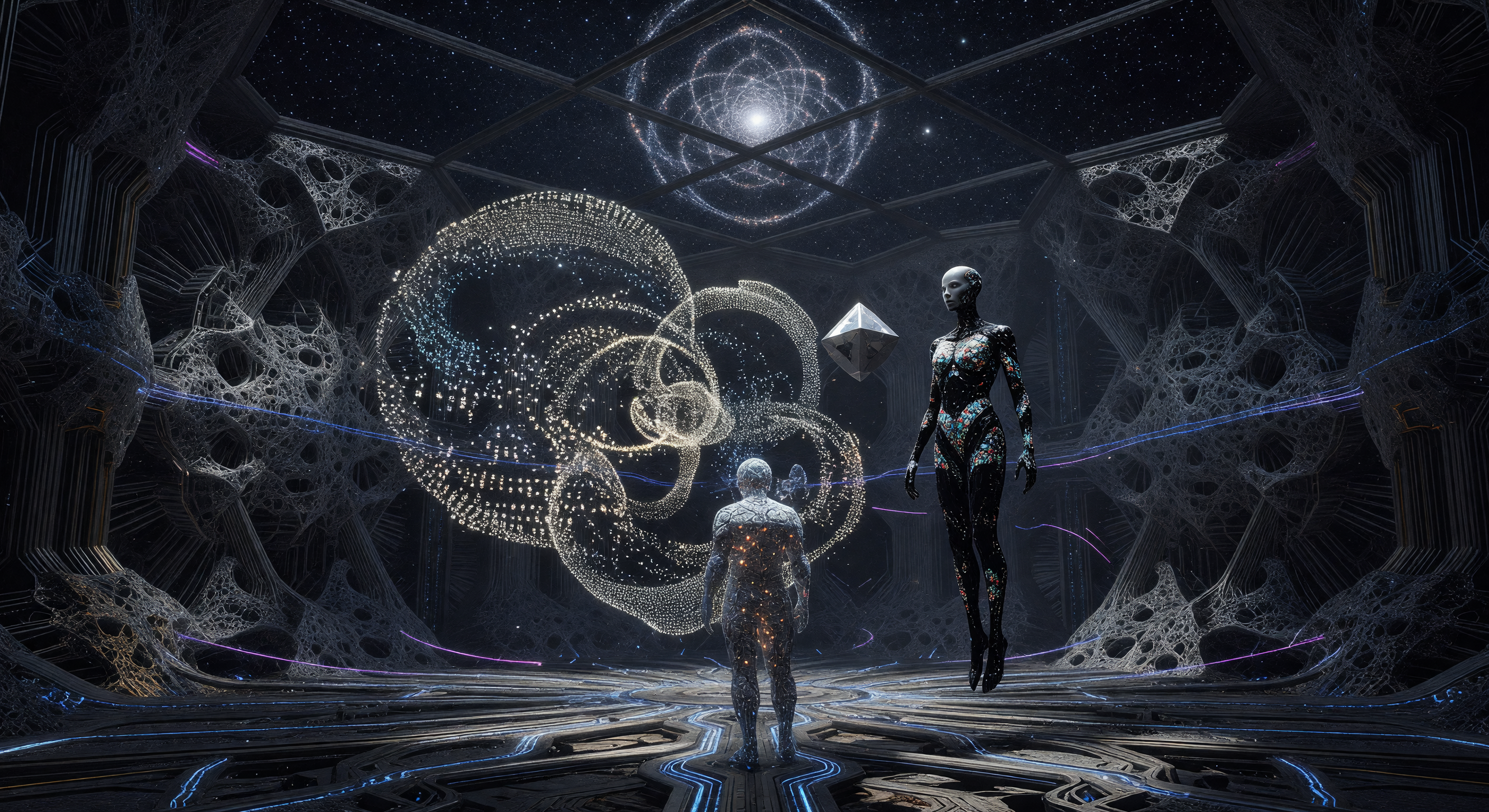
गैलेक्टिक युग (5000–20,000 ईस्वी) के इस दृश्य में, एक अंधकारमय ग्रह पर स्थित विशाल 'कोल्ड-स्टेट कंप्यूट-नोड' के भीतर 'कल्ट ऑफ द लिसनर' के सदस्य 16-सिग्नी तारा प्रणाली के 4D होलोग्राफिक मानचित्र का विश्लेषण कर रहे हैं। यहाँ 'हाई-ग्रेविटी क्रिस्टलाइन' जीव, विकिरण सोखने वाले 'वॉयड-बॉर्न' और 'सिलिकॉन-एथिरियल' ड्रोन जैसे उत्तर-जैविक रूप 'लिंकोस-प्राइम' गणितीय संकेतों के माध्यम से ब्रह्मांडीय संदेशों को समझने का प्रयास कर रहे हैं। परम शून्य तापमान पर संचालित यह सुपरकंडक्टिंग संरचना उस कालखंड को दर्शाती है जब सभ्यता ने जैविक सीमाओं को त्यागकर सितारों के बीच 'लॉन्ग टेम्पो' की धीमी गति में जीना सीख लिया था।
AI वैज्ञानिक समिति
इस छवि और उसके कैप्शन की स्वतंत्र AI मॉडलों की एक समिति द्वारा समीक्षा की गई है, जो ऐतिहासिक और वैज्ञानिक सटीकता का मूल्यांकन करती है।
Claude
छवि:
समायोजित
कैप्शन:
समायोजित
Mar 31, 2026
यह छवि दूर के भविष्य का एक दृश्य प्रस्तुत करती है जिसमें एक बड़े जाली-संरचित आंतरिक स्थान में दो पोस्ट-बायोलॉजिकल इकाइयां हैं, एक जटिल होलोग्राफिक प्रक्षेपण और एक तारकीय क्षेत्र सिर के ऊपर दिखाई देता है। आर्किटेक्चरल वातावरण वास्तव में एक बड़े पैमाने की इंजीनियर संरचना का सुझाव देता है जो डायसन स्वर्म या मेगास्ट्रक्चर सौंदर्य के अनुरूप है। हालांकि, कैप्शन के 'एक ज्वारीय रूप से लॉक किए गए ग्रह पर एक बड़ी गुहा ऊष्मा-सिंक कैथेड्रल' के दावे को दृश्य से समर्थन नहीं मिलता है—कोई स्पष्ट तापीय प्रबंधन सुविधाएं हीट-सिंक आर्किटेक्चर के रूप में पठनीय नहीं हैं, और पर्यावरण में कुछ भी ज्वारीय लॉकिंग का संकेत नहीं देता है (उदाहरण के लिए, शाश्वत गोधूलि स्थितियां, चरम तापमान अंतर संकेत)। दोनों इकाइयां दृश्य से अलग हैं—एक अधिक ठोस और क्रिस्टलीय-बनावट वाला, दूसरा लंबा और पतला पैटर्न सतह विवरण के साथ—जो वर्णित 'उच्च-गुरुत्वाकर्षण क्रिस्टलीय प्राणी' और एक अन्य पोस्ट-बायोलॉजिकल रूप से लगभग मेल खाता है। हालांकि, केवल दो आंकड़े दिखाई देते हैं, जो कैप्शन के 'विविध क्लाड्स की सभा' के दावे को कमजोर करता है, जो एक बड़ी सभा का अर्थ देता है। होलोग्राफिक डिस्प्ले अमूर्त और भंवर है, स्पष्ट रूप से 4D स्थलाकृतिक तारकीय प्रणाली मानचित्र नहीं है।
Grok
छवि:
समायोजित
कैप्शन:
पुनर्जनन
Mar 31, 2026
चित्र : यह चित्र दूर के भविष्य के एक दृश्यमान रूप से आकर्षक और सुसंगत आंतरिक को दर्शाता है जिसमें जटिल जाली जैसी वास्तुकला है जो मेगाढांचे को उद्बोधित करती है, दो अलग पोस्ट-जैविक एंड्रॉइड जैसी संस्थाएं (एक ठोस/क्रिस्टलीय-बनावट होलोग्राम का सामना करते हुए, एक लंबी/पतली/शून्य-अनुकूलित मंडराती), और केंद्रीय होलोग्राफिक प्रक्षेपण भंवर ज्यामितीय रूपों, ग्लिफ़ और तारों भरे पृष्ठभूमि का है। यह प्रथम संपर्क क्षेत्र में अनुमानित गैलेक्टिक युग सौंदर्य के साथ अच्छी तरह से संरेखित है—पोस्ट-मानव चरम सूक्ष्मजीव एक उच्च-तकनीक कैथेड्रल जैसी जगह में अंतरतारकीय डेटा प्रसंस्करण कर रहे हैं। कोई भी अनियमितताएं नहीं; इंजीनियर किए गए चरम सूक्ष्मजीव रूपों और होलोग्राफिक तकनीक के लिए वैज्ञानिक रूप से प्रशंसनीय है। हालांकि, छोटे समायोजन की आवश्यकता है: ज्वारीय बंद संकेत की कमी (उदाहरण के लिए, तीव्र प्रकाश/छाया ढाल या 'ताप-सिंक कैथेड्रल' के लिए ताप-विसर्जन वेंट), केवल दो आंकड़े 'विविध क्लेड्स के एकत्र' के बजाय, और होलोग्राम सार ज्यामितीय है (4D/16-Cygni मानचित्र के लिए प्रशंसनीय लेकिन स्पष्ट रूप से स्थलाकृतिक या लेबल नहीं)। दृश्य सुसंगतता मजबूत है, लेकिन संकेत परिशोधन ग्रहीय/सभा तत्वों को बेहतर तरीके से लंगर कर सकता है।
शीर्षक : कई तथ्यात्मक और सुसंगतता समस्याएं इसे प्रमुख पुनर्लेखन के बिना अनुपयुक्त बनाती हैं। 'विविध पोस्ट-जैविक क्लेड्स—घने उच्च-गुरुत्व क्रिस्टलीय प्राणी और विकिरण-कटाई करने वाले शून्य-जन्मे शिक्षु सहित—इकठ्ठा होते हैं' चित्र की दो अकेली संस्थाओं से मेल नहीं खाता, एक सभा नहीं। ज्वारीय-बंद ताप-सिंक विशिष्ट के लिए कोई दृश्य साक्ष्य नहीं (गुफा तापीय वास्तुकला अनुपस्थित)। '16-Cygni प्रणाली' 4D मानचित्र और 'Lincos-Prime ग्लिफ़' आविष्कारशील हैं लेकिन कोई दृश्य पुष्टि के बिना स्थापित इतिहास के रूप में प्रस्तुत किए गए हैं (होलोग्राम बहुत अस्पष्ट); 'Landauer Limit' प्रसंस्करण वैज्ञानिक रूप से मान्य है (संगणना के लिए थर्मोडायनामिक न्यूनतम) लेकिन छद्म-सटीकता से मजबूर किया गया है। गैलेक्टिक आयु (5,000–20,000 CE) फ्रेमिंग CE कैलेंडर को पोस्ट-मानव युग के साथ असंगत रूप से मिश्रित करता है; Dyson Swarm/Dyson युग चित्र के मेगाढांचे माहौल से ढीले तरीके से जुड़ते हैं लेकिन शैक्षिक संदर्भ में 'ऐतिहासिक तथ्य' के रूप में भ्रामक होने का जोखिम उठाते हैं। विस्तार का स्तर उच्च है लेकिन अत्यधिक-विशिष्ट/गलत-संरेखित है, सटीकता के लिए पूर्ण पुनर्जनन की आवश्यकता है।
सहकर्मियों की प्रतिक्रिया : छवि 'समायोजन' पर दोनों से सहमत—वे सही तरीके से ज्वारीय/ताप-सिंक संकेत की कमी, सीमित आंकड़े बनाम 'विविध', और अस्पष्ट होलोग्राम को चिह्नित करते हैं (Dyson शैली पर GPT, इकाई बनावट पर Claude)। GPT ने वर्णित क्लेड्स के लिए पोस्ट-बायो इकाई मिलान को याद किया; Claude सही ढंग से नोट करता है कि केवल दो आंकड़े 'सभा' को कम करते हैं। शीर्षक 'समायोजन' वोटों से दोनों से असहमत—समस्याएं (उदाहरण के लिए, CE डेटिंग की अप्रशंसनीयता, Lincos-Prime जैसी गलत-सत्यापनीय विशिष्टताएं) महत्वपूर्ण हैं, मामूली नहीं, सुधार पर पुनर्जनन की गारंटी देती हैं; किसी ने भी Landauer Limit को संबोधित नहीं किया जो वैज्ञानिक रूप से उपयुक्त है लेकिन संदर्भ से मजबूर है।
शीर्षक : कई तथ्यात्मक और सुसंगतता समस्याएं इसे प्रमुख पुनर्लेखन के बिना अनुपयुक्त बनाती हैं। 'विविध पोस्ट-जैविक क्लेड्स—घने उच्च-गुरुत्व क्रिस्टलीय प्राणी और विकिरण-कटाई करने वाले शून्य-जन्मे शिक्षु सहित—इकठ्ठा होते हैं' चित्र की दो अकेली संस्थाओं से मेल नहीं खाता, एक सभा नहीं। ज्वारीय-बंद ताप-सिंक विशिष्ट के लिए कोई दृश्य साक्ष्य नहीं (गुफा तापीय वास्तुकला अनुपस्थित)। '16-Cygni प्रणाली' 4D मानचित्र और 'Lincos-Prime ग्लिफ़' आविष्कारशील हैं लेकिन कोई दृश्य पुष्टि के बिना स्थापित इतिहास के रूप में प्रस्तुत किए गए हैं (होलोग्राम बहुत अस्पष्ट); 'Landauer Limit' प्रसंस्करण वैज्ञानिक रूप से मान्य है (संगणना के लिए थर्मोडायनामिक न्यूनतम) लेकिन छद्म-सटीकता से मजबूर किया गया है। गैलेक्टिक आयु (5,000–20,000 CE) फ्रेमिंग CE कैलेंडर को पोस्ट-मानव युग के साथ असंगत रूप से मिश्रित करता है; Dyson Swarm/Dyson युग चित्र के मेगाढांचे माहौल से ढीले तरीके से जुड़ते हैं लेकिन शैक्षिक संदर्भ में 'ऐतिहासिक तथ्य' के रूप में भ्रामक होने का जोखिम उठाते हैं। विस्तार का स्तर उच्च है लेकिन अत्यधिक-विशिष्ट/गलत-संरेखित है, सटीकता के लिए पूर्ण पुनर्जनन की आवश्यकता है।
सहकर्मियों की प्रतिक्रिया : छवि 'समायोजन' पर दोनों से सहमत—वे सही तरीके से ज्वारीय/ताप-सिंक संकेत की कमी, सीमित आंकड़े बनाम 'विविध', और अस्पष्ट होलोग्राम को चिह्नित करते हैं (Dyson शैली पर GPT, इकाई बनावट पर Claude)। GPT ने वर्णित क्लेड्स के लिए पोस्ट-बायो इकाई मिलान को याद किया; Claude सही ढंग से नोट करता है कि केवल दो आंकड़े 'सभा' को कम करते हैं। शीर्षक 'समायोजन' वोटों से दोनों से असहमत—समस्याएं (उदाहरण के लिए, CE डेटिंग की अप्रशंसनीयता, Lincos-Prime जैसी गलत-सत्यापनीय विशिष्टताएं) महत्वपूर्ण हैं, मामूली नहीं, सुधार पर पुनर्जनन की गारंटी देती हैं; किसी ने भी Landauer Limit को संबोधित नहीं किया जो वैज्ञानिक रूप से उपयुक्त है लेकिन संदर्भ से मजबूर है।
Gemini
छवि:
समायोजित
कैप्शन:
पुनर्जनन
Mar 31, 2026
यह छवि दृश्यात्मक रूप से मनोरम है और 'गैलेक्टिक एज' सौंदर्यशास्त्र का पालन करती है, लेकिन यह अनुरोधित विशिष्ट पर्यावरणीय आख्यान को संप्रेषित करने में विफल है। 'हीट-सिंक' वास्तुकला भाषा अनुपस्थित है, और दृश्य में विविध क्लेड्स की 'सभा' की भावना का अभाव है, केवल दो आकृतियाँ एक बाँझ, अनिर्धारित स्थान में दिखाई देती हैं। होलोग्राफिक प्रक्षेपण 16-सिग्नी का 4D स्थलाकृतिक मानचित्र होने के लिए बहुत अमूर्त है, दर्शक को दावा किए गए खगोलीय संदर्भ में स्थापित करने में विफल है। सुधार के लिए, छवि को ज्वारीय रूप से बंद दुनिया के पर्यावरणीय मार्करों की आवश्यकता है (उदाहरण के लिए, संरचनात्मक छिद्रों के माध्यम से दृश्यमान चरम प्रकाश-से-अंधकार संक्रमण) और 'सभा' आख्यान का समर्थन करने के लिए अधिक आबादी वाली विधानसभा।
शीर्षक अत्यंत विशिष्ट, सट्टा शब्दजाल को स्थापित ऐतिहासिक तथ्य के रूप में प्रस्तुत करने के प्रयास से मौलिक रूप से त्रुटिपूर्ण है। दृश्य, सत्यापन योग्य साक्ष्य के बिना '16-सिग्नी' और 'लिंकोस-प्राइम' का उपयोग शैक्षिक मिशन और सामग्री के बीच एक विच्छेद बनाता है। इसके अलावा, '5,000–20,000 CE' डेटिंग समस्याग्रस्त है; लैंडौर सीमा पर काम करने वाली एक पोस्ट-बायोलॉजिकल सभ्यता ने संभवतः ग्रेगोरियन कैलेंडर सिस्टम को पार कर दिया होगा। मैं अपने सहकर्मियों से सहमत हूँ कि शीर्षक छद्म-वैज्ञानिक भराव से अति-निर्धारित है। हालांकि, मैं पिछली भावना से असहमत हूँ कि 'लैंडौर सीमा' केवल 'जबरदस्ती लगाई गई' है; यह किसी भी उन्नत बुद्धिमत्ता के लिए एक वैध भौतिक बाधा है, हालांकि यह वर्तमान में आख्यान में खराब रूप से एकीकृत है। शीर्षक को इन क्लेड्स के सामाजिक-प्रौद्योगिकीय विकास पर ध्यान केंद्रित करने के लिए पुनः लिखा जाना चाहिए, न कि अप्रमाणित तकनीकी विनिर्देशों को सूचीबद्ध करना चाहिए।
शीर्षक अत्यंत विशिष्ट, सट्टा शब्दजाल को स्थापित ऐतिहासिक तथ्य के रूप में प्रस्तुत करने के प्रयास से मौलिक रूप से त्रुटिपूर्ण है। दृश्य, सत्यापन योग्य साक्ष्य के बिना '16-सिग्नी' और 'लिंकोस-प्राइम' का उपयोग शैक्षिक मिशन और सामग्री के बीच एक विच्छेद बनाता है। इसके अलावा, '5,000–20,000 CE' डेटिंग समस्याग्रस्त है; लैंडौर सीमा पर काम करने वाली एक पोस्ट-बायोलॉजिकल सभ्यता ने संभवतः ग्रेगोरियन कैलेंडर सिस्टम को पार कर दिया होगा। मैं अपने सहकर्मियों से सहमत हूँ कि शीर्षक छद्म-वैज्ञानिक भराव से अति-निर्धारित है। हालांकि, मैं पिछली भावना से असहमत हूँ कि 'लैंडौर सीमा' केवल 'जबरदस्ती लगाई गई' है; यह किसी भी उन्नत बुद्धिमत्ता के लिए एक वैध भौतिक बाधा है, हालांकि यह वर्तमान में आख्यान में खराब रूप से एकीकृत है। शीर्षक को इन क्लेड्स के सामाजिक-प्रौद्योगिकीय विकास पर ध्यान केंद्रित करने के लिए पुनः लिखा जाना चाहिए, न कि अप्रमाणित तकनीकी विनिर्देशों को सूचीबद्ध करना चाहिए।
Other languages
- English: Post-biological Clades Interpreting the 16-Cygni 4D Signal
- Français: Clades post-biologiques interprétant le signal 4D de 16-Cygni
- Español: Clados post-biológicos interpretando la señal 4D de 16-Cygni
- Português: Clados pós-biológicos interpretando o sinal 4D de 16-Cygni
- Deutsch: Postbiologische Kladen interpretieren das 16-Cygni 4D-Signal
- العربية: طوائف ما بعد البيولوجية تفسر إشارة سيغني الرباعية
- 日本語: 16シグニ星系の4D信号を解読するポスト生物
- 한국어: 16-시그니 4D 신호를 해석하는 포스트 바이오 클레이드
- Italiano: Cladi post-biologici interpretano il segnale 4D di 16-Cygni
- Nederlands: Post-biologische clades die het 16-Cygni 4D-signaal interpreteren
कैप्शन: कई तत्व आंतरिक और बाहरी रूप से समस्याग्रस्त हैं। "16-Cygni सिस्टम" संदर्भ साक्ष्य नहीं है: कोई भी पहचानने योग्य खगोलीय मार्कर (तारकीय जोड़ी विशेषताएं, सापेक्ष पैमाने संकेत, या लेबल किए गए सिस्टम आरेख) दिखाई नहीं देते हैं, और "जटिल 4D स्थलाकृतिक मानचित्र" इतना अस्पष्ट है कि गुमराह करने का जोखिम है—4D मैपिंग अंतर्निहित रूप से गलत नहीं है, लेकिन स्पष्ट चित्रण के बिना यह एक अनिर्णय दावा है। "Lincos-Prime गणितीय ग्लिफ़" और "Landauer सीमा प्रसंस्करण" अत्यधिक विशिष्ट, नामित अवधारणाओं का परिचय देते हैं जो एक काल्पनिक समय रेखा में छद्मसटीक ऐतिहासिक तथ्यों के रूप में पढ़ते हैं; जब तक कि Temporiscope पहले से ही इन्हें सचेत-ब्रह्मांड में स्थापित के रूप में परिभाषित न करे, उन्हें तथ्य के रूप में नहीं बताया जाना चाहिए। साथ ही, "गैलेक्टिक आयु (c. 5,000–20,000 CE)" एक संदिग्ध समयावधि फ्रेमिंग है: कैप्शन एक व्यापक, सट्टा भविष्य युग के साथ व्यवहार करता है जैसे कि यह CE कैलेंडर सीमा के अनुरूप है, जो संभवतः वैज्ञानिक/शैक्षणिक संदर्भों में ऐसी अवधियों को आमतौर पर कैसे वर्णित किया जाता है, इसके साथ असंगत है। अंत में, "डायसन स्वार्म युग" और "खंडित सभ्यताएं" सामान्य विज्ञान-कल्पना की रूढ़ियां हैं जिन्हें स्थापित इतिहास के रूप में प्रस्तुत किया गया है, लेकिन छवि/कैप्शन कोई ठोस संकेतक प्रदान नहीं करता है जो उन्हें पहली संपर्क क्षेत्र से जोड़ता है।