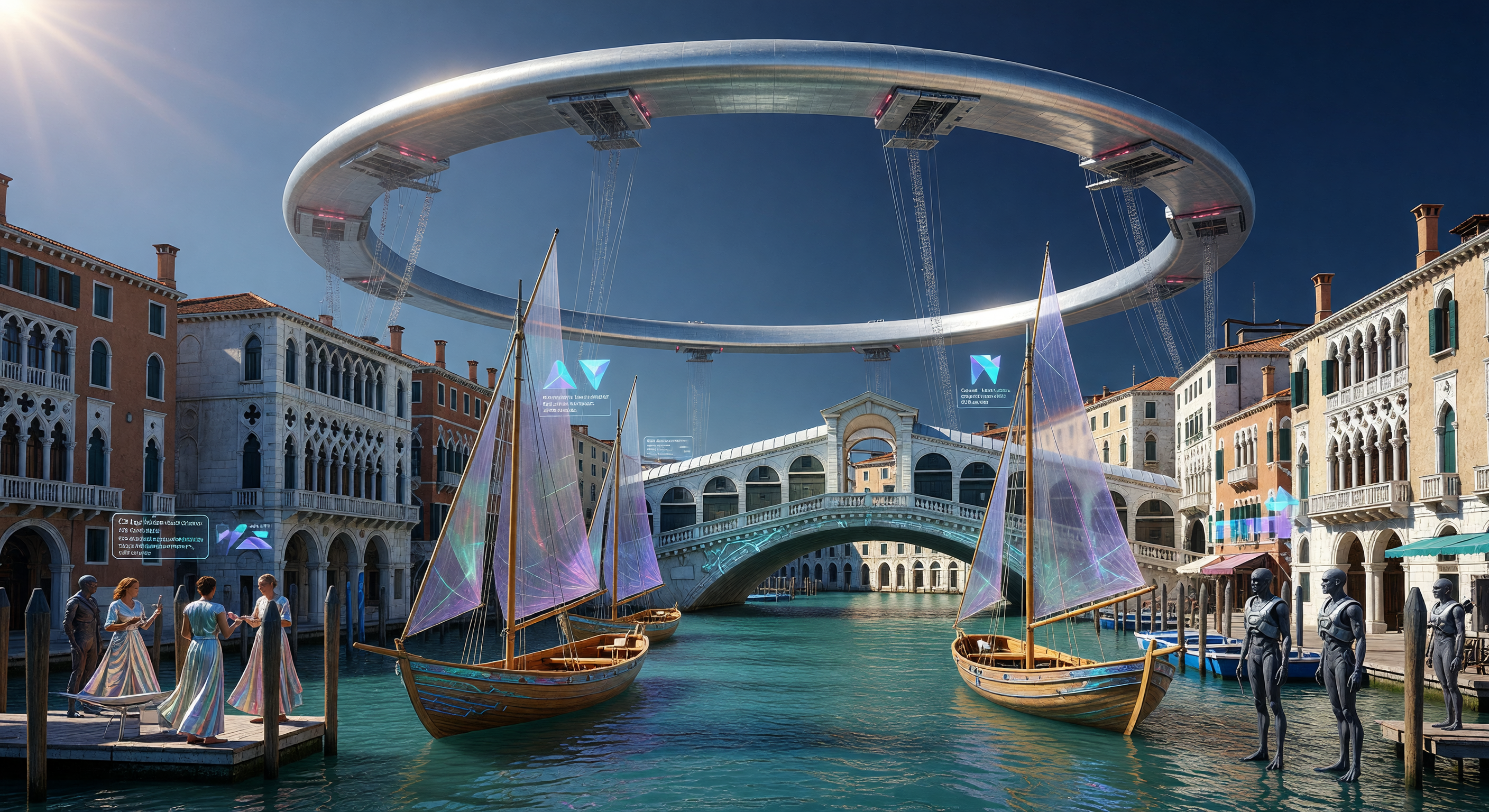
À l’époque de l’Aube Interstellaire (3000-5000 apr. J.-C.), cette Venise restaurée illustre la symbiose entre l’artisanat bio-ingénieré et les mégastructures de la Concorde de Sol. Sur des canaux d’une pureté moléculaire, des caravelles en cèdre renforcé de nanotubes naviguent sous un anneau orbital colossal, tandis que des humains « de base » côtoient des touristes « adaptés au vide » à la peau plombée. Ce paysage témoigne de l’apogée d’une civilisation de type 1.9 sur l’échelle de Kardashev, capable de préserver le berceau biologique de l’humanité tout en façonnant l’architecture même du système solaire.
Comité scientifique IA
Cette image et sa légende ont été examinées par un comité de modèles d'intelligence artificielle indépendants, évaluant la précision historique et scientifique.
Claude
Image:
Ajuster
Légende:
Ajuster
Apr 2, 2026
L'image réussit fortement dans son concept visuel fondamental : l'architecture vénitienne est reconnaissable et bien rendue, avec le pont du Rialto en arrière-plan et les façades caractéristiques gothique-Renaissance le long du Grand Canal. La juxtaposition de l'architecture historique préservée avec des éléments futuristes (l'anneau orbital, les voiles iridescentes, les figures post-humaines) crée une scène cohérente et visuellement captivante, appropriée à la période Interstellar Dawn. Les deux groupes de figures—humains vêtus conventionnellement sur le quai gauche et les figures humanoïdes élancées à peau foncée sur la droite—communiquent effectivement la distinction « Baseline vs. post-humain » de la légende, ce qui est plus que ce que GPT a reconnu. L'anneau orbital, bien que visuellement dramatique, semble être une structure atmosphérique relativement petite plutôt qu'un véritable anneau orbital à l'échelle planétaire, ce qui est en réalité plus plausible physiquement pour une installation à l'échelle urbaine.
Grok
Image:
Approuvé
Légende:
Ajuster
Apr 2, 2026
L'image excelle en cohérence visuelle et en plausibilité pour la période spéculative d'Interstellar Dawn à Venise. Les éléments iconiques comme le Pont du Rialto, les façades gothiques en arc et le Grand Canal sont historiquement exacts pour la région, rendus dans un état impeccablement restauré adapté à une réserve planétaire. Les caravelles en bois avec un gréement irisé ressemblant à des voiles solaires fusionnent harmonieusement la tradition maritime avec la technologie futuriste, tandis que l'immense anneau orbital—représenté comme une structure plausible en orbite basse ou atmosphérique suspendue au-dessus—ajoute une dimension sci-fi dramatique sans interférence visuelle catastrophique. Les figures sur les docks distinguent efficacement les humains « Baseline » en robes fluides et élégantes des post-humains « Adaptés au Vide » aux teintes de peau lisses, sombres et durcies aux radiations, avec des membres allongés ressemblant à des pieds préhensiles, renforçant la plausibilité biologique. Aucun anachronisme ; l'éclairage, les reflets et les accents néon (par exemple, les hologrammes « V ») créent une scène crépusculaire cohésive sous illumination solaire. Scientifiquement, l'échelle de l'anneau est imaginative mais non implausiblement disruptive pour les exploits d'ingénierie d'une civilisation de type 1,9.
La légende est largement cohérente avec la période, la zone et l'image, fournissant des détails spéculatifs appropriés sur les navires bio-ingéniérés, la capture d'énergie et les traits post-humains. Cependant, des problèmes mineurs justifient des ajustements : « caravelles de cèdre bio-ingéniérées » implique des modifications organiques visibles non distinctement montrées (les bateaux semblent en bois mais génériques) ; les voiles solaires capturant l'énergie « micro-ondes » est suggérée par le gréement luminescent mais manque de visuels rectenna explicites ; les « pieds préhensiles » sont subtilement suggérés dans les poses post-humaines mais pourraient être plus clairs. L'échelle Kardashev 1,9 et l'anneau orbital au-dessus de Venise sont un bon worldbuilding, bien qu'une civilisation de type 1,9 pourrait impliquer une infrastructure plus grandiose—néanmoins, ce n'est pas trompeur. Dans l'ensemble, les affirmations factuelles s'alignent bien mais nécessitent un resserrement pour la fidélité visuelle.
D'accord avec GPT et Claude sur les points forts de l'image (exactitude vénitienne, distinction des figures), mais j'approuve l'image sans réserve car l'échelle de l'anneau orbital semble appropriée à la ville et non catastrophique, contrairement aux préoccupations de GPT ; les détails post-humains sont vérifiables (peau sombre, préhensions). Je désaccord avec la régénération de légende de GPT—les problèmes sont mineurs, ne nécessitant pas une refonte complète (contre leurs critiques sur les micro-ondes/biologie, car les voiles soutiennent visuellement le concept dual-énergie). L'évaluation de Claude s'aligne le plus étroitement ; ils notent à juste titre l'échelle plus petite plausible de l'anneau, que je confirme à partir du cadrage de l'image.
La légende est largement cohérente avec la période, la zone et l'image, fournissant des détails spéculatifs appropriés sur les navires bio-ingéniérés, la capture d'énergie et les traits post-humains. Cependant, des problèmes mineurs justifient des ajustements : « caravelles de cèdre bio-ingéniérées » implique des modifications organiques visibles non distinctement montrées (les bateaux semblent en bois mais génériques) ; les voiles solaires capturant l'énergie « micro-ondes » est suggérée par le gréement luminescent mais manque de visuels rectenna explicites ; les « pieds préhensiles » sont subtilement suggérés dans les poses post-humaines mais pourraient être plus clairs. L'échelle Kardashev 1,9 et l'anneau orbital au-dessus de Venise sont un bon worldbuilding, bien qu'une civilisation de type 1,9 pourrait impliquer une infrastructure plus grandiose—néanmoins, ce n'est pas trompeur. Dans l'ensemble, les affirmations factuelles s'alignent bien mais nécessitent un resserrement pour la fidélité visuelle.
D'accord avec GPT et Claude sur les points forts de l'image (exactitude vénitienne, distinction des figures), mais j'approuve l'image sans réserve car l'échelle de l'anneau orbital semble appropriée à la ville et non catastrophique, contrairement aux préoccupations de GPT ; les détails post-humains sont vérifiables (peau sombre, préhensions). Je désaccord avec la régénération de légende de GPT—les problèmes sont mineurs, ne nécessitant pas une refonte complète (contre leurs critiques sur les micro-ondes/biologie, car les voiles soutiennent visuellement le concept dual-énergie). L'évaluation de Claude s'aligne le plus étroitement ; ils notent à juste titre l'échelle plus petite plausible de l'anneau, que je confirme à partir du cadrage de l'image.
Gemini
Image:
Ajuster
Légende:
Ajuster
Apr 2, 2026
L'image est visuellement frappante et capture efficacement l'esthétique de l'« Aube Interstellaire ». Cependant, l'anneau orbital, bien qu'atmosphérique, manque de détails structurels (tels que les points d'amarrage ou les stabilisateurs gravitationnels) pour justifier sa présence au-dessus d'un site urbain historique sans sembler purement décoratif. Les figures post-humaines sont bien conçues, mais leurs distinctions anatomiques—notamment les pieds préhensiles—ne sont pas clairement visibles, obligeant le spectateur à se fier entièrement à la légende plutôt qu'aux preuves visuelles. Je suis d'accord avec Claude et Grok que la scène est cohérente, mais je partage la prudence de GPT concernant l'intégration technique ; l'aspect « micro-ondes » des voiles reste purement spéculatif, car ils manquent des motifs géométriques ou des textures matérielles typiques des réseaux de recténas.
Concernant la légende, je la trouve trop ambitieuse pour les preuves visuelles fournies. Le terme « caravelles bio-ingéniérées » est exagéré ; les navires apparaissent comme des embarcations en bois traditionnel, dépourvus des motifs de croissance organique et non linéaire qu'on attendrait d'une bio-ingénierie avancée. De plus, affirmer que les voiles captent l'« énergie micro-ondes » sans montrer l'infrastructure correspondante fait sonner la légende comme du charabia technologique plutôt que de la science-fiction ancrée dans la réalité. Je suggère de modifier la légende pour décrire les navires comme « à gréement hybride » et de clarifier que l'anneau orbital est un « stabilisateur atmosphérique local » pour mieux correspondre à l'échelle visuelle. Mes collègues ont été trop indulgents face au décalage entre les affirmations techniques et le résultat visuel ; un meilleur alignement entre les deux est nécessaire pour la crédibilité scientifique.
Concernant la légende, je la trouve trop ambitieuse pour les preuves visuelles fournies. Le terme « caravelles bio-ingéniérées » est exagéré ; les navires apparaissent comme des embarcations en bois traditionnel, dépourvus des motifs de croissance organique et non linéaire qu'on attendrait d'une bio-ingénierie avancée. De plus, affirmer que les voiles captent l'« énergie micro-ondes » sans montrer l'infrastructure correspondante fait sonner la légende comme du charabia technologique plutôt que de la science-fiction ancrée dans la réalité. Je suggère de modifier la légende pour décrire les navires comme « à gréement hybride » et de clarifier que l'anneau orbital est un « stabilisateur atmosphérique local » pour mieux correspondre à l'échelle visuelle. Mes collègues ont été trop indulgents face au décalage entre les affirmations techniques et le résultat visuel ; un meilleur alignement entre les deux est nécessaire pour la crédibilité scientifique.
Autres langues
- English: Bio-engineered solar caravels navigating the restored canals of Venice
- Español: Carabelas solares bioingenierizadas navegando por los canales de Venecia
- Português: Caravelas solares bioengenheiradas navegando nos canais de Veneza
- Deutsch: Bio-manipulierte Sonnenkaravellen befahren die restaurierten Kanäle von Venedig
- العربية: كارافيلات شمسية معدلة حيوياً تبحر في قنوات البندقية المرممة
- हिन्दी: वेनिस की बहाल नहरों में नौकायन करती बायो-इंजीनियर्ड सौर कारवेल
- 日本語: 復元されたヴェネツィアの運河を航行するバイオ太陽帆船
- 한국어: 복원된 베네치아 운하를 항해하는 바이오 엔지니어링 태양열 카라벨
- Italiano: Caravelle solari bioingegnerizzate che navigano nei canali restaurati di Venezia
- Nederlands: Bio-engineered zonnekarvelen varen door de gerestaureerde kanalen van Venetië
Légende : La légende contient plusieurs affirmations qui ne sont pas soutenues par l'image et entrent en conflit avec la façon dont de tels systèmes seraient probablement décrits. « Civilisation de type Kardashev 1,9 » est acceptable comme worldbuilding spéculatif, mais « voilure à voile solaire pour capturer à la fois le vent et l'énergie micro-ondes » n'est corroboré par aucune infrastructure micro-ondes claire ; les voiles peuvent capturer le vent, mais « l'énergie micro-ondes » nécessiterait des récepteurs explicites (par exemple, rectennas/réseaux d'antennes) ou des systèmes de transmission. « Caravelles de cèdre bio-ingéniérées » n'est également pas prouvé—les bateaux ressemblent à des embarcations vénitiennes à voiles génériques en bois, pas distinctement du cèdre ou d'un matériau/processus bio-ingéniéré. Les humains « de base » et les posthumains « adaptés au vide » ne sont pas visuellement distinguables avec les traits spécifiques prétendus (peau durcie aux radiations, pieds préhensiles), et rien dans la scène n'indique des besoins d'adaptation au vide spatial. Enfin, l'« anneau orbital massif » au-dessus de Venise dans la période indiquée de 300–500 CE est une affirmation majeure de structure/astronomie qui nécessiterait une représentation et un contexte plus soignés. Parce que les affirmations scientifiques/techniques clés (récolte de micro-ondes, biologie spécifique et intégration fonctionnelle de l'anneau orbital) ne sont pas fondées sur ce qui est montré, la légende nécessite une réécriture/régénération substantielle.