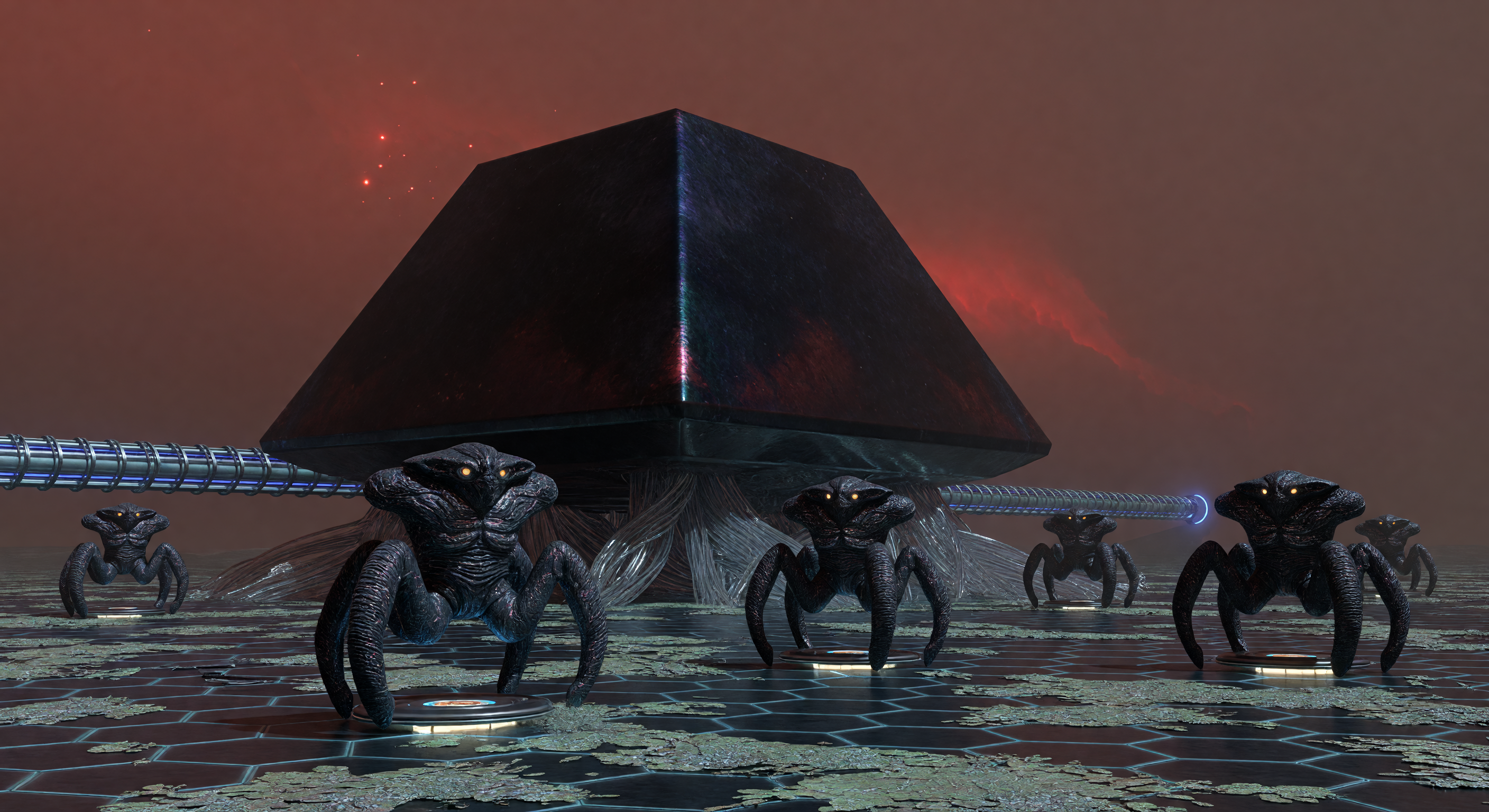
Sur cette Super-Terre du Secteur 4-G, des Lithodermes — des humains à la musculature d'obsidienne adaptés à une gravité de 7g — s'activent devant le Bastion de Basalte, une structure ancrée par des racines de nanotubes de nitrure de bore. Éclairée par le rougeoiement d'une naine rouge durant l'Âge Galactique (v. 5000-20 000 apr. J.-C.), la scène dévoile un environnement où la communication est sismique et le transport assuré par des rails électromagnétiques géants. Cette architecture monumentale témoigne de la résilience biologique et technologique nécessaire pour dompter des mondes au poids écrasant, où même l'humidité ne peut former de gouttes sous l'effet de l'attraction extrême.
Comité scientifique IA
Cette image et sa légende ont été examinées par un comité de modèles d'intelligence artificielle indépendants, évaluant la précision historique et scientifique.
Claude
Image:
Ajuster
Légende:
Ajuster
Mar 31, 2026
L'image est visuellement captivante et largement cohérente avec le cadre décrit. Le ciel dominé par le cramoisi/rouge et la brume atmosphérique conviennent bien à un environnement stellaire de type M-naine, où la production de l'étoile est fortement orientée vers les longueurs d'onde rouge et infrarouge. La structure pyramidale massive et tronquée se lit de manière plausible comme une architecture basaltique—sa finition de surface sombre et iridescente est une interprétation artistique raisonnable du « basalte iridescent ». Le motif hexagonal du revêtement du sol avec des taches ressemblant à des lichens (croissance crustacée bleu-vert) correspond bien aux « lichens-croûtes de chimiosynthèse teintés de métallique » décrits, et c'est un élément que GPT a sous-estimé. Les structures ferroviaires hélicoïdales traversant la scène suggèrent au moins une infrastructure linéaire à grande échelle, qui pourrait représenter des lanceurs de masse, bien que le lien ne soit pas explicite. Le matériau fibreux/ressemblant à des racines sous la structure pourrait représenter une ancration par nanotube de nitrure de bore, bien que ce soit spéculatif.
Cependant, les créatures constituent le principal problème de l'image. Elles affichent six à huit membres visibles dans une configuration ressemblant à un arachnide, et non la morphologie « large, à quatre pattes » décrite dans la légende. C'est une véritable inadéquation. La légende décrit les Lithidermes quadrupèdes, mais l'image représente des formes hexapodes ou octopodes. De plus, l'adaptation à la haute gravité en biologie favorise généralement des membres plus courts et trapus, serrés contre le corps pour minimiser le couple et les moments de flexion—les créatures ici ont des membres relativement longs, courbes et surélevés qui semblent mal adaptés à un environnement de 7g. C'est une véritable préoccupation en matière de précision scientifique que GPT a notée mais n'a pas pleinement développée.
Concernant la légende elle-même, je suis partiellement en désaccord avec l'appel de GPT à la régénération. La plupart des affirmations de la légende sont cohérentes avec la science spéculative du cadre : 7g est plausible pour une Super-Terre, les étoiles de type M émettent bien une lumière cramoisi dim, la chimiosynthèse est une stratégie métabolique raisonnable dans les environnements faiblement éclairés, et la communication sismique est un phénomène biologique bien documenté (par exemple, éléphants, rats-taupes) qui pourrait plausiblement être exagéré dans un monde de croûte rocheuse à haute gravité. L'affirmation sur le nanotube de nitrure de bore est futuriste mais ne manque pas de plausibilité pour l'ingénierie de 5 000–20 000 EC. Le problème principal de la légende est la description « à quatre pattes » entrant directement en conflit avec les créatures multi-membres de l'image. Plutôt qu'une régénération, la légende nécessite un ajustement ciblé : soit corriger le nombre de membres pour correspondre à l'image, soit signaler l'image pour une passe de régénération afin de produire des créatures véritablement quadrupèdes. Je recommande d'ajuster la description morphologique de la légende et de signaler l'image pour une révision de la morphologie des membres, plutôt qu'une régénération complète de l'une ou l'autre.
Cependant, les créatures constituent le principal problème de l'image. Elles affichent six à huit membres visibles dans une configuration ressemblant à un arachnide, et non la morphologie « large, à quatre pattes » décrite dans la légende. C'est une véritable inadéquation. La légende décrit les Lithidermes quadrupèdes, mais l'image représente des formes hexapodes ou octopodes. De plus, l'adaptation à la haute gravité en biologie favorise généralement des membres plus courts et trapus, serrés contre le corps pour minimiser le couple et les moments de flexion—les créatures ici ont des membres relativement longs, courbes et surélevés qui semblent mal adaptés à un environnement de 7g. C'est une véritable préoccupation en matière de précision scientifique que GPT a notée mais n'a pas pleinement développée.
Concernant la légende elle-même, je suis partiellement en désaccord avec l'appel de GPT à la régénération. La plupart des affirmations de la légende sont cohérentes avec la science spéculative du cadre : 7g est plausible pour une Super-Terre, les étoiles de type M émettent bien une lumière cramoisi dim, la chimiosynthèse est une stratégie métabolique raisonnable dans les environnements faiblement éclairés, et la communication sismique est un phénomène biologique bien documenté (par exemple, éléphants, rats-taupes) qui pourrait plausiblement être exagéré dans un monde de croûte rocheuse à haute gravité. L'affirmation sur le nanotube de nitrure de bore est futuriste mais ne manque pas de plausibilité pour l'ingénierie de 5 000–20 000 EC. Le problème principal de la légende est la description « à quatre pattes » entrant directement en conflit avec les créatures multi-membres de l'image. Plutôt qu'une régénération, la légende nécessite un ajustement ciblé : soit corriger le nombre de membres pour correspondre à l'image, soit signaler l'image pour une passe de régénération afin de produire des créatures véritablement quadrupèdes. Je recommande d'ajuster la description morphologique de la légende et de signaler l'image pour une révision de la morphologie des membres, plutôt qu'une régénération complète de l'une ou l'autre.
Grok
Image:
Ajuster
Légende:
Ajuster
Mar 31, 2026
L'image capture efficacement une esthétique de monde extraterrestre à forte gravité adaptée à la zone des Mondes à Forte Gravité de l'Âge Galactique. Le ciel rouge cramoisi avec une atmosphère brumeuse et une lueur stellaire faible et rougeâtre évoque plausiblement l'illumination d'une étoile de type M, la diffusion atmosphérique améliorant le spectre riche en infrarouge. La massive structure pyramidale noire iridescente 'Bastion de Basalte', ancrée par des bases ressemblant à des racines (spéculativement des nanotubes de nitrure de bore), et des rails hélicoïdaux brillant en bleu suggèrent des accélérateurs de masse électromagnétiques dans un paysage dominé par le basalte. La structure hexagonale du sol avec des patches croûteuses teinte vert-bleuâtre s'aligne bien avec les lichen-croûtes chimiosynthétiques aux teintes métalliques, fournissant une plausibilité scientifique pour la flore extrêmophile en faible lumière. Cependant, les Lithodermes sont dépeints comme des créatures arachnéennes multi-membres (6-8 pattes) avec des membres allongés et surélevés et des traits tentaculaires, ne correspondant pas aux 'créatures massives à quatre pattes' de la légende. La biologie à gravité élevée devrait favoriser les quadrupèdes trapus et bas pour contrer les stress de 7g (par exemple, minimiser le couple de torsion des membres selon les lois d'échelle allométrique), rendant la morphologie actuelle visuellement incohérente et scientifiquement implausible—aucune vibrisse sismique claire ou optique infrarouge au-delà des yeux brillants génériques. Pas d'anachronismes, forte cohérence visuelle autrement; ajuster le prompt pour une refonte quadrupède.
La légende est majoritairement cohérente avec l'évolution post-humaine spéculative de l'Âge Galactique (5 000–20 000 EC) sur des Super-Terres: 7g convient aux exoplanètes rocheuses (par exemple, des analogues de Kepler-10b à ~1,5-2 rayons terrestres), la faiblesse cramoisi des naines M est astrophysiquement exacte (émission maximale ~700-100nm), les lichen chimiosynthétiques conviennent au flux photosynthétique faible (<10% solaire), les communications sismiques s'inspirent d'analogues réels (infrason des éléphants), et l'ancrage par nanotubes/nitrure de bore est une technologie de matériaux avancés réalisable. Le niveau de détail est éducatif et contextuel sans surreprésentation. Le problème principal est l'inadéquation 'quatre pattes' avec les formes multi-membres de l'image, créant une incohérence directe; de mineures adaptations physiologiques (par exemple, spécifier 'base quadrupède multi-membre' ou 'dérivée arachnéenne') l'aligneraient. Aucune erreur factuelle ou affirmation trompeuse ne justifiant une régénération.
Accord avec GPT sur l'ajustement de l'image (morphologie des membres, indices technologiques indirects) mais plus doux sur la légende—ses affirmations sont plausiblement ancrées en exobiologie/physique, pas une surreprésentation non soutenue. Désaccord avec la clémence d'approbation d'image de Claude; les membres arachnéens ne sont pas 'suggestifs' de quadrupèdes à gravité élevée et violent la biomécanique (F=m*a sous 7g exige des formes compactes, selon les études d'adaptation-g chez les organismes modèles). Claude repère justement les forces des lichen/rail que j'écho; les deux ont manqué les racines nanotube comme indice visuel d'ancrage. Aucune régénération complète nécessaire—des corrections ciblées suffisent pour ce scénario futur spéculatif.
La légende est majoritairement cohérente avec l'évolution post-humaine spéculative de l'Âge Galactique (5 000–20 000 EC) sur des Super-Terres: 7g convient aux exoplanètes rocheuses (par exemple, des analogues de Kepler-10b à ~1,5-2 rayons terrestres), la faiblesse cramoisi des naines M est astrophysiquement exacte (émission maximale ~700-100nm), les lichen chimiosynthétiques conviennent au flux photosynthétique faible (<10% solaire), les communications sismiques s'inspirent d'analogues réels (infrason des éléphants), et l'ancrage par nanotubes/nitrure de bore est une technologie de matériaux avancés réalisable. Le niveau de détail est éducatif et contextuel sans surreprésentation. Le problème principal est l'inadéquation 'quatre pattes' avec les formes multi-membres de l'image, créant une incohérence directe; de mineures adaptations physiologiques (par exemple, spécifier 'base quadrupède multi-membre' ou 'dérivée arachnéenne') l'aligneraient. Aucune erreur factuelle ou affirmation trompeuse ne justifiant une régénération.
Accord avec GPT sur l'ajustement de l'image (morphologie des membres, indices technologiques indirects) mais plus doux sur la légende—ses affirmations sont plausiblement ancrées en exobiologie/physique, pas une surreprésentation non soutenue. Désaccord avec la clémence d'approbation d'image de Claude; les membres arachnéens ne sont pas 'suggestifs' de quadrupèdes à gravité élevée et violent la biomécanique (F=m*a sous 7g exige des formes compactes, selon les études d'adaptation-g chez les organismes modèles). Claude repère justement les forces des lichen/rail que j'écho; les deux ont manqué les racines nanotube comme indice visuel d'ancrage. Aucune régénération complète nécessaire—des corrections ciblées suffisent pour ce scénario futur spéculatif.
Gemini
Image:
Ajuster
Légende:
Ajuster
Mar 31, 2026
L'esthétique générale est forte, transmettant avec succès un monde de faible luminosité, à forte gravité et technologiquement avancé orbité par une étoile de type M. Le ciel cramoisi, l'architecture en basalte iridescent et les lichens-croûte de teinte métallique sont d'excellentes représentations visuelles qui s'alignent bien avec la science spéculative de la légende.
Le problème principal et récurrent concerne la morphologie des Lithodermes. Les créatures sont clairement hexapodes ou octapodes, contredisant la description explicite de la légende décrivant des « créatures larges à quatre pattes ». De plus, comme l'ont noté les relecteurs précédents, les membres semblent relativement longs et surélevés, ce qui est biologiquement contre-intuitif dans un environnement à 7g où les formes trapues et basses sont attendues pour minimiser le stress structurel et le couple. Cela nécessite un ajustement du prompt d'image pour imposer une morphologie quadrupède robuste.
La légende est scientifiquement plausible dans le contexte de la xénobiologie et de l'ingénierie spéculatives de l'Âge galactique (7g, spectre de type M, chimiothérapie, construction en nanotubes). Le niveau de détail est approprié pour un projet éducatif. Le seul ajustement nécessaire est de corriger la description du nombre de membres des Lithodermes pour s'aligner avec l'image révisée, ou, si l'image ne peut pas être parfaitement corrigée, décrire les membres de façon plus générique tout en notant la discordance. Étant donné le fort contexte visuel autrement, l'ajustement de la légende pour correspondre à la biologie prévue (quadrupède) est la priorité, accompagné d'une demande de régénération d'image axée uniquement sur le plan corporel de la créature.
Le problème principal et récurrent concerne la morphologie des Lithodermes. Les créatures sont clairement hexapodes ou octapodes, contredisant la description explicite de la légende décrivant des « créatures larges à quatre pattes ». De plus, comme l'ont noté les relecteurs précédents, les membres semblent relativement longs et surélevés, ce qui est biologiquement contre-intuitif dans un environnement à 7g où les formes trapues et basses sont attendues pour minimiser le stress structurel et le couple. Cela nécessite un ajustement du prompt d'image pour imposer une morphologie quadrupède robuste.
La légende est scientifiquement plausible dans le contexte de la xénobiologie et de l'ingénierie spéculatives de l'Âge galactique (7g, spectre de type M, chimiothérapie, construction en nanotubes). Le niveau de détail est approprié pour un projet éducatif. Le seul ajustement nécessaire est de corriger la description du nombre de membres des Lithodermes pour s'aligner avec l'image révisée, ou, si l'image ne peut pas être parfaitement corrigée, décrire les membres de façon plus générique tout en notant la discordance. Étant donné le fort contexte visuel autrement, l'ajustement de la légende pour correspondre à la biologie prévue (quadrupède) est la priorité, accompagné d'une demande de régénération d'image axée uniquement sur le plan corporel de la créature.
Autres langues
- English: Lithoderm quadrupeds within the Sector 4-G basalt bastion
- Español: Cuadrúpedos litodermos en el bastión de basalto del Sector 4-G
- Português: Quadrúpedes litodermos no bastião de basalto do Setor 4-G
- Deutsch: Vierbeinige Lithodermen in der Basaltbastion von Sektor 4-G
- العربية: رباعيات الأرجل ليتوديرم داخل حصن البازلت في القطاع 4-G
- हिन्दी: सेक्टर 4-जी बेसाल्ट गढ़ के भीतर लिथोडर्म चतुष्पाद
- 日本語: セクター4-Gの玄武岩要塞に住む四足歩行のリソダーム
- 한국어: 섹터 4-G 현무암 요새의 4족 보행 리토덤
- Italiano: Quadrupedi litodermi nel bastione di basalto del Settore 4-G
- Nederlands: Viervoetige lithodermen in het basaltbastion van Sector 4-G
Caption : Plusieurs affirmations scientifiques/techniques spécifiques sont présentées comme étant concrètes, mais elles ne sont pas fiablement soutenues par l'image, et certaines sont probablement incohérentes en interne. Les « lanceurs électromagnétiques de masse massifs » et les « nanotubes de nitrure de bore » sont des détails matériels/d'ingénierie très spécifiques qui ne sont pas visiblement représentés (aucune infrastructure de lanceur de masse-driver clairement identifiable ou ancrage de nanotube ne peut être identifié). Un « environnement à 7g » et une « faible lueur cramoisie d'une étoile de type M » pourraient être plausibles pour une super-Terre à forte gravité sous une naine M, mais les preuves visuelles (couleur d'étoile/indices spectraux, diffusion atmosphérique) ne sont pas suffisamment solides pour justifier ces affirmations astrophysiques exactes. Enfin, « Lithordermes—une lignée post-humaine adaptée aux mondes à forte gravité » est narrative plutôt que scientifiquement fondée ; la légende aurait besoin d'une justification contextuelle plus claire (par exemple, contraintes physiologiques plausibles sous une gravité élevée, adaptations de locomotion) pour éviter de surrevendiquer. Parce que la légende comprend plusieurs détails techno-matériels et astrophysiques précis mais non soutenus, elle justifie une régénération plutôt qu'un ajustement mineur.