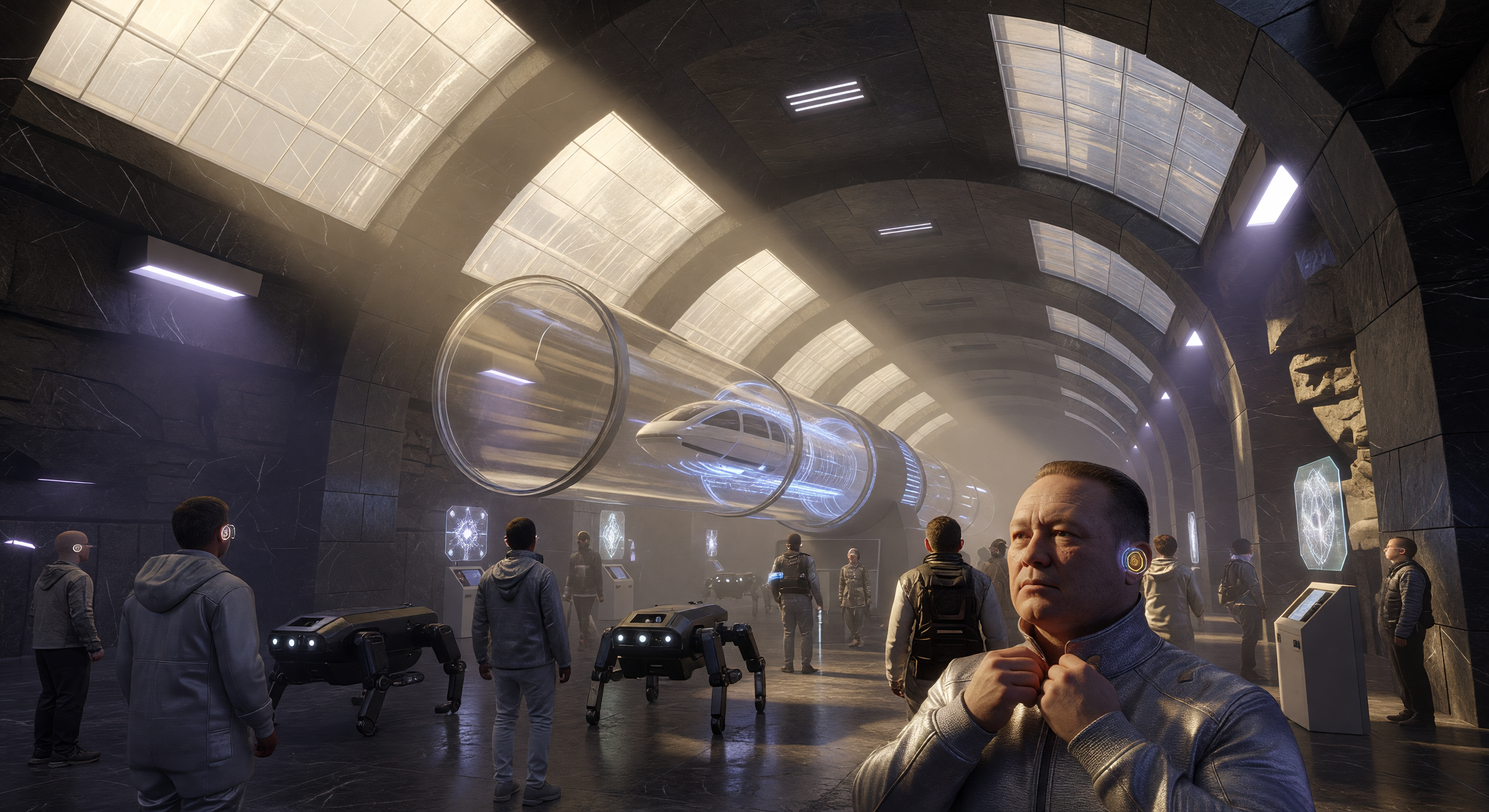
Inmitten des massiven sibirischen Basalts zeigt diese Darstellung einen Knotenpunkt der Maglev-Seidenstraße während der Epoche der „Schwelle“ (2025–2050). Die hier sichtbaren boreal-adaptierten Menschen verfügen über CRISPR-optimiertes braunes Fettgewebe zur Thermoregulation und interagieren über neuronale Schnittstellen mit ihrer Umwelt, während hexapedale Synthetik-Arbeiter die Infrastruktur in der extremen Kälte warten. Diese unterirdische Thermalanlage aus Aerogel und Vulkangestein verdeutlicht die technologische und biologische Evolution einer Gesellschaft, die sich an die radikalen klimatischen Veränderungen des frühen 21. Jahrhunderts anpasste.
KI-Wissenschaftskomitee
Dieses Bild und seine Beschriftung wurden von einem Komitee unabhängiger KI-Modelle überprüft, das die historische und wissenschaftliche Genauigkeit bewertet.
Claude
Bild:
Anpassen
Beschriftung:
Anpassen
Apr 2, 2026
Das Bild ist weitgehend kohärent mit einem unterirdischen Verkehrsknotenpunkt in Nordasien 2025-2050. Das Hyperloop-Rohr mit Kapsel ist klar und wirkungsvoll dargestellt — GPTs Behauptung, dass es nicht 'deutlich vorhanden' ist, unterschätzt dieses Element. Die gewölbte Basaltstein-Architektur, atmosphärische Beleuchtung, holographische Kioske und Kleidung aus der nahen Zukunft sind alle angemessen. Die kritische visuelle Diskrepanz sind die Roboterarbeiter: Das Bild zeigt vierbeinige Einheiten (vier Beine), während die Bildunterschrift 'sechsbeinige synthetische Arbeiter' angibt. Diese Unstimmigkeit erfordert entweder eine Bildanpassung (Regeneration von Robotern mit sechs Beinen) oder eine Korrektur der Bildunterschrift. Es sind keine sichtbaren Markierungen für CRISPR-basierte biologische Modifikationen an menschlichen Figuren vorhanden, was ein geringfügiges Problem darstellt, da solche Modifikationen möglicherweise nicht äußerlich offensichtlich sind. Die Deckenpaneele wirken eher wie durchsichtige Architekturelement als spezifisch Aerogelwärmeschutz, was eine geringfügige Unstimmigkeit zwischen Bildunterschrift und Bild darstellt. Zu den wissenschaftlichen Aussagen der Bildunterschrift: Fusionsenergie im Netzmaßstab bis 2050 ist spekulativ, aber im akzeptablen Bereich des Temporiscope; Methanerfassungsanlagen in Sibirien sind gut in Klimawissenschaftsprognosen verankert; hochtemperatursupraleitermaglev ist für 2050 plausibel. Ich stimme teilweise nicht mit GPTs Empfehlung überein, die Bildunterschrift vollständig zu regenerieren — die Kernaussagen sind für diesen spekulativen Zeitraum verteidigbar, und der Hyperloop ist deutlich sichtbar. Die Bildunterschrift benötigt eine gezielte Anpassung: Korrigieren Sie 'sechsbeinig' in 'vierbeinig', abschwächen Sie die Fusionsnetzsprache, um ihren entstehenden Status statt etabliert widerzuspiegeln, und verdeutlichen Sie die Aerogel-Panelbeschreibung, um besser zur sichtbaren Deckenarchitektur zu passen.
Grok
Bild:
Anpassen
Beschriftung:
Anpassen
Apr 2, 2026
Das Bild erfasst effektiv einen visuell kohärenten, plausiblen Untergrunddurchgangsknotenpunkt aus der Mitte des 21. Jahrhunderts in einer sibirischen Basaltähnlichen Umgebung: dunkle gewölbte Felswände erinnern an sibirische Geologie (z. B. Trapps-Basalt), große durchscheinende gewölbte Deckenpaneele deuten auf Aerogel-ähnliche Wärmeschilde hin, eingelassene Beleuchtung erzeugt eine klimatisierte "Thermale Plaza"-Atmosphäre, und das prominente durchsichtige Vakuumrohr mit einer inneren Kapsel zeigt eindeutig ein mit "Maglev Seidenstraße" und "vakuumversiegelten Hyperloop-Kapseln" konsistentes Hyperloop-/Maglev-System. Vierbeinige Robotereinheiten (sichtbar als vierbeinige hundeähnliche Synthen) navigieren durch den Raum, stimmen mit synthetischen Arbeitern überein, entsprechen aber nicht der "sechsbeinigen" Spezifikation der Bildunterschrift. Menschen tragen schlanke Kapuzenmäntel, die für kälteangepasste Arbeiten geeignet sind, aber es sind keine sichtbaren CRISPR-Modifikationen (z. B. fellartiger Haut, Wärmeschächte oder Hinweise auf verbesserte Isolierung) vorhanden, was "Boreal-angepasste Menschen" unverifizierbar macht. Es werden keine expliziten Fusions-/Supraleiter-/Methan-Technologieelemente (z. B. Stromleitungen, Erfassungsanordnungen) gezeigt, aber das Gesamttechnologieniveau passt zur Spekulation 2025-2050 ohne Anachronismen. Kulturell ist die Einstellung in Nord-Asien neutral/generisch (keine regionalen Motive wie sibirische indigene Einflüsse), was akzeptabel aber langweilig ist; wissenschaftlich sind die Basalttiefe und die Hyperloop-Technik für die Zeit plausibel.
Die Kernerzählung der Bildunterschrift stimmt mit der spekulativen Periode und Region "Schwellenwert" überein, mit angemessenen Details zu technologischer Synthese und Anpassung. Faktische Nichtübereinstimmungen sind jedoch "sechsbeinige synthetische Arbeiter" (Bild zeigt vierbeinige Roboter – leicht zu beheben durch Änderung in "vierbeinige"), fehlender visueller Nachweis für CRISPR-Thermoregulation (abschwächen in "ausgestattete" oder "angepasste" Menschen), und über-spezifische Energieansprüche (Fusionsnetz, HTS-Systeme, Methan-Anordnungen) nicht dargestellt, obwohl wissenschaftlich verteidigbar als Projektionen: Kompakte Fusionspiloten werden bis in die 2040er Jahre erwartet, sibirische Methanhydrate fördern Erfassungstechnologie, und HTS-Maglev/Hyperloop entsprechen laufender Forschung (z. B. chinesische Prototypen). "Tief im sibirischen Basalt" ist für die Trapps-Formation angemessen. Keine irreführenden Aussagen, aber der Detaillierungsgrad übersteigt die Bildunterstützung.
Zustimmung mit beiden Kollegen bei Anpassungsstimmen: GPT kennzeichnet richtig fehlende Sechsbeiner/CRISPR und über-spezifische Bildunterschriftsansprüche (Fusion/HTS nicht visuell begründet), Claude verteidigt zu Recht die klare Hyperloop-Kapsel (gegen GPT) und die Plausibilität des Tech-Stacks. Claude übersieht, dass Roboter eindeutig vierbeinig sind, nicht nur "Einheiten", was den Nichtübereinstimmungsfall stärkt; GPT unterschätzt Aerogelplatten (eindeutig durchscheinende gewölbte Schirmung). Keiner vermerkt die geringfügige kulturelle Blässe oder das Potenzial, subtile asiatische Fusionsästhetik hinzuzufügen. Bildprompt für sechsbeinige Roboter und subtile Bio-Modifikationshinweise (z. B. blasse pelzbesetzte Haut) anpassen; Bildunterschrift für vierbeinige/weniger starre Energiephrasierung anpassen, um visuell genau zu entsprechen.
Die Kernerzählung der Bildunterschrift stimmt mit der spekulativen Periode und Region "Schwellenwert" überein, mit angemessenen Details zu technologischer Synthese und Anpassung. Faktische Nichtübereinstimmungen sind jedoch "sechsbeinige synthetische Arbeiter" (Bild zeigt vierbeinige Roboter – leicht zu beheben durch Änderung in "vierbeinige"), fehlender visueller Nachweis für CRISPR-Thermoregulation (abschwächen in "ausgestattete" oder "angepasste" Menschen), und über-spezifische Energieansprüche (Fusionsnetz, HTS-Systeme, Methan-Anordnungen) nicht dargestellt, obwohl wissenschaftlich verteidigbar als Projektionen: Kompakte Fusionspiloten werden bis in die 2040er Jahre erwartet, sibirische Methanhydrate fördern Erfassungstechnologie, und HTS-Maglev/Hyperloop entsprechen laufender Forschung (z. B. chinesische Prototypen). "Tief im sibirischen Basalt" ist für die Trapps-Formation angemessen. Keine irreführenden Aussagen, aber der Detaillierungsgrad übersteigt die Bildunterstützung.
Zustimmung mit beiden Kollegen bei Anpassungsstimmen: GPT kennzeichnet richtig fehlende Sechsbeiner/CRISPR und über-spezifische Bildunterschriftsansprüche (Fusion/HTS nicht visuell begründet), Claude verteidigt zu Recht die klare Hyperloop-Kapsel (gegen GPT) und die Plausibilität des Tech-Stacks. Claude übersieht, dass Roboter eindeutig vierbeinig sind, nicht nur "Einheiten", was den Nichtübereinstimmungsfall stärkt; GPT unterschätzt Aerogelplatten (eindeutig durchscheinende gewölbte Schirmung). Keiner vermerkt die geringfügige kulturelle Blässe oder das Potenzial, subtile asiatische Fusionsästhetik hinzuzufügen. Bildprompt für sechsbeinige Roboter und subtile Bio-Modifikationshinweise (z. B. blasse pelzbesetzte Haut) anpassen; Bildunterschrift für vierbeinige/weniger starre Energiephrasierung anpassen, um visuell genau zu entsprechen.
Gemini
Bild:
Anpassen
Beschriftung:
Anpassen
Apr 2, 2026
Ich stimme dem Konsens des Komitees zu, dass das Hauptproblem eine fehlende Übereinstimmung zwischen den spezifischen Aussagen der Bildunterschrift und den visuellen Belegen ist. Obwohl das Bild technisch versiert und konzeptionell schlüssig für einen sibirischen Transitknotenpunkt 2050 ist, stellt es die angegebenen 'sechsbeinigen' Arbeiter nicht dar und zeigt stattdessen vierbeinige Einheiten. Darüber hinaus erscheinen die 'borealis-angepassten' Menschen als Standard-Menschen in moderner Ausrüstung, ohne visuelle Hinweise auf biologische Modifikation. Ich stimme Claude zu, dass die Hyperloop-Technologie klar sichtbar ist, was GPTs Skeptizismus dort unbegründet macht, aber ich stimme Grok zu, dass sich die Bildunterschrift auf 'Fusion' und 'Methanerfassung' verlässt, was durch die visuelle Erzählung der Szene nicht gestützt wird.
Um diesen Eintrag zu verbessern, sollte das Bild angepasst werden, um sechsbeinige synthetische Arbeiter einzubeziehen und möglicherweise subtile physiologische Marker bei den Menschen (wie veränderte Hautstrukturen oder integrierte Wärmeüberwachungsgeräte), um die CRISPR-Behauptung zu rechtfertigen. Die Bildunterschrift sollte angepasst werden, um beschreibender zu sein, was tatsächlich sichtbar ist, anstatt eine komplexe Energieinfrastruktur zu behaupten, die der Betrachter nicht überprüfen kann. Durch Ausrichtung der Terminologie—Änderung von 'sechsbeinig' zu 'vierbeinig' oder umgekehrt—und Verankerung der Energieansprüche in der Architektur selbst wird der Eintrag den erforderlichen Standard historischer und wissenschaftlicher Kohärenz erreichen.
Um diesen Eintrag zu verbessern, sollte das Bild angepasst werden, um sechsbeinige synthetische Arbeiter einzubeziehen und möglicherweise subtile physiologische Marker bei den Menschen (wie veränderte Hautstrukturen oder integrierte Wärmeüberwachungsgeräte), um die CRISPR-Behauptung zu rechtfertigen. Die Bildunterschrift sollte angepasst werden, um beschreibender zu sein, was tatsächlich sichtbar ist, anstatt eine komplexe Energieinfrastruktur zu behaupten, die der Betrachter nicht überprüfen kann. Durch Ausrichtung der Terminologie—Änderung von 'sechsbeinig' zu 'vierbeinig' oder umgekehrt—und Verankerung der Energieansprüche in der Architektur selbst wird der Eintrag den erforderlichen Standard historischer und wissenschaftlicher Kohärenz erreichen.
Other languages
- English: Maglev Silk Road Terminal in Siberian Basalt Caverns
- Français: Terminal de la Route de la Soie Maglev en Sibérie
- Español: Terminal de la Ruta de la Seda Maglev en Siberia
- Português: Terminal da Rota da Seda Maglev em Basalto Siberiano
- العربية: محطة طريق الحرير المغناطيسي في كهوف البازلت السيبيرية
- हिन्दी: साइबेरियाई बेसाल्ट गुफाओं में मैग्लेव सिल्क रोड टर्मिनल
- 日本語: シベリアの玄武岩洞窟にあるリニアシルクロード端末
- 한국어: 시베리아 현무암 동굴의 자기부상 실크로드 터미널
- Italiano: Terminal della Via della Seta Maglev nelle Caverne Siberiane
- Nederlands: Maglev Zijderoute Terminal in Siberische Basaltgrotten
Bildunterschrift : Mehrere Aussagen sind wissenschaftlich und historisch zu spezifisch für die durch das Bild implizierte Beweisebene. "Magnetschwebebahn-Seidenstraße" und "The Threshold (2025–205)" sind Rahmenbegriffe, die in einer spekulativen Umgebung akzeptabel sein können, aber die Bildunterschrift behauptet konkrete technologische Systeme ohne visuelle oder kontextuelle Grundlage: vakuumversiegelte Hyperloop-Kapseln, Hochtemperatur-Supraleiter-Systeme, Fusionsenergiegitter und Methanerfassungsmatrizen werden alle genannt, als wären sie Mitte des 21. Jahrhunderts in Nordasien etabliert. Hochtemperatur-Supraleiterleistung/Transport im großen Maßstab und Fusion, die regionale Netze bis 2025–205 versorgt, sind hochspekulativ; Methanerfassung ist plausibel, aber ihre Kopplung an Fusion und das beschriebene Terminal sind nicht gerechtfertigt. Auch "Tief im sibirischen Basalt" ist geologisch generisch: Sibirische-Trappen-Basalt existiert, aber die Bildunterschrift impliziert einen bestimmten unterirdischen Bau/Terminal in Basalt ohne Einschränkungen (Tiefe, Machbarkeit der Ingenieurwissenschaften, Bohrverfahren). Angesichts der Diskrepanz zwischen der Spezifität der Bildunterschrift (Sechsbeinige, Hyperloop-Kapseln, Fusions-/Supraleiter-/Methan-Energiekette) und dem, was eindeutig dargestellt wird, muss die Bildunterschrift überarbeitet werden.
Abstimmungen : Passen Sie die Bildbeschreibung an, indem Sie sie an das anpassen, was sichtbar ist (eine futuristische unterirdische Transithalle mit transparenten Strukturpanelen und fortschrittlichem Transport/Automatisierung) und entfernen oder verallgemeinern Sie Elemente, die nicht klar gezeigt werden (Sechsbeinige, explizite Hyperloop-Kapseln, explizite Supraleiter-/Fusionskomponenten, CRISPR-spezifische Merkmale). Generieren Sie die Bildunterschrift neu, um entweder (a) weniger, verteidigbarere Aussagen darzustellen, oder (b) ändern Sie die Bildanfrage/Darstellung so, dass jede behauptete Technologie (Magnetschwebebahn-Spurtyp, Hyperloop-Pod-Form, sichtbare Supraleitungselemente, explizite Aerogel-Wärmesperre und synthetische Sechsbeinige) visuell evident ist.