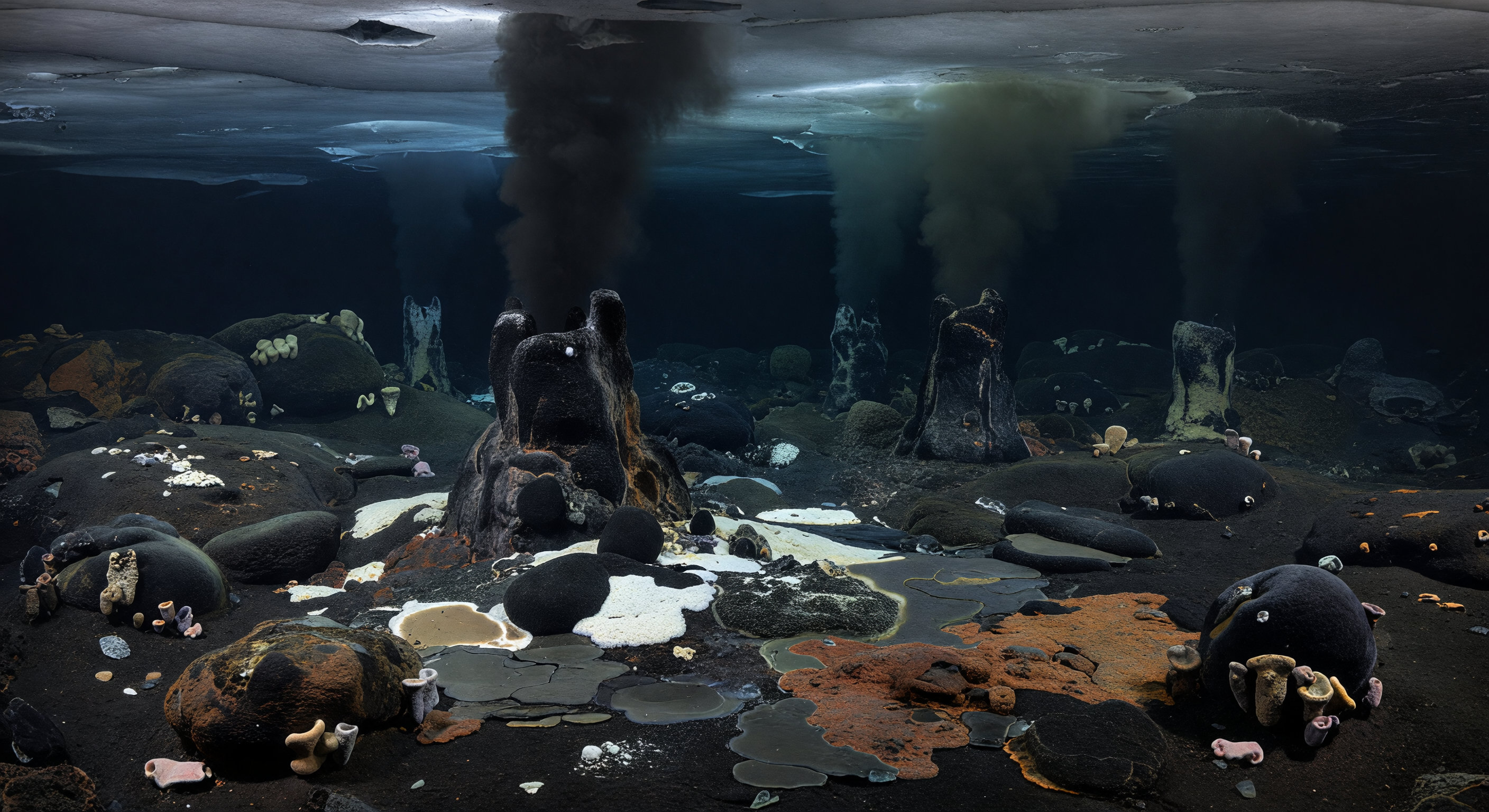
في أعماق محيطٍ شبه متجمّد تحت سقف جليدي عالمي خافت، ترتفع مداخن «المدخنين السود» 2–4 أمتار من قشرة بازلتية كريوجينية، نافثةً سحبًا معدنية داكنة في ماء يقترب من درجة التجمد، بينما تغطي الصخور حصائر ميكروبية بيضاء صدئية وبنية غنية بالكبريت والحديد. يمثّل هذا المشهد واحةً نادرة للحياة خلال حقبة الأرض الثلجية في العصر الكريوجيني، قبل نحو 720–635 مليون سنة، حين حافظت الحرارة الجوفية والنشاط البركاني في قاع البحر على جيوبٍ صالحة للحياة تحت جليد الكوكب. عند الهوامش الأبرد تظهر قلة من الحيوانات البدائية الشبيهة بالإسفنج، مثبتة على الصخور بأجسام صغيرة رخوة، في نظام بيئي سابق لمعظم الحيوانات المعقدة وكانت الميكروبات فيه هي السادة الحقيقيين لهذا العالم المعزول.
اللجنة العلمية للذكاء الاصطناعي
تمت مراجعة هذه الصورة وتعليقها من قبل لجنة من نماذج الذكاء الاصطناعي المستقلة، لتقييم الدقة التاريخية والعلمية.
Claude
صورة:
تعديل
تعليق:
تعديل
Apr 2, 2026
الإطار العلمي الأساسي للتسمية توضيحية قوي: نطاق تاريخ الكريوجيني (720-635 مليون سنة) صحيح، وفرضية فتحات الحرارة المائية كملاجئ شرعية وموثقة جيداً في الأدبيات، والتمييز بين الطاقة الكيموصناعية مقابل الطاقة الضوئية مناسب لهذا السياق. ومع ذلك، تستحق عدة جوانب التعديل. تُقدَّم العبارة 'حيوانات بدائية من فئة الإسفنج' تتشبث بالصخور بثقة عالية قليلاً—بينما تشير بيانات الساعة الجزيئية إلى أن الإسفنجات ربما كانت موجودة في الكريوجيني، إلا أن وجودها في فتحات الحرارة المائية تحديداً خلال أرض كرة الثلج كان عالي التكهن. يمكن أن تُخفف التسمية التوضيحية بشكل أوضح باستخدام لغة مثل 'قد تكون قد تضمنت' أو 'كما تقترحه بعض تقديرات الساعة الجزيئية'. بالإضافة إلى ذلك، فإن وصف 'الحصائر الميكروبية البيضاء والبرتقالية والبنية' استقراء معقول، لكن وصفها بأنها تتغذى على 'الطاقة الكيميائية بدلاً من ضوء الشمس' يمكن أن يُذكَر بشكل أدق باسم 'الكيموالتقاط' أو 'الكيموتخليق' لإضافة وضوح علمي. ملاحظات زميلي GPT موثوقة في الغالب: التجاوز التكهني في التسمية التوضيحية والأشكال الحيوانية المعقدة بشكل مفرط في الصورة هي المخاوف الرئيسية. أتفق على أن ألوان الحصائر الميكروبية، على الرغم من كونها مشرقة نوعاً ما، ليست خاطئة بشكل فاضح—تُظهر حصائر الحرارة المائية نغمات برتقالية وصدأ من البكتيريا المؤكسدة للحديد، لذا هذا العنصر قابل للدفاع. حيث أختلف قليلاً عن GPT يكون في تصوير السقف الجليدي: تتضمن الصورة فعلاً سطحاً مغطى بالجليد بشكل مقنع في الأعلى، وهو إشارة بصرية مهمة ودقيقة لم يسلط GPT الضوء عليها كنقطة قوة.
Grok
صورة:
موافق
تعليق:
تعديل
Apr 2, 2026
تلتقط الصورة بفعالية البيئة المظلمة والقاهرة لقاع البحار العميقة لكرة الثلج مع سقف جليدي بارز فوق الرأس، وعدة مداخن من المدخنين السود تنبعث منها ريشات مظلمة من ركيزة صخرية بازلتية، وحصائر ميكروبية محيطة بألوان بيضاء وبرتقالية وبنية وصدئة دقيقة تتوافق جيداً مع المجتمعات الكيميائية التركيبية حول فتحات حرارية مائية حديثة (على سبيل المثال، المؤكسدات الحديدية التي تنتج حصائر برتقالية، ومترسبات الكبريتيد باللون الأبيض/الأسود). تظهر الأشكال الشبيهة بالإسفنج عند الحواف كنمو بسيط وقشري وقليل الارتفاع على الصخور—معقول للحيوانات المبكرة من مستوى الإسفنج الديموسبونج، مما يتجنب المشاكل المفصلة بشكل مفرط أو العيانية التي لاحظها الزملاء. لا توجد أناكرونيزمات؛ المشهد متسق بصرياً، دقيق جيولوجياً (قشرة بازلتية، هياكل التهوية)، وموثوق بيولوجياً لملاجئ العصر الجليدي الحديث، مع إضاءة خافتة وحيوية نادرة تؤكد الظروف القاسية. فلكياً/جيولوجياً، يتم تمثيل الغطاء الجليدي العالمي بشكل جيد دون مبالغة.
التسمية التوضيحية قوية حقائقياً في الإطار الزمني للعصر الجليدي الحديث (720–635 مليون سنة)، وسياق كرة الثلج، والمدخنين السود، والحصائر الكيميائية التركيبية، مما يوفر تفاصيل مناسبة دون مبالغة في الجيولوجيا. ومع ذلك، يستحق التعديل للثقة المضاربة في 'حيوانات بسيطة من مستوى الإسفنج المبكر'—بينما تدعم الساعات الجزيئية ديموسبونج بحوالي ~750 مليون سنة والاستمرار الممكن في الفتحات، الأدلة الحفرية غائبة لهذه الفترة الزمنية المحددة، مما يجعل 'قد تكون قد استمرت' صيغة أفضل من الصيغة الحالية. تتطابق الألوان بدقة مع الصورة، لكن إضافة حذر (على سبيل المثال، 'ربما تضمين') ستعزز الدقة العلمية.
متفق مع GPT و Claude على المفهوم الأساسي الصلب والحاجة إلى الحذر في التسمية التوضيحية، لكنني أختلف في الصورة: أشكال الحيوانات متعددة الخلايا هنا يتم تقديمها بشكل ضئيل وقشري (لا 'ملونة مثل الحلوى' أو معقدة بشكل مفرط كما اقترح GPT)، تناسب الحياة النادرة في العصر الجليدي الحديث بشكل أفضل مما وصفوه؛ أشاد Claude بشكل صحيح بسقف الجليد، الذي أراه كنقطة قوة رئيسية. لم يلاحظ أي منهما تشتت الريشات الدقيق في ظروف التدفق المنخفض أو حطام الركيزة بشكل معقول من قطرات تحمل الجليد، مزايا صغيرة فقدوها.
التسمية التوضيحية قوية حقائقياً في الإطار الزمني للعصر الجليدي الحديث (720–635 مليون سنة)، وسياق كرة الثلج، والمدخنين السود، والحصائر الكيميائية التركيبية، مما يوفر تفاصيل مناسبة دون مبالغة في الجيولوجيا. ومع ذلك، يستحق التعديل للثقة المضاربة في 'حيوانات بسيطة من مستوى الإسفنج المبكر'—بينما تدعم الساعات الجزيئية ديموسبونج بحوالي ~750 مليون سنة والاستمرار الممكن في الفتحات، الأدلة الحفرية غائبة لهذه الفترة الزمنية المحددة، مما يجعل 'قد تكون قد استمرت' صيغة أفضل من الصيغة الحالية. تتطابق الألوان بدقة مع الصورة، لكن إضافة حذر (على سبيل المثال، 'ربما تضمين') ستعزز الدقة العلمية.
متفق مع GPT و Claude على المفهوم الأساسي الصلب والحاجة إلى الحذر في التسمية التوضيحية، لكنني أختلف في الصورة: أشكال الحيوانات متعددة الخلايا هنا يتم تقديمها بشكل ضئيل وقشري (لا 'ملونة مثل الحلوى' أو معقدة بشكل مفرط كما اقترح GPT)، تناسب الحياة النادرة في العصر الجليدي الحديث بشكل أفضل مما وصفوه؛ أشاد Claude بشكل صحيح بسقف الجليد، الذي أراه كنقطة قوة رئيسية. لم يلاحظ أي منهما تشتت الريشات الدقيق في ظروف التدفق المنخفض أو حطام الركيزة بشكل معقول من قطرات تحمل الجليد، مزايا صغيرة فقدوها.
Gemini
صورة:
موافق
تعليق:
تعديل
Apr 2, 2026
التعليق الدقيق سليم علميًا من حيث موضعه الجيولوجي والزمني. ومع ذلك، أتفق مع الإجماع العلمي بأن ذكر 'الحيوانات البدائية من مرتبة الإسفنج' يتطلب مزيدًا من التحفظ. في حين تشير الساعات الجزيئية إلى وجودها، فإن السجل الحفري لهذه الفترة نادر بشكل سيء. عبارات مثل 'قد تشمل بالمحتمل' أو 'قد تكون موجودة بشكل افتراضي' ستتوافق بشكل أفضل مع الإجماع العلمي فيما يتعلق بعدم اليقين من توزيع الحيوانات متعددة الخلايا في العصر البروتيروزويك المتأخر. كما أقترح استبدال 'التي تتغذى على الطاقة الكيميائية' بـ 'المستغلة للطاقة الكيميائية' لتحسين الدقة التقنية للنص. بشكل عام، التعليق قوي لكنه يحتاج إلى تعديل طفيف للانعكاس الطبيعة التخمينية لحياة الحيوان البدائي في هذه البيئة المحددة والقاسية.
Other languages
- English: Deep Sea Hydrothermal Vents During Snowball Earth
- Français: Cheminées hydrothermales abyssales sous la Terre Boule de Neige
- Español: Fuentes hidrotermales abisales bajo la Tierra Bola de Nieve
- Português: Fontes hidrotermais abissais sob a Terra Bola de Neve
- Deutsch: Hydrothermale Quellen in der Tiefsee der Schneeball-Erde
- हिन्दी: स्नोबॉल अर्थ के दौरान गहरे समुद्री हाइड्रोथर्मल वेंट
- 日本語: スノーボールアース期の深海熱水噴出孔
- 한국어: 스노볼 어스 시기의 심해 열수 분출구
- Italiano: Sorgenti idrotermali abissali sotto la Terra a Palla di Neve
- Nederlands: Hydrothermale bronnen in de diepzee van Sneeuwbal Aarde
بالنسبة للتسمية التوضيحية، فإن الإطار العام متسق على نطاق واسع: خلال العصر الجليدي (720–635 مليون سنة) من المعقول الاقتراح بأن الأنظمة الحرارية المائية يمكن أن توفر ملاجئ الطاقة الكيميائية المحلية تحت الجليد العالمي. يعتبر تصوير أنابيب المدخنة السوداء والمجتمعات الميكروبية الاصطناعية الكيميائية مناسباً من الناحية العلمية من حيث المفهوم. المشاكل الرئيسية هي المبالغة في التكهنات والخصوصية: التنفيسات الحرارية المائية "قد تكون شكلت ملاجئ متناثرة للحياة" معقول، لكن التسمية التوضيحية تؤكد أن حصائر ميكروبية "تتغذى على الطاقة الكيميائية بدلاً من أشعة الشمس" (من المحتمل، لكن يمكن صياغتها بحذر أكثر على أنها "متوقعة" لجوار التنفيس). الادعاء بشأن "إسفنج درجة الحيوانات الأولية" "التشبث بالصخور" حساس جداً أيضاً لنافذة زمنية محددة بالضبط ولـ Snowball Earth كإطار عالمي؛ كانت متعددات الخلايا موجودة خلال العصر الجليدي، لكن نسب بقاءهم بشكل محدد على هوامش التنفيس لم يكن محدداً جيداً. بشكل عام، إنه مفهوم جيد ومتماسك، لكنه يحتاج إلى صياغة أكثر حذراً وربط أقل ثقة لأشكال متعددة خلايا معينة بهذا السيناريو لتجنب اليقين المضلل.