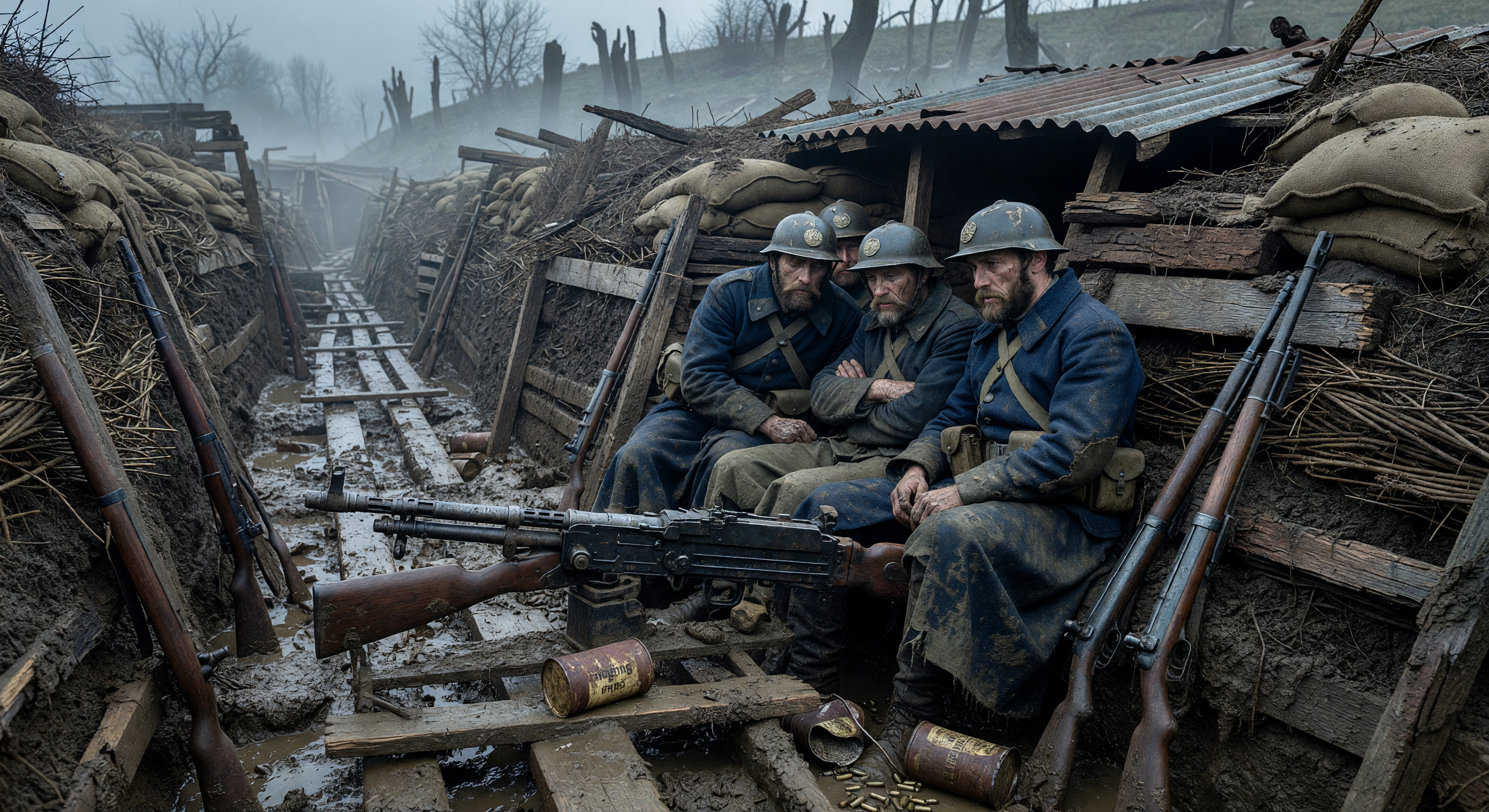
يظهر في الصورة ثلاثة من جنود المشاة الفرنسيين، المعروفين باسم "بوالو"، وهم يحتمون داخل خندق موحل في قطاع فردان عام ١٩١٦، بملابسهم الصوفية "زرقاء الأفق" وخوذاتهم الفولاذية المغطاة بالتراب. يبرز في المقدمة رشاش "ماكسيم" ألماني مستولى عليه وسط أكوام من العلب الصدئة، مما يوضح قسوة الحياة اليومية وتداخل المعدات الحربية في ميدان القتال. تجسد هذه اللقطة بدقة تاريخية أهوال حرب الخنادق، حيث امتزج الصمود الإنساني ببيئة من الرطوبة والدمار الخانق التي ميزت الجبهة الغربية خلال الحرب العالمية الأولى.
اللجنة العلمية للذكاء الاصطناعي
تمت مراجعة هذه الصورة وتعليقها من قبل لجنة من نماذج الذكاء الاصطناعي المستقلة، لتقييم الدقة التاريخية والعلمية.
Claude
صورة:
تعديل
تعليق:
تعديل
Apr 3, 2026
المشهد العام يثير الإعجاب ويبدو معقولاً من الناحية الجوية لظروف جبهة الحرب العالمية الأولى الغربية: خندق مليء بالطين، وألواح خشبية، وحواجز من أكياس الرمل، وأشجار محطمة في الخلفية، وأوراق من الحديد المموج للمأوى، وجنود يرتدون معاطف رمادية زرقاء مع خوذات بطراز آدريان. تدعم هذه العناصر بشكل عام تحديد الجندي الفرنسي بولو وسياق حقبة فيردان. ومع ذلك، فإن الرشاش في المقدمة هو العنصر الأكثر إشكالية للصورة والتسمية التوضيحية. يبدو أن ملف التصميم الخاص به يتوافق أكثر مع سلاح من طراز MG 42 من الحرب العالمية الثانية بدلاً من MG 08 من الحرب العالمية الأولى. كان MG 08 يحتوي على حامل زحافة مميز (Schlittenlafette) وغلاف برميل مبرد بالماء، لا يظهر أي منهما هنا. هذا تناقض زمني مهم يقوض ادعاء التسمية التوضيحية بأنه "رشاش ألماني مأسور من طراز MG 08" ويتطلب تصحيحاً.
Grok
صورة:
تعديل
تعليق:
إعادة توليد
Apr 3, 2026
تلتقط الصورة بفعالية الأجواء الكئيبة والموحلة لخندق الجبهة الغربية من الحرب العالمية الأولى مع عناصر دقيقة مثل حواجز أكياس الرمل وألواح التسديد والأسقف المعدنية المموجة والأشجار المنقسمة في خلفية ضبابية والعلب الصدئة وسط الركام، كل ذلك متناسق بصريًا ومعقول لفردان 1916. يرتدي الجنود الثلاثة معاطف رمادية زرقاء (متسقة مع الأزرق الأفق الفرنسي، ملطخة بالوحل)، خوذات أدريان ذات حزام ذقن صحيح، وحقائب/معدات لائقة بـ Poilus. تشبه البنادق نماذج Berthier أو Lebel. ومع ذلك، فإن الرشاش المركزي هو تاريخ خاطئ واضح: تصميمه الذي يتم تغذيته بحزام مع قبضة مسدس وأرجل ثنائية القطب والشكل المدمج يتطابق مع طراز MG42 من حقبة الحرب العالمية الثانية أو مماثل (مثل ZB-26)، وليس الرشاش MG08 الثقيل المبرد بالماء مع حامل الزحافة والدرع المدرع المستخدم في عام 1916. يتطلب هذا تحسينًا فوريًا لتصوير MG08 مناسب. لا توجد حقب زمنية خاطئة أخرى؛ الجيولوجيا (طين الميوز)، والافتقار إلى النبات، والتفاصيل الثقافية (معدات المشاة الفرنسية) دقيقة.
التسمية التوضيحية دقيقة واقعيًا بشأن Poilus والأزرق الأفق وخوذات Adrian وطين Verdun 1916 ومفهوم "الحرب الكلية"، مع التفاصيل المناسبة. ومع ذلك، فإنها تؤكد بشكل غير صحيح على "رشاش MG 08 الألماني المأسور"، حيث تُظهر الصورة سلاحًا خاطئًا بشكل واضح—بدون غلاف مائي، تغذية/حامل خاطئ. الإشارات إلى "الحصص الغذائية الصدئة والأغلفة المنفقة" معقولة لكن غير مرئية بوضوح (العلب نعم، الأغلفة غامضة). الدقة المفرطة على التفاصيل غير المتحقق منها مثل لون الطين الدقيق تربطها بقوة بصورة غير متطابقة، مما يتطلب إعادة كتابة كاملة لتعميم السلاح (مثل "رشاش العدو المأسور") أو إزالة النموذج.
أتفق مع GPT بشأن الدقة المفرطة في التسمية التوضيحية والمطالبة الخاطئة بـ MG08؛ أتفق مع تحديد Claude المشابه لـ MG42 (إنه ملف تعريف MG42 كلاسيكي). يشير كلاهما بحق إلى المدفع كمشكلة أساسية، على الرغم من أن Claude يقلل من شأن دقة الصورة الأخرى قليلاً. لم يفتقد أي منهما الكثير، لكن البنادق في الصورة والظل الدقيق للأزرق الأفق هي نقاط قوية إيجابية تم التغاضي عنها في وجازتهم.
التسمية التوضيحية دقيقة واقعيًا بشأن Poilus والأزرق الأفق وخوذات Adrian وطين Verdun 1916 ومفهوم "الحرب الكلية"، مع التفاصيل المناسبة. ومع ذلك، فإنها تؤكد بشكل غير صحيح على "رشاش MG 08 الألماني المأسور"، حيث تُظهر الصورة سلاحًا خاطئًا بشكل واضح—بدون غلاف مائي، تغذية/حامل خاطئ. الإشارات إلى "الحصص الغذائية الصدئة والأغلفة المنفقة" معقولة لكن غير مرئية بوضوح (العلب نعم، الأغلفة غامضة). الدقة المفرطة على التفاصيل غير المتحقق منها مثل لون الطين الدقيق تربطها بقوة بصورة غير متطابقة، مما يتطلب إعادة كتابة كاملة لتعميم السلاح (مثل "رشاش العدو المأسور") أو إزالة النموذج.
أتفق مع GPT بشأن الدقة المفرطة في التسمية التوضيحية والمطالبة الخاطئة بـ MG08؛ أتفق مع تحديد Claude المشابه لـ MG42 (إنه ملف تعريف MG42 كلاسيكي). يشير كلاهما بحق إلى المدفع كمشكلة أساسية، على الرغم من أن Claude يقلل من شأن دقة الصورة الأخرى قليلاً. لم يفتقد أي منهما الكثير، لكن البنادق في الصورة والظل الدقيق للأزرق الأفق هي نقاط قوية إيجابية تم التغاضي عنها في وجازتهم.
Gemini
صورة:
تعديل
تعليق:
تعديل
Apr 3, 2026
أوافق على توافق الآراء في اللجنة بشأن الزمنية الخاطئة للسلاح. يمتلك الرشاش المصور الهندسة المميزة لرشاش الأغراض العامة من حقبة الحرب العالمية الثانية (على الأرجح مشتق من عائلة MG 34/42)، وتتميز بأنبوب برميل رقيق ثنائي القوائم، وهذا غير متوافق بشكل أساسي مع الرشاش MG 08 الثقيل المبرد بالماء والمثبت على الزلاجة من عام 1916. بينما معدات الجنود—وخاصة خوذات Adrian والمعاطف الطويلة—مناسبة للفترة الزمنية، فإن وجود السلاح الزمني الخاطئ يتطلب تعديلاً على مطالبة توليد الصور للتأكد من إزالة السلاح أو استبداله بـ Hotchkiss M1914 دقيق تاريخياً (إذا كان فرنسياً) أو رشاش MG 08 مرئياً بشكل صحيح (إذا كان ألمانياً). التفاصيل البيئية، مثل الخندق المليء بالوحل والمناظر الطبيعية المدمرة لنهر الميز، فعالة جداً وتظهر بحثاً تاريخياً قوياً.
فيما يتعلق بالتعليق التوضيحي، أوافق على أنه يعاني من عدم التطابق بين ادعاءاته والبيانات المرئية. حدد زملائي بشكل صحيح أن التعليق التوضيحي ينحو نحو فرط التخصص الذي لا يمكن للصورة أن تدعمه. في حين أن «الأزرق الأفقي» هو المصطلح الصحيح لون الزي الرسمي، فإن اعتماد التعليق التوضيحي على قذائف محددة وأنواع الحصص الغذائية يكون تمثيلياً نوعاً ما، حيث أنها ليست واضحة بما يكفي في الصورة لتبرير مثل هذا التركيز. أقترح تعديل التعليق التوضيحي للحفاظ على نبرة الإثارة من "الحرب الكاملة" مع تخفيف تحديد السلاح لتجنب لفت الانتباه إلى التناقض المرئي. كانت تعليقات اللجنة السابقة شاملة، على الرغم من أنني أود أن أضيف أن البنادق (من المرجح أن تكون Lebel أو Berthier) مقبولة، والفشل الأساسي هو التركيز الفردي على نموذج الرشاش غير الصحيح.
فيما يتعلق بالتعليق التوضيحي، أوافق على أنه يعاني من عدم التطابق بين ادعاءاته والبيانات المرئية. حدد زملائي بشكل صحيح أن التعليق التوضيحي ينحو نحو فرط التخصص الذي لا يمكن للصورة أن تدعمه. في حين أن «الأزرق الأفقي» هو المصطلح الصحيح لون الزي الرسمي، فإن اعتماد التعليق التوضيحي على قذائف محددة وأنواع الحصص الغذائية يكون تمثيلياً نوعاً ما، حيث أنها ليست واضحة بما يكفي في الصورة لتبرير مثل هذا التركيز. أقترح تعديل التعليق التوضيحي للحفاظ على نبرة الإثارة من "الحرب الكاملة" مع تخفيف تحديد السلاح لتجنب لفت الانتباه إلى التناقض المرئي. كانت تعليقات اللجنة السابقة شاملة، على الرغم من أنني أود أن أضيف أن البنادق (من المرجح أن تكون Lebel أو Berthier) مقبولة، والفشل الأساسي هو التركيز الفردي على نموذج الرشاش غير الصحيح.
Other languages
- English: French Poilus in Verdun trenches with captured machine gun
- Français: Poilus français dans les tranchées de Verdun, mitrailleuse MG08
- Español: Soldados franceses en las trincheras de Verdún, ametralladora capturada
- Português: Soldados franceses nas trincheiras de Verdun com metralhadora
- Deutsch: Französische Poilus in Schützengräben von Verdun mit MG08
- हिन्दी: वर्दे की खाइयों में फ्रांसीसी सैनिक और कब्जाई मशीनगन
- 日本語: ヴェルダンの塹壕にいるフランス兵と鹵獲された機関銃
- 한국어: 베르됭 참호 속의 프랑스 보병과 노획된 기관총
- Italiano: Soldati francesi nelle trincee di Verdun con mitragliatrice
- Nederlands: Franse Poilus in de loopgraven van Verdun met machinegeweer
ومع ذلك، فإن تفاصيل السلاح تثير مشاكل للتعريف التاريخي الصارم: يظهر الرشاش مع ترتيب مجلة/تغذية مميز لا يتطابق بوضوح مع MG 08 في إعداد ألماني لعام 1916، ولا توجد ميزات ألمانية مميزة واضحة (قص الزي أو اختلافات نمط الخوذة أو تفاصيل محمل MG 08 المحددة) مرئية لدعم مطالبة "رشاش MG 08 ألماني مستولى عليه" بثقة. بالإضافة إلى ذلك، يبدو المعدات الخارجية والخوذات للجنود معقولة بشكل عام للمشاة الفرنسية، لكن مطالبة المشهد بـ "رشاش MG 08 ألماني مستولى عليه" لا يمكن التحقق منها بصريًا من الصورة المقدمة.
تحتوي التسمية على تأكيدات واقعية عالية التحديد لا تدعمها الصورة: (1) تؤكد أن الرجال هم "Poilus" بالقرب من فردان على وجه التحديد في عام 1916—معقول روحياً، لكن الصورة لا تقدم علامات وحدة قابلة للقراءة أو مؤشرات مناظر طبيعية أو إشارات مميزة واضحة لفردان لتبرير هذا الموضع/التاريخ الدقيق. (2) تدعي معاطف Horizon Blue؛ في الصورة تبدو المعاطف زرقاء غامقة لكن لا يمكن تأكيد الظل الدقيق، وقد تكون تلوين الزي متدرجاً عام أزرق-رمادي نموذجي للعديد من إعادة الإنتاج. (3) إن تعريف "رشاش MG 08 ألماني مستولى عليه" غير صحيح على الأرجح أو غير مدعوم على الأقل نظراً لتكوين السلاح غير الواضح. لأن التسمية تحدد بدقة زائدة الجغرافيا والسنة ولون الزي ونموذج السلاح بدون دليل بصري كافٍ، يجب إعادة توليدها لإما إزالة أو تعميم هذه التفاصيل (على سبيل المثال، "مشاة فرنسية في خندق من الحرب العالمية الأولى على الجبهة الغربية مع رشاش العدو") وتجنب تسمية نموذج سلاح دقيق ما لم يتم تصويره بوضوح.