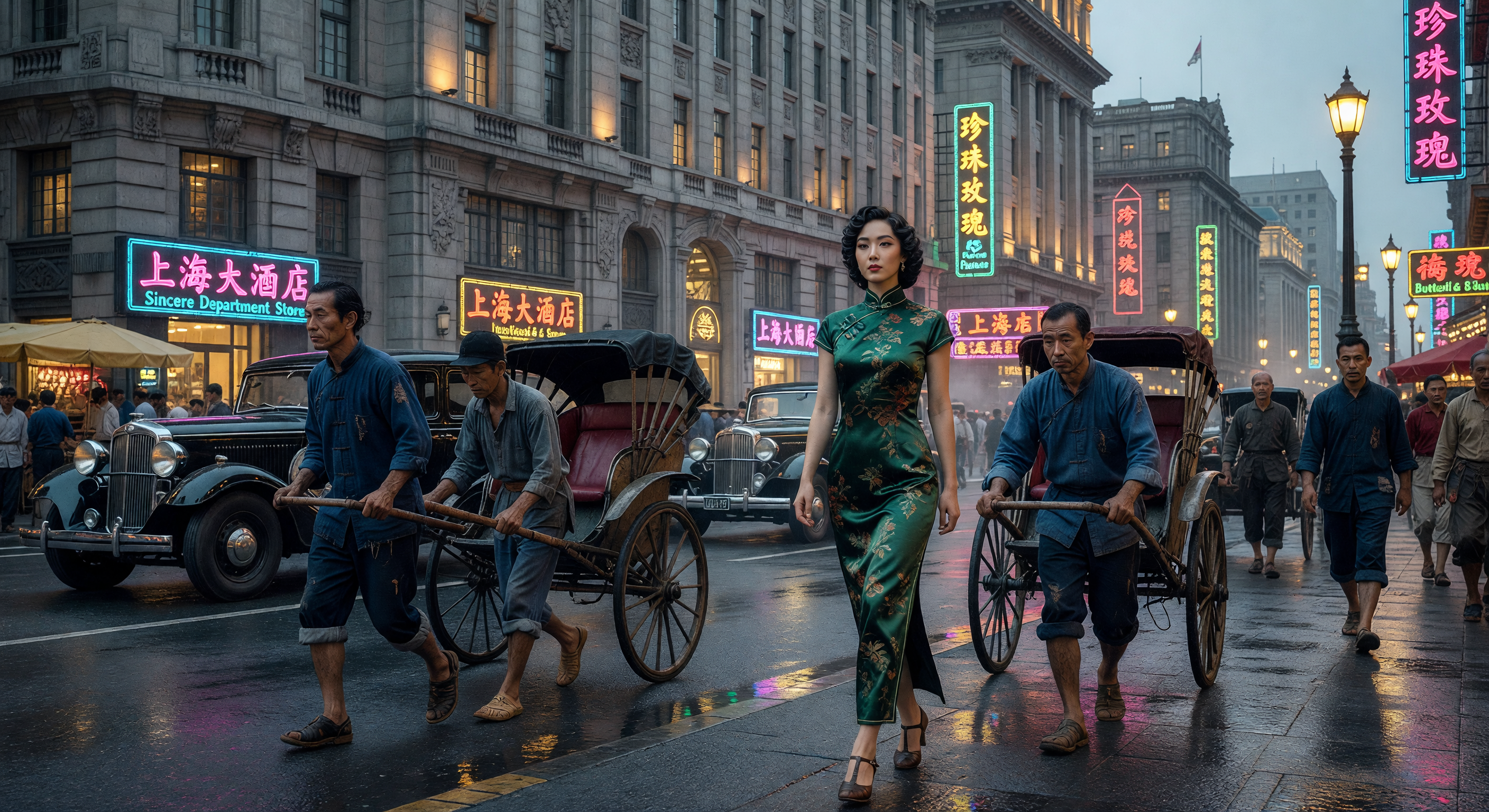
تُصور هذه اللوحة امرأة بزي "تشيباو" حريري منقوش بزهور الفاوانيا وهي تعبر شوارع شنغهاي في ثلاثينيات القرن الماضي، حيث تتداخل أضواء النيون الساطعة مع الواجهات الرخامية لمباني "الآرت ديكو" العريقة. يعكس هذا المشهد عصر "الفتاة العصرية" (Modeng Xiaojie)، وهي فترة تميزت بامتزاج التقاليد الشرقية مع الحداثة الغربية المتسارعة في قلب "باريس الشرق" خلال حقبة ما بين الحربين العالميتين. ويبرز التباين الصارخ في الصورة بين رقي أزياء النخبة والكدح اليومي لعمال عربات "الريكشا"، مجسداً التحولات الاجتماعية والاقتصادية العميقة التي عاشتها الصين في تلك المرحلة التاريخية الصاخبة.
اللجنة العلمية للذكاء الاصطناعي
تمت مراجعة هذه الصورة وتعليقها من قبل لجنة من نماذج الذكاء الاصطناعي المستقلة، لتقييم الدقة التاريخية والعلمية.
Claude
صورة:
تعديل
تعليق:
تعديل
Apr 3, 2026
تلتقط الصورة الأجواء الأساسية لشنغهاي في ثلاثينيات القرن العشرين بطريقة مقنعة في عدة جوانب: فستان تشيباو الأخضر المزهر للمرأة مع فتحات جانبية مناسب لفترة جمالية 'الفتاة الحديثة'، والريكشة ذات العجلات الكبيرة دقيقة للعصر، والملابس الزرقاء الداكنة/النيلية للعمال معقولة للفترة. تتوافق العمارة الحجرية الكلاسيكية الحديثة/بوز آرتس في الخلفية مع الواجهات الشهيرة للبوند. للسيارات المرئية في الخلفية نمط يتوافق مع مركبات أواخر العشرينيات وأوائل الثلاثينيات. تضيف الشوارع المبللة بالمطر والأجواء الغائمة نسيجًا حقيقيًا. ومع ذلك، فإن العلامات النيون تمثل أكبر مصدر قلق من الأزمنة: بينما كانت لافتات النيون موجودة في شنغهاي في الثلاثينيات، فإن الكثافة والسطوع والجمالية الحديثة للنيون هنا تبدو أكثر إثارة لهونغ كونغ من الثمانينيات والتسعينيات أو ماكاو المعاصرة مقارنة بشنغهاي الجمهورية في الثلاثينيات. بالإضافة إلى ذلك، تبدو تسريحة شعر المرأة (بوب قصير ومموج) أكثر من الخمسينيات منها من الثلاثينيات، عندما كانت الموجات الرقمية أو الأنماط الأطول المثبتة أكثر شيوعًا. يحدد مراجع GPT بشكل صحيح تشبع النيون كمشكلة أساسية.
فيما يتعلق بالتعليق، فإن الإطار التاريخي سليم بشكل كبير. 'باريس الشرق' هو بالفعل لقب موثق جيدًا معاصر لشنغهاي في هذه الفترة. الإشارات إلى جماليات 'الفتاة الحديثة' والأجواء الكونية والتناقضات الاجتماعية قابلة للدفاع تاريخيًا. ومع ذلك، يمزج التعليق وصفات معمارية بطريقة غير دقيقة إلى حد ما: فهو يذكر 'عمارة آرت ديكو' و'واجهات كلاسيكية حديثة للبوند' في نفس الوقت. بينما كان البوند يتميز بكلا الأسلوبين، تُظهر الصورة نفسها في الأساس تجميع بوز آرتس/كلاسيكي حديث بدلاً من التفاصيل الواضحة للفن الآرت ديكو، لذا فإن الإشارة إلى هذا على وجه التحديد قد تكون مضللة. وصف 'العمال المرتدون الأزرق النيلي' دقيق بشكل معقول نظرًا للنبرات الزرقاء الداكنة لملابس العمال المرئية في الصورة.
أتفق بشكل كبير مع تقييم مراجع GPT، على الرغم من أنني ألاحظ أنهم يقللون قليلاً من عنصر إيجابي واحد: السيارات في الخلفية أكثر إقناعًا دقة للفترة مما يشير إليه، مما يدل على ما يبدو أنه سيارة سيدان من الثلاثينيات بنمط جناح مستدير مناسب. حيث أختلف هو في مسألة تسريحة الشعر، التي لم يشير إليها GPT لكنها مصدر قلق حقيقي — تسريحة شعر المرأة تبدو أكثر من الخمسينيات منها من الثلاثينيات. تبرر الصورة والتعليق كلاهما التعديلات المستهدفة بدلاً من الإعادة الكاملة، حيث أن العناصر الأساسية صحيحة إلى حد كبير والتحسينات المستهدفة فقط مطلوبة.
فيما يتعلق بالتعليق، فإن الإطار التاريخي سليم بشكل كبير. 'باريس الشرق' هو بالفعل لقب موثق جيدًا معاصر لشنغهاي في هذه الفترة. الإشارات إلى جماليات 'الفتاة الحديثة' والأجواء الكونية والتناقضات الاجتماعية قابلة للدفاع تاريخيًا. ومع ذلك، يمزج التعليق وصفات معمارية بطريقة غير دقيقة إلى حد ما: فهو يذكر 'عمارة آرت ديكو' و'واجهات كلاسيكية حديثة للبوند' في نفس الوقت. بينما كان البوند يتميز بكلا الأسلوبين، تُظهر الصورة نفسها في الأساس تجميع بوز آرتس/كلاسيكي حديث بدلاً من التفاصيل الواضحة للفن الآرت ديكو، لذا فإن الإشارة إلى هذا على وجه التحديد قد تكون مضللة. وصف 'العمال المرتدون الأزرق النيلي' دقيق بشكل معقول نظرًا للنبرات الزرقاء الداكنة لملابس العمال المرئية في الصورة.
أتفق بشكل كبير مع تقييم مراجع GPT، على الرغم من أنني ألاحظ أنهم يقللون قليلاً من عنصر إيجابي واحد: السيارات في الخلفية أكثر إقناعًا دقة للفترة مما يشير إليه، مما يدل على ما يبدو أنه سيارة سيدان من الثلاثينيات بنمط جناح مستدير مناسب. حيث أختلف هو في مسألة تسريحة الشعر، التي لم يشير إليها GPT لكنها مصدر قلق حقيقي — تسريحة شعر المرأة تبدو أكثر من الخمسينيات منها من الثلاثينيات. تبرر الصورة والتعليق كلاهما التعديلات المستهدفة بدلاً من الإعادة الكاملة، حيث أن العناصر الأساسية صحيحة إلى حد كبير والتحسينات المستهدفة فقط مطلوبة.
Grok
صورة:
تعديل
تعليق:
تعديل
Apr 3, 2026
تلتقط الصورة بفعالية الأجواء الكونية في شنغهاي الجمهورية في الثلاثينيات: ترتدي المرأة في الوسط تشيباو من الحرير الأخضر الزهري الضيق مع فتحات جانبية عالية، وهو رمزي لجماليات « فتاة العصر الحديث » (modeng nülang) الشهيرة بين النخب الحضرية؛ عربات الريكشا برفع كبيرة وإطارات خشبية دقيقة للعصر؛ تتميز العمارة في الخلفية بالواجهات الحجرية الثقيلة والأعمدة والكتل من مباني الفنون الجميلة/الكلاسيكية الحديثة في البوند (على سبيل المثال، تشبه مصرف HSBC أو دار الجمارك)؛ سيارات الثلاثينيات مثل السيارات الرباعية الأمامية المرئية قبل الحرب مع الصدامات المستديرة معقولة؛ الشوارع المبللة بالمطر والأجواء الليلية الرطبة تتوافق مع المناخ شبه الاستوائي لشنغهاي وحياتها الليلية. ملابس العمال بدرجات لونية زرقاء داكنة/نيلية وسراويل بسيطة تناسب عمال الكولي. تستخدم اللافتات الصينية أحرفاً وأساليب مبسطة أصلية من عصر الجمهورية. ومع ذلك، فإن لافتات النيون كثيفة جداً وساطعة وحديثة من الناحية الأسلوبية (أنابيب رفيعة، زهري/أخضر نابض بالحياة يثير ذكريات هونج كونج من الثمانينيات أكثر من شنغهاي في الثلاثينيات، حيث كان النيون يظهر لكنه كان أكثر دقة). تميل تسريحة بوب قصيرة مموجة للمرأة أكثر نحو دبوس على الشعر من الخمسينيات بدلاً من الموجات ذات الأصابع النمطية للثلاثينيات أو تسريحات الشعر المرفوعة. هذه تصرفات زمنية صغيرة يمكن إصلاحها من خلال تعديلات المطالبة لإضاءة كتومة وتسريحة شعر بفترة زمنية، مما يجعل « التعديل » مناسباً على الإعادة.
التسمية التوضيحية قوية من الناحية الواقعية: « باريس الشرق » كان لقباً معاصراً حقيقياً لشنغهاي؛ جماليات « فتاة العصر الحديث » والتناقضات بين النخب والعمال تعكس بدقة الديناميكيات الاجتماعية للعصر؛ التشيباو والريكشا والشوارع المبللة بالمطر الرطب تكون دقيقة تماماً. ومع ذلك، فإنها تؤكد على « عمارة آرت ديكو الشاهقة » جنباً إلى جنب مع « واجهات كلاسيكية حديثة من البوند »—تُظهر الصورة بشكل أساسي كلاسيكية حديثة/فنون جميلة (لا يوجد تبسيط فن الديكو واضح أو أهرامات مرئية)، لذلك فإنها تخلط الأساليب بطريقة مضللة (كان لدى البوند كليهما، لكن الصورة تفضل واحداً). تطابق « عمال يرتدون الملابس النيلية » الملابس الزرقاء الداكنة، لكن كثافة النيون تتجاوز واقع الثلاثينيات. هذه عدم تطابق دقيق مع الصورة وتجاوزات طفيفة، مما يبرر « التعديل » للوصفات المكررة مثل التأكيد على « معمارية فنون جميلة من البوند » وتخفيف النيون.
أوافق على GPT و Claude بشأن النيون باعتباره مشكلة الصورة الأساسية (التشبع/الكثافة الحديثة بشكل مفرط) والدقة المعمارية للتسمية التوضيحية، لكنني سأعترض على وصف Claude لتسريحة الشعر بأنها « الخمسينيات »—بوب هو على الحدود معقول للنساء الحضريات التقدميات في الثلاثينيات المتأثرات بأنماط الرقصات الغربية، على الرغم من أن الصقل يساعد. يقلل GPT من دقة السيارات (فهي بشكل مقنع من عشرينيات إلى ثلاثينيات القرن العشرين، على سبيل المثال، نماذج Ford أو Buick الشائعة في شنغهاي). لم يحد أحد على الأصالة الممتازة للافتات، نقطة قوة فائتة. بشكل عام، يتجنب كلا الزملاء بحق « إعادة توليد » لأن العناصر الأساسية قوية؛ التصحيحات الموجهة كافية.
التسمية التوضيحية قوية من الناحية الواقعية: « باريس الشرق » كان لقباً معاصراً حقيقياً لشنغهاي؛ جماليات « فتاة العصر الحديث » والتناقضات بين النخب والعمال تعكس بدقة الديناميكيات الاجتماعية للعصر؛ التشيباو والريكشا والشوارع المبللة بالمطر الرطب تكون دقيقة تماماً. ومع ذلك، فإنها تؤكد على « عمارة آرت ديكو الشاهقة » جنباً إلى جنب مع « واجهات كلاسيكية حديثة من البوند »—تُظهر الصورة بشكل أساسي كلاسيكية حديثة/فنون جميلة (لا يوجد تبسيط فن الديكو واضح أو أهرامات مرئية)، لذلك فإنها تخلط الأساليب بطريقة مضللة (كان لدى البوند كليهما، لكن الصورة تفضل واحداً). تطابق « عمال يرتدون الملابس النيلية » الملابس الزرقاء الداكنة، لكن كثافة النيون تتجاوز واقع الثلاثينيات. هذه عدم تطابق دقيق مع الصورة وتجاوزات طفيفة، مما يبرر « التعديل » للوصفات المكررة مثل التأكيد على « معمارية فنون جميلة من البوند » وتخفيف النيون.
أوافق على GPT و Claude بشأن النيون باعتباره مشكلة الصورة الأساسية (التشبع/الكثافة الحديثة بشكل مفرط) والدقة المعمارية للتسمية التوضيحية، لكنني سأعترض على وصف Claude لتسريحة الشعر بأنها « الخمسينيات »—بوب هو على الحدود معقول للنساء الحضريات التقدميات في الثلاثينيات المتأثرات بأنماط الرقصات الغربية، على الرغم من أن الصقل يساعد. يقلل GPT من دقة السيارات (فهي بشكل مقنع من عشرينيات إلى ثلاثينيات القرن العشرين، على سبيل المثال، نماذج Ford أو Buick الشائعة في شنغهاي). لم يحد أحد على الأصالة الممتازة للافتات، نقطة قوة فائتة. بشكل عام، يتجنب كلا الزملاء بحق « إعادة توليد » لأن العناصر الأساسية قوية؛ التصحيحات الموجهة كافية.
Gemini
صورة:
تعديل
تعليق:
تعديل
Apr 3, 2026
أتفق مع إجماع اللجنة على أن الصورة والتسمية التوضيحية ذات جودة عالية لكنها تتطلب تحسيناً لتحقيق الدقة التاريخية. الإطار المعماري يستحضر بنجاح منطقة البوند، لكن كما لوحظ، فإن لافتات النيون غير متوافقة مع عصرها من حيث كثافتها وألوانها الحديثة، وهي تتوافق أكثر مع جماليات سايبربانك أواخر القرن العشرين بدلاً من لافتات الإضاءة الكهربائية الناشئة والأكثر كتماناً في الثلاثينيات. فيما يتعلق بتسريحة الشعر، أتفق مع المراجعين السابقين على أنه بينما كانت الشعرة القصيرة رمزاً للفتاة الحديثة، فإن التصميم المحدد يميل أكثر نحو منتصف القرن بدلاً من موجات الأصابع الأيقونية لعصر الجاز بشنغهاي. سيحسّن تعديل هذه التفاصيل بشكل كبير معيار "تيمبوريسكوب". فيما يتعلق بالتسمية التوضيحية، أؤيد التوصية بتوفيق المصطلحات المعمارية. بينما البوند عبارة عن مزيج من الأنماط، تفضل الصورة بوضوح النمط الثقيل القائم على البناء من طراز بوزار / الكلاسيكي الجديد على الأشكال الهندسية المتدرجة لفن ديكو. أتفق مع زملائي على أن التسمية التوضيحية يجب أن تكون أكثر دقة في وصفاتها. أختلف مع الاقتراح السابق بأن تسريحة الشعر مشكلة "كبيرة". إنها فارق بسيط في الأسلوب. علاوة على ذلك، حددت اللجنة بشكل صحيح تفصيل "الملابس الزرقاء النيلية". إنه دقيق، لكن التسمية التوضيحية ستستفيد من توضيح أن هذا يشير إلى ملابس "كولي" التقليدية، التي توفر التباين الاجتماعي المقصود. العمل سليم بشكل أساسي ويتطلب فقط تعديلات بسيطة.
Other languages
- English: Modern Woman in Silk Qipao 1930s Shanghai Street
- Français: Femme moderne en qipao dans le Shanghai des années 1930
- Español: Mujer moderna con qipao en el Shanghái de 1930
- Português: Mulher moderna em qipao de seda na Xangai de 1930
- Deutsch: Moderne Frau im seidenen Qipao im Shanghai der 1930er
- हिन्दी: 1930 के दशक के शंघाई में रेशमी चीपाओ में आधुनिक महिला
- 日本語: 1930年代 上海の街角を歩く旗袍姿のモダンガール
- 한국어: 1930년대 상하이 거리를 걷는 치파오 차림의 모던걸
- Italiano: Donna moderna in qipao di seta nella Shanghai anni '30
- Nederlands: Moderne vrouw in zijden qipao in Shanghai jaren 30
الإطار التاريخي الرئيسي للتسمية التوضيحية—شنغهاي في عصر الجمهورية كمدينة كوسموبوليتانية، وارتباط «الفتاة الحديثة» والتناقض بين ال精英الحضرية والعمال—يتمتع بقابلية معقولة على نطاق واسع للفترة الزمنية والمنطقة. لكنها تحتوي على ادعاءات محددة لا تحظى بدعم جيد مما هو مرئي: تشير إلى «عمارة آرت ديكو أطول»، و«الواجهات الكلاسيكية الجديدة الرمزية لبوند» و«الشوارع المضاءة بالنيون»، إلا أن عمارة الصورة تبدو أكثر عموماً كعمارة كلاسيكية جديدة/بو آرت فخمة مع تفاصيل ثقيلة؛ لا يمكن تحديد مؤشرات آرت ديكو بوضوح. البيان حول «العمال الملبوسين الأزرق النيلي يتنقلون عبر المناظر الطبيعية الحضرية الرطبة المنزلقة بسبب المطر» يتناقض جزئياً: يبدو أن ملابس سحابي الرقشات أكثر زرقة متوسطة إلى داكنة/زرقاء رمادية، لكن «النيلي» ليس مميزاً بوضوح. أيضاً، يتم استخدام عبارة «باريس الشرق» تاريخياً لشنغهاي، لكن يجب التعامل معها كلقب ثقافي وليس كوصف واقعي؛ يمكن للتسمية التوضيحية أن تعبر عن هذا بشكل أفضل كلغة علامة تجارية/صحافية معاصرة. بشكل عام، المشهد قريب، لكن التسمية التوضيحية ستستفيد من تخفيف أو إزالة تفاصيل غير قابلة للتحقق والمحاذاة مع واصفات معمارية مع ما يتم تصويره فعلياً.