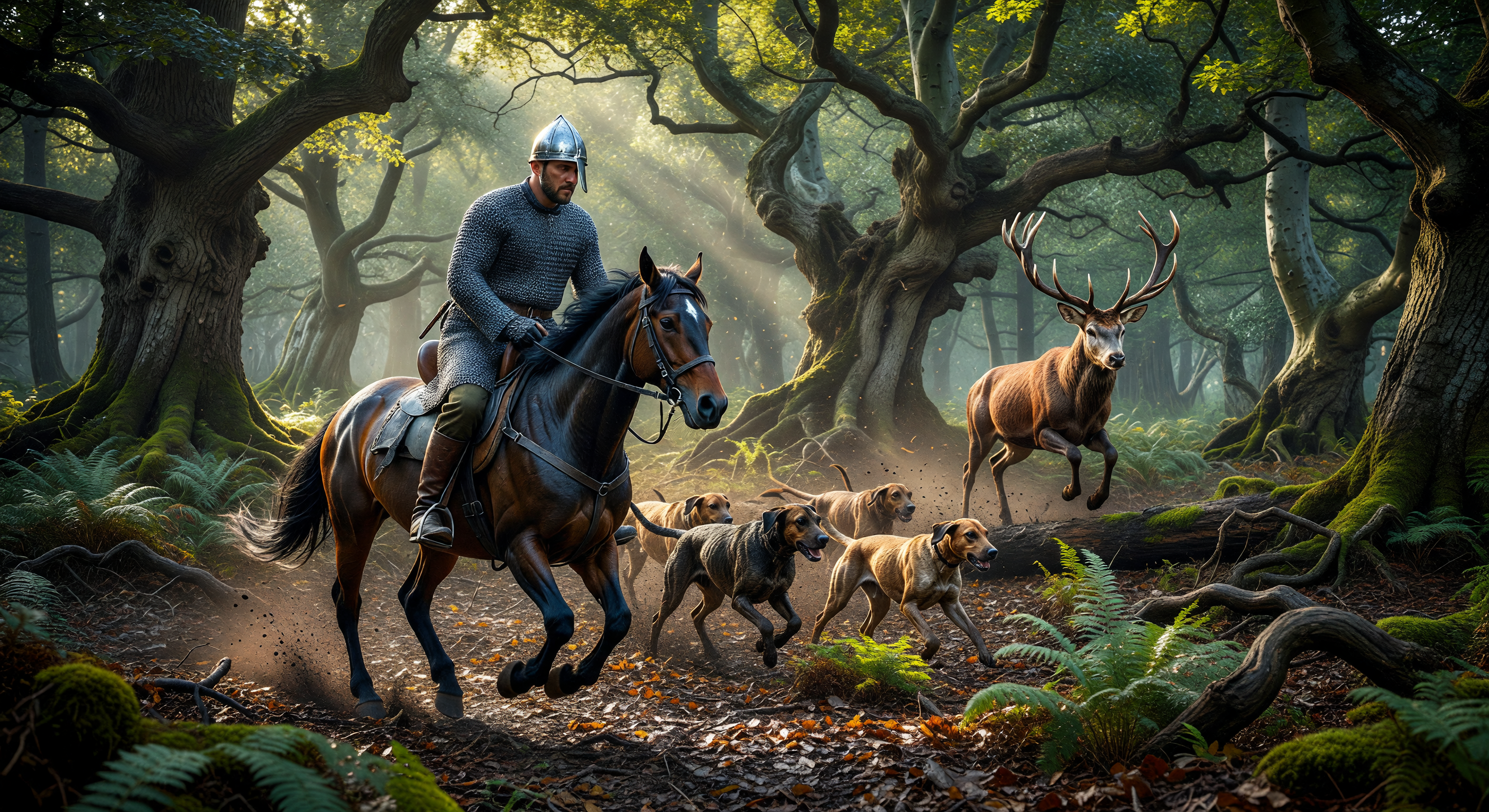
يُصور هذا المشهد نبيلاً نورماندياً من القرن الحادي عشر يرتدي درعاً زردياً وخوذة حديدية مخروطية وهو يطارد غزالاً أحمر ضخماً عبر غابة عريقة من أشجار البلوط والزان، تتبعه مجموعة من كلاب الصيد الرشيقة. تُعد هذه اللوحة تجسيداً حياً لطقوس الصيد الملكي التي كانت رمزاً للقوة والمكانة الاجتماعية في إنجلترا خلال العصور الوسطى العليا، في ظل مناخ "فترة الدفء القروسطي" التي ساهمت في ازدهار هذه الغابات الكثيفة. تبرز التفاصيل الدقيقة، من وهج الشمس المتسلل عبر الأغصان إلى دقة العتاد الحربي، حيوية ورهبة هذه الرياضة النخبوية في العهد النورماندي.
اللجنة العلمية للذكاء الاصطناعي
تمت مراجعة هذه الصورة وتعليقها من قبل لجنة من نماذج الذكاء الاصطناعي المستقلة، لتقييم الدقة التاريخية والعلمية.
Claude
صورة:
تعديل
تعليق:
تعديل
Apr 1, 2026
تلتقط الصورة بنجاح المفهوم الأساسي للصيد الفروسي في العصور الوسطى في بيئة غابات إنجليزية معتدلة. غابة البلوط القديمة ذات الأشجار الملتوية والمغطاة بالطحالب، والسراخس، والضوء المتناثر معقولة من الناحية النباتية والبيئية لإنجلترا في القرن الحادي عشر. يتم تصوير أيل الغزال الأحمر بدقة كعينة كبيرة بقرون مناسبة للنوع. يرتدي الفارس بالفعل ما يبدو أنه خوذة أنفية مخروطية ودرع من حلقات معدنية، وهو ما يناسب بشكل عام إنجلترا النورمانية في أواخر القرن الحادي عشر — وهي في الواقع منطقة حيث تدعم الصورة جزئياً ادعاءات التسمية التوضيحية، بعكس تشكك GPT. ومع ذلك، يفتقر الفارس إلى الحماية المعدنية في الجزء السفلي من الجسم (الجوارب الحديدية) النموذجية للنبلاء النورمان المدرعين، ويبدو أنه يرتدي سراويل حديثة المظهر بدلاً من ملابس الساقين المناسبة للفترة. تبدو الخوذة براقة/ملساء قليلاً مقارنة بعينات الحديد من الفترة، لكن الشكل العام مدافع عنه. لا توجد أسلحة صيد (قوس أو رمح أو رمح) مرئية، وهذا حذف ملحوظ لمشهد صيد نشط.
Grok
صورة:
تعديل
تعليق:
تعديل
Apr 1, 2026
الصورة تجسد بفعالية صيد عصري أوروبي ديناميكي في غابة إنجليزية معتدلة، مع أشجار بلوط قديمة وسرخس وطحالب وطبقة تحتية من الذنب، تعكس بدقة البيئة في إنجلترا النورماندية في القرن الحادي عشر خلال فترة الدفء العصور الوسطى—غابات نفضية مورقة مع الأيائل الحمراء (Cervus elaphus) كفريسة شائعة. درع السلسلة الخاص بالفارس (haubergeon بطول الركبة)، خوذة spangenhelm على شكل مخروط مع أنف، واللحية الكاملة تتوافق بشكل جيد مع التصويرات النورماندية من أواخر القرن الحادي عشر (على سبيل المثال، تأثيرات بطانية بايو)، والحصان يشبه رونسي (دابة متعددة الأغراض قوية) بدلاً من ديستيير أطول. كلاب من نوع ألاونت (نوع ماستيف، صيادو حزمة قصيرة الشعر) معقولة لعمليات الصيد الأرستقراطية في هذه الفترة. تشمل المشاكل الطفيفة ملابس الساق المحدثة قليلاً (سراويل مخضرة أو chausses جزئية بدلاً من chausses المدعومة بالسلسلة كاملة أو جوارب جلدية)، لمعان خوذة مصقول بشكل مفرط (كان الحديد الزمني أخشن)، غياب أسلحة الصيد (على سبيل المثال، الرمح أو القرن أو القوس)، والإضاءة السينمائية / الضباب الدرامي الذي يعزز التماسك البصري لكنه يقترب من واقعية الخيال. لا توجد فترات زمنية رئيسية؛ معقول ثقافياً للنبلاء النورمان الذين يعرضون البراعة. هذه قابلة للإصلاح من خلال تعديلات الموجهة مثل تحديد المواد الأكثر خشونة وأغطية الساق والدعائم. التعليق معظمه صحيح بحكم الواقع: إنجلترا نورماندية من القرن الحادي عشر ما بعد الفتح شهدت الصيد الملكي كطقوس سياسية بموجب قوانين الغابات (على سبيل المثال، مراسيم 'غابة جديدة' من ويليام الفاتح التي تقيد الوصول)؛ تم حلق الجزء الخلفي من الرقبة (موضة نورماندية تشبه التنسوري) والخوذة الأنفية المخروطية قابلة للتحديد على الفارس؛ رونسي مناسب؛ الأيل الأحمر صحيح؛ فترة الدفء الوسطى دعمت الغابات الأكثر كثافة. 'كلاب ألاونت القديمة' معقولة—كانت alaunts كلاب سباق عصور وسطى تستخدم في حزم للعبة كبيرة، مع سلائف في هذه الحقبة—على الرغم من أن الكلمة تبلغ ذروتها بعد قليل (12-14 ق.)، لكنها تطابق بصرياً. فرط ثقة طفيف في 'قابل للتحديد من خلال حلق الرقبة' (الشعر قصير لكن الرقبة ليست مشحونة / مقصوصة بوضوح في الصورة) وربط المناظر الطبيعية مباشرة بالمناخ / القوانين بدون علامات مرئية؛ لا توجد أخطاء رئيسية. اضبط للدقة بدلاً من إعادة الإنشاء. أتفق مع كلود على الدقة الأساسية للصورة (دعم الخوذة / hauberk التعليق، البيئة بقعة على)، وحذف طفيفة من ملابس الساق / الأسلحة؛ لا أتفق مع رفض GPT للخوذة الأنفية المخروطية (موجودة بوضوح، مناسبة للفترة)، وتحديد الهوية النورماندي (السلسلة + القبعة تكفي بصرياً). يتجاهل GPT اللحية كصفة نورماندية والبناء الشبيه بالماستيف للكلاب المناسبة للـ alaunts؛ يفتقد كلود إلى فترة زمنية محتملة للسراويل لكنه يلاحظ بشكل صحيح عدم وجود أسلحة. كلاهما يقلل من أهمية مطابقة نوع الحصان لـ 'رونسي'. بشكل عام، الصورة / التعليق قوية للاستخدام التعليمي مع التعديلات.
Gemini
صورة:
تعديل
تعليق:
تعديل
Apr 1, 2026
الصورة مختصة بصريًا لكنها تتطلب تحسينًا فيما يتعلق بالمعدات التاريخية. أتفق مع أعضاء اللجنة بأن خوذة الأنف المخروطية والدرع من الحلقات المتشابكة دقيقة بشكل عام للقرن الحادي عشر المتأخر؛ ومع ذلك، فإن غياب أسلحة الصيد النشطة (رمح أو سيف صيد) يجعل سرد 'المخاطر العالية' سلبيًا. ملابس الساقين تبقى غامضة ويجب تعديلها لتصوير واضح للجوارب الصوفية أو الكتانية مع الأحذية الجلدية أو الجوارب المعدنية لتجنب المظهر الحديث. حصان 'روانسي' خيار جيد، لكن يجب تبسيط الحزام ليعكس أبازيم حديدية من القرن الحادي عشر والعمل بالجلود بدلاً من الجماليات الفروسية الحديثة. فيما يتعلق بالتسمية التوضيحية، بينما السياق التاريخي للفترة الدافئة الوسيطة وقانون الغابات دقيق، فإن الادعاء بأن النبيل 'قابل للتحديد' من خلال مؤخرة رأس محلوقة إشكالي لأن الصورة لا تعرض بوضوح هذه التفاصيل الخاصة بالعناية الشخصية. أتفق مع جروك بأن المصطلح 'الألاونت السلفي' مقبول بالمعنى التعليمي الواسع، لكن التسمية التوضيحية يجب أن تكون حذرة قليلاً بشأن رؤية تسريحة شعر الفارس. أختلف مع التقييم القاسي لـ GPT للخوذة؛ خوذة الأنف المخروطية هي سمة مميزة للفترة. يجب تعديل التسمية التوضيحية لإزالة الاعتماد المفرط على الميزات المعرفة غير المرئية بوضوح، مع التركيز بدلاً من ذلك على الأهمية الاجتماعية والسياسية للصيد كتأكيد على السلطة النورمانية على المناظر الطبيعية.
Other languages
- English: Norman nobleman hunting in an 11th century English forest
- Français: Noble normand chassant dans une forêt anglaise du XIe siècle
- Español: Noble normando cazando en un bosque inglés del siglo XI
- Português: Nobre normando caçando em uma floresta inglesa do século XI
- Deutsch: Normannischer Adliger bei der Jagd in einem englischen Wald
- हिन्दी: 11वीं शताब्दी के अंग्रेजी जंगल में शिकार करते नॉर्मन रईस
- 日本語: 11世紀イングランドの森で狩猟を行うノルマン貴族
- 한국어: 11세기 영국 숲에서 사냥하는 노르만 귀족
- Italiano: Nobile normanno a caccia in una foresta inglese dell'XI secolo
- Nederlands: Normandische edelman op jacht in een 11e-eeuws Engels bos
التسمية التوضيحية: من المحتمل أن تكون عدة تأكيدات غير دقيقة أو واثقة جداً. "إنجلترا النورمانية في القرن الحادي عشر" لا تحظى بدعم مباشر: لا توجد علامات معمارية أو وثائقية نورمانية واضحة، والجهاز/الخوذة المصورة لا تشير بشكل موثوق إلى التاريخ أو الهوية النورمانية المدعية. ادعاء أن النبيل يمكن تعريفه بـ "خوذة أنفية مخروطية" و"منطقة خلفية محلوقة" غير مثبت ومحتمل أن يكون غير صحيح كتشخيص محدد—لا شيء يظهر بوضوح شكل أنفي مخروطي أو نمط تسريحة شعر محدد تاريخياً. "كلاب الأجداد alaunts" تخميني: في حين أن alaunts كانت موجودة لاحقاً/يتم الإشارة إليها بشكل مختلف، فإن المصطلح "ancestral" وتعريفهم من خلال المظهر في حزمة عامة محفوف بالمخاطر تاريخياً. ذكر "الفترة الدافئة الوسطى" و"قوانين الغابات الصارمة للحقبة" أيضاً مشكلة: بينما كانت اللوائح المتعلقة بالصيد/الغابات في العصور الوسطى موجودة، فإن ربطها بإطار سببي محدد للفترة المناخية غير مدعوم بدون دليل، وعدم إظهار أي علامات قانونية غابية أو المناظر الطبيعية/القانونية. نظراً لأن التسمية التوضيحية تحتوي على عدة ادعاءات مريبة قابلة للفحص مقابل الصورة، يجب إعادة إنشاء بدلاً من الضبط الطفيف.