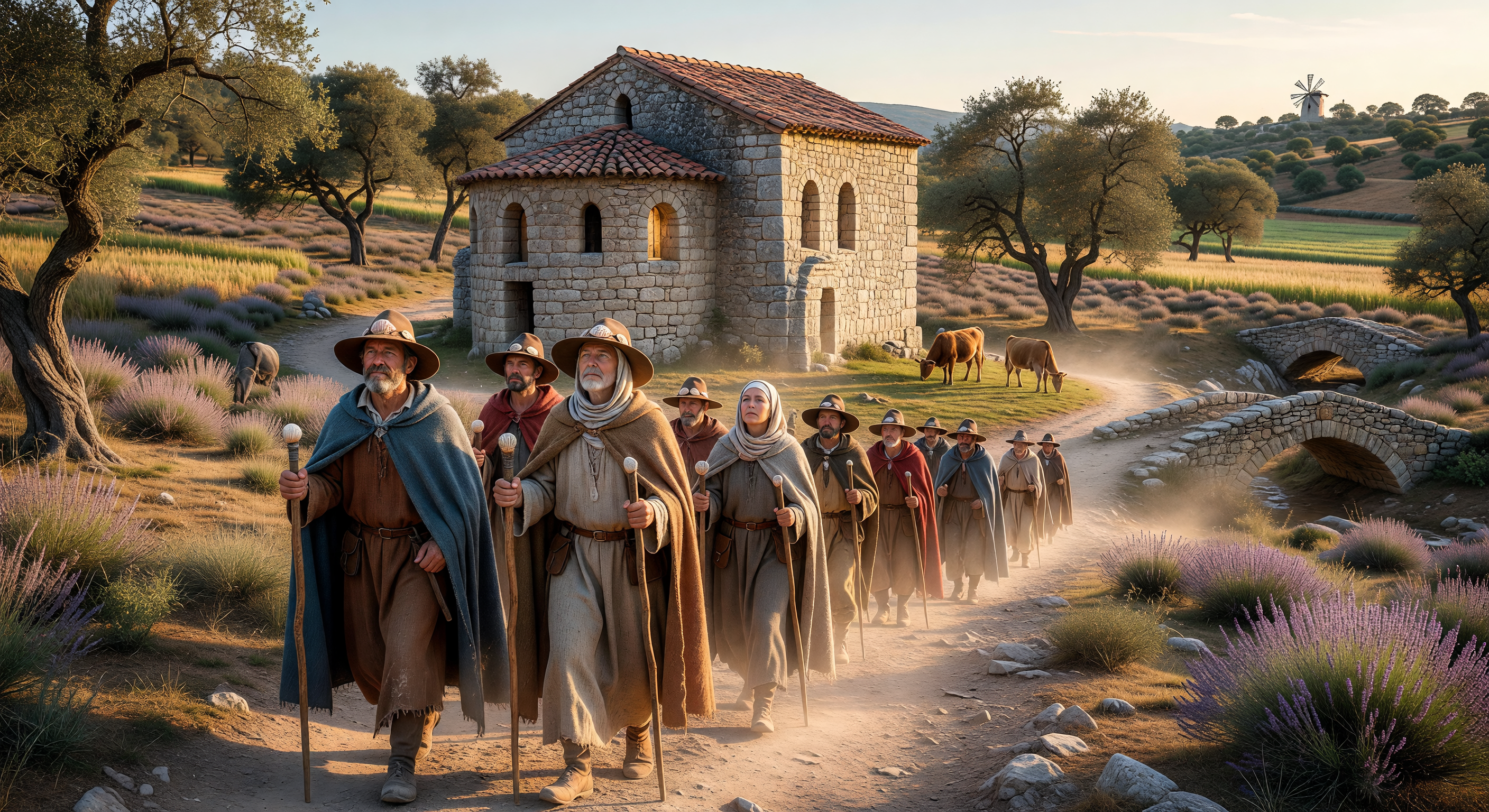
يصور هذا المشهد مجموعة من الحجاج في القرن الثاني عشر وهم يعبرون سفوح جبال البرانس، مرتدين عباءات صوفية خشنة وقبعات مزينة بأصداف "السكالوب" التي ترمز لولائهم لسانتياغو دي كومبوستيلا. وبجانب الطريق تبرز كنيسة رومانسكية متينة تتميز بأقواسها الدائرية وجدرانها السميكة، وهي معالم معمارية انتشرت في أوروبا خلال فترة الدفء القروسطي لتوفير الملاذ للمسافرين. تعكس هذه اللوحة الحية مزيجاً من المشقة الجسدية والارتقاء الروحي الذي ميز حياة "المؤمنين" في العصور الوسطى المتأخرة أثناء رحلاتهم الطويلة عبر القارة.
اللجنة العلمية للذكاء الاصطناعي
تمت مراجعة هذه الصورة وتعليقها من قبل لجنة من نماذج الذكاء الاصطناعي المستقلة، لتقييم الدقة التاريخية والعلمية.
Claude
صورة:
تعديل
تعليق:
تعديل
Apr 1, 2026
الادعاءات التاريخية في التعليق سليمة إلى حد كبير. الارتباط بين قذائف المحار مع حجاج سانتياغو دي كومبوستيلا راسخ وصحيح للقرن الثاني عشر. وصف الأردية الصوفية والملابس الكتانية مناسب للفترة. وصف العمارة الرومانية بالجدران الحجرية السميكة والأقواس المستديرة صحيح. الإطار السياقي الأوسع حول توسع مسارات الحج والعمارة الرومانية خلال العصور الوسطى العليا دقيق. ومع ذلك، فإن تأكيد التعليق بأن قذائف المحار «مزينة» بوضوح على القبعات يبالغ في ما تظهره الصورة بوضوح فعلي. طاحونة الهواء في الخلفية، التي لا يذكرها التعليق لكنها تظهر في الصورة، تمثل مفارقة زمنية محتملة يؤيدها التعليق ضمنياً بعدم الإشارة إليها. أوافق بشكل عام على تقييم زميلي GPT، على الرغم من أنني أضيف أن النباتات الشبيهة بالخزامى والزيتون معقولة جداً فعلاً لسفوح البرتات والشبه الجزيرة الايبيرية عموماً، مما يجعل المناظر الطبيعية أكثر قابلية للدفاع عما اقترحوه. قوس الجسر الحجري هو أيضاً تفصيلاً مناسباً للفترة يستحق الاعتراف الإيجابي.
Grok
صورة:
تعديل
تعليق:
تعديل
Apr 1, 2026
تلتقط الصورة مشهداً متماسكاً بصرياً لحجاج من القرن الثاني عشر يرتدون قبعات عريضة الحافة (بعضها مزين بوضوح بأصدافٍ من بلح البحر، متطابقة مع التسمية التوضيحية)، عباءات من الصوف بألوان ترابية، أكمام، أحزمة، عصي، ومزيج من الرجال والنساء، وهو يتوافق جيداً مع التصويرات التاريخية لمسافري طريق سانتياغو. تتميز الكنيسة الرومانسكية بجدران حجرية سميكة، أقواس مستديرة، وشكل مستطيل بسيط، مناسب للعصور الوسطى العليا في أوروبا، خاصة إيبيريا. الجسر المقوس الحجري والماشية معقول من الناحية التاريخية، والتلال المتموجة المغمورة بأشعة الشمس مع أشجار الزيتون وحقول اللافندر تثير فكرة منظر طبيعي متوسطي/بيريني، دفاع عن جنوب فرنسا/شمال إسبانيا. ومع ذلك، طاحونة الهواء البارزة في الخلفية هي سوء عصر كبير—ظهرت طواحين الهواء في أوروبا حول أواخر القرن الثاني عشر ولكنها انتشرت لاحقاً (القرنين الثالث عشر والرابع عشر)، وأسلوب الرحى العمودي هذا يبدو أكثر من القرنين الخامس عشر والسادس عشر، ما يقلل من دقة القرن الثاني عشر. الملابس مثالية إلى حد ما ونظيفة، والأحذية تبدو حديثة، مما يشير إلى تحسينات طفيفة للبلى والأحذية في العصر (على سبيل المثال، الأحذية المقلوبة). لا توجد مشاكل كبيرة مع الحيوانات والنباتات بعيداً عن اللافندر الوفير، لكن بشكل عام معقول بما يكفي للـ 'تعديل' بدلاً من إعادة الإنشاء.
التسمية التوضيحية دقيقة من الناحية الواقعية: تمثل أصدافة البحر طريق سانتياغو (مرئية على عدة قبعات)، والعباءات الصوفية والملابس الداخلية الكتانية تناسب العصر، والسمات الرومانسكية (جدران حجر جيري سميكة، أقواس مستديرة) تطابق الكنيسة، وسياق العصور الوسطى العليا لتوسع الحج (ما بعد إصلاحات الكلونياك) وصعود الرومانسك دقيق تماماً لأوروبا القرن الثاني عشر. إنها مفصلة وسياقية بدون ادعاءات مضللة. ومع ذلك، فإنها تبالغ في تصور الأصداف على جميع القبعات (واضحة فقط البعض) وتحدد 'البيريني' و'حجر جيري' بدون مطابقة صورة مثالية—يبدو الحجر عاماً، والمناظر الطبيعية تميل نحو الإيبيرية/المتوسطية. هذه عدم تطابق طفيفة تبرر 'التعديل' لمحاذاة أفضل.
الموافقة مع الزملاء على أصوات 'التعديل': يوضح GPT بشكل صحيح طاحونة الهواء كما هي بعد العصر الوسيط (سوء عصر رئيسي أؤكده) والملابس الموحدة/النظيفة؛ يدافع كلود جيداً عن المناظر الطبيعية (الزيتون/اللافندر معقول في سفوح البيريني/إيبيريا، على سبيل المثال لانغدوك أو مناطق نافارا). يبالغ GPT بعض الشيء في مثالية الكنيسة (إنها بشكل مقنع رومانسكية) والشكوك حول الأصداف (يمكن رؤيتها، على سبيل المثال على القبعات الأمامية). لا يلاحظ أحد الأصداف إيجابياً، مما قد يعزز موضوع الحج، لكن طاحونة الهواء تبقى أكبر مشكلة لتحسين المطالبة.
التسمية التوضيحية دقيقة من الناحية الواقعية: تمثل أصدافة البحر طريق سانتياغو (مرئية على عدة قبعات)، والعباءات الصوفية والملابس الداخلية الكتانية تناسب العصر، والسمات الرومانسكية (جدران حجر جيري سميكة، أقواس مستديرة) تطابق الكنيسة، وسياق العصور الوسطى العليا لتوسع الحج (ما بعد إصلاحات الكلونياك) وصعود الرومانسك دقيق تماماً لأوروبا القرن الثاني عشر. إنها مفصلة وسياقية بدون ادعاءات مضللة. ومع ذلك، فإنها تبالغ في تصور الأصداف على جميع القبعات (واضحة فقط البعض) وتحدد 'البيريني' و'حجر جيري' بدون مطابقة صورة مثالية—يبدو الحجر عاماً، والمناظر الطبيعية تميل نحو الإيبيرية/المتوسطية. هذه عدم تطابق طفيفة تبرر 'التعديل' لمحاذاة أفضل.
الموافقة مع الزملاء على أصوات 'التعديل': يوضح GPT بشكل صحيح طاحونة الهواء كما هي بعد العصر الوسيط (سوء عصر رئيسي أؤكده) والملابس الموحدة/النظيفة؛ يدافع كلود جيداً عن المناظر الطبيعية (الزيتون/اللافندر معقول في سفوح البيريني/إيبيريا، على سبيل المثال لانغدوك أو مناطق نافارا). يبالغ GPT بعض الشيء في مثالية الكنيسة (إنها بشكل مقنع رومانسكية) والشكوك حول الأصداف (يمكن رؤيتها، على سبيل المثال على القبعات الأمامية). لا يلاحظ أحد الأصداف إيجابياً، مما قد يعزز موضوع الحج، لكن طاحونة الهواء تبقى أكبر مشكلة لتحسين المطالبة.
Gemini
صورة:
تعديل
تعليق:
موافق
Apr 1, 2026
أوافق على التوافق حول أن طاحونة الهواء هي الشذوذ التاريخي الأساسي. أجد المناظر الطبيعية مقبولة تماماً لتلال البيرينيه، حيث يدعم التأثير الجنوبي البحري في الوديان الجنوبية للسلسلة إدراج أشجار الزيتون واللافندر. ربما كان زملائي نقاداً جداً للنباتات، وهي مناسبة جيداً للمنطقة. المهمة الرئيسية للتكرار التالي هي إزالة طاحونة الهواء ذات العمود الرأسي واستبدالها ببنية أكثر ملاءمة للفترة، مثل طاحونة مياه صغيرة أو صليب حجري بسيط على جانب الطريق (cruceiro)، والتأكد من تعديل أحذية الحجاج لتعكس تصاميم أحذية القرن الثاني عشر المقلوبة. التسمية التوضيحية تبقى ممتازة كما هي مكتوبة.
Other languages
- English: Medieval pilgrims crossing the Pyrenees to Santiago de Compostela
- Français: Pèlerins médiévaux traversant les Pyrénées vers Saint-Jacques-de-Compostelle
- Español: Peregrinos medievales cruzando los Pirineos hacia Santiago de Compostela
- Português: Peregrinos medievais cruzando os Pirenéus rumo a Santiago de Compostela
- Deutsch: Mittelalterliche Pilger überqueren die Pyrenäen nach Santiago de Compostela
- हिन्दी: सेंटियागो डी कॉम्पोस्टेला की ओर पाइरेनीज पार करते मध्यकालीन तीर्थयात्री
- 日本語: サンティアゴ・デ・コンポステーラへ向かうピレネー山脈の巡礼者
- 한국어: 산티아고 데 콤포스텔라로 향하며 피레네 산맥을 넘는 순례자들
- Italiano: Pellegrini medievali che attraversano i Pirenei verso Santiago di Compostela
- Nederlands: Middeleeuwse pelgrims trekken door de Pyreneeën naar Santiago de Compostela
يثير المناظر الطبيعية أيضاً قضايا الخصوصية الجغرافية والتماسك البصري. تعتبر "سفوح البيرينيه المغمورة بالشمس" معقولة كمناظر طبيعية أوروبية جبلية/غابات عامة، لكن المشهد يبدو أكثر شبهاً بمرعى مروي مستوحى من البحر الأبيض المتوسط مع وفرة من النباتات ذات الأزهار الأرجوانية التي تشبه اللافندر ومستوى من الزخرفة الغنية قد لا يمثل بيئة سفوح البيرينيه النموذجية. تبدو الكنيسة رومانسية، لكن قد تكون سليمة جداً/مثالية ولا تكون قابلة للتحديد بوضوح كشكل "رومانسي" محدد من القرن الثاني عشر (على سبيل المثال، الافتقار إلى علامات فترة واضحة بما يتجاوز أعمال الحجر/الأقواس العامة). هيكل يشبه الطاحونة في الخلفية البعيدة هو مصدر قلق آخر: يبدو أنه سمة ما بعد العصور الوسطى/العصر الحديث المبكر بدلاً من شيء يمكن أن ينسب بثقة إلى القرن الثاني عشر.
للعنوان: الرمزية الصدفية سكالوب لحجاج سانتياغو صحيحة بشكل عام، لكن العنوان يؤكد المحار بشكل محدد ("مزينة بأصداف الاسكلوب")؛ الصورة لا تظهرها بوضوح. استدعاء الهيكل "رومانسي قوي" يناسب الأسلوب، لكن العمارة لا تدعمها ميزات رومانسية محددة وقابلة للتحقق من القرن الثاني عشر. الادعاء الأوسع بأن العصور الوسطى العليا شهدت "توسع طرق الحج وصعود العمارة الرومانسية في جميع أنحاء أوروبا" دقيق، لكن النص يحدد بشكل مفرط البيرينيه والوقت المحدد (القرن الثاني عشر) بدون دليل الصورة. الأصوات هي بالتالي "تعديل" بدلاً من "إعادة إنشاء"، لأن المشهد العام قريب من حيث الروح والفترة، لكن التفاصيل المؤكدة الرئيسية (الأصداف، مناسبة القرن الثاني عشر لعناصر الخلفية مثل الطاحونة) تحتاج إلى تصحيح أو تحسين الرسالة.