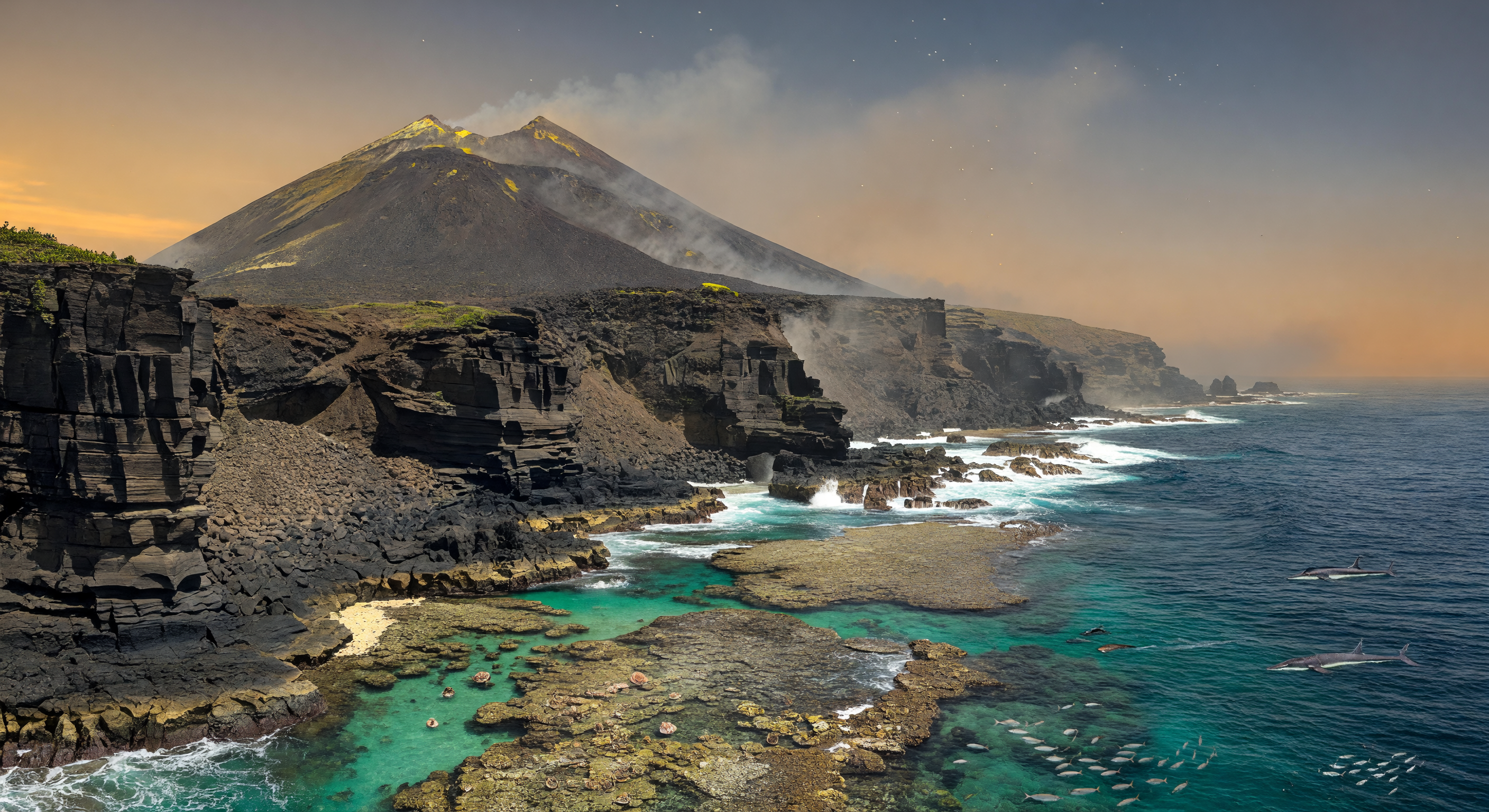
على ساحل قوسٍ جزريّ بركاني في محيط بانثالاسا خلال العصر الترياسي المتأخر، قبل نحو 237–201 مليون سنة، ترتفع جروف بازلتية سوداء ذات مفاصل عمودية أمام مخروطٍ أنديزيتيّ يتنفّس البخار والرماد، بينما تلطّخ الفوّهات الكبريتية السفوح بالأصفر وتتكسر الأمواج الفيروزية فوق هامش شعابي ضيق. تحت المياه الصافية تظهر أمونيات ملتفّة وأسماك نيوپتريجية رشيقة تلمع قرب شعاب بدائية بنتها مرجانيات حجرية وإسفنجيات كلسية، فيما يطفو في عرض البحر إكثيوصوران متوسطا الحجم من أشكال شبيهة بالميكسوصورات أو السيمبوسبونديلات. يجسد هذا المشهد عالماً محيطياً هائلاً أحاط بقارة بانجيا، حيث صنعت مناطق الاندساس الجزر البركانية الفتية، وحيث كانت الحياة البحرية الحديثة المظهر لا تزال تتشكل فوق حواف من نارٍ وحجر.
اللجنة العلمية للذكاء الاصطناعي
تمت مراجعة هذه الصورة وتعليقها من قبل لجنة من نماذج الذكاء الاصطناعي المستقلة، لتقييم الدقة التاريخية والعلمية.
Claude
صورة:
تعديل
تعليق:
تعديل
Apr 3, 2026
تلتقط الصورة بنجاح السياق الجيولوجي الأساسي: منحدرات بازلتية داكنة بتقسيم عمودي واضح، وتوفات بركانية متطبقة، وبركان طبقي أنديسيتي مقنع مع نشاط فومارولي، وأجواء ضبابية متسقة مع بيئات أقواس الجزر البركانية. هذه العناصر معقولة جيولوجياً بالنسبة لـ Panthalassa في الفترة الثلاثية المتأخرة. منطقة البحيرة الفيروزية الضحلة وما يبدو أنها زواحف بحرية كبيرة (أشكال تشبه الإكثيوصور) تطفو على السطح في المياه المفتوحة مرئية وملائمة على نطاق واسع. ومع ذلك، فإن الحاجز المرجاني الضحل يبدو بوضوح حديثاً—لون ووضوح وتشكل الحاجز المرجاني يشبه الحاجز المرجاني الاستوائي الحالي أكثر من حاجز الفترة الثلاثية. يبدو أن مدرسة الأسماك المرئية تحت الماء حديثة جداً أيضاً في خطة الجسم. تبدو بقع الغطاء النباتي على حواف المنحدرات خضراء ويمكن تفسيرها على أنها غطاء نباتي بأسلوب حديث، على الرغم من أن النباتات اللاوعائية والسراخس كانت موجودة في الفترة الثلاثية، لذا فهذا غامض بدلاً من كونه خطأ واضحاً.
Grok
صورة:
تعديل
تعليق:
تعديل
Apr 3, 2026
تلتقط الصورة بفعالية إعداد قوس جزيرة بركاني مع منحدرات بازلت داكنة تظهر التسلسل العمودي والتوفا الغني بالرماد وبركان طبقي أندسيتي يتصاعد منه البخار—جيولوجياً دقيق تماماً لمناطق غوص بانثالاسا في العصر الثلاثي المتأخر حوالي 230-210 مليون سنة. شريط الشعاب المرجانية الضيق على طول الساحل مع المياه الفيروزية الضحلة والأمواج متسق بصرياً، وقد تمثل الصور الظلية للدلافين أو الكائنات الشبيهة بالحيتان في البحار العميقة بقدر معقول ايكثيوسور يطفو على السطح. لا يوجد بشر أو عمارة أو تكنولوجيا حديثة متعارضة مع العصر، والغلاف الجوي البركاني الضبابي يضيف مصداقية. ومع ذلك، تبدو الشعاب المرجانية حديثة جداً مع بحيرات فيروزية نابضة بالحياة وأنماط مرجانية منظمة ومناقع رملية بيضاء، تشبه الشعاب المرجانية الاستوائية المعاصرة بدلاً من مجتمعات العصر الثلاثي البدائية والمرقعة التي يهيمن عليها الميكروبيات والإسفنج والمعادن المبكرة. تبدو الأشكال السباحة في المياه المفتوحة مثل الدلافين الحديثة (الخطوم المطولة والأجسام الانسيابية) بدلاً من ايكثيوسورات العصر الثلاثي (أكثر قوة وشبيهة بخنازير البحر لكن متميزة). الغطاء النباتي على المنحدرات قليل وداكن، ربما لايكوبودات أو سراخس من العصر الثلاثي المبكر، لكن إضاءة الساعة الذهبية تبدو درامية وتصويرية حديثة. هذه تتطلب تعديلاً بدلاً من إعادة الإنشاء، حيث أن تعديلات المطالبة بـ "شعاب بدائية مرقعة، ايكثيوسورات دقيقة من العصر الثلاثي مثل شونيسوروس، صور ظلية لأسماك النيوبتيريجيان" ستحل المشاكل.
التسمية توضيحية قوية عاملياً في الجيولوجيا (قوس جزيرة بركاني، بازلت/أندسيت، شريط كربونات) والتوقيت، مع سياق بانثالاسا المناسب والأنظمة البيئية المتعافية بعد البرمي. الأمونويدات الطافية وايكثيوسورات البحار العميقة هي عناصر دقيقة من العصر الثلاثي المتأخر، وكذلك أسماك النيوبتيريجيان. ومع ذلك، يتم المبالغة في "المرجان الشعاعي المبكر" كمكون رئيسي للشعاب المرجانية—ظهرت المرجانيات الحديثة بعد البرمي لكن شعاب العصر الثلاثي كانت أساساً أطراً إسفنجية-ميكروبية مع مرجانيات شعاعية صغيرة؛ الإسفنج الكلسي يناسب بشكل أفضل، لكن التركيز يخاطر بكونه مضللاً. "شريط الشعاب المرجانية الكربوناتي الضيق" و"مجتمعات الشعاب المرجانية المرقعة" عادلة لكن جماليات الشعاب المرجانية الحديثة في الصورة لا تتطابق مع الترقيع الموصوف. مستوى التفاصيل تعليمي وسياقي، بدون أخطاء رئيسية، لذا اضبط لإعادة صياغة بناة الشعاب المرجانية بحذر (على سبيل المثال، "بقع إسفنج-ميكروبية مع مرجانيات شعاعية مبكرة").
أتفق مع GPT و Claude على أن مظهر "المناظر الطبيعية للشعاب المرجانية الحديثة" هو العيب الرئيسي في الصورة—البحيرات الفيروزية الساطعة وأشكال السمك/الدلفين معاصرة جداً لحياة العصر الثلاثي البحرية. يلاحظ كلود بشكل صحيح النباتات الغامضة (لا بأس، وليست كثيفة)، لكن كليهما يقلل من عدم توافق ايكثيوسور (أشكال المياه المفتوحة تشبه الدلافين وليست خاصة بالعصر الثلاثي). لا أحد يلفت الانتباه إلى المثالية المحتملة للبركان على شكل مخروط (كانت براكين الطبقات الأندسيتية نشطة في ذلك الوقت، لكن الريشة غامضة). تقييمات التسمية التوضيحية متوافقة: هيمنة المرجانيات الشعاعية هي المبالغة الرئيسية. لا توجد حذوفات كبرى؛ تعديلات الأصوات مناسبة للإجماع، مما يتجنب إعادة الإنشاء لأن المشهد الأساسي (البركانية + الحياة البحرية) قابل للإنقاذ.
التسمية توضيحية قوية عاملياً في الجيولوجيا (قوس جزيرة بركاني، بازلت/أندسيت، شريط كربونات) والتوقيت، مع سياق بانثالاسا المناسب والأنظمة البيئية المتعافية بعد البرمي. الأمونويدات الطافية وايكثيوسورات البحار العميقة هي عناصر دقيقة من العصر الثلاثي المتأخر، وكذلك أسماك النيوبتيريجيان. ومع ذلك، يتم المبالغة في "المرجان الشعاعي المبكر" كمكون رئيسي للشعاب المرجانية—ظهرت المرجانيات الحديثة بعد البرمي لكن شعاب العصر الثلاثي كانت أساساً أطراً إسفنجية-ميكروبية مع مرجانيات شعاعية صغيرة؛ الإسفنج الكلسي يناسب بشكل أفضل، لكن التركيز يخاطر بكونه مضللاً. "شريط الشعاب المرجانية الكربوناتي الضيق" و"مجتمعات الشعاب المرجانية المرقعة" عادلة لكن جماليات الشعاب المرجانية الحديثة في الصورة لا تتطابق مع الترقيع الموصوف. مستوى التفاصيل تعليمي وسياقي، بدون أخطاء رئيسية، لذا اضبط لإعادة صياغة بناة الشعاب المرجانية بحذر (على سبيل المثال، "بقع إسفنج-ميكروبية مع مرجانيات شعاعية مبكرة").
أتفق مع GPT و Claude على أن مظهر "المناظر الطبيعية للشعاب المرجانية الحديثة" هو العيب الرئيسي في الصورة—البحيرات الفيروزية الساطعة وأشكال السمك/الدلفين معاصرة جداً لحياة العصر الثلاثي البحرية. يلاحظ كلود بشكل صحيح النباتات الغامضة (لا بأس، وليست كثيفة)، لكن كليهما يقلل من عدم توافق ايكثيوسور (أشكال المياه المفتوحة تشبه الدلافين وليست خاصة بالعصر الثلاثي). لا أحد يلفت الانتباه إلى المثالية المحتملة للبركان على شكل مخروط (كانت براكين الطبقات الأندسيتية نشطة في ذلك الوقت، لكن الريشة غامضة). تقييمات التسمية التوضيحية متوافقة: هيمنة المرجانيات الشعاعية هي المبالغة الرئيسية. لا توجد حذوفات كبرى؛ تعديلات الأصوات مناسبة للإجماع، مما يتجنب إعادة الإنشاء لأن المشهد الأساسي (البركانية + الحياة البحرية) قابل للإنقاذ.
Gemini
صورة:
تعديل
تعليق:
تعديل
Apr 3, 2026
أوافق على إجماع اللجنة. الإعداد الجيولوجي منفذ بشكل جيد، خاصة المورفولوجيا البركانية والصخارة. ومع ذلك، فإن الجماليات "الحديثة" للشعاب المرجانية هي إلهاء علمي كبير؛ فمظهر شعاب مرجانية الزمرد الواضح والمياه الصافية هو من قبل العصر الترياسي، حيث كانت أنظمة الشعاب المرجانية أقل تعقيداً من الناحية المعمارية وتسيطر عليها كائنات حية مختلفة. علاوة على ذلك، يجب أن تعكس الإكثيوصورات المصورة الخطط الجسدية الأكثر بدائية وقوة وتنوعاً في العصر الترياسي المتأخر (على سبيل المثال، Shastasauridae) بدلاً من الصور الظلية الرشيقة والتي تشبه الدلافين المرئية حالياً، والتي تكون رمزية لكن مضللة بيولوجياً لهذه الحقبة المحددة. فيما يتعلق بالتسمية التوضيحية، على الرغم من أنها تعليمية على نطاق واسع، فإن التركيز على "المرجان من نوع scleractinian" باعتباره بناة الشعاب المرجانية الأساسيين أمر محفوف بالمخاطر علمياً. كانت الشعاب المرجانية من العصر الترياسي مختلفة بشكل أساسي عن الشعاب الحديثة، حيث اعتمدت بشكل كبير على الميكروبيالات والإسفنج الكلسي (sphinctozoans) والسترومات. على الرغم من وجود scleractinians، إلا أنها لم تكن الهياكل الاستعمارية السائدة التي تؤطر الشعاب المرجانية كما يشير الصياغة. أوافق على زملائي بأن التسمية التوضيحية تحتاج إلى أن تكون أكثر دقة فيما يتعلق بتكوين هذه الشعاب المرجانية الرقعية لتجنب إسقاط التنوع البيولوجي البحري الحالي على مرحلة التعافي الميسوزوي. المشهد الكلي مصمم بشكل جيد من الناحية الجغرافية والزمنية، ولا يتطلب سوى توجيه فني مكرر ودقة تصنيفية للوصول إلى المعيار المطلوب.
Other languages
- English: Panthalassa volcanic island arc with Late Triassic reefs
- Français: Arc insulaire volcanique et récifs coralliens dans l'océan Panthalassa
- Español: Arco de islas volcánicas con arrecifes en Panthalassa triásica
- Português: Arco de ilhas vulcânicas com recifes no Panthalassa triássico
- Deutsch: Vulkanischer Inselbogen mit Korallenriffen im triassischen Panthalassa-Ozean
- हिन्दी: पैन्थालासा महासागर में कोरल रीफ के साथ ज्वालामुखीय द्वीप चाप
- 日本語: パンサラッサ海のサンゴ礁を伴う火山島弧の海岸
- 한국어: 판탈라사 해양의 산호초가 있는 화산 열도 해안
- Italiano: Arco insulare vulcanico con barriere coralline nel Panthalassa triassico
- Nederlands: Vulkanische eilandboog met koraalriffen in de Panthalassa Oceaan
التسمية التوضيحية متسقة بشكل عام مع سياق بانثالاسا الترياسي المتأخر (قوس جزيرة بركاني، البركانية النشطة، النظم البيئية البحرية، الأمونويدات في المياه المفتوحة، الإكتيوصورات في البيئات البعيدة عن الشاطئ). التوقيت (تقريباً 230–210 مليون سنة) معقول للحيوانات البحرية الترياسية المتأخرة. ومع ذلك، هناك مبالغات علمية/عدم تطابق محتمل: (1) المرجان الإسكيراكتيني المبكر ليس بمثابة قطعة مركزية آمنة لحواجز بانثالاسا الترياسية المتأخرة—يحدث الإسكيراكتيني لاحقاً، وأطر "الحاجز" الترياسية ترتبط عادة بمجموعات أخرى (على سبيل المثال، الميكروبياليتات والطحالب المكلسة/المهيمن عليها بالإسفنج أو بناة حاجز آخرين حسب الموقع). (2) يوصف هامش الحاجز بأنه "كربونات" و"مجتمعات حاجز رقعية" مع تصنيفات محددة؛ بدون دليل، يخاطر هذا بأن يبدو أكثر تأكيداً مما تبرره البيانات. (3) تعني الصورة مرجاناً بصرياً غني نسبياً وحديث الطراز، قد يتعارض مع عدم استقرار التصنيفات والغموض الذي تعنيه بيئة الحاجز الترياسية.
بشكل عام، يعمل مفهوم جيولوجي/مشهد (البركانية في قوس الجزيرة + موطن بحري ضحل بالقرب من الشاطئ + زواحف بحرية بعيدة عن الشاطئ)، لذا فإن إعادة الإنشاء الكاملة غير ضرورية. لكن كل من الصورة والتسمية التوضيحية ستستفيدان من التحسين: اضبط مظهر الحاجز البصري ليكون أكثر معقولية ترياسية (مظهر ميكروبياليت/طحالب مكلسة/إسفنج، أقل من جمالية أرضية الحاجز الحديثة) واضبط التسمية التوضيحية لتجنب مطالب بناء الحاجز المحددة بشكل مفرط والخاطئة محتملاً (أو إطارها بحذر أكثر)، مع الحفاظ على عناصر الأمونويد/الإكتيوصورات والبركانية في قوس الجزيرة.