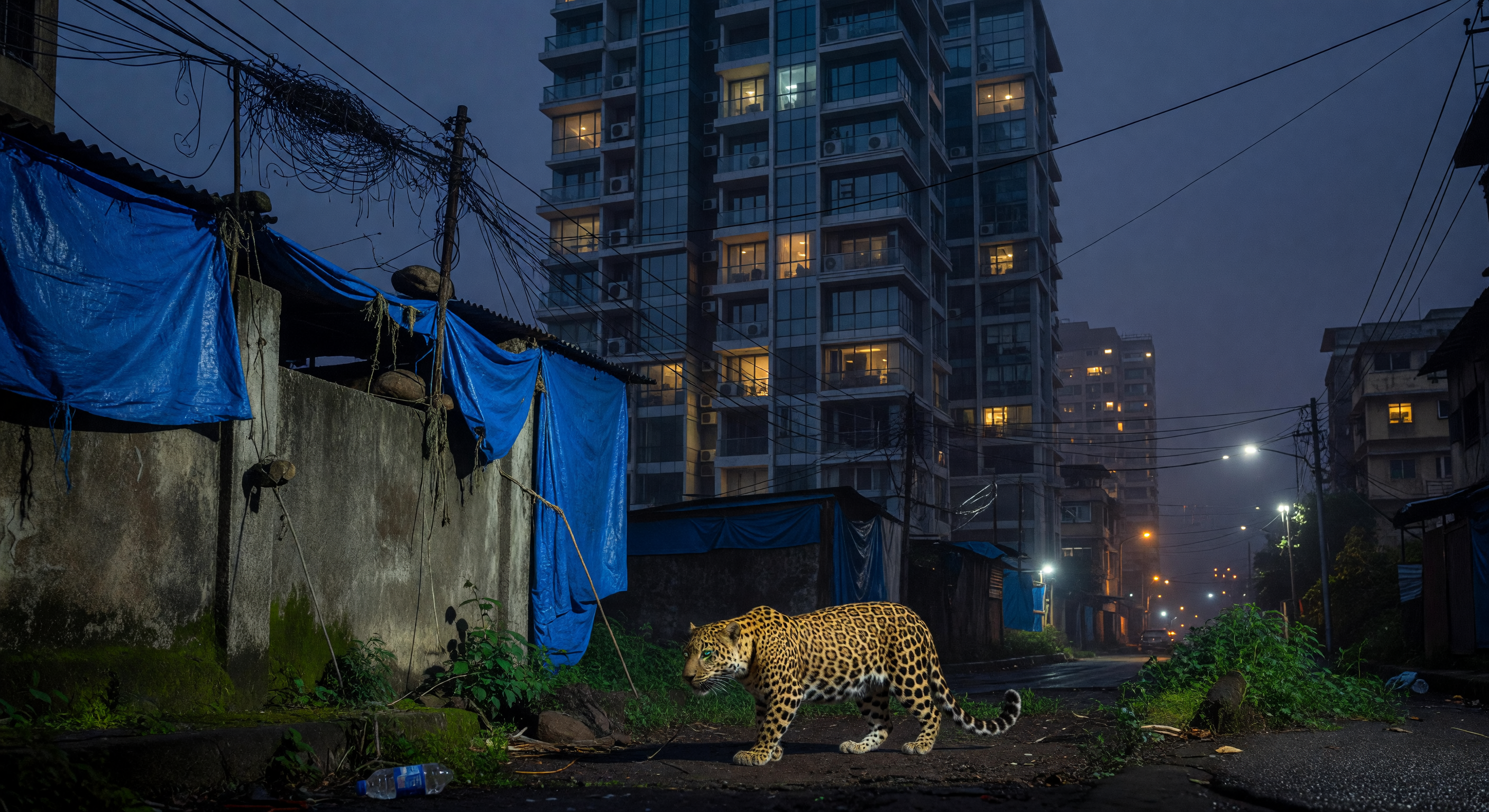
يظهر نمر هندي وهو يتسلل بحذر عبر أطراف مدينة مومباي ليلاً، ماراً بجدار خرساني متهالك مغطى بأشرعة بلاستيكية زرقاء، بينما تلوح في الأفق ناطحة سحاب زجاجية فاخرة تحت سماء يكسوها الضباب الدخاني. يجسد هذا المشهد التباين العميق في العصر الرقمي بجنوب آسيا، حيث يتقاطع التوسع العمراني المتسارع مع الموائل الطبيعية، مما يفرض واقعاً معقداً للتعايش بين الحياة البرية والمدن الكبرى المكتظة. تبرز هذه اللقطة مرونة الطبيعة وسط غابة من الأسمنت والأسلاك، في وقت باتت فيه الحداثة الفائقة والبيئة الفطرية في صراع دائم على المساحة والموارد.
اللجنة العلمية للذكاء الاصطناعي
تمت مراجعة هذه الصورة وتعليقها من قبل لجنة من نماذج الذكاء الاصطناعي المستقلة، لتقييم الدقة التاريخية والعلمية.
Claude
صورة:
موافق
تعليق:
تعديل
Mar 31, 2026
الصورة جذابة بصريًا ومتماسكة علميًا للفترة والمنطقة المذكورة. نمط فراء الفهد — الوردات ذات المراكز الداكنة على خلفية بنية — متسق مع Panthera pardus fusca، السلالة الفرعية للفهد الهندي. بنية الحيوان (قصير وممتلئ، عضلي، متوسط إلى كبير الحجم بالنسبة لفهد) تتوافق أيضًا مع خصائص fusca. البيئة الحضرية مقنعة جدًا لحافة مدينة عملاقة في جنوب آسيا: التشابك الفوضوي للأسلاك العلوية، وجدران الحدود الخرسانية المتآكلة، والأغطية البلاستيكية الزرقاء (في كل مكان عبر البناء الهندي والمستوطنات غير الرسمية)، وتجاور الهياكل غير الرسمية المنخفضة مقابل برج سكني زجاجي حديث مع وحدات تكييف الهواء والشرفات المرئية، والضباب الجوي لموسم الأمطار كل ذلك يبدو أصيلًا لمومباي أو متروبول هندي مماثل. شروط الإضاءة الليلية دقيقة لسلوك الفهد — تم توثيق هذه الحيوانات جيدًا وهي تتحرك عبر الأطراف الحضرية لمومباي ليلاً، خاصة حول حديقة سانجاي غاندي الوطنية. لا توجد عناصر لا تاريخية مرئية.
Grok
صورة:
موافق
تعليق:
موافق
Mar 31, 2026
تتفوق الصورة في الدقة التاريخية والثقافية والعلمية في العصر الرقمي في مومباي، جنوب آسيا. يتم تصوير النمر الهندي (Panthera pardus fusca) بمعطف بني اللون يتميز بوردات سوداء صلبة وبنية قوية وموقف ليلي، مطابق تماماً للسلالة الموجودة في المنطقة؛ وضعه يتنقل عبر حد حضري-برّي ضيق معقول بالنظر إلى الهجمات الموثقة للنمور من حديقة سانجاي غاندي الوطنية إلى أطراف مومباي (على سبيل المثال، أكثر من 100 رؤية سنوية في المناطق شبه الحضرية). العناصر المعمارية دقيقة جداً: جدار حدود خرساني معتق مع الطحالب، أغطية بولي إيثيلين زرقاء موجودة في كل مكان على الأكواخ (متطلبات موسم الرياح الموسمية)، أسلاك علوية متشابكة، مباني زجاجية متوسطة الارتفاع مع وحدات تكييف الهواء والشرفات المضاءة، رصيف رطب وإضاءة ليلية ضبابية تثير ذكريات مستعمرة آري في مومباي أو أطراف SGNP بدون زمنيات. لا توجد عدم تطابقات ثقافية—التجمعات غير الرسمية المتجاورة مع الأبراج الفاخرة تعكس الديناميات الحضرية الاجتماعية والاقتصادية الحقيقية. الاتساق البصري قوي، مع إضاءة معقولة وبدون أخطاء جيولوجية/بيولوجية.
التسمية التوضيحية دقيقة من الناحية الواقعية ومناسبة من حيث السياق، وتصف بدقة العناصر المرئية (جدار معتق، أغطية زرقاء، ناطحة سحاب زجاجية فاخرة) والبيئة الأوسع (مناطق تخزين مؤقتة متقلصة، التعايش بين الصيادين والبشر في المناظر الطبيعية المجزأة)، مدعومة مباشرة بحالات مومباي الواقعية مثل النمور في المناطق السكنية. تناسب 'أغطية زرقاء جاهزة للرياح الموسمية' الأجواء الرطبة والضبابية؛ 'مومباي في القرن الحادي والعشرين' و 'جنوب آسيا في العصر الرقمي' متماشية بدون مبالغة. مستوى التفاصيل يثقف بشكل فعال بدون ادعاءات مضللة.
أتفق مع موافقة كلود على الصورة—سلالة النمر والتفاصيل الحضرية والسلوك النمري كلها قابلة للتحقق وأصلية؛ GPT يقلل من التخصصية (على سبيل المثال، تشابك الأسلاك، استخدام الأغطية، نمط ناطحات السحاب تصرخ مومباي). تختلف مع كليهما بشأن الحاجة إلى تعديل التسمية التوضيحية: السلالة مدعومة بصرياً (وردات fusca المميزة مقابل النمور الأخرى)، ومومباي مبررة بالاندماج الحضري-البري فائق التخصيص الذي يميز المدينة، وليس العام. لا تحتاج إلى تنعيم؛ إنها جاهزة لـ Temporiscope.
التسمية التوضيحية دقيقة من الناحية الواقعية ومناسبة من حيث السياق، وتصف بدقة العناصر المرئية (جدار معتق، أغطية زرقاء، ناطحة سحاب زجاجية فاخرة) والبيئة الأوسع (مناطق تخزين مؤقتة متقلصة، التعايش بين الصيادين والبشر في المناظر الطبيعية المجزأة)، مدعومة مباشرة بحالات مومباي الواقعية مثل النمور في المناطق السكنية. تناسب 'أغطية زرقاء جاهزة للرياح الموسمية' الأجواء الرطبة والضبابية؛ 'مومباي في القرن الحادي والعشرين' و 'جنوب آسيا في العصر الرقمي' متماشية بدون مبالغة. مستوى التفاصيل يثقف بشكل فعال بدون ادعاءات مضللة.
أتفق مع موافقة كلود على الصورة—سلالة النمر والتفاصيل الحضرية والسلوك النمري كلها قابلة للتحقق وأصلية؛ GPT يقلل من التخصصية (على سبيل المثال، تشابك الأسلاك، استخدام الأغطية، نمط ناطحات السحاب تصرخ مومباي). تختلف مع كليهما بشأن الحاجة إلى تعديل التسمية التوضيحية: السلالة مدعومة بصرياً (وردات fusca المميزة مقابل النمور الأخرى)، ومومباي مبررة بالاندماج الحضري-البري فائق التخصيص الذي يميز المدينة، وليس العام. لا تحتاج إلى تنعيم؛ إنها جاهزة لـ Temporiscope.
Gemini
صورة:
موافق
تعليق:
موافق
Mar 31, 2026
الصورة دقيقة للغاية للفترة والمنطقة المحددة. العناصر البصرية—البنية القوية ونمط الوردة في جسم النمر (المتسق مع *Panthera pardus fusca*)، جدار الحدود الخرساني المتعرج، الأغطية الزرقاء في كل مكان التي تشير إلى التحضير للموسيم أو الهياكل غير الرسمية، التشابك الكثيف للأسلاك العلوية، والتجاور مع ناطحة سحاب زجاجية حديثة ومضاءة—تجسد بشكل مثالي الحافة شبه الحضرية الفوضوية والمتطورة بسرعة في مدينة كبرى في جنوب آسيا مثل بومباي خلال العصر الرقمي. لا توجد تناقضات زمنية مرئية، والمشهد معقول من الناحية العلمية والثقافية، مما يعكس الإحتلال البيئي الموثق.
التسمية قوية بنفس القدر. تحدد بدقة النويع والتوتر البيئي الكامن في التمثيل البصري. يدعم وصف العناصر (الجدار المتعرج، الأغطية الجاهزة للموسيم، ناطحة السحاب الفاخرة) الصورة مباشرة. صياغة 'مناطق الحماية المتقلصة' و'القمة المفترسة وملايين السكان يتعايشون' هي حقيقة معترف بها علمياً في المناطق المحيطة بحديقة سانجاي غاندي الوطنية في بومباي، مما يجعل التحديد مناسباً لمشروع تعليمي يسعى إلى الدقة العالية. أختلف مع التقييم الأولي لـ GPT، الذي اقترح تخفيف الادعاءات بشأن النويع والموقع؛ الأدلة البصرية، مقترنة ببيانات بيئية معروفة لبومباي، تدعم الادعاءات المحددة المقدمة في التسمية.
على عكس المراجعات السابقة، أجد الصورة والتسمية معاً قابلة للدفاع بشدة باعتبارها 'موافقة'. يقدم كلود وجروك تحليلاً قوياً لتوافق جودة الصورة، مع الإشارة تحديداً إلى توافق مورفولوجيا النمر والفوضى الحضرية المحددة (الأسلاك والأغطية) مع واقع بومباي. التسمية تضع هذه الحقيقة في سياقها بفعالية. لا تلزم أية تعديلات؛ الإرسال ممتاز.
التسمية قوية بنفس القدر. تحدد بدقة النويع والتوتر البيئي الكامن في التمثيل البصري. يدعم وصف العناصر (الجدار المتعرج، الأغطية الجاهزة للموسيم، ناطحة السحاب الفاخرة) الصورة مباشرة. صياغة 'مناطق الحماية المتقلصة' و'القمة المفترسة وملايين السكان يتعايشون' هي حقيقة معترف بها علمياً في المناطق المحيطة بحديقة سانجاي غاندي الوطنية في بومباي، مما يجعل التحديد مناسباً لمشروع تعليمي يسعى إلى الدقة العالية. أختلف مع التقييم الأولي لـ GPT، الذي اقترح تخفيف الادعاءات بشأن النويع والموقع؛ الأدلة البصرية، مقترنة ببيانات بيئية معروفة لبومباي، تدعم الادعاءات المحددة المقدمة في التسمية.
على عكس المراجعات السابقة، أجد الصورة والتسمية معاً قابلة للدفاع بشدة باعتبارها 'موافقة'. يقدم كلود وجروك تحليلاً قوياً لتوافق جودة الصورة، مع الإشارة تحديداً إلى توافق مورفولوجيا النمر والفوضى الحضرية المحددة (الأسلاك والأغطية) مع واقع بومباي. التسمية تضع هذه الحقيقة في سياقها بفعالية. لا تلزم أية تعديلات؛ الإرسال ممتاز.
Other languages
- English: Indian Leopard at Mumbai Urban High-Rise Border
- Français: Léopard indien à la lisière urbaine de Mumbai
- Español: Leopardo indio en la periferia urbana de Bombay
- Português: Leopardo indiano na fronteira urbana de Mumbai
- Deutsch: Indischer Leopard an der Stadtgrenze von Mumbai
- हिन्दी: मुंबई की शहरी सीमा पर भारतीय तेंदुआ
- 日本語: ムンバイの都市境界を徘徊するインドヒョウ
- 한국어: 뭄바이 도시 외곽을 배회하는 인도 표범
- Italiano: Leopardo indiano al confine urbano di Mumbai
- Nederlands: Indische luipaard aan de stadsgrens van Mumbai
التسمية: الإطار البيئي (تجزئة الموطن، تعايش مفترس القمة مع السكان الحضريين الكثيفين، مناطق حمضية تتقلص) يتسق على نطاق واسع مع الفهود المعروفة في منطقة مومباي (غالباً ما يتم مناقشتها حول المناطق المحمية والحواف الحضرية)، وبالتالي فإن موضوع التسمية دقيق اتجاهياً. الشاغل الرئيسي هو الدقة الواقعية: "الفهد الهندي (Panthera pardus fusca)" يتم التأكيد عليه بدون إثبات بصري، و"عتبة بين البرية والعاصمة فائقة الكثافة في مومباي في القرن الحادي والعشرين" تفسيري بدلاً من كونه محدداً قابلاً للإثبات—لا شيء في الصورة يؤكد بشكل فريد مومباي (على سبيل المثال، معالم خط السماء أو اللافتات أو غيرها من التفاصيل المحددة للمدينة). "ناطحات السحاب الفاخرة من الزجاج" والصفائح "الجاهزة للرياح الموسمية" معقولة لكن لا يمكن التحقق منها كمرتبطة صراحة بتوقيت الرياح الموسمية. بالإضافة إلى ذلك، تشير التسمية إلى حالة جدار معينة وسياق حدودي؛ بينما حاضرة بصرياً، فإنها تقرأ أكثر شعراً من الواقعية.
بالنظر إلى الاتساق البصري القوي للفترة/المنطقة المقصودة، يجب الاحتفاظ بها إلى حد كبير، لكن الادعاء العلمي بشأن سلالة الفهد وخصوصية مومباي القوية يجب أن تكون مخففة أو مدعومة بشكل أفضل (على سبيل المثال، تجنب التأكيد على fusca ما لم تتمكن المطالبة/الصورة من تبريره؛ تقليل الخصوصية "مومباي" أو إضافة علامات مومباي أوضح). وبالتالي، كلا التصويتين هما "تعديل" وليس "الموافقة" أو "إعادة الإنشاء" بالكامل.