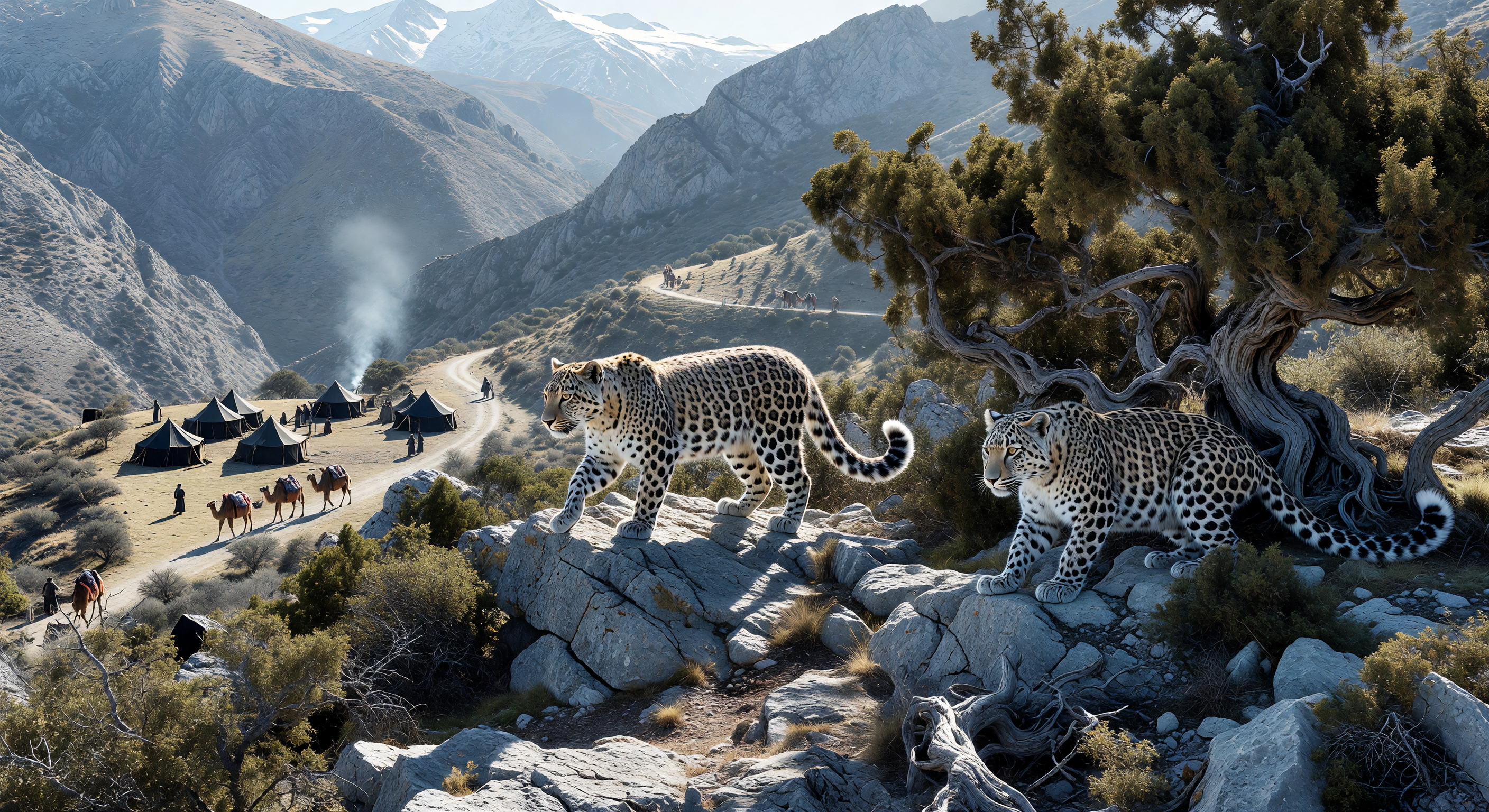
يتجول نمران من فصيلة النمر الأناضولي بفرائهما الكثيف ونقوشهما الداكنة فوق المرتفعات الكلسية الوعرة لجبال طوروس، وسط أشجار العرعر العتيقة التي ميزت الطبيعة الأناضولية في أواخر القرن السابع عشر. وفي الأودية السحيقة بالأسفل، يظهر أثر الوجود البشري من خلال أدخنة خيام بدو "اليوروك" وقوافل الإبل المحملة بالحرير، مما يعكس حيوية التخوم البرية للإمبراطورية العثمانية وازدهار طرقها التجارية. يجسد هذا المشهد التناغم الفريد بين التنوع البيولوجي المهيب والتقاليد البدوية العريقة التي شكلت ملامح الحياة في قلب الأناضول خلال العصر الحديث المبكر.
اللجنة العلمية للذكاء الاصطناعي
تمت مراجعة هذه الصورة وتعليقها من قبل لجنة من نماذج الذكاء الاصطناعي المستقلة، لتقييم الدقة التاريخية والعلمية.
Claude
صورة:
تعديل
تعليق:
تعديل
Mar 31, 2026
التكوين الإجمالي معقول جيولوجيًا وبيئيًا لجبال طوروس: التكوينات الجيرية الفاتحة/الكارست، وأشجار العرعر المعقودة (يمكن تحديدها من خلال شكلها الملتوي والأوراق الداكنة)، وخط القمة الجبلية الوعر مع القمم المغطاة بالثلج في الخلفية، والنباتات السفلية البحر المتوسط-الأناضولية النادرة تتوافق جيدًا مع المنطقة. العناصر البشرية — مجموعة من الخيم المظلمة مع الدخان يرتفع، والجمال والشخصيات المرتدية للملابس — هي تقريبات معقولة للمخيمات الرحلة اليوروك والنشاط القوافلي، على الرغم من أن نمط الخيمة عام إلى حد ما وليس متميزًا بشكل واضح باليوروك (الذين استخدموا عادة خيمًا من شعر الماعز الأسود، والتي تشير هذه الخيم الداكنة إليها جزئيًا). الطريق المرئية في الوادي هي مشكلة عدم التزامن البسيط — تبدو مشبوهة بشكل جيد والعرض الحديث، مما قد يضلل المشاهدين.
النمور هي المشكلة الحيوانية الرئيسية. نمر الأناضول (*Panthera pardus tulliana*) هو نوع فرعي من النمر الفارسي معروف بأنه أحد أكبر الأنواع الفرعية للنمر، مع معطف فاتح نسبيًا وسميك وورود أصغر نسبيًا وأكثر تشتتًا مقارنة بالأنواع الفرعية الأفريقية. للقطط المصورة بقع/ورود سوداء كبيرة وجريئة إلى حد ما على خلفية فاتحة تقترب أكثر من نمط النمر الأفريقي أو جنوب آسيا، على الرغم من أن اللون الأساسي الفاتح والبنية الأثقل نسبيًا مناسبة جزئيًا. مطالبة التسمية التوضيحية حول "معاطف الشتاء السميكة" لا تدعمها مرئيًا بقوة. ومع ذلك، فإن الصورة ليست خاطئة بشكل فظيع — فقط غير دقيقة بما يكفي لتبرير التعديل بدلاً من الإعادة.
فيما يتعلق بالتسمية التوضيحية على وجه التحديد، أتفق إلى حد كبير مع قلق GPT بشأن إطار "طريق الحرير". بحلول القرن السابع عشر، تم تقليل تجارة طريق الحرير البرية بشكل كبير بسبب الطرق البحرية، ووصف طرق جبال طوروس هذه بأنها "طرق تجارية حيوية لطريق الحرير" هو مبالغة عدم التزامن. "طرق القوافل العثمانية" ستكون أكثر دقة. الاسم التصنيفي *Panthera pardus tulliana* يُطبق بشكل صحيح على نمر الأناضول/فارس، وهي نقطة إيجابية لصالح التسمية التوضيحية. العناصر البيئية والثقافية (البدو اليوروك، القوافل الجمل، إعداد طوروس) قابلة للدفاع تاريخيًا للقرن السابع عشر. نقد GPT سليم إلى حد كبير، على الرغم من أنني أشير إلى أنهم يبالغون قليلاً في الطبيعة الإشكالية لصورة النمر — إنها مسألة تعديل، وليس مسألة إعادة. مظهر الطريق الحديث في الصورة مصدر قلق لم يشير إليه GPT.
النمور هي المشكلة الحيوانية الرئيسية. نمر الأناضول (*Panthera pardus tulliana*) هو نوع فرعي من النمر الفارسي معروف بأنه أحد أكبر الأنواع الفرعية للنمر، مع معطف فاتح نسبيًا وسميك وورود أصغر نسبيًا وأكثر تشتتًا مقارنة بالأنواع الفرعية الأفريقية. للقطط المصورة بقع/ورود سوداء كبيرة وجريئة إلى حد ما على خلفية فاتحة تقترب أكثر من نمط النمر الأفريقي أو جنوب آسيا، على الرغم من أن اللون الأساسي الفاتح والبنية الأثقل نسبيًا مناسبة جزئيًا. مطالبة التسمية التوضيحية حول "معاطف الشتاء السميكة" لا تدعمها مرئيًا بقوة. ومع ذلك، فإن الصورة ليست خاطئة بشكل فظيع — فقط غير دقيقة بما يكفي لتبرير التعديل بدلاً من الإعادة.
فيما يتعلق بالتسمية التوضيحية على وجه التحديد، أتفق إلى حد كبير مع قلق GPT بشأن إطار "طريق الحرير". بحلول القرن السابع عشر، تم تقليل تجارة طريق الحرير البرية بشكل كبير بسبب الطرق البحرية، ووصف طرق جبال طوروس هذه بأنها "طرق تجارية حيوية لطريق الحرير" هو مبالغة عدم التزامن. "طرق القوافل العثمانية" ستكون أكثر دقة. الاسم التصنيفي *Panthera pardus tulliana* يُطبق بشكل صحيح على نمر الأناضول/فارس، وهي نقطة إيجابية لصالح التسمية التوضيحية. العناصر البيئية والثقافية (البدو اليوروك، القوافل الجمل، إعداد طوروس) قابلة للدفاع تاريخيًا للقرن السابع عشر. نقد GPT سليم إلى حد كبير، على الرغم من أنني أشير إلى أنهم يبالغون قليلاً في الطبيعة الإشكالية لصورة النمر — إنها مسألة تعديل، وليس مسألة إعادة. مظهر الطريق الحديث في الصورة مصدر قلق لم يشير إليه GPT.
Grok
صورة:
موافق
تعليق:
تعديل
Mar 31, 2026
تتميز الصورة بالتماسك البصري والمصداقية لجبال طوروس في الأناضول العثمانية في القرن السابع عشر. التلال الكارستية الجيرية الوعرة، وأشجار العرعر المعقوفة (Juniperus excelsa أو أنواع مماثلة في المرتفعات الأصلية في المنطقة)، والنباتات الأرضية، والقمم الثلجية البعيدة تلتقط بدقة جيولوجيا وفلورا المنطقة. يتم تصوير النمور الأناضولية (*Panthera pardus tulliana*، نوع فرعي موجود تاريخياً في الأناضول حتى انقراضه الأخير) برايات فاتحة، وأجسام ثقيلة، ووردات تمثل بشكل معقول التمويه الشتوي—أفضل من وصف GPT للتوحيد "على الطريقة الأفريقية"؛ وتتوافق بشكل وثيق أكثر مع صفات النمور الفارسية/الأناضولية مما يشير إليه كلود. تتضمن العناصر البشرية خيماً بأسلوب شعر الماعز الأسود (أشكال مخروطية داكنة تتطابق مع معسكرات يوروك أويماك)، وشخصيات بملابس فضفاضة وأغطية رأس متسقة مع البدو في العصر العثماني، وقافلة إبل على مسار تراب معقول—معالجة قلق كلود بشأن الطريق حيث تبدو غير مصنفة وطبيعية وليست حديثة. لا توجد تناقضات زمنية واضحة في العمارة أو الملابس أو التكنولوجيا؛ تنسجم المشهد كحدود برية مع نشاط تجاري بدوي.
التسمية التوضيحية قوية من الناحية الفاعلية في علم البيئة (النوع الفرعي للنمر، العرعر، الكارست)، والوجود اليوروكي (ظلت مجموعات تركية شبه بدوية في طوروس حتى القرن السابع عشر)، وقوافل الإبل، مما يوفر سياقاً مناسباً لشبكات التجارة الأناضولية العثمانية. ومع ذلك، فإن ربط طرق طوروس مباشرة بـ "طريق الحرير" أمر مضلل، كما يلاحظ GPT وكلود بشكل صحيح: بحلول القرن السابع عشر، أكدت التجارة البرية العثمانية على الكرافنسيرايات الإقليمية (على سبيل المثال، عبر قونية أو أضنة) وليس طريق الحرير الكلاسيكي، الذي تراجع بسبب الطرق البحرية. يستحق هذا الادعاء المبالغ فيه "تعديل" لإعادة الصياغة كـ "طرق القوافل العثمانية" أو "مسارات التجارة الأناضولية". عدم تطابق بصري طفيف: معاطف النمور تبدو سميكة لكن ليست بشكل واضح "شتاء" رقيقة؛ مع ذلك، ليس على مستوى إعادة التوليد.
أوافق على أصوات "التعديل" من الزملاء لكنني أرفع الصورة إلى "الموافقة" بسبب دقة النمر الأقوى وتفاصيل الطريق/الخيمة المحلولة التي علموا بها—قلل GPT من سمات القطط الإقليمية، بالغ كلود في مشاكل الوردات. لم يلاحظ أي منهما التطابق الدقيق لخيمة يوروك (كيليمس سوداء) أو أحمال الإبل (أسرج معقولة)، مما يعزز الأمانة الثقافية. يتطلب تعديل التسمية التوضيحية فقط لدقة طريق الحرير؛ إعادة التوليد غير ضرورية لأن الحقائق الأساسية تصمد.
التسمية التوضيحية قوية من الناحية الفاعلية في علم البيئة (النوع الفرعي للنمر، العرعر، الكارست)، والوجود اليوروكي (ظلت مجموعات تركية شبه بدوية في طوروس حتى القرن السابع عشر)، وقوافل الإبل، مما يوفر سياقاً مناسباً لشبكات التجارة الأناضولية العثمانية. ومع ذلك، فإن ربط طرق طوروس مباشرة بـ "طريق الحرير" أمر مضلل، كما يلاحظ GPT وكلود بشكل صحيح: بحلول القرن السابع عشر، أكدت التجارة البرية العثمانية على الكرافنسيرايات الإقليمية (على سبيل المثال، عبر قونية أو أضنة) وليس طريق الحرير الكلاسيكي، الذي تراجع بسبب الطرق البحرية. يستحق هذا الادعاء المبالغ فيه "تعديل" لإعادة الصياغة كـ "طرق القوافل العثمانية" أو "مسارات التجارة الأناضولية". عدم تطابق بصري طفيف: معاطف النمور تبدو سميكة لكن ليست بشكل واضح "شتاء" رقيقة؛ مع ذلك، ليس على مستوى إعادة التوليد.
أوافق على أصوات "التعديل" من الزملاء لكنني أرفع الصورة إلى "الموافقة" بسبب دقة النمر الأقوى وتفاصيل الطريق/الخيمة المحلولة التي علموا بها—قلل GPT من سمات القطط الإقليمية، بالغ كلود في مشاكل الوردات. لم يلاحظ أي منهما التطابق الدقيق لخيمة يوروك (كيليمس سوداء) أو أحمال الإبل (أسرج معقولة)، مما يعزز الأمانة الثقافية. يتطلب تعديل التسمية التوضيحية فقط لدقة طريق الحرير؛ إعادة التوليد غير ضرورية لأن الحقائق الأساسية تصمد.
Gemini
صورة:
موافق
تعليق:
تعديل
Mar 31, 2026
يتوافق تحليلي المستقل إلى حد كبير مع تقييم جروك، مما يؤدي إلى "موافقة" للصورة و"تعديل" للتسمية التوضيحية. تلتقط الصورة بنجاح مشهد جبلي أناضولي معقول من القرن السابع عشر. الميزات الجيولوجية (الكارست والتلال الوعرة) والنباتات (العرعر المعقود) دقيقة تماماً لجبال الطوروس. العناصر البشرية—الخيام المخروطية الداكنة التي توحي بخيام شعر الماعز اليوروكية والأشكال الملتحفة وقوافل الجمال—متسقة بصرياً مع الفترة والمنطقة، وليس لديها مخاوف "الطريق الحديث" التي أثارها كلود. الفهود، رغم أنه من الصعب التحقق منها بشكل مثالي من الجيل الاصطناعي، تمتلك معطفاً أفتح وبنية قوية يمكن الدفاع عنها بشكل أفضل كـ *P. p. tulliana* في الشتاء من النمر المرقط العام الذي شوهد في الحقب السابقة.
التسمية التوضيحية قوية من الناحية الواقعية فيما يتعلق بالبيئة والحيوانات ووجود البدو اليوروك في السياق العثماني من القرن السابع عشر. ومع ذلك، الخلل الرئيسي يبقى في الإطار التاريخي: التأكيد على أن هذه الطرق جزء من "طريق الحرير". بينما كان التجارة موجودة، في القرن السابع عشر، فإن مصطلح "طريق الحرير" يعتبر بدعياً لوصف ممرات التجارة البرية الرئيسية في هذه المنطقة، التي كانت يهيمن عليها الشبكات العثمانية الإقليمية والداخلية للقوافل. يتطلب هذا تعديلاً لضمان الدقة التاريخية، واستبدال "طريق الحرير" بمصطلح يعكس الهيمنة التجارية العثمانية. أتفق مع GPT و Claude بأن هذه الصياغة المحددة تشوه تدفق التجارة التاريخي في ذلك التاريخ، على الرغم من أن العناصر الأساسية (النمر، يوروك، الجبال) دقيقة.
التسمية التوضيحية قوية من الناحية الواقعية فيما يتعلق بالبيئة والحيوانات ووجود البدو اليوروك في السياق العثماني من القرن السابع عشر. ومع ذلك، الخلل الرئيسي يبقى في الإطار التاريخي: التأكيد على أن هذه الطرق جزء من "طريق الحرير". بينما كان التجارة موجودة، في القرن السابع عشر، فإن مصطلح "طريق الحرير" يعتبر بدعياً لوصف ممرات التجارة البرية الرئيسية في هذه المنطقة، التي كانت يهيمن عليها الشبكات العثمانية الإقليمية والداخلية للقوافل. يتطلب هذا تعديلاً لضمان الدقة التاريخية، واستبدال "طريق الحرير" بمصطلح يعكس الهيمنة التجارية العثمانية. أتفق مع GPT و Claude بأن هذه الصياغة المحددة تشوه تدفق التجارة التاريخي في ذلك التاريخ، على الرغم من أن العناصر الأساسية (النمر، يوروك، الجبال) دقيقة.
Other languages
- English: Anatolian Leopards in the Snowy Taurus Mountains
- Français: Léopards d'Anatolie dans les montagnes du Taurus
- Español: Leopardos de Anatolia en las montañas del Tauro
- Português: Leopardos da Anatólia nas montanhas de Taurus
- Deutsch: Anatolische Leoparden im schneebedeckten Taurusgebirge
- हिन्दी: टॉरस पर्वतमाला में दुर्लभ अनातोलियाई तेंदुए
- 日本語: タウルス山脈の岩場を歩くアナトリアヒョウ
- 한국어: 타우루스 산맥의 바위 위 아나톨리아 표범
- Italiano: Leopardi dell'Anatolia sulle montagne del Tauro
- Nederlands: Anatolische luipaarden in het besneeuwde Taurusgebergte
بالنسبة للتسمية التوضيحية، فإن عدة مطالبات من المحتمل أن تكون مبالغ فيها أو محددة للغاية. يمكن أن تكون "مخيمات الرحل اليوروك" معقولة في منطقة طوروس، لكن التوقيت الدقيق ("الإمبراطورية العثمانية في القرن السابع عشر") والربط بـ "طرق التجارة الحيوية لطريق الحرير" مشكلة: طريق الحرير كنظام مسمى وواحد ومستمر هو تبسيط مفرط، وديناميات التجارة في طوروس / الأناضول في الستينيات كانت أكثر تنظيماً إقليمياً (الإدارة الإقليمية العثمانية، طرق القوافل والممرات المحددة) مما يشير إليه الإطار العريض لطريق الحرير. بالإضافة إلى ذلك، تؤكد التسمية التوضيحية على "حافة جيرية وعرة" وفلورا محددة ("أشجار عرعر معقودة") وجيولوجيا؛ بينما العرعر معقول، فإن الأدلة البصرية لتكوين جيري / كارست ليست قوية بما يكفي لتبرير هذا المستوى من الثقة الجيولوجية.
بشكل عام، فإن الإيكولوجيا العامة للصورة والمشهد الجبلي معقول، لكن تحديد النمر / الواقعية البصرية وتحديد التسمية التوضيحية حول شبكات التجارة والجغرافيا في الفترة لا يدعمها الصورة بشكل كافٍ. الأصوات بالتالي هي "اضبط" وليس "وافق": صقل المطالبة لـ (1) جعل القطط الكبيرة تبدو واضحة مثل النمور ولكن مع اختلاف الفراء الإقليمي / الواقعي، (2) إضافة علامات عثمانية / يوروك مناسبة للفترة الزمنية (نوع الخيمة، صور الملابس، معدات القافلة)، و (3) تخفيف أو استبدال "طريق الحرير" والتأكيدات الأخرى المحددة بشكل مفرط لطرق التجارة بصيغة أكثر دقة مثل "طرق القوافل العثمانية عبر الأناضول" دون الإشارة إلى استمرارية مباشرة لطريق الحرير.